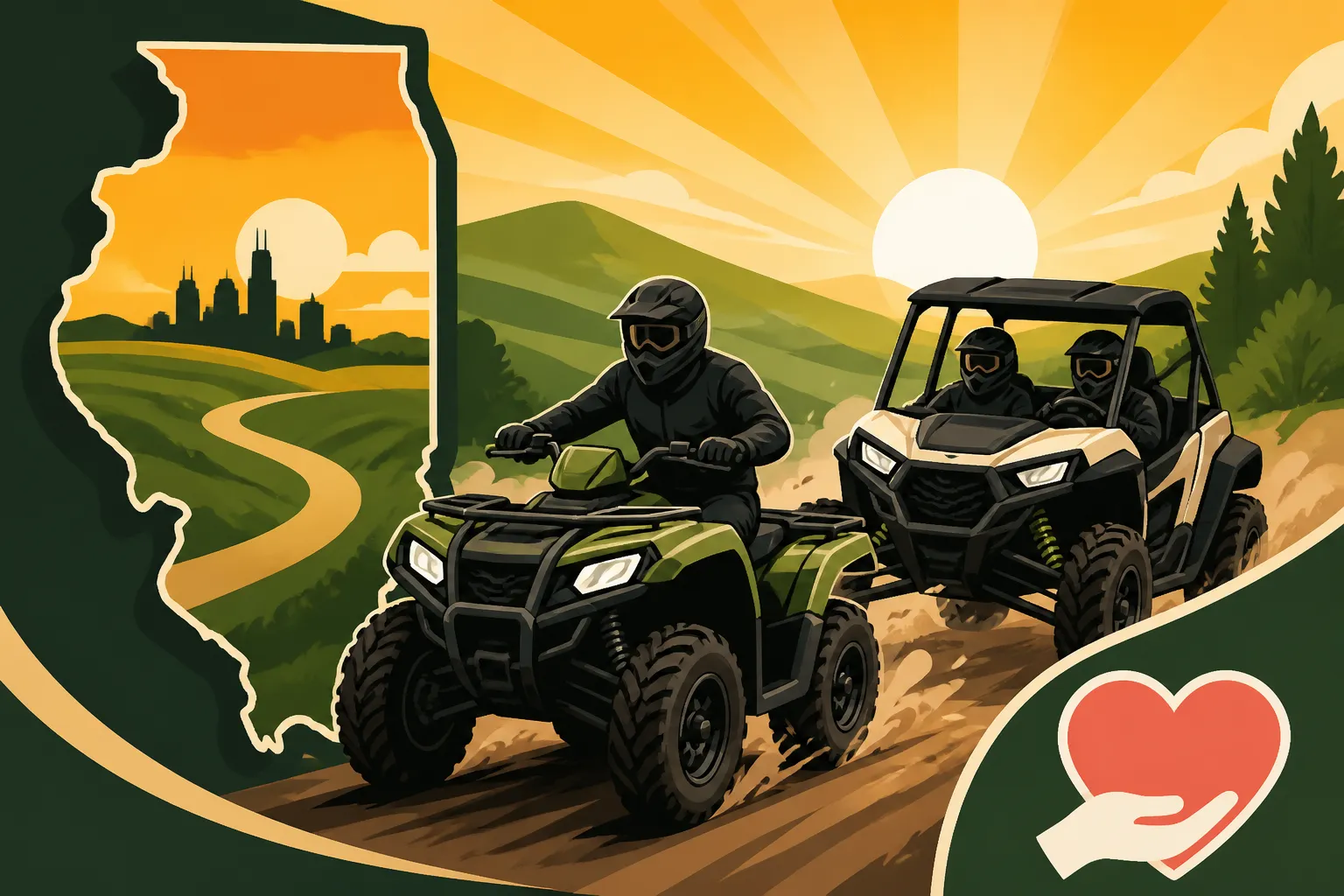
Illinois Poker Runs and Charity Rides
A poker run can sound simple: follow a route, collect cards, and meet back for a charity event. The stressful part is figuring out whether the route is legal, what permits apply, and how to keep a group together when conditions change. This guide explains how to choose, prepare for, and ride an Illinois ATV or UTV poker run responsibly.
What an Illinois ATV Poker Run Involves
The basic format and why routes vary
A poker run is usually a group ride with several checkpoints. At each stop, participants draw or receive a playing card; the hand collected along the route determines a score or prize. Charity rides use the same general format but raise money for a cause through registration, donations, raffles, or other event activities. The exact rules are set by the organizer, so check the event information rather than assuming every run works the same way.
The ride itself may take place on a private off-road property, a permitted trail system, or a route that includes roads. Those are not interchangeable settings. An event invitation that says “road ride” does not automatically make every road legal for ATVs or UTVs, and a poker-run card or wristband is not a substitute for a required permit.
Ask the organizer where the event takes place and what kinds of surfaces the route uses. If it includes public roads, ask how the route complies with the local rules for each road and jurisdiction. For a private park, confirm that the property is open to the event and learn its admission, vehicle, and rider rules. For a public or grant-assisted riding site, find out which permits and stickers are required before you travel.
Why the cause and the ride need separate planning
The fundraiser and the ride are connected, but each needs its own plan. A charity may have a clear donation process while the route details are still being finalized. Conversely, an organized ride can have a well-marked route but little information about where proceeds go. Before signing up, look for a named organizer, a clear check-in location, a description of the ride area, and a way to ask questions.
You can also ask how the event handles registration and donations. Find out whether the registration fee includes riding access or whether park admission is separate. Ask whether passengers register individually, whether children can participate, and whether a donation is optional or part of the event entry. These details matter when you are budgeting for a family or a group of machines.
If you are considering helping organize a ride, separate event fundraising from permission to use the land. Get clear approval from the property owner or site manager, and check whether an event permit or other authorization applies. The planning considerations in [Illinois Event Permits for a Ride] are a useful starting point; do not assume that a charity purpose automatically waives site rules.
How to Choose and Prepare for a Ride
Match the event to your machine and your group
Before registering, find out what machines the route allows. A course designed for smaller ATVs or dirt bikes may not suit a wide side-by-side. Some sites set limits based on trail width, vehicle type, passenger capacity, or the condition of the terrain. Ask about the narrowest sections and whether the route includes steep, rocky, muddy, or otherwise challenging areas.
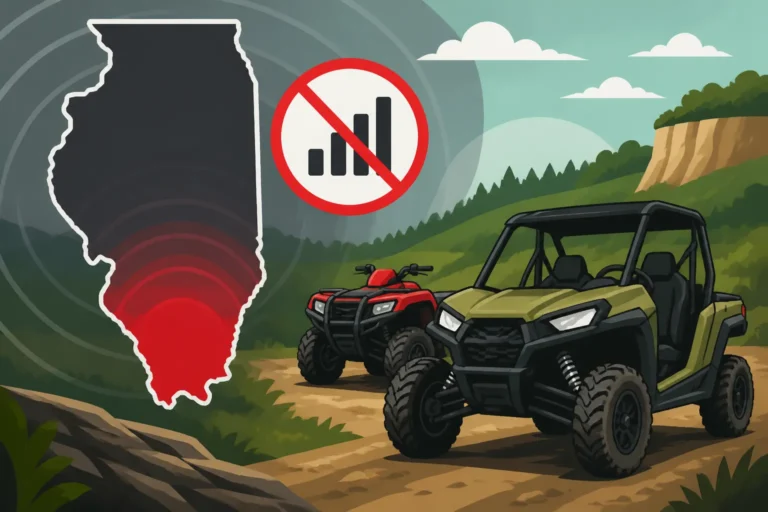
Be honest about your group’s experience. A new rider may be happier on a short, clearly marked route than on a long loop with difficult sections and little cell service. Families should ask about age rules, supervision, passenger requirements, and the event’s helmet policy. Organizers and riding sites can set rules that are stricter than what a rider expects, so check the written event guidance.
Route length is only one measure of difficulty. A relatively short ride can take much longer after rain, during busy check-in periods, or when riders need to stop for mechanical trouble. If the event offers different route options, ask who each option is intended for and whether riders can turn back safely. [Illinois Group Ride Planning] offers more ideas for keeping a mixed-experience group organized.
Verify access, permits, and route information
Confirm the actual riding location before you load the trailer. Illinois riders may encounter different rules at a private park, a grant-assisted site, and a route involving local roads. A permit or sticker for one setting does not necessarily grant access to another. Review [Illinois ATV Trails: Where You Can Actually Ride] and [Illinois Grant-Assisted Riding Areas] to understand why the site type matters.
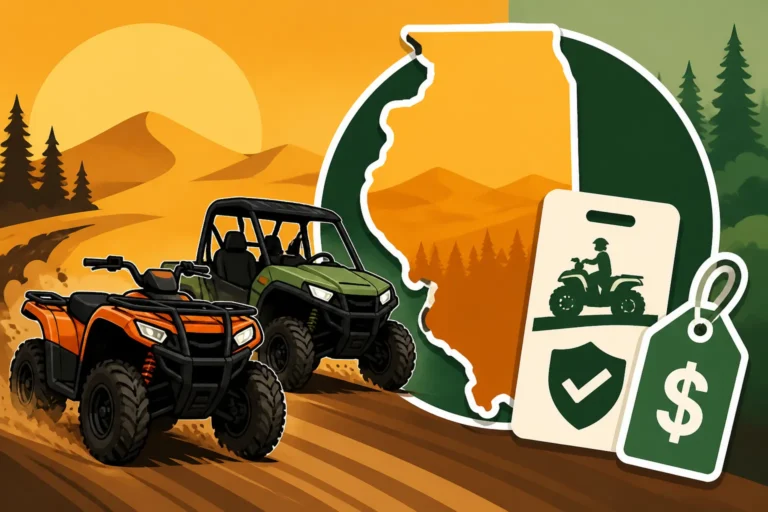
If the ride uses a grant-assisted area, ask the organizer which access requirements apply to each machine and rider. Illinois distinguishes between stickers with different purposes, so do not rely on an old decal, a registration from another state, or an event wristband as proof that you have what you need. The guide [Illinois OHV Permits: Two Stickers Explained] can help you identify the distinction and the questions to ask.
Get the route and check-in details directly from the organizer. A map app can be useful for general orientation, but a displayed track does not prove that a road or piece of land is open to riders. Tools such as onX Offroad can help you review mapped routes and terrain while planning, but confirm access, closures, and event-specific instructions with the organizer or land manager. Keep a written address and a backup plan in case your phone loses service.
| Planning question | Why it matters | What to confirm |
|---|---|---|
| Where does the ride take place? | Rules differ between private parks, public sites, and roads | Exact venue, access point, and route area |
| What machines are allowed? | Trail width and site rules may exclude some vehicles | ATV, dirt bike, or side-by-side eligibility |
| What permits are required? | Event registration may not include riding permits | Required stickers, passes, and proof of purchase |
| What is included in registration? | Park admission or passenger fees may be separate | Entry, riding access, meals, raffles, and donations |
| What happens if conditions change? | Rain or closures can affect route safety | Cancellation, rerouting, refund, and update procedures |
| Is there a route map or briefing? | Riders need to know where to go and what to avoid | Checkpoints, boundaries, emergency contact, and return time |
Getting Ready for Event Day
Inspect the machine and pack for the ride
A quick pre-ride inspection can prevent a small issue from becoming a long walk back to the staging area. Check tires, brakes, steering, lights, fluid levels, fuel, and visible damage. Make sure the machine has working equipment required by the site or route. If it has been sitting through winter or has not been ridden recently, test it before the event rather than discovering a problem at the trailhead.
Bring the essentials that match the location and season: water, a basic first-aid kit, a charged phone, any required medications, and tools or recovery gear appropriate to your machine. A UTV group may need different recovery equipment than a single ATV rider. Do not overload a rack or trailer with gear that can shift or interfere with safe handling.
Check the forecast and recent trail conditions, but do not treat either as a guarantee. Southern Illinois clay can behave very differently after rain than it does during a dry stretch, and wooded or low-lying routes may hold water. Contact the organizer close to departure for updates, especially if you are towing a long distance. [Illinois Trail Conditions Before You Tow] can help you build that check into your travel plan.
Agree on group rules before anyone starts
Decide who is leading and who is bringing up the rear. Share phone numbers, set a regrouping point, and agree not to leave a stopped rider behind. If a group spreads out, use safe, designated places to wait rather than blocking a trail or a road. A simple plan prevents confusion when the lead riders reach a checkpoint before everyone else.
Talk through the event’s route markings and checkpoint procedure before unloading. Ask whether riders must stay on a marked route, whether passing is allowed, and how to respond if a sign or marker is missing. Do not follow a machine onto an unmarked side trail just because it looks passable. If the route becomes unclear, stop somewhere safe and contact the event team.
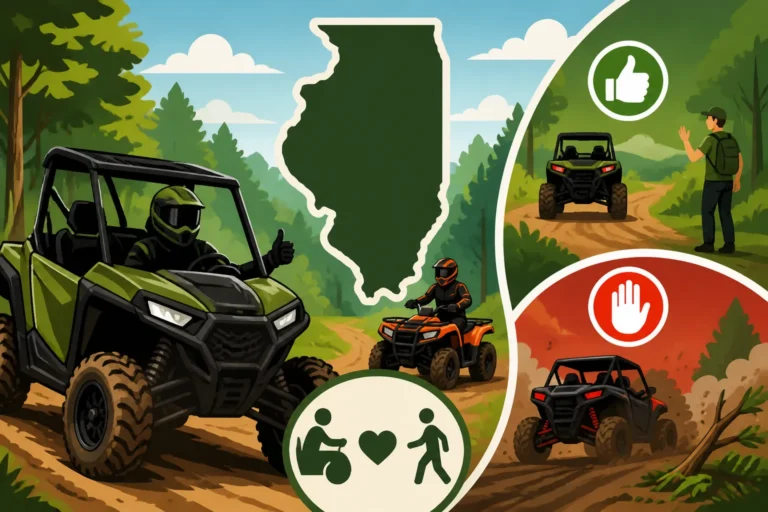
Trail etiquette matters at charity events because the ride may include beginners, families, and riders on machines with different capabilities. Leave room between vehicles, slow down near people and equipment, and avoid roosting dirt toward other riders. Respect closed gates, private property boundaries, and posted instructions. [Illinois Trail Etiquette Locals Expect] provides useful habits for sharing a riding area without making the day harder for everyone.
Riding Safely and Supporting the Event
Follow the event’s rules without assuming they replace local rules
An organizer’s route briefing is important, but it does not cancel laws or land-use rules. If any part of the event uses a road, verify that the road and jurisdiction allow the type of machine and riding involved. Illinois road access can depend on local rules, the road itself, and the equipment required. Never assume that a route is legal simply because it appears on a flyer or because other riders used it previously.
At a riding site, stay within designated areas and follow posted speed, noise, vehicle, and passenger rules. Do not ride into a closed area to bypass a queue or shortcut between checkpoints. If weather, crowding, or a mechanical issue makes a section unsafe, stop and contact event staff rather than improvising a new route. A route change should come from someone authorized to make it.
For private parks, read the waiver and site rules before the event. A waiver does not mean that every activity is permitted, and a fundraiser’s schedule does not necessarily match the park’s operating rules. Ask whether the event has a separate check-in process, whether the site has a machine inspection, and where emergency vehicles can reach the route.
Make the fundraiser worthwhile without creating pressure
A charity ride should make it easy for participants to understand what they are supporting. Look for a clear description of the beneficiary and how donations are collected. If you are unsure whether a registration payment, raffle ticket, or additional donation goes to the charity, ask the organizer. Reputable event communication should make those distinctions understandable without requiring participants to guess.
If you are helping with a ride, keep the donation process transparent and avoid implying that every part of a participant’s payment is a charitable contribution unless that is accurate. Provide clear information about registration, refunds, food, merchandise, and any optional fundraising activities. For a larger event, assign someone to answer questions about the cause while another person handles rider check-in and route logistics.
After the ride, thank volunteers and follow the organizer’s directions for leaving the site. Pack out trash, avoid unnecessary revving in staging or camping areas, and report damaged markers or hazards. A well-run event depends on more than a safe route: it also depends on riders treating the property, staff, volunteers, and one another with care.
Questions to ask before you register
If event details are limited, a short message to the organizer can save a frustrating trip. Ask:
- What is the exact riding location, and where should participants check in?
- What types and sizes of machines are allowed?
- Are required riding permits or site admission included in registration?
- Does the route use public roads, private property, or a designated riding area?
- What is the expected route difficulty, and are shorter options available?
- What equipment, age, passenger, helmet, or insurance rules apply?
- What is the plan if rain, a closure, or a sold-out entry limit affects the ride?
- Where can riders find event updates on the day?
For additional planning support, [Illinois ATV Clubs Worth Joining] can point you toward the kinds of local riding communities that may share event information and trail etiquette. Use any club or mapping information as a starting point, then confirm current access and rules with the event organizer and the site itself.
Disclaimer
This article is for general informational purposes only and does not constitute professional advice. Laws, prices and regulations vary by location and change over time. Consult a qualified professional for guidance on your specific situation.