Illinois Riding Areas With Wash Stations
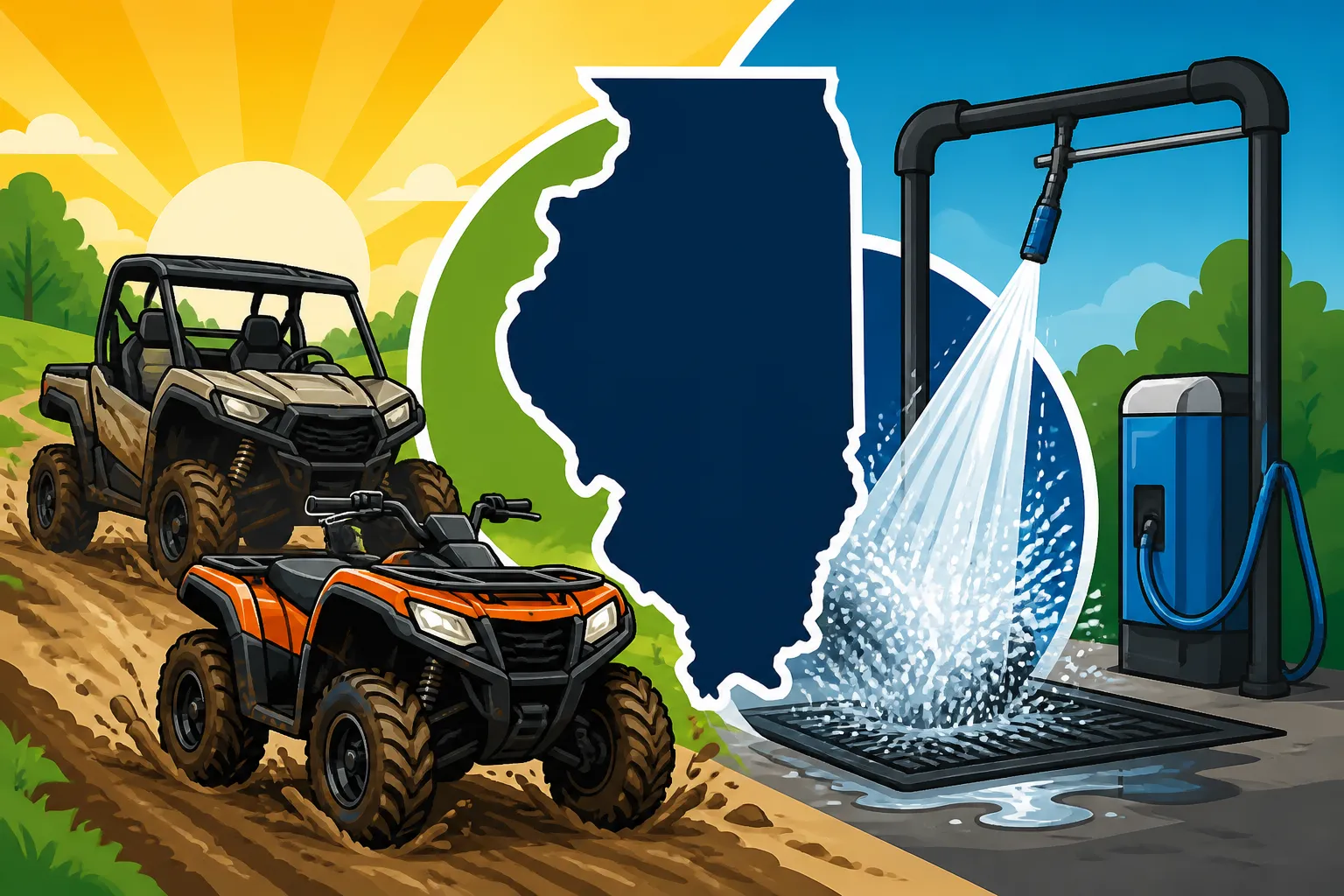
A muddy ride can leave clay packed into the radiator, caked around the footwells, and dripping from the trailer before you are even out of the parking area. Finding an Illinois riding area with a wash station can make cleanup easier, but facilities and rules vary. This guide explains what to ask, how to plan, and how to avoid arriving with a dirty machine and nowhere to rinse it.
How to find Illinois riding areas with wash stations
A park listing may mention riding trails, camping, or trailer parking without saying whether riders can wash their machines. Even when a wash area exists, it may be reserved for campers, limited to certain hours, or unavailable after heavy rain. The safest approach is to confirm the details directly with the riding area before you haul your ATV or UTV.
Ask what “wash station” actually means
The term can describe anything from a basic garden hose to a designated wash bay with drainage. Those are not interchangeable when you are trying to clean thick southern Illinois clay from a side-by-side, or simply rinse dust from a youth quad.
When you call, ask whether the facility is intended for washing off-road machines, not just rinsing boots or equipment. Find out whether you need to bring your own hose, nozzle, or pressure washer, and whether there are limits on water use. A wash area may also have rules about washing near campsites, using detergents, or letting runoff flow onto a trail or into a ditch.
A few practical questions can prevent a frustrating surprise:
- Is there a machine wash area on-site?
- Is it open to day riders, campers, or both?
- Is water available, or should you bring your own?
- Are pressure washers allowed?
- Are there restrictions on soaps or degreasers?
- Does the wash area have set hours or close in wet conditions?
- Is there a separate fee or reservation requirement?
- Where should trailers and vehicles wait while machines are being washed?
When contacting a park, give them the details that matter: your machine type, whether you are staying overnight, and when you plan to ride. A facility that works for a small ATV might not be practical for several muddy UTVs arriving together.
Verify before choosing a destination
Illinois has several kinds of riding destinations, including state-managed areas, club-run parks, county facilities, and private pay-to-ride properties. A wash station is a property-level amenity, not something you can assume comes with a trail permit or access decal. For an overview of places to ride, see Illinois ATV Trails: Where You Can Actually Ride. For private properties, Illinois Private Off-Road Parks can help frame what to check before you go.
Sahara Woods near Harrisburg, Little Egypt Off Road near Marion, Mill Creek Park near Marshall, and The Cliffs near Marseilles are examples of Illinois riding destinations you might contact when planning a trip. Do not assume that any particular site currently offers machine washing simply because it has trails, camping, or other rider amenities. Ask the venue directly, then confirm again if your visit is well in the future.
For a regional trip, onX Offroad can help you organize route ideas and see mapped access information, but it should not be treated as confirmation that a wash facility is available or open. Use it to plan the drive and riding area, then rely on the park for its current facility rules. If a route crosses multiple access areas or approaches private property, verify boundaries and permitted access rather than assuming a mapped line gives permission to ride.
What to check before you tow to a wash-equipped park
The wash station is only one part of a good riding plan. A site may be open but have limited trailer space, muddy access roads, or trail closures after rain. A little preparation helps you avoid a long drive that ends with a closed gate or a machine you cannot clean before loading.
Confirm trail, parking, and wash-area conditions
Ask whether the trails and wash area are both open on your chosen date. Heavy rain can affect them differently: a park might keep some routes open while closing low sections, or it might restrict washing to conserve water or prevent runoff. Review Illinois Trail Conditions Before You Tow and [Illinois Trail Closures After Rain] as part of your planning, then confirm conditions with the operator.
If you are bringing a trailer, ask where it can be parked while you ride and whether there is room to maneuver near the wash area. A wash station may be easy to use with a single ATV and difficult to access with a long trailer or a group of machines. Check [Illinois Trailheads With Trailer Parking] for related planning considerations, but verify the specific parking arrangement with the site you intend to visit.
A map can help with navigation, but it cannot answer every access question. onX Offroad may be useful for orienting yourself around a riding area or building a route plan. Before following any mapped route, confirm that it is open to your machine and that it does not pass through private land or a closed section.
Budget time for cleanup and loading
Washing a machine takes longer when mud has dried, packed into the undercarriage, or collected around a skid plate. Add time at the end of the day rather than assuming you can rinse and load in a few minutes. If several people are traveling together, agree on who uses the wash area first and where the rest of the group will wait.
A wash station can also become crowded near closing time, especially after a wet day. Ask whether the park has a queue system or whether riders are expected to leave the area promptly after washing. For a group trip, [Illinois Group Ride Planning] offers related ideas for organizing arrival and departure logistics.
| What to confirm | Why it matters | Helpful follow-up question |
|---|---|---|
| Who may use the wash area | Access may be limited to campers or registered riders | Does my day-use permit include wash-area access? |
| Water and equipment | A hose, pressure washer, or nozzle may not be provided | What should I bring with me? |
| Hours and closures | The facility may close before the trails do | What time does the wash area stop operating? |
| Runoff rules | Soap or muddy water may be restricted | Are detergents or degreasers allowed? |
| Trailer access | Tight space can make washing and loading awkward | Can a trailer enter or wait near the wash area? |
| Wet-weather policy | Conditions can affect trails, water use, or facility access | Should I call again on the morning of my ride? |
Washing an ATV or UTV without damaging it
A wash station makes cleanup more convenient, but aggressive washing can create its own problems. High-pressure water directed at seals, electrical connections, bearings, or radiator fins can force dirt and moisture into places that are hard to inspect. Wash deliberately, following the machine manufacturer’s guidance.
Start with the areas that collect mud
Before you spray, look over the machine and remove sticks, leaves, and clumps of mud by hand where it is safe to do so. Pay particular attention to the radiator face, underbody, wheel wells, footwells, and suspension components. If mud is baked on, soaking it and allowing it to soften can be more effective than immediately blasting it with a concentrated spray.
Use a broad spray pattern and keep the nozzle at a sensible distance. Avoid aiming directly at electrical connectors, seals, bearings, instrument panels, and air intake openings. A pressure washer can make a machine look clean quickly while driving water and grit into sensitive areas. Take extra care around the radiator: bent fins and packed debris can interfere with cooling. For more detail, see [Washing Clay Out of a Radiator and Frame].
Follow any posted park instructions. Some properties may prohibit pressure washers or restrict detergents because of water supply, drainage, or environmental concerns. If the facility only allows a basic rinse, do not bring out a chemical cleaner and assume it is acceptable. When in doubt, ask staff before starting.
Make cleanup part of responsible riding
Mud and wash water do not disappear just because they leave your tires. Avoid washing a machine in a parking lot, roadside ditch, creek, or campground unless the landowner or park explicitly permits it. Do not leave clumps of mud where they can clog a drain or create a slippery surface for other riders.
A simple rinse can be enough to remove loose mud before transport. At home, you can complete a more careful inspection and cleaning in a location where runoff is permitted. After washing, check that the radiator is clear, look for damage hidden by mud, and make sure the machine is secured before you tow. If you ride in clay or on reclaimed mine terrain, a quick rinse may still leave packed material underneath; [Riding Through Reclaimed Mine Ground] is a useful related topic when preparing for that kind of surface.
Keep your approach courteous, too. Follow posted instructions, leave the area clean, and do not occupy a wash bay while you sort gear or load your trailer. [Illinois Trail Etiquette Locals Expect] covers the broader habits that help keep shared riding areas welcoming.
A practical wash-station plan for your next ride
A dependable plan has a backup. If the riding area confirms it has a wash facility, find out how it works and what restrictions apply. If it does not, or if access is uncertain, decide before you leave whether you will bring basic cleaning supplies, stop at an appropriate commercial wash, or clean the machine at home.
Use this simple pre-trip checklist
Before leaving, save the park’s contact information and note the answer about wash access. Check the riding area’s operating rules, weather-related updates, and trailer arrangements. Pack gloves, a soft brush, and any equipment the park specifically says riders should bring. Do not bring detergents or a pressure washer unless the venue allows them.
If you are visiting multiple locations, avoid treating the wash station as a guaranteed part of your route. onX Offroad can be one tool for planning your driving and riding-area navigation, but it does not replace permission from a landowner or confirmation from a park. Call ahead when the wash station is central to your plan, especially if you are hauling a large machine or traveling with a group.
Have a backup that respects local rules
If the on-site facility is unavailable, do not improvise by washing beside a public road, in a stream, or on property where you lack permission. A commercial wash may have its own rules for off-road machines, so call first rather than pulling a mud-covered UTV into a bay that is intended for passenger cars. Ask whether the wash can accommodate the machine’s width and whether mud removal is permitted.
You can also reduce the cleanup burden by removing loose material at the park only where allowed, then completing detailed cleaning at home. If you have to drive a muddy machine onto a trailer, secure it carefully and consider how mud may fall onto the road during transport. A tarp or removable mat can help contain debris, provided it does not interfere with tie-downs or safe loading.
The best Illinois riding area for your trip is not necessarily the one with the most amenities. It is the one whose trails, access rules, parking, and cleanup arrangements fit your group and your machine. Confirm the wash station directly, follow the property’s rules, and give yourself enough time to clean up without turning the ride home into another muddy chore.
Disclaimer
This article is for general informational purposes only and does not constitute professional advice. Laws, prices and regulations vary by location and change over time. Consult a qualified professional for guidance on your specific situation.