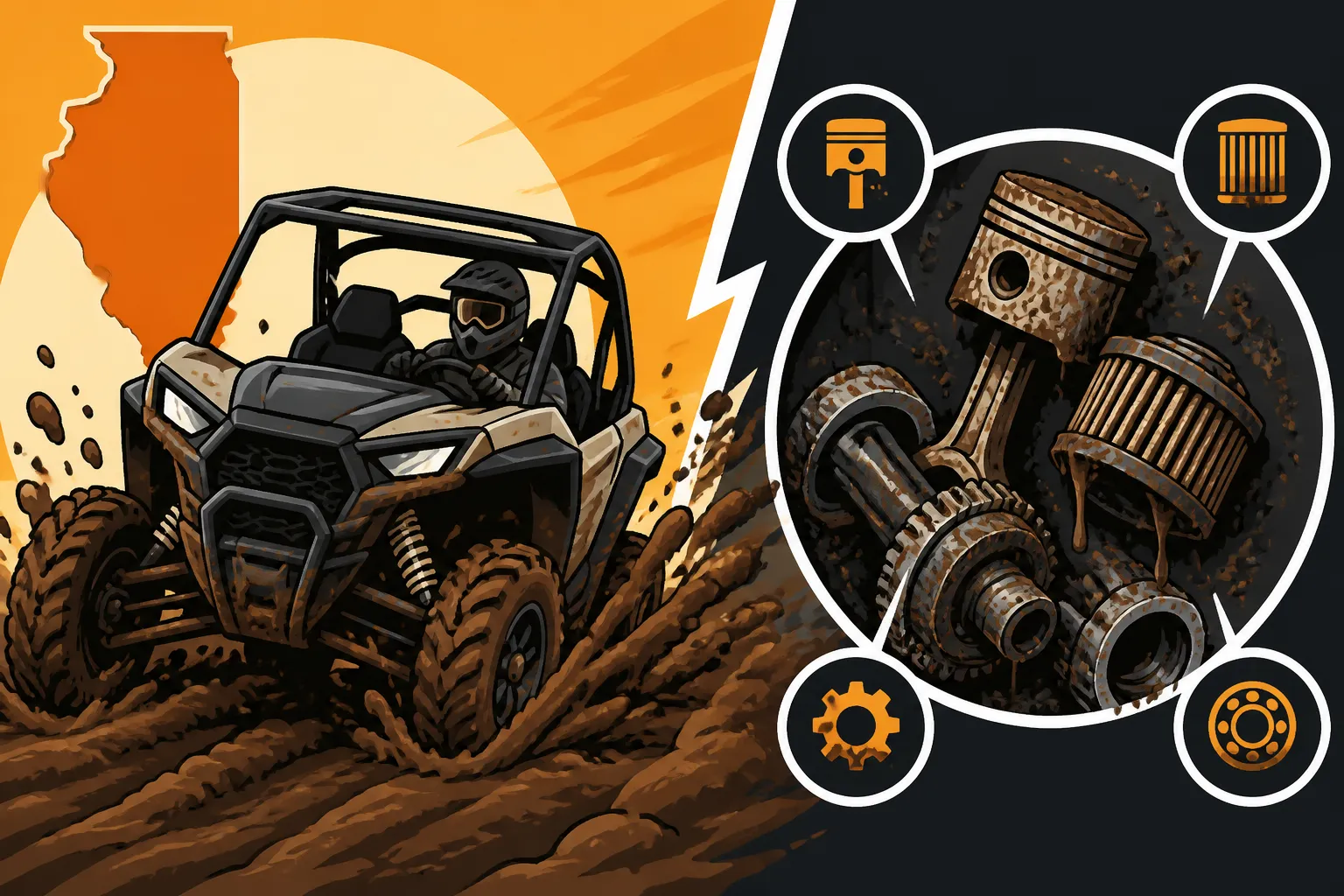
Illinois Mud and What It Does to a Machine
Illinois mud can turn a fun ride into a costly cleanup, especially when wet clay packs around a radiator, brakes, and moving parts. The damage is not always obvious when you pull back onto the trailer. This guide explains what mud does to an ATV or UTV, how to reduce the risk while riding in Illinois, and what to inspect and clean afterward.
Why Illinois mud is hard on ATVs and UTVs
Clay and wet soil cling to more than the tires
Mud is not just a slippery surface. Illinois soils can include sticky clay that holds to tires, fenders, skid plates, and the underside of a machine. As the wheels turn, they sling it into places you may not see from the seat. A thin coating can become a heavy layer that traps heat, hides damage, or interferes with parts that need to move freely.
The extra weight matters, too. Mud packed into a wheel or lodged under a fender can make a machine feel less predictable. It can contribute to vibration, make steering feel uneven, and leave you working harder to keep a line. A machine that feels clumsy in a deep rut may not be broken, but it deserves a careful check before you keep riding.
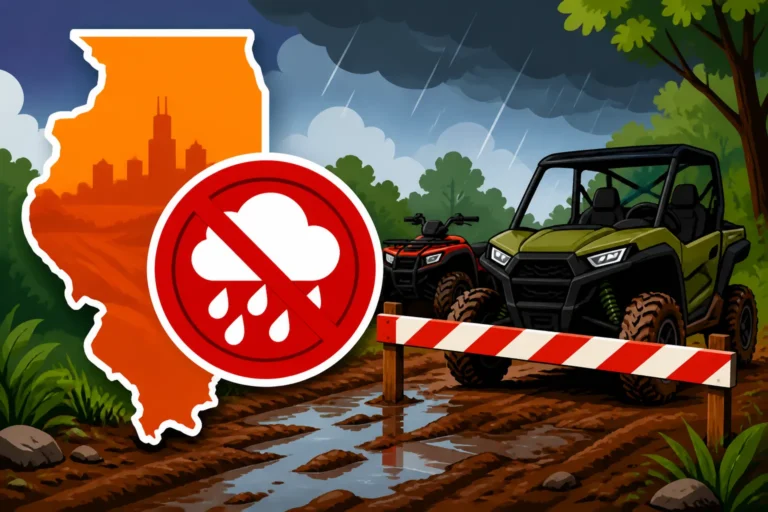
Conditions can change quickly across Illinois. A route that seems firm near the parking area may become slick or deeply rutted in a shaded hollow, low spot, or recently disturbed ground. Before towing out, check the site’s own updates and rules. [Illinois Trail Conditions Before You Tow] and [Illinois Trail Closures After Rain] are useful reminders that recent weather can change what is rideable—and whether it is appropriate to ride there at all.
Mud can block airflow and raise temperatures
A radiator needs a clear path for air to move through its fins. Mud and plant debris can cover that surface, restricting airflow and making it harder for the cooling system to shed heat. This is especially worth watching when riding slowly through sticky ground, where the machine may be working hard but moving too slowly to get much airflow.
An engine temperature warning, steam, an unusual smell, or a sudden change in how the machine runs is a reason to stop somewhere safe. Do not keep pushing through mud in the hope that the warning will clear. Let the machine cool according to the owner’s manual, and do not open a hot radiator cap. If you regularly ride in areas with loose debris and mud, a properly fitted radiator screen may help with some debris, but it is not a substitute for checking and cleaning the radiator. See [Radiator Screens for Corn Dust] for related protection considerations.
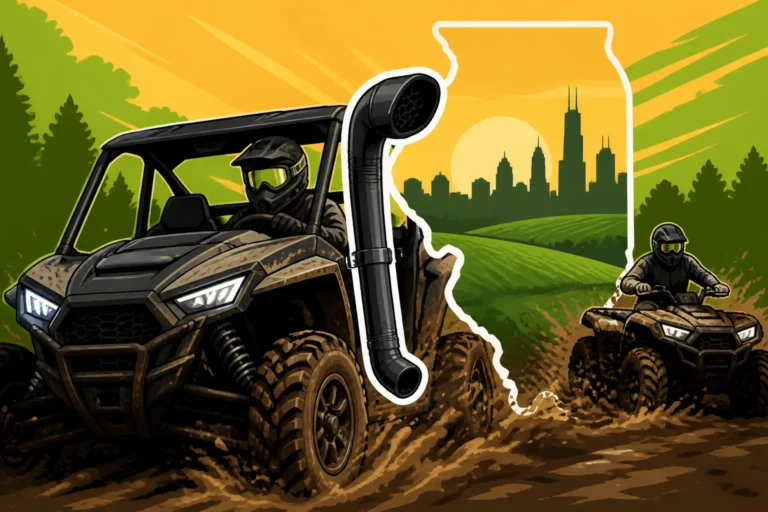
Mud can also get into air intakes, electrical connectors, and other openings, depending on a machine’s design and how it is ridden. Know where your ATV or UTV’s intake and vents are, and avoid submerging the machine beyond the limits in its manual. A snorkel or other modification does not make every machine waterproof, and poorly planned changes can create their own problems.
The parts mud can damage or wear down
Brakes, bearings, and seals need attention
Mud and grit can reduce braking performance or leave brakes feeling different after a ride. The problem may be as simple as contamination that needs careful cleaning, but a dragging brake, persistent grinding, or noticeably weak braking deserves attention before the next outing. Never assume that a quick splash through clean-looking water has rinsed everything away.
Bearings and seals are another concern. Grit can work into areas where smooth movement matters, while repeated exposure to water and mud can put extra stress on protective seals. Listen for new grinding, clicking, or humming sounds, and pay attention to unusual play in wheels or other moving parts. If you are unsure how to check a component safely, follow the manual or ask a qualified mechanic rather than forcing parts apart.
A quick post-ride look can catch trouble early. Check around the wheels, brake areas, axles, and visible joints for packed dirt, damaged boots, loose parts, or signs of leakage. These checks do not replace scheduled maintenance, but they can help you spot a problem before the next ride turns a small repair into a bigger one.
Belts, chains, and underbody parts can take a beating
On a belt-driven machine, mud and water exposure can affect the drivetrain, depending on how the machine is designed and where the water reached. A change in acceleration, a new slipping sensation, or an unfamiliar noise may mean it is time to stop and inspect rather than ride harder. Follow the manufacturer’s maintenance instructions for the specific model; belt housings and service procedures are not identical across machines.
On machines with exposed chains, mud can carry abrasive grit into the chain area and speed up wear if it is left there. Clean and lubricate the chain as directed by the manufacturer. Also inspect skid plates and the underside for packed mud, loose fasteners, and signs of impact. A clump of dirt may hide a scrape or a bent part until you wash it off.
| Area to check | What mud may do | What to notice after riding |
|---|---|---|
| Radiator and cooling openings | Restrict airflow | Warning lights, excess heat, debris on fins |
| Brakes and wheels | Carry grit or interfere with movement | Grinding, dragging, weak or uneven braking |
| Bearings and seals | Expose parts to water and abrasive soil | New noise, looseness, or visible damage |
| Belt or chain area | Carry dirt into drivetrain components | Slipping, unusual noise, or visible buildup |
| Skid plates and underbody | Pack into gaps or conceal impacts | Loose fasteners, dents, trapped debris |
If you plan routes with onX Offroad, use it as one part of your preparation rather than as a substitute for site rules or current conditions. A mapped line does not mean the trail is open, suitable after rain, or safe to cross. Verify access with the riding area before unloading.
How to reduce mud-related problems before and during a ride
Prepare the machine and your route
Before heading out, check that tires are in good condition and appropriate for the terrain you expect. Tire choice affects traction and handling, but no tread pattern makes a machine immune to slick clay or deep ruts. [Choosing Tires for Southern Clay and Mud] can help you think through the trade-offs between traction, steering, and the type of riding you do.
Make a quick pre-ride check: confirm that the radiator area is clear, visible fasteners are secure, and lights and brakes work. Check fluid levels as instructed in the owner’s manual. If the machine has had recent repairs or has been sitting through winter, a brief test in a safe area can reveal a problem before you are far from the trailer.
Plan for conditions, not just mileage. onX Offroad can help you orient yourself while planning a route, but verify trail access and restrictions with the park or land manager. Check whether the area has recently received rain and whether it has posted closures. [Illinois Trail Difficulty Ratings] and [Illinois Riding Season Considerations] offer useful context when choosing a ride that fits your group and the day’s conditions.
Ride with traction and trail etiquette in mind
In slick conditions, make smooth inputs. Sudden acceleration can spin the tires and dig ruts deeper; abrupt braking or steering can make a machine slide. Keep a controlled pace, leave room between riders, and avoid charging into a rut or puddle when you cannot see what is underneath. A shallow-looking crossing can conceal a soft bottom, a sharp edge, or a change in depth.
If your machine starts to bog down, pause and assess before repeatedly applying throttle. Spinning tires can dig the machine in farther and damage the trail. Use recovery equipment only as intended, keep bystanders clear, and follow the equipment manufacturer’s safety guidance. If conditions are deteriorating or the route is becoming impassable, turning around is often the sensible choice.
Respect closures and posted restrictions even when a trail looks tempting. Riding around a closure or making a new route through vegetation can damage the site and create problems for other riders. onX Offroad may help you keep track of a planned route, while [Illinois Trail Etiquette Locals Expect] is a good companion for thinking about how your choices affect the riding area.
Cleaning and inspecting your machine after a muddy ride
Rinse carefully and remove packed debris
Start by letting the machine cool and checking the owner’s manual for washing instructions. Remove clumps by hand where it is safe to do so, especially from wheels, fenders, the underside, and around cooling openings. A gentle rinse is generally a better starting point than blasting every seam with high-pressure water. A pressure washer aimed at seals, bearings, electrical connections, or radiator fins can force water or debris where it does not belong or cause damage.
Work methodically. Clear the radiator face without bending the fins, rinse mud from around the brakes and wheels without directing a forceful stream into sensitive areas, and check that debris has not collected around moving parts. If your machine has a belt housing, follow its model-specific cleaning guidance rather than assuming a general wash is sufficient.
After the mud is off, dry the machine as appropriate and inspect it in good light. Look for new scrapes, loose fasteners, damaged wiring, leaking fluids, and torn boots or seals. If you notice a warning light, persistent unusual noise, overheating, or a change in braking, do not treat a wash as a repair. Have the issue checked before riding again. [Washing Clay Out of a Radiator and Frame] covers the cleanup challenge in more detail.
Build cleanup into the trip plan
A little planning can make post-ride cleanup much less frustrating. Bring water for basic rinsing if the riding area permits it, along with gloves, a small brush, and supplies recommended by your machine’s manual. Do not assume every park has a wash station or allows washing on site. Check the rules before you go; [Illinois Riding Areas With Wash Stations] can help you look for a more convenient cleanup option.
If you are towing home with a thick layer of mud still packed underneath, consider whether it could fall off on the road or create a mess at your next stop. Remove excess mud where permitted, and secure the machine properly on the trailer. When you get home, give the machine a more thorough inspection before storing it or putting it away for the season.
onX Offroad can be useful for planning a return route or keeping track of your intended riding area, but the machine still needs a hands-on inspection after a muddy day. Treat cleanup as part of the ride, not an optional chore. A few careful minutes can reveal a developing issue while it is still easier to address.
Disclaimer
This article is for general informational purposes only and does not constitute professional advice. Laws, prices and regulations vary by location and change over time. Consult a qualified professional for guidance on your specific situation.