Illinois Insurance Proof at a Gate
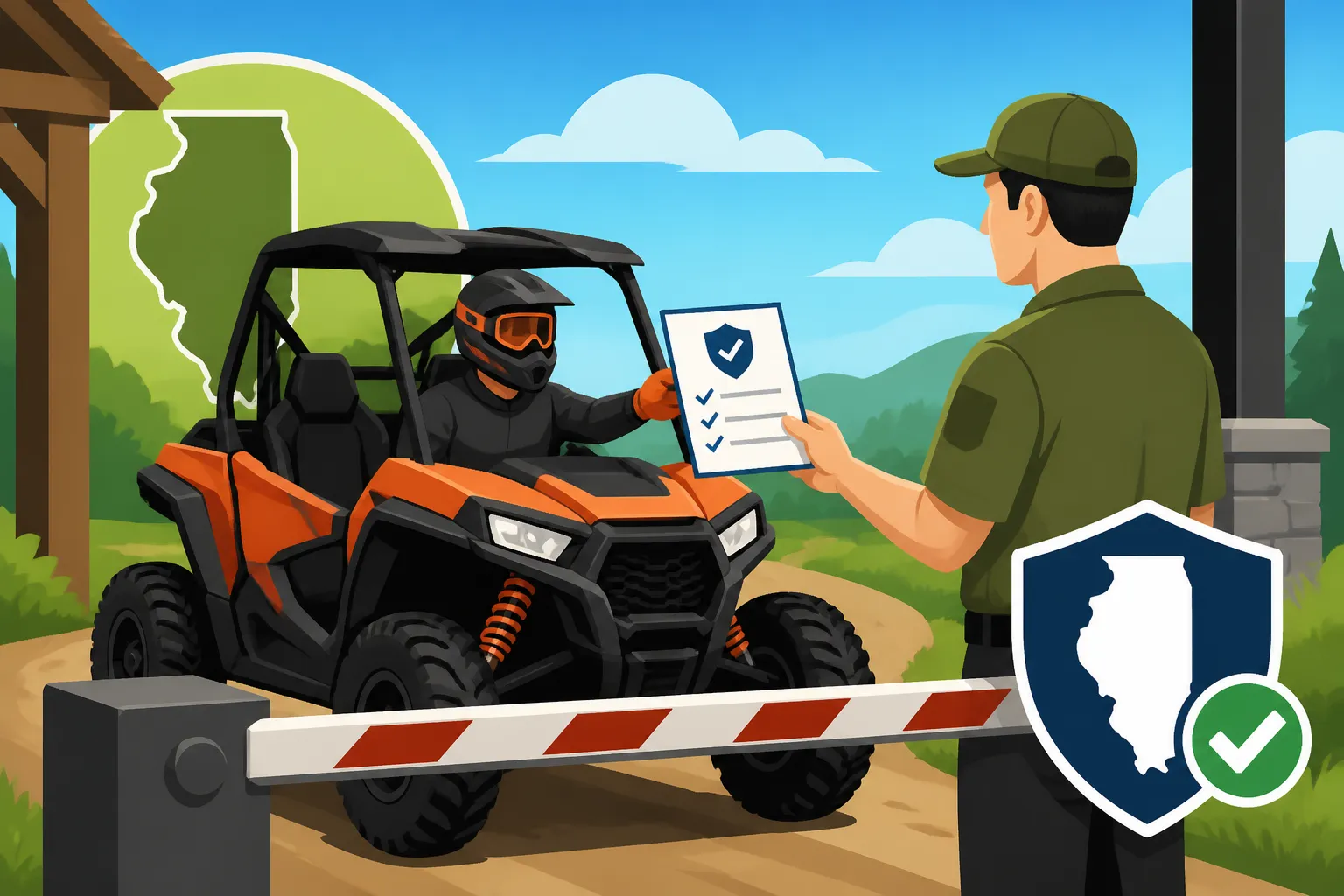
Arriving at an Illinois riding area only to be asked for insurance proof can leave you unsure what the gate expects. The answer depends on the site and how you plan to ride: street-use rules are not the same as trail-access rules. Here’s what to check, what documents to carry, and how to avoid confusing insurance with a permit.
Does an Illinois riding-area gate always require insurance proof?
There is no single answer for every gate. A machine used on a public road may be subject to insurance requirements that do not automatically apply to a machine used only off-road. Meanwhile, an individual riding park or site can set its own entry conditions, including requiring insurance proof or other paperwork.
That means the useful question is not simply, “Does Illinois require insurance?” Ask instead:
- Is this machine being driven on a public road, even briefly?
- Is the destination a public riding area, a grant-assisted site, or a private park?
- Do the site’s current rules require insurance proof at check-in?
- Does the policy cover the machine and the kind of riding planned?
A gate employee may request proof because the facility’s rules require it, because the machine is being used on a road, or because a special event has additional conditions. The request alone does not tell you which rule applies. Ask what document they need and whether the requirement comes from the site’s rules, the event organizer, or the machine’s intended road use.
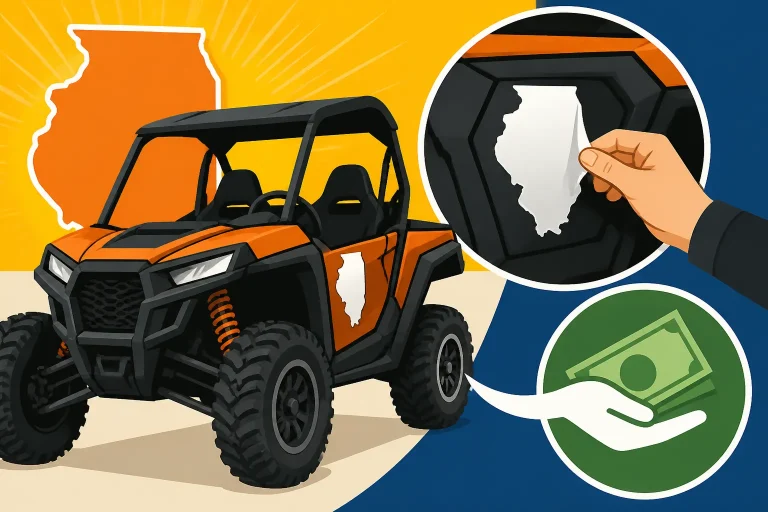
For a public riding site, check the rules before you tow. A valid permit or decal does not, by itself, prove that you have insurance. The reverse is also true: an insurance card does not replace the access permission the site requires. Illinois Grant Site Rules for Riders explains the separate requirements that can apply at grant-assisted areas, while Illinois Stamp and Decal Compared covers the difference between Illinois’s riding-related stickers.
| Situation | What the gate may ask for | What to check before leaving |
|---|---|---|
| Riding at a public off-road site | The site’s required permits and any site-specific documents | Current site rules and whether insurance proof is listed |
| Riding at a private park | Proof of insurance, a signed waiver, or both, depending on the park | Entry rules, waiver terms, and coverage exclusions |
| Driving on a public road to reach the site | Proof of required road-use coverage, along with any local permit or equipment requirements | The route’s rules and the machine’s road-use eligibility |
| Using a rental machine | Rental paperwork and any proof the operator requires | Who is insured, what the rental coverage includes, and what you must provide |
| Attending an organized ride | Requirements set by the venue or event organizer | Event instructions and any additional insurance conditions |
Do not assume a rule at one park applies at another. If the website or booking confirmation does not say whether you need proof, call or message the site before loading the machine. Ask whether they want evidence of liability coverage, a full policy document, or something else. Also ask whether every rider needs to show proof or whether the machine owner’s documents are sufficient.
What counts as insurance proof at the gate?
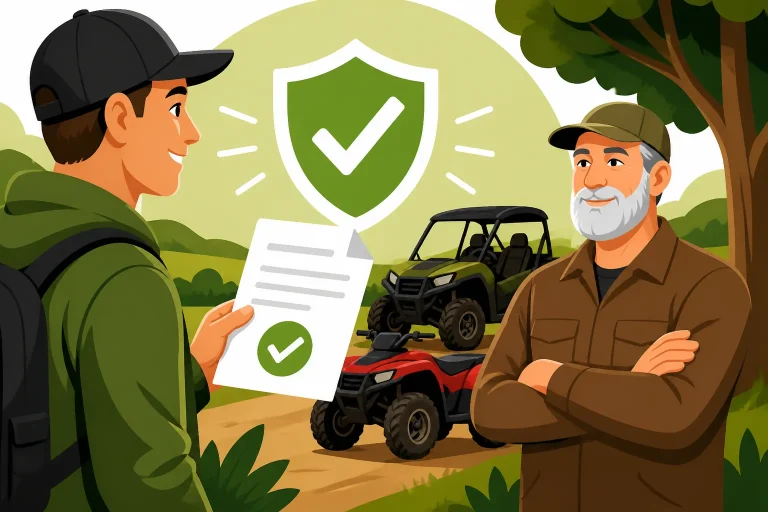
The most practical document is usually a current insurance identification card or another document issued by the insurer that clearly identifies the relevant coverage. Requirements can differ, so follow the site’s instructions if they specify a particular document.
Before your trip, make sure the proof is easy to read and matches the machine you are bringing. Check that it shows:
- The named insured or policyholder.
- The insurer and policy information.
- The policy’s effective dates.
- The machine, where the document lists it, or a way to confirm it is covered under the policy.
- Any additional details the park or event specifically requests.
A photograph or digital copy may be convenient, but do not assume every gate accepts a phone screen. Some sites may have limited service, and a phone can lose power or become difficult to read in poor conditions. Save a digital copy for access without a signal and consider carrying a paper copy as a backup. If staff require an original or a particular document, a screenshot may not meet that requirement; check first.
Keep the proof accessible rather than buried under tie-downs or packed gear. A wallet card, a clearly labeled folder in the tow vehicle, or a saved file on the phone can make check-in quicker. Keep private information secure: show only what the site reasonably needs to verify, and avoid leaving policy documents where they can be seen or taken.
A bill of sale, title, registration document, usage stamp, access decal, or permit confirmation is not a substitute for insurance proof. Each document serves a different purpose. Carrying Papers at a Grant Site can help you think through what to keep available when riding at a grant site, but the site’s own requirements still control what it asks to see.
If you have a policy document but are uncertain whether it covers trail riding, do not rely on the gate staff to interpret it. Contact the insurer and ask specifically about the machine, the location, and the planned use. “The ATV is insured” may not answer whether the policy covers bodily injury or property damage while riding off-road.
Does street-use insurance cover off-road riding?
Not necessarily. Road-use coverage and off-road coverage are not interchangeable assumptions. A policy may cover certain kinds of liability while the machine is being operated on a road but exclude or limit coverage during recreational trail use. Other policies may offer coverage for off-road use, subject to their own definitions, exclusions, and conditions.
Read the policy or ask the insurer about the exact activity. Useful questions include:
- Does liability coverage apply while the machine is being ridden on trails or private riding property?
- Does coverage apply at a commercial or pay-to-ride park?
- Are passengers covered, and under what conditions?
- Is the machine covered when someone other than the policyholder operates it?
- Does the policy cover damage to the machine, or only liability to other people?
- Are modifications, racing, timed events, or organized rides excluded?
- Does coverage apply when the machine is being transported or borrowed?
For road use, Illinois has separate requirements. A machine’s insurance card does not make it legal to drive on a road if the machine does not qualify for that use or the local jurisdiction has not allowed it. The relevant insurance rules and the equipment and local-road rules should be checked separately. See Illinois Insurance Proof for Street Use and How Much Liability Insurance an Illinois Rider Must Carry for the road-use side of the issue.
The practical distinction is simple: being insured for one use does not automatically mean you are insured for every use. If a machine is sometimes ridden on public roads and sometimes on trails, have the insurer confirm both situations in writing or provide policy documents that clearly describe the coverage. A quick verbal assumption can be costly if a crash leads to a claim and the policy excludes that activity.
A gate check also does not certify the policy’s adequacy. Staff may be checking that you have a document, not interpreting your coverage or promising that a future claim will be paid. If the site asks for proof, provide the requested evidence; separately confirm with your insurer that the policy fits the riding you intend to do.
How to prepare before arriving at the gate
A few checks before departure can prevent a frustrating turn-around. Start with the venue, then verify the insurance, then organize the papers.
- Identify the exact site and access type. Confirm whether you are going to a public grant-assisted area, a private park, or an organized event at a particular location. Do not rely on a general description such as “public trails.”
- Check current entry rules. Look for insurance requirements, waivers, permits, machine restrictions, and age or operator rules. If anything is unclear, contact the site directly.
- Ask what proof the gate accepts. Confirm whether a digital insurance card is enough, whether a paper document is preferred, and whether the policyholder must be present.
- Contact the insurer about the planned riding. Describe the type of machine, whether it will be ridden off-road or on public roads, and whether passengers or other operators will be involved.
- Match documents to the machine. Check the machine details on the insurance document where available. For a borrowed or shared machine, make sure the policy and site rules address the person who will operate it.
- Keep separate documents together. Store insurance proof with the permit confirmation and other paperwork, but remember that each document satisfies a different requirement.
- Plan a backup. Save a readable digital copy and carry paper proof if practical. Check that your phone has enough battery and that the document can be opened without an internet connection.
For a rented machine, do not assume the rental company’s insurance automatically covers every rider or every type of loss. Ask the rental provider what its coverage includes, whether the renter must show personal insurance, and what liability or damage remains the renter’s responsibility. Confirm that the answer applies to the specific riding area and the planned use. Illinois Permit for a Rented Machine addresses permits for rented machines, which are a separate issue from insurance.
Visitors bringing a machine from another state should make the same checks. An out-of-state registration or insurance card may be useful evidence, but it does not necessarily satisfy every Illinois site’s entry requirements or local road rules. Ask the site what it expects and check the rules for your planned route. Illinois Rules for an Out-of-State Machine provides related context for visiting riders.
If a gate attendant says your proof is not acceptable, stay calm and ask what is missing: the document type, the effective dates, the named insured, or evidence tied to the machine. If the problem is a site rule, the site can explain its entry process. If it is a question about coverage, contact the insurer rather than trying to settle policy language at the gate. When you cannot confirm the requirement, postponing the ride is safer than assuming a permit or a different document will be accepted.
Good preparation keeps the different responsibilities clear. The site decides what it requires for entry, the insurer determines what the policy covers, and road-use laws apply when you take the machine onto public streets. Carry the proof the site asks for, but do not treat it as a substitute for checking either your policy or the riding rules.
Disclaimer
This article is for general informational purposes only and does not constitute professional advice. Laws, prices and regulations vary by location and change over time. Consult a qualified professional for guidance on your specific situation.