Campfire Bans When Southern Illinois Turns Dry
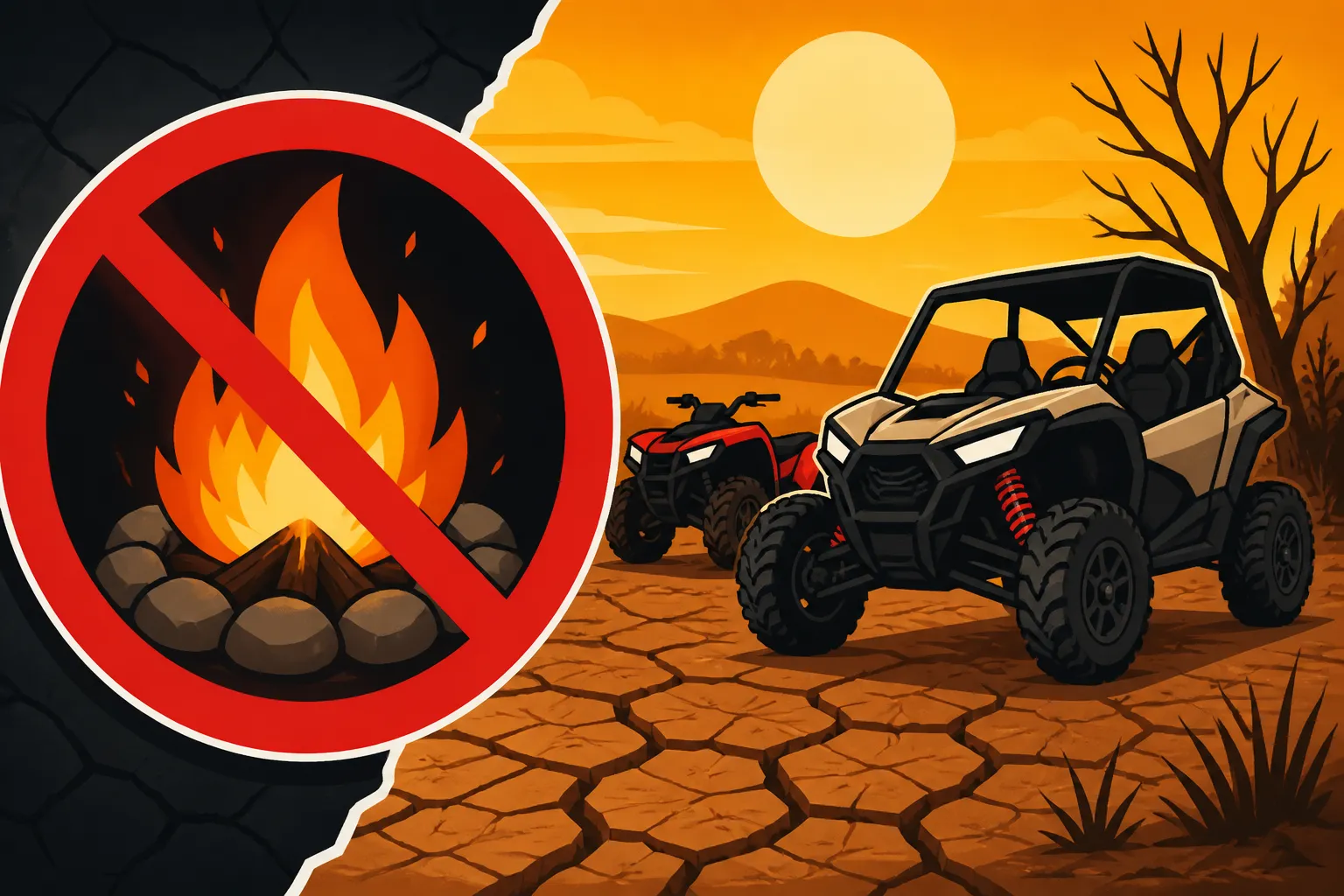
Southern Illinois can turn dry quickly, and a campfire that was allowed on one visit may be prohibited the next. For ATV and UTV riders, the tricky part is knowing which rule applies: a county burn ban, a riding area’s own policy, or both. Check before you travel, confirm what counts as a fire, and have a no-flame backup plan.
Why fire rules can change during a riding trip
A campfire restriction is not necessarily a season-long rule or a single statewide decision. Local conditions, official burn bans, and the policies of a park or campground can all affect whether you may have a fire. A restriction can take effect after you have planned a weekend, so information from an old trip or an outdated post may not be reliable.
Dry grass, leaf litter, wind, and low humidity can let a small fire spread beyond a fire ring. That is why restrictions may tighten even when a site has designated fire areas. A built fire ring does not automatically mean that fires are permitted during a ban.
The rules that matter most are usually set by the authority responsible for the land or by the operator of the riding area. A county or municipality may also issue restrictions that apply beyond an individual park. Read the actual notice or ask the relevant office what it covers. Do not assume that a restriction on open burning either includes or excludes a recreational campfire without checking.
| Rule or policy | What it may cover | What to verify |
|---|---|---|
| Local burn ban | Outdoor burning within a defined area; its wording may treat recreational fires differently from other burning | Which area is covered, when the restriction applies, and whether campfires or grills are included |
| Riding area or campground policy | Fires on that property, including where they may be built or what fuel may be used | Whether fires are allowed at all, and whether the rule changes during dry conditions |
| Fire-ring or campsite rule | Fires at a specific campsite or in an approved receptacle | Whether the ring is approved for use under current conditions |
| Equipment restrictions | Certain grills, stoves, or other heat-producing devices | Which devices are allowed and where they may be used |
A permit to ride is not permission to make a campfire. The Illinois OHV Permits: Two Stickers Explained covers riding-related stickers, while Illinois Grant Site Rules for Riders addresses the separate requirements that can apply at a riding area. Neither should be treated as a substitute for checking current fire rules.
The distinction matters at grant-assisted riding sites, too. An access decal may be needed for riding at eligible sites, but it does not override a site closure or a fire restriction. If your trip depends on a particular campground or park, check its current notices directly. Illinois Grant-Assisted Riding Areas can help you understand what these sites are, but the operator is the right source for its current campsite rules.
How to check before you leave home
Make fire restrictions part of the same pre-trip check as riding hours, trail conditions, and permit availability. For an overnight trip, check once while planning and again shortly before departure. If conditions are very dry or windy, call the riding area rather than relying only on an old social media post or a third-party listing.
Use this process:
- Identify every place you plan to use. A riding park, public campground, private campground, and overnight stop may have different rules. Check each one separately rather than assuming one policy covers the whole trip.
- Look for current notices from the land manager or operator. Check the site’s official announcements, reservation information, or rules page. If the notice is unclear, contact the office or campground host and ask whether recreational campfires are allowed that day.
- Check whether a local restriction also applies. If the property is within a town or county that has announced a burn ban, confirm the area covered and the definition of prohibited burning with the relevant local authority.
- Ask about the exact device you plan to use. “No campfires” may not answer whether a propane stove, charcoal grill, or other appliance is permitted. Give the operator the device type and ask where it can be used.
- Confirm the rule again if the weather changes. A dry, windy stretch can lead to new restrictions after you first checked. Call before lighting anything if conditions or notices have changed.
- Save the contact details and notice. Keep the campground number and any current instructions accessible on your phone. Cell service may be unreliable near a trailhead, so consider saving or printing key information before leaving.
If you are riding at a place such as Sahara Woods, Little Egypt Off Road, Heartland Lodge, or Mill Creek Park, do not assume the same fire policy applies at all of them. They are distinct destinations, and rules may differ by property, campsite, and conditions. For general trip planning, Illinois Trails With Camping and Illinois Trail Conditions Before You Tow can help you prepare, but neither replaces a direct check of current fire restrictions.
When you call, ask clear questions: Are recreational fires allowed today? Are raised fire pits treated differently from ground fires? Are charcoal or gas grills allowed? Can the site provide an approved location? What should campers do if wind or weather conditions worsen? The answers are more useful than a general “fires are usually okay.”
What to do if fires are prohibited
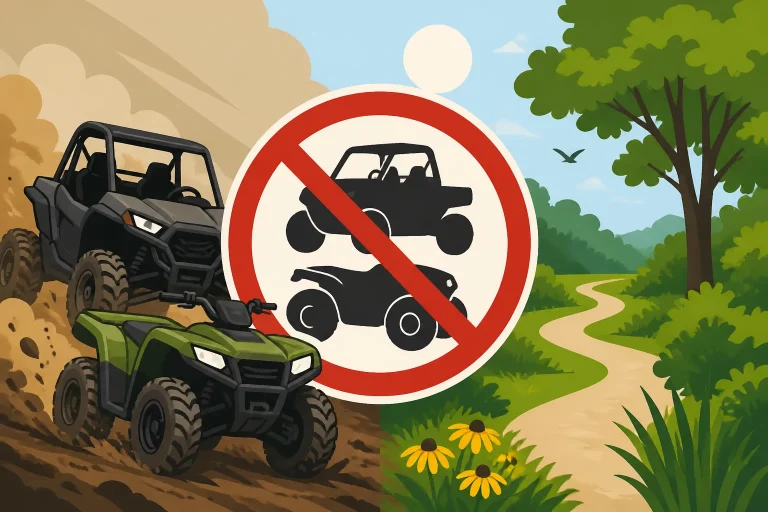
If a ban or site rule prohibits fires, do not try to work around it by changing the container, moving a few feet, or calling the fire something else. Follow the restriction as written and ask the site operator whether any non-flame cooking option is allowed. A portable stove or grill can still produce heat and may be covered by the rule, so confirm before using it.
A no-fire plan can be simple. Pack food that does not need cooking, or bring an appliance only after the operator confirms it is permitted. Keep food, water, and basic supplies in a way that does not depend on a campfire for warmth or meal preparation. If fire is central to the camping experience you planned, consider changing the overnight location or postponing the trip rather than risking a violation or wildfire.
When fires are allowed, use only the location and method approved by the property. Follow any instructions about fuel, size, supervision, or extinguishing the fire. Do not leave a fire unattended, and make sure it is fully out before leaving the campsite or going to sleep. If the operator closes fire rings or asks campers to stop, comply even if you saw a different rule earlier.
Avoid relying on a campfire for an emergency signal or for warming up after a wet ride. Pack suitable clothing, a charged phone or backup power source, and a first-aid kit. A small fire extinguisher can be useful in camp, but it does not make a prohibited fire acceptable. If you need to replace safety equipment, Amazon may be one place to compare options; check the product specifications and choose equipment appropriate for your use.
Riders should also take care when parking and unloading. Hot engine or exhaust components can ignite dry material, and a machine that has just been ridden may remain hot after it is shut off. Use the site’s designated parking area, follow any instructions about where machines may be parked, and avoid placing hot components in contact with dry grass or leaves. These precautions do not replace a fire ban; they reduce avoidable ignition risks while you follow the site’s rules.
If you see smoke or a fire spreading, move away from danger and contact emergency services or site staff as appropriate. Do not put yourself at risk trying to fight a fire that is beyond your ability to control. Give responders the location as clearly as possible, including the nearest road, entrance, or trail marker.
Planning an overnight ride when conditions are dry
A dry-weather plan works best when it is made before the trailer is packed. Decide what you will do if campfires are banned, where you can stay if your preferred site closes its fire area, and how you will get current information while traveling. If a reservation or riding permit is involved, check its terms before changing plans; fire restrictions do not necessarily mean that reservations or permits are automatically refunded. For a state-site trip, see Reserving a Riding Day at a State OHV Park and Illinois Private Park Camping Rules for other planning details to verify with the operator.
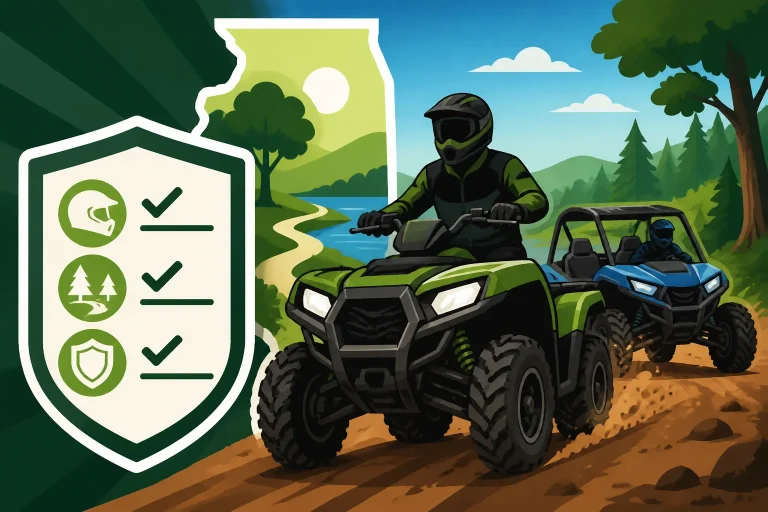
Use this checklist before leaving:
- Confirm that riding and camping are open on your planned dates.
- Check the current fire notice for each property, not just the region.
- Ask whether your specific cooking device is allowed during a restriction.
- Pack food and supplies that work without a campfire.
- Save the site’s contact information and relevant notices offline.
- Keep machines and hot equipment away from dry vegetation.
- Have an alternate overnight plan if the site changes its rules.
Fire rules can change between the time you book and the time you arrive. A quick confirmation before departure is more reliable than assuming a fire ring, a previous visit, or an ATV permit settles the question. If the answer is unclear, treat that as a reason to ask again before lighting a fire—not as permission to proceed.
Disclaimer
This article is for general informational purposes only and does not constitute professional advice. Laws, prices and regulations vary by location and change over time. Consult a qualified professional for guidance on your specific situation.