Illinois Trails With Camping
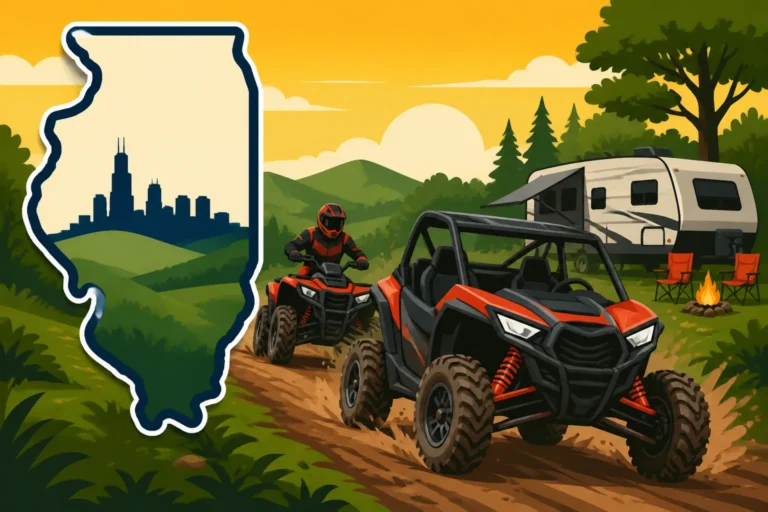
Finding an Illinois riding area that also works for an overnight trip can take more planning than expected: a trail may be open to machines while camping is somewhere else entirely. This guide explains how to pair riding areas with nearby camping, what to confirm before towing, and how to plan around permits, trail conditions, and site rules.
How to pair Illinois riding areas with camping
Start with the riding site, not the campground
In Illinois, “camping near trails” does not always mean you can camp at the trailhead. Some places are private riding parks, some are public OHV areas, and others offer lodging or camping separately from the riding operation. Even when a campground appears close on a map, its entrance, road access, or rules may make it a poor fit for a trailer and off-road machine.
Choose your riding destination first, then look for a campground or lodging option that suits your group. Check the riding area’s own rules for operating hours, permitted machine types, registration or permits, noise limits, and whether overnight parking is allowed. Contact the campground separately to ask about trailers, machine storage, generators, wash areas, and how close you can camp to the riding site.
That small amount of checking can prevent a frustrating arrival: you may have a campsite reservation but discover that the park is closed, the trail does not allow your machine, or the road between the two locations is not suitable for a loaded trailer. For a broader starting point, see Illinois ATV Trails: Where You Can Actually Ride and Illinois OHV Camping With Trail Access.
Compare riding areas by the whole trip
The right destination depends on what your group needs after the ride. A family with children may prefer a campground with restrooms, showers, and a straightforward drive to the park. A group towing several machines might care more about wide roads, trailer parking, and space to unload. Riders who want to stay close to the trails should ask whether the site has camping on the property or whether “nearby” means a separate drive.
Here are a few Illinois areas to consider when researching an overnight ride. Treat camping details as a question to confirm with the operator or campground, not as a guarantee based on a map listing.
| Riding area | General location | Camping and overnight planning |
|---|---|---|
| Sahara Woods State Recreation Area | Near Harrisburg in southern Illinois | Confirm the riding site’s current overnight rules and identify a separate nearby campground if camping is not available where you ride. |
| Little Egypt Off Road | Near Marion | Ask the club or park about overnight options, event-day arrangements, and nearby campgrounds before choosing dates. |
| Heartland Lodge riding area | Near Nebo in Pike County | Check directly with the lodge about available lodging or camping, riding access, and how reservations are coordinated. |
| Mill Creek Park | Near Marshall in eastern Illinois | Confirm current riding access and ask the park district or nearby campground about camping and trailer arrangements. |
| The Cliffs | Near Marseilles in northern Illinois | Verify overnight options and current park rules directly before planning a multi-day stay. |
For more background on individual destinations, explore Sahara Woods: Illinois's Only State OHV Park, Little Egypt Off Road in Illinois, and Illinois Riding Near Marion. These topics can help you narrow the riding area before you start comparing campgrounds.
Decide what “camping with trail access” means for your group
There are a few different versions of a camping-and-riding trip. You might camp at a riding property, stay at a campground a short drive away, or book a cabin or other lodging and trailer to the park each day. None is automatically best. On-site camping can make mornings easier, but nearby campgrounds may offer the facilities your group wants. A cabin can be a welcome break after a wet or muddy ride, but you’ll still need a plan for storing machines and securing your trailer.
Think through the daily routine, not just the distance between pins on a map. If you have young riders, for example, a long drive between camp and the riding area can turn a relaxed weekend into a series of hurried load-ups. If your group expects to ride all day, ask whether the campground allows machines to be unloaded or moved around the property. Some places may restrict engine use outside designated riding areas.
When you compare options, make a short list of must-haves: space for your trailer, access to toilets and drinking water, a safe place to park machines, and a realistic travel route to the trailhead. Then confirm each item with the campground and riding operator. A campground reservation alone does not authorize riding on adjoining land.
Illinois destinations to research for an overnight ride
Southern Illinois and the Harrisburg area
Sahara Woods near Harrisburg is a natural starting point for riders looking for a designated OHV destination in southern Illinois. The important planning detail is to separate the riding permit and access rules from your overnight arrangements. Confirm where you can ride, what permits or decals apply to your machine, and whether the property itself allows overnight stays. If camping is elsewhere, check the drive between the campground and the designated entrance rather than assuming the nearest map pin is convenient.
Southern Illinois trips can involve long stretches between services, especially once you are traveling with a trailer. Before setting out, confirm fuel, food, and campground check-in plans, and save directions that will work if cell service is weak. An app such as onX Offroad can help you review route context and keep your trip organized, but a map app does not grant access to private land or replace the riding site’s rules. Use it alongside directions and information from the property that actually manages the trail.
If you are considering a private park near Marion, check its operating schedule and overnight arrangements directly. Private parks may have different procedures for reservations, waivers, machine inspections, and camping than public areas. Read Illinois Private Off-Road Parks and Illinois Riding Near Harrisburg as you compare locations, then call before you commit to a nonrefundable campsite or make a long drive.
Pike County, central Illinois, and northern options
Heartland Lodge near Nebo offers a different kind of trip-planning question: what lodging or camping is available through the property, and how does it connect with riding access? Ask whether overnight accommodations are bundled with riding or arranged separately. Confirm where trailers and machines may be parked, what check-in involves, and whether the group needs to reserve both lodging and riding access in advance.
For riders considering Mill Creek Park near Marshall or The Cliffs near Marseilles, look closely at the distance between the riding entrance and your planned overnight stay. A place can be “near” a park but still require a drive that is awkward after a full day of riding, especially with a long trailer or a tired family. Ask about the route, parking, and whether your machine can be stored securely overnight. [Illinois Riding Areas With RV Sites] can also help you think through which amenities to ask about, though availability should always be checked with the campground.
Use onX Offroad or another mapping tool to compare routes and see the general relationship between your campground and the riding area. Then verify access with the land manager, park operator, or campground. Property boundaries and road permissions matter: a trail visible on a map is not automatically an authorized route, and a public road can have restrictions that affect off-highway vehicles.
Plan permits, routes, and overnight logistics
Confirm the rules before reserving
Before booking, ask the riding area what each rider and machine needs. Depending on where you plan to ride, requirements may include a usage stamp, an access decal, a park-specific permit, a waiver, or proof of ownership. The requirements can differ by site, so do not assume that paperwork for one destination covers another. [Illinois OHV Permits: Two Stickers Explained] and [What the Stamp Covers and What the Decal Covers] explain why these documents are not interchangeable.
Make sure you understand the rules for every machine in the group, including rented machines and youth vehicles. Ask whether a decal or permit must be attached before arrival, whether permits must be purchased in advance, and what happens if your preferred riding day is full or canceled. If you are visiting a grant-assisted riding site, confirm its specific access requirements; having a permit for one location does not necessarily cover every private park or riding area.
Check the campground’s policies separately. Ask whether riding machines may be parked at the campsite, whether there are restrictions on unloading or engine use, and whether the property has quiet hours. Also clarify what happens if rain affects the riding area. A campground may remain open when trails are closed, and a campground’s cancellation policy may be different from a park’s riding or permit policy.
Build a practical drive-and-ride plan
A good overnight trip starts with a realistic schedule. Plan when you will leave, how long loading will take, when the campground allows check-in, and when the riding site opens. Avoid assuming that you can arrive late and still get onto the trails. Some destinations use reservations, daily limits, check-in procedures, or required waivers. Confirm the process before you load up.
Prepare for the road as carefully as the trail. Check the trailer, tie-downs, lights, tires, and hitch before departure. Save the campground address and the riding-area entrance separately, because they may not share an entrance or even the same access road. If your route depends on rural roads, check whether your vehicle and trailer can comfortably navigate them. Keep a paper or offline route available in case cell coverage drops.
For trail information, onX Offroad may help you orient yourself and plan around your route, but treat it as a planning aid rather than proof that a road or trail is open to your machine. Verify closures and current conditions with the site operator before leaving home. Illinois Trail Conditions Before You Tow and [Illinois Trail Closures After Rain] are useful reminders that a route can change after heavy weather or maintenance.
Pack for camping and riding as two separate activities
A common packing mistake is bringing everything for the machine and forgetting the basics that make camp comfortable. Keep riding gear and camping supplies in separate checklists. For riding, include helmets and protective gear, machine keys, required permits, water, a basic tool kit, and a way to handle a minor breakdown. For camp, plan for bedding, weather-appropriate clothing, food, lighting, chargers, and any medication your group needs.
Mud changes the cleanup plan. Bring spare clothes, towels, trash bags for wet gear, and a way to keep muddy equipment away from bedding and food. Ask the campground whether it allows machine washing or has a wash station. Do not assume a creek, ditch, or campground water source is available for cleaning; follow the property’s rules and avoid washing oil, fuel, or mud into waterways.
Finally, leave room in the schedule for recovery time. A full riding day followed by a complicated late-night setup can wear everyone down, particularly if children are along. If you are planning a first trip, choose a campground with the facilities your group will actually use and keep the riding plan flexible. The best Illinois trails-with-camping weekend is not necessarily the one with the most trail miles; it is the one where access, lodging, and logistics all work together.
A simple checklist before you go
Before paying for a campsite or making the drive, confirm these details with the people who manage the riding area and the overnight property:
- Riding access: Is the site open on your planned dates, and are your machine types allowed?
- Permits and paperwork: What does each rider and machine need, and when must it be purchased or displayed?
- Camping location: Is overnight camping on-site, nearby, or unavailable? Are reservations required?
- Trailer logistics: Is there room to park, turn around, unload, and secure your trailer and machines?
- Daily travel: How do you get from camp to the actual riding entrance, and are the roads suitable for your rig?
- Weather and closures: Who provides the latest trail-condition information, and what is the policy if conditions change?
- Campground rules: Are machines allowed at the site? What are the quiet hours, generator rules, and cleanup requirements?
- Backup plan: If riding is unavailable, can you change dates, cancel, or use the campground for a non-riding stay?
A quick phone call can clear up details that a map or general listing may leave ambiguous. Confirm the riding rules with the riding operator, the camping rules with the campground, and the route with both if access is unclear. That way, your reservation, permits, trailer plan, and trail day are all based on the same expectations.
Disclaimer
This article is for general informational purposes only and does not constitute professional advice. Laws, prices and regulations vary by location and change over time. Consult a qualified professional for guidance on your specific situation.