Washing Clay Out of a Radiator and Frame
Clay from an Illinois trail can dry into a stubborn shell around your ATV or UTV’s radiator, frame, skid plates, and suspension. Rinsing only the visible mud may leave packed clay blocking airflow or hiding damage. This guide walks through a careful post-ride cleanup, explains what to avoid, and helps you spot problems before the next trip.
Why Illinois clay needs more than a quick rinse
How packed mud can affect your machine
Wet clay is heavy, sticky, and easy to push into narrow spaces. As it dries, it can cling to radiator fins, collect behind guards, and fill gaps around the frame and suspension. A machine may look clean from the sides while a thick layer remains underneath or behind a panel.
The radiator deserves particular attention because it needs unobstructed airflow to help manage engine temperature. Clay packed against its fins can restrict that airflow. A layer on the frame or skid plates is less likely to cause an immediate problem, but it can conceal a loose fastener, damaged hose, or scraped component. On a muddy ride, cleanup is also a chance to check over the machine while dirt is still fresh enough to remove.
Clay can be rough on equipment even when it doesn’t cause an obvious breakdown. It adds weight, holds moisture against components, and may hide wear until you notice it later. If your ride included deep ruts or sticky southern Illinois ground, it’s worth taking a little extra time to inspect areas you normally can’t see.
For a closer look at how local ground conditions affect a ride, see Illinois Mud and What It Does to a Machine and Choosing Tires for Southern Clay and Mud. These are useful considerations before your next trip, especially if you’re choosing between a maintained trail and a muddy route.
Start by letting the machine cool
Park on stable, level ground away from traffic, turn the machine off, and remove the key. Let the engine and exhaust cool before you begin. Never open a hot radiator cap: hot coolant and steam can cause serious burns. You usually don’t need to open the cooling system to clean the outside of the radiator.
If mud has collected around the radiator, resist the urge to start the engine in hopes that vibration or heat will loosen it. That can leave the machine working harder while airflow is restricted. Let it cool, then remove the debris gently from the outside.
Put on gloves and eye protection before rinsing. Mud and small stones can flick back toward your face, particularly when you’re cleaning underneath a machine. If you’re using a hose or a low-pressure washer, keep water away from electrical connectors, the air intake, and openings where water could collect. Follow the owner’s manual if it gives specific cleaning instructions for your model.
A careful step-by-step cleaning routine
Loosen clay before rinsing
Begin by removing any loose clumps by hand or with a soft brush. Work from the outside of the machine inward, and avoid scraping the radiator fins with a screwdriver or other hard tool. The fins are delicate; bending them can reduce airflow and make the radiator harder to clean.
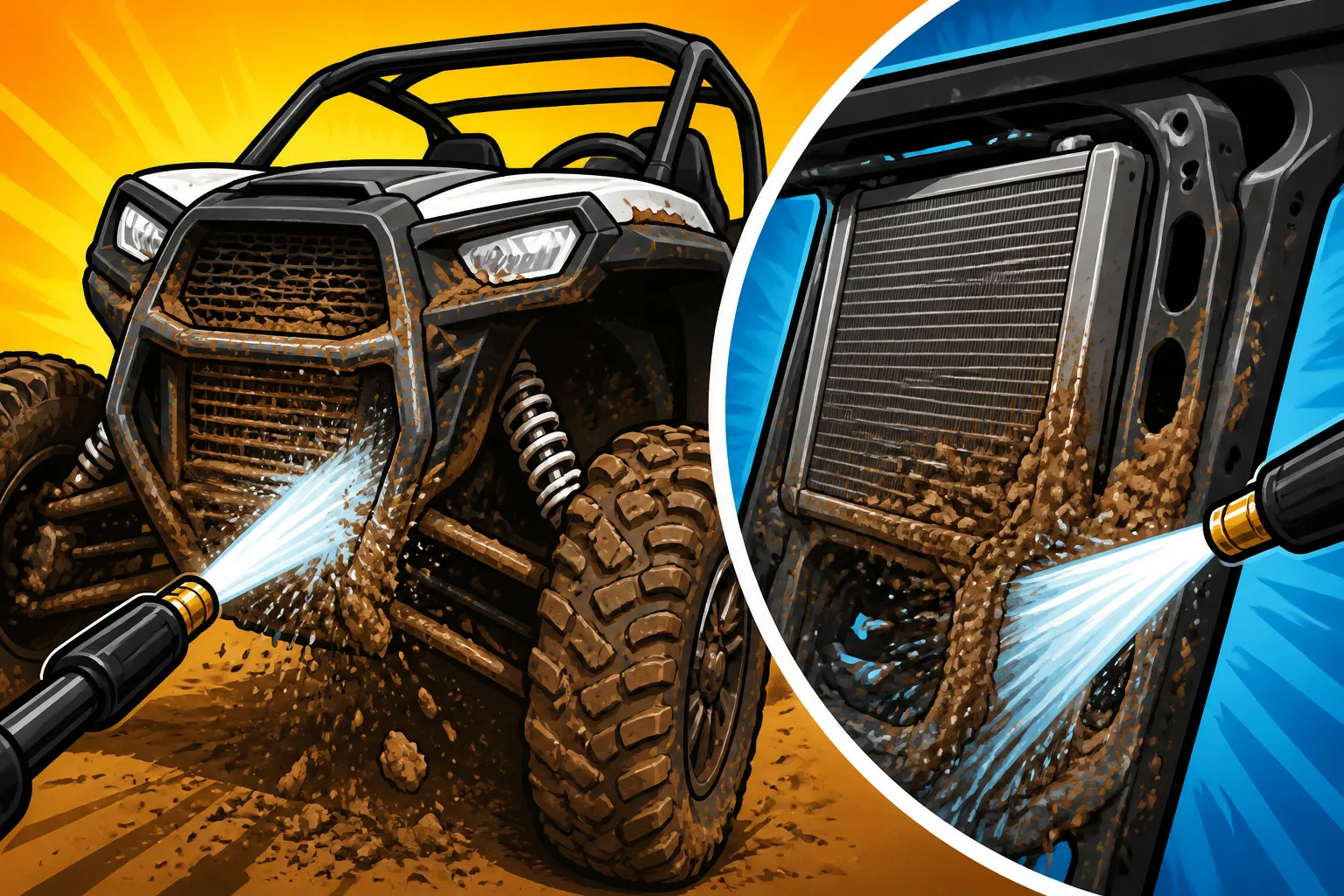
A gentle stream of water can help soften dried clay. Give stubborn areas time to soak rather than trying to blast them free in one pass. Rinse from a suitable angle so loosened mud can flow away from the machine instead of being driven deeper between the fins or into a cavity. Check both sides of the radiator if you can reach them safely.
A pressure washer can be useful on broad, sturdy surfaces, but it is easy to damage fins, seals, decals, and electrical components with concentrated pressure. Keep the nozzle back, choose a gentle setting, and don’t aim a close, narrow stream directly into the radiator. If you’re unsure how much pressure is safe, use a garden hose instead. Patience is usually cheaper than replacing a damaged part.
Clean the frame, underbody, and hard-to-see pockets
After clearing the radiator, work around the frame, skid plates, footwells, wheel wells, and suspension. Clay often packs behind guards and around mounting points, where a casual rinse may not reach. Use a soft brush or plastic tool to loosen thick deposits, then rinse them away. Avoid pulling on wiring or hoses while reaching into tight spaces.
On a UTV, check the areas behind the tires and around the lower frame rails. On an ATV, look beneath the engine and around the swingarm and footwells. If the machine has removable guards or panels, consult the manual before taking them off. Some covers are simple to remove, while others protect components that should not be exposed to careless handling.
Move slowly around brake parts, bearings, seals, and electrical connections. Don’t direct high-pressure water at these areas. If packed clay is trapped where you can’t safely reach it, stop rather than forcing a tool into the gap. A shop can advise you on stubborn buildup or parts that need to be removed for proper cleaning.
| Area to check | What to look for | Safer cleaning approach |
|---|---|---|
| Radiator fins | Clay across the fins, bent fins, blocked airflow | Soften with water and rinse gently; avoid close, concentrated pressure |
| Frame and skid plates | Packed mud, scrape marks, loose debris | Brush away clumps, then rinse from a moderate distance |
| Wheel wells and suspension | Clay around arms, guards, and mounting points | Use a soft brush or plastic tool and avoid pulling on hoses or wiring |
| Electrical areas | Mud near connectors, exposed wires, or the intake | Wipe or rinse cautiously; don’t force water into openings |
| Brakes and seals | Buildup or visible damage nearby | Use a gentle rinse and inspect; don’t aim a pressure-washer jet directly at seals |
Inspect and dry the machine before the next ride
Check for damage while the dirt is gone
Once the visible clay is removed, take a close look at the radiator, hoses, frame, tires, and underside. Check for bent fins, cracked or loose guards, damaged hoses, hanging wires, and new scrapes. Look for seepage or other signs that something may have been struck or loosened during the ride. If the machine ran unusually hot, displayed a warning, or began making a new sound, don’t assume a wash has solved the problem.
Check the tires and suspension for debris that could affect movement, and make sure mud isn’t still wedged around the controls or footrests. If your machine has a radiator screen, inspect it too. Screens can catch debris before it reaches the radiator, but they need cleaning themselves. Radiator Screens for Corn Dust discusses a related protection issue; the same basic habit applies after a ride through any debris-heavy conditions.
If you see damage you can’t assess confidently, or the radiator remains blocked after gentle cleaning, have a qualified technician inspect it. Avoid bending fins back and forth, removing unfamiliar parts, or running a machine that seems to be overheating just to see what happens.
Let water drain and dry before storing
After rinsing, park the machine where water can drain away. Wipe accessible surfaces with a clean cloth and let the machine dry before covering or storing it. Pay attention to crevices where water and fine clay may remain trapped. If you plan to put the machine away for a while, a quick post-wash inspection can help catch problems before they sit unnoticed.
Follow the owner’s manual for any post-wash checks, including lubrication points or maintenance items specific to your model. Don’t apply lubricant indiscriminately: keep it off brake surfaces, tires, and other parts where it could affect grip or function. If you’re not sure whether a component needs attention after washing, check the manual or ask a service professional.
Make cleanup part of your ride plan
Reduce the mess before it becomes a problem
You can’t always avoid mud, and a muddy section may be part of the fun. But checking trail conditions and closures before towing out can help you avoid a long drive to a route that has become unsuitable after rain. Read Illinois Trail Closures After Rain and Illinois Trail Riding After Heavy Rain when planning a trip. Respecting closures also helps protect trails from damage.
A route-planning tool such as onX Offroad can help you organize a trip and keep track of where you intend to ride. Before relying on any mapping app, confirm that your route is open and that you have permission to ride there. A map is a planning aid, not permission to enter land or use a closed trail.
It can also help to think about cleanup before you leave home. Bring gloves, eye protection, a soft brush, and a towel. Check whether your destination has a wash area by looking at Illinois Riding Areas With Wash Stations. If you’re going somewhere without one, plan to clean the machine at a suitable location afterward rather than letting heavy clay dry through the trip home.
Leave the riding area and your equipment in good shape
Keep muddy rinse water and debris where the riding area allows; don’t assume you can wash a machine anywhere on site. Follow posted directions and staff instructions, and avoid leaving clay on access roads, parking areas, or shared wash facilities. Leaving a Trailhead the Way You Found It and Illinois Trail Etiquette Locals Expect cover the small habits that make a riding area better for the next group.
If you use onX Offroad to plan routes, it can also help you keep your trip information together, such as the trailhead you used or the route you intended to follow. Make sure your group knows the plan and has a backup way to communicate if a phone loses service. Once you’re home, use the same notes to remember which sections were especially muddy and whether your machine needed more cleanup than usual.
A good routine doesn’t have to mean a full teardown after every ride. Let the machine cool, loosen clay gently, rinse without forcing water into sensitive areas, and inspect what the dirt was hiding. If you’re riding through a season with frequent rain, checking the route before leaving and knowing where cleanup is possible can make the return trip much less frustrating. onX Offroad may be useful for organizing the route, while trail conditions and local access rules should always guide where you ride.
Disclaimer
This article is for general informational purposes only and does not constitute professional advice. Laws, prices and regulations vary by location and change over time. Consult a qualified professional for guidance on your specific situation.