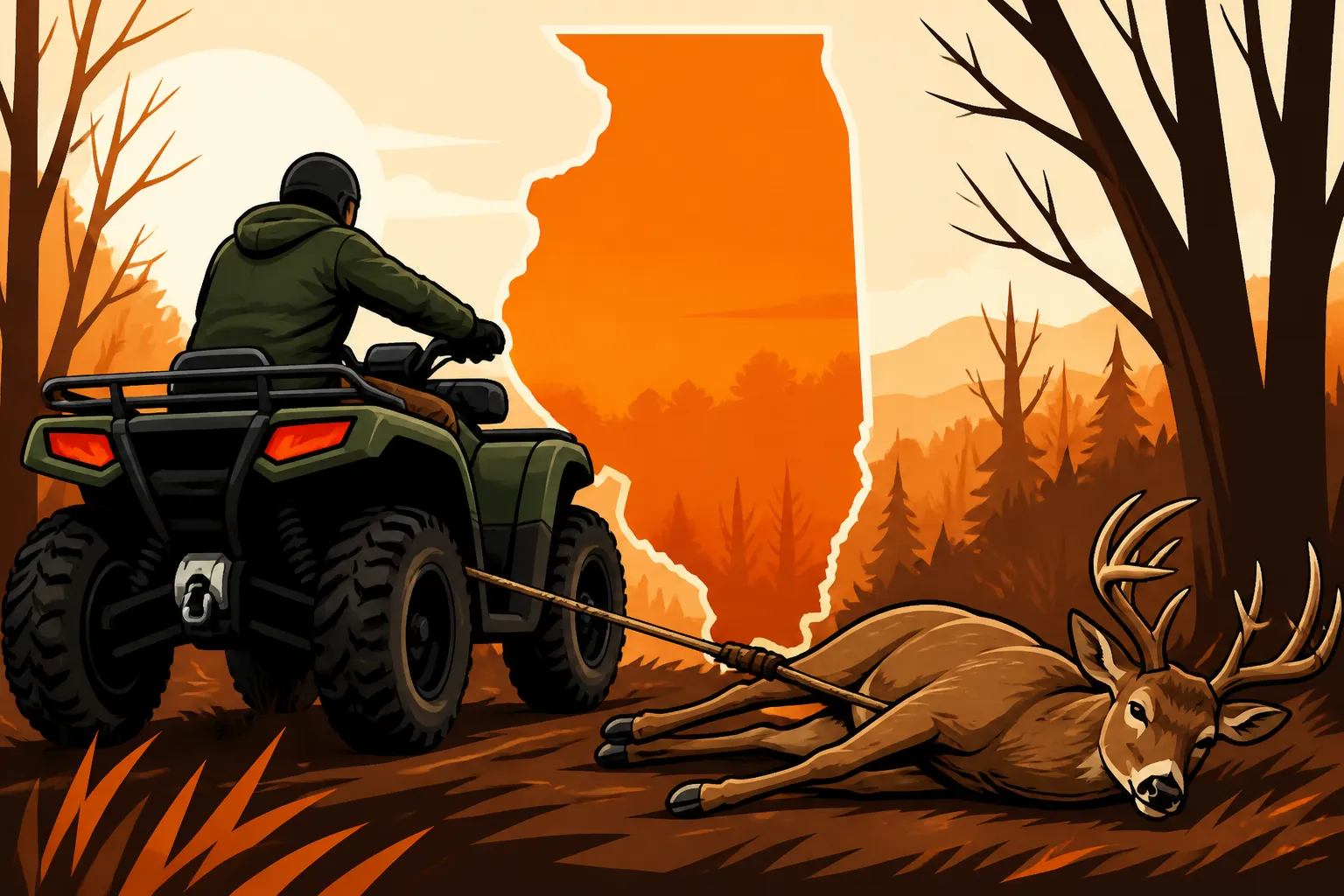
Using a Quad to Drag a Deer Out
Using a quad to drag a deer out in Illinois can save time and effort, but the recovery route may matter more than the machine. A hunting license does not automatically authorize ATV access, and public areas can have their own restrictions. Check permission and site rules before riding, then use a controlled, low-speed setup that keeps the deer and machine secure.
Check that you can ride where the deer is
Before starting the quad, establish who controls the land and whether motorized access is allowed. Permission to hunt does not always include permission to drive an ATV across the property. On private land, ask the landowner about the route, gates, wet ground, and any areas to avoid. If you have permission only to hunt, clarify that a quad and deer drag are included.
Public land requires a separate check. A hunting area may allow hunting while limiting motor vehicles to specific roads, parking areas, or designated routes. Rules can differ by site and season, so do not assume that a trail visible on a map is open to ATVs. Ask the site manager or check the current rules for that particular property before entering. The general principle behind Illinois Hunting Access by Machine is that hunting access and vehicle access are separate questions.
Permits and stickers do not replace landowner permission or site approval. Illinois’s OHV stamp and public access decal have different roles, and neither should be treated as a general pass to ride anywhere. Review What the Stamp Covers and What the Decal Covers and Illinois Usage Stamp vs Access Decal if you are unsure which rules apply to your trip. A hunting license is not an ATV pass either; Your Hunting License Is Not a Riding Permit explains the distinction.
| Where the deer is | What to confirm before using a quad |
|---|---|
| Private property | The owner has authorized ATV travel and deer recovery on the route |
| Public hunting area | The site permits motorized use for this purpose, and the route is open |
| Grant-assisted riding site | The site allows the activity, the machine meets its rules, and required access credentials are in place |
| Road or shoulder | Local and state road rules allow the machine to travel there; do not assume a route is legal because it is short |
For private ground, get clear permission rather than relying on a vague understanding. Ask whether the owner wants you to stay on a field edge, use an existing lane, avoid crops, or keep away from a creek or drainage ditch. Written permission can prevent misunderstandings, especially if someone else manages the property or you will be crossing a boundary. See Illinois Private Land Permission Rules, Illinois Farm Land Riding Permission, and Keeping a Landowner’s Written Permission on You for related considerations.
If the recovery route touches a public road, do not ride there simply because the destination is nearby. Illinois street use depends on applicable state requirements and local ordinances, and a machine that is allowed on one road may not be allowed on another. Check Illinois ATV Road Rules: Local Ordinances Decide before planning a road connection. When no lawful riding route exists, walking the deer out, using a hand cart, or moving it to a permitted pickup point may be the safer choice.
Plan the recovery before attaching the deer
A short walk to the deer can turn into a difficult pull if the route crosses mud, a steep bank, brush, or a narrow opening. Walk or inspect the route first when it is safe to do so. Look for hidden stumps, wire, holes, slippery slopes, fences, and soft ground that could trap the quad. Choose the simplest permitted route, not necessarily the shortest one.
Think about the deer’s condition and how it will be moved. A drag harness or sled can make the pull more controlled and reduce snagging. A loose rope around the legs or antlers may catch on brush or put force in an unpredictable direction. If you use a strap, rope, sled, or winch, use equipment intended for the task and follow its instructions. Check its condition before loading it, and do not rely on a product listing alone to establish that equipment is suitable.
Prepare the quad as well. Check the tires, brakes, throttle, and steering; clear loose gear from the cargo area; and confirm that the intended attachment point is designed for pulling. A tow ball, rack, or improvised point may not be suitable for a recovery load. Keep the connection low and centered where the machine’s design allows, and avoid a setup that could pull the quad sideways or lift its rear end.
A few practical checks help keep the job manageable:
- Confirm permission and route access. Check the owner or site rules before bringing the machine in.
- Inspect the ground. Identify hazards and a place to turn around without making a sharp pull.
- Choose suitable equipment. Use a drag, sled, or rated strap that matches the task and the machine’s approved attachment points.
- Secure the load. Keep the deer from shifting or catching on the quad, and do not exceed the machine’s stated towing or cargo limits.
- Tell someone your plan. Let a hunting partner know where you are going and when you expect to return, especially in an area with poor phone coverage.
Do not treat a winch as a reason to pull from an unsafe position. A winch can move a load, but it cannot make unstable ground, a weak attachment point, or a poor line angle safe. Keep people out of the line of pull and away from the loaded strap or cable. If the quad starts to slide, lift, or lose steering control, stop and reassess instead of adding throttle.
Drag slowly and keep control of the quad
Use a walking pace and make smooth starts. Sudden acceleration can jerk the connection, damage equipment, or destabilize the quad. Keep the deer behind the machine, out of the tires, and clear of moving parts. Stop periodically to check that the drag has not snagged and that the load remains secure.
Avoid steep side slopes and deep mud where possible. Pulling a deer can change how the quad handles, especially when braking or turning. A heavy or snagged load may push the machine downhill or sideways. If the route requires a steep descent, tight turn, or crossing that you cannot manage safely, change the route or use a different method.
Do not carry a passenger just to help manage the load unless the quad is designed and equipped for that passenger and the person can remain seated safely. A passenger does not make a risky pull more controlled. Keep hands, clothing, and loose straps away from wheels, suspension, chain, and other moving parts. Stop the machine before adjusting the line or freeing a snag.
Follow the manufacturer’s limits for towing and cargo. Those limits can vary by machine, attachment, and operating conditions. The deer, drag equipment, and any other cargo all add weight, and a rack is not necessarily a rated towing point. If you cannot find the machine’s approved limits or attachment instructions, do not guess at a heavy pull.
Be careful around other hunters and trail users. Keep the route clear, yield where required, and do not drag the animal across a route that the property owner or site manager has closed. If the area has staff, gates, or check-in requirements, follow them even when you are only making a short recovery trip. Rules for grant-assisted areas are not interchangeable with rules for private hunting ground; Illinois Grant Site Rules for Riders covers why the site’s own requirements matter.
After reaching the pickup point, load the deer only if the machine’s cargo capacity and loading method allow it. Keep the load balanced and secured so it cannot shift during travel. If loading would make the quad unstable or exceed its limits, use a trailer or another vehicle instead. Do not ride with an animal dragging alongside the quad on a road, trail, or other route where it could snag, strike a person, or obstruct control.
Handle the deer and machine separately from the ride
Recovering an animal does not replace the hunter’s responsibility to follow current Illinois deer harvest, tagging, reporting, and carcass-handling requirements. Those requirements can depend on the season, location, and circumstances. Check the current Illinois Department of Natural Resources hunting information for the rules that apply, and complete required steps before the animal is transported or processed. If you are uncertain about a site-specific rule, ask the land manager or an appropriate official rather than assuming the quad permit answers it.
Once the deer is out, take the machine back by the same route only if that route remains open and permitted. Close gates as directed, avoid driving through crops or sensitive ground, and remove any straps or gear left at the recovery point. If the ground is wet, a second trip can cause more damage than the first. Ask the landowner before making additional passes.
Clean the quad and recovery gear before using them elsewhere. Mud, plant material, and fluids can be carried between properties. Inspect the attachment point and strap for wear after the pull, and replace damaged equipment rather than storing it for another trip. Check the machine for trapped debris around the tires, brakes, and cooling areas.
If you hunt on public land regularly, confirm the rules before each trip instead of relying on what was allowed somewhere else. A nearby property may have different vehicle restrictions, and a permit valid for one type of access may not cover another. Illinois Land You May Not Ride is useful background, but the site’s current rules are the final word for a specific recovery route.
The simplest reliable plan is often to use a quad only where motorized access is clearly allowed, keep the pull short and controlled, and have a backup method ready. If permission, terrain, equipment, or the deer’s weight makes the job questionable, stop and choose a safer way to bring the animal out.
Disclaimer
This article is for general informational purposes only and does not constitute professional advice. Laws, prices and regulations vary by location and change over time. Consult a qualified professional for guidance on your specific situation.