Turn Signals on a Side-by-Side
Riding your side-by-side on public roads in Illinois can feel like navigating a maze of ever-changing rules, and figuring out what equipment you need, like turn signals, often leaves riders scratching their heads. You might have heard whispers about certain towns allowing UTVs on their streets, only to then wonder exactly what modifications are required to make your machine compliant. This guide is here to untangle the confusion surrounding turn signals for your side-by-side in Illinois, breaking down the state's requirements and offering practical advice to help you ride legally and safely on approved local roads.
The Illinois Law That Starts It All: Why Turn Signals Matter
It’s easy to get frustrated when you see neighboring states with seemingly simpler rules for UTVs on roads. Here in Illinois, the journey to street-legal status for your side-by-side begins with a fundamental understanding of how our state views these machines on public thoroughfares. It’s not as straightforward as just adding a few lights; there's a specific legal framework at play.
The Core Ban on Street Riding
At its heart, Illinois law generally prohibits off-highway vehicles (OHVs), which includes most side-by-sides and ATVs, from being operated on public roads and highways. This isn't meant to be punitive, but rather a reflection of how these machines were initially designed and categorized. They're built for trails, fields, and rugged terrain, not for interacting with standard road traffic. This core prohibition is the baseline, and any allowance for street use must come from specific exceptions or local ordinances. Without these exceptions, even a short hop down a quiet road could land you in trouble, regardless of how well-equipped your machine might be. Understanding [Illinois Law Starts by Banning Street Riding] is the first crucial step in appreciating why additions like turn signals become necessary.
When Local Ordinances Step In
Here’s where it gets interesting, and often, a little bit confusing. While the state begins with a general ban, Illinois law also grants significant power to local units of government – specifically villages, counties, and townships – to create their own ordinances that can permit the operation of OHVs on designated local roads. This means that what's legal in one town might be completely off-limits just a few miles down the road. This patchwork of regulations is a major source of frustration for riders who travel across different jurisdictions.
When a local government decides to "open" certain roads to UTVs, they essentially create a local exception to the state's general ban. However, these local allowances almost always come with a strict set of conditions and equipment requirements. They aren't just saying, "Go for it!" They're saying, "Go for it, but only if your machine meets these safety standards, many of which are derived from state guidelines." This is why it’s so critical to understand [Which Units of Government Can Open a Road]. Whether it's a small village board, a county council, or a township road commissioner, their decision is what paves the way for your side-by-side to even consider street use. You'll want to investigate [Illinois Municipalities That Pass Ordinances] and [Illinois Counties That Pass Resolutions] that are relevant to your riding area.
Illinois's Non-Highway Vehicle Equipment List
Once a local ordinance is in place that permits UTVs on specific roads, the state steps in with its own list of required equipment for these "Non-Highway Vehicles" (NHVs) when operated on public streets. This isn't a suggestion; it's a mandate. The idea is to ensure that if these machines are sharing the road with cars and trucks, they have the basic safety features to signal their intentions and be seen by other drivers. This list is designed to bring NHVs closer to the safety standards expected of conventional vehicles, acknowledging that their original design wasn't for this purpose.
Turn signals are a prominent feature on this list, but they are far from the only one. Your side-by-side will also need working headlights, taillights, brake lights, a rearview mirror, and often a slow-moving vehicle emblem. This comprehensive approach ensures that the machine can operate predictably and visibly, reducing the risk of accidents. Without meeting every item on this list, even in a town that permits UTVs, you could be cited for non-compliance. It’s essential to familiarize yourself with the complete [Illinois Non-Highway Vehicle Equipment List] before hitting any permitted public roads.
Understanding Illinois's Specific Turn Signal Requirements for Side-by-Sides
So, you've identified a local ordinance that allows UTVs on certain roads. Great! Now, let's zero in on those turn signals. It's not just about having a signal; it's about having one that meets the specific standards outlined by Illinois law to ensure your intentions are clearly communicated to other motorists.
What the Statute Actually Says
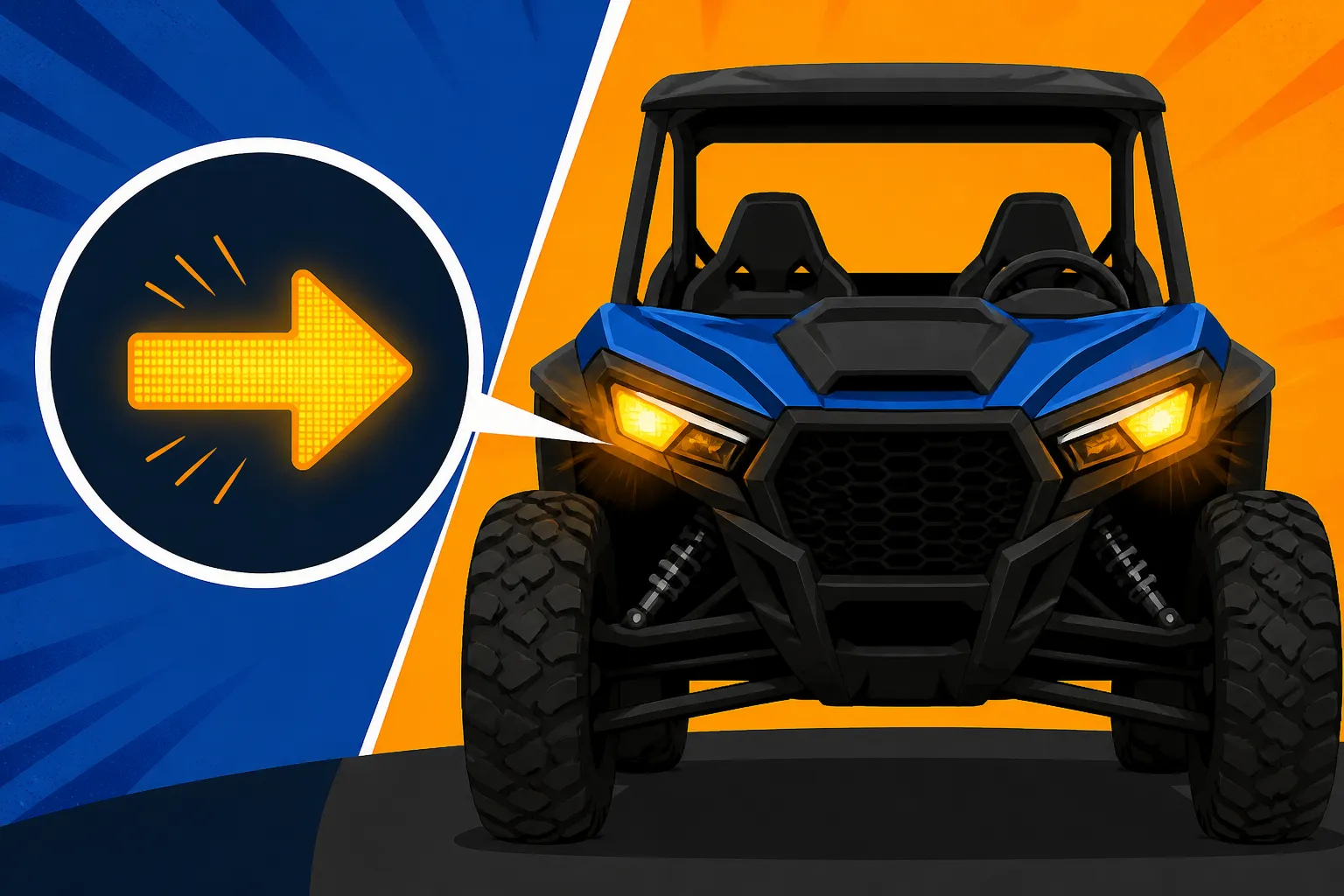
When Illinois law references turn signals for Non-Highway Vehicles, it’s not leaving much to interpretation. The statute generally requires turn signals to be capable of clearly indicating the operator's intention to turn left or right. This means they must be mounted in a way that is visible from both the front and rear of the vehicle, and they need to be distinct enough to grab the attention of other drivers. Typically, this implies amber lights, flashing in a consistent, noticeable pattern.
It’s not enough to simply point your hand out the window; an actual electrical signaling system is required. The signals must be functional at all times when the vehicle is on public roads, meaning proper wiring, bulbs, and a working switch are non-negotiable. This level of specificity is crucial for safety on shared roadways, as it helps prevent misinterpretations and potential collisions. For the definitive requirements, you should review [Illinois Turn Signal Requirements] as they apply to NHVs.
Beyond the Basics: Practical Considerations for Visibility
While the law dictates the necessity, practical application often demands a bit more thought. Simply meeting the bare minimum might not be enough in real-world driving conditions. Think about the challenges: bright midday sun can wash out dimmer lights, heavy rain or road spray can obscure rear signals, and dusty gravel roads can quickly coat your lenses. This is where quality components and thoughtful installation really shine.
Many riders turn to reputable aftermarket suppliers like SuperATV for their robust turn signal kits, knowing these companies design products specifically for the demands of off-road machines that might occasionally hit the pavement. These kits often feature bright LED lights that are more visible in varied conditions and durable housings built to withstand the bumps and vibrations inherent to UTV riding. When choosing or installing your signals, consider not just if they work, but if they work effectively under adverse conditions. Will a driver behind you easily see your right turn signal on a sunny afternoon? Can oncoming traffic clearly identify your left turn signal from a reasonable distance? These practical questions are key to truly enhancing safety, rather than just ticking a legal box.
Avoiding Penalties and Ensuring Safety
Compliance with turn signal requirements isn't just about avoiding a ticket; it's fundamentally about safety. An improperly functioning or non-existent turn signal system can lead to serious accidents, especially when sharing roads with faster-moving cars and trucks. Imagine a scenario: you're planning to turn left off a county road, but your signal isn't bright enough, or perhaps a bulb is out. A driver behind you, expecting you to continue straight, might initiate a pass, leading to a dangerous situation.
The penalties for non-compliance can range from monetary fines to having your permit revoked, or even having your machine impounded if you're deemed to be operating unsafely. Check out [Illinois Penalties for Illegal Street Riding] for more details. Many villages and counties that issue UTV permits require an inspection of your machine before granting the permit. During this inspection, officials will meticulously check for all required equipment, including the functionality and visibility of your turn signals. An inspection is a make-or-break moment, and any deficiency will prevent you from getting that coveted permit. This process underscores the importance of not only having the signals but ensuring they are properly installed and maintained. You can learn more about this aspect by looking into [Illinois Equipment Inspections by a Village].
Equipping Your Side-by-Side with Turn Signals
Once you understand the "why," the next step is the "how." Adding turn signals to your side-by-side isn't always as simple as screwing in a light bulb, but it's definitely a manageable project for most owners, whether you tackle it yourself or opt for professional help. The key is choosing the right components and ensuring correct installation.
DIY Installation vs. Professional Help
For many side-by-side owners, the idea of wrenching on their machine is part of the fun. If you're comfortable with basic electrical work and following instructions, a DIY turn signal installation is certainly feasible. Most kits come with a wiring harness, lights (front and rear), a dash-mounted switch, and a flasher relay. The general steps involve mounting the lights, running the wiring, connecting to a power source (usually the battery or an accessory circuit), and installing the switch and relay. The biggest challenge is often routing wires cleanly and securely, protecting them from heat, abrasion, and moisture. Patience and attention to detail are paramount to avoid electrical issues down the line.
However, if electrical systems make you nervous, or if you simply lack the time or specific tools, professional installation is a smart investment. A qualified mechanic, especially one familiar with UTV accessories, can ensure the system is installed correctly, functions reliably, and meets all legal requirements. This can save you headaches, potential rewiring jobs, and the risk of damaging your machine's electrical system. While it comes with a cost, the peace of mind knowing it's done right can be well worth it.
Choosing the Right Turn Signal Kit
The market is flooded with options for turn signal kits, ranging from bare-bones universal setups to elaborate vehicle-specific systems. Your choice should balance cost, quality, ease of installation, and compliance with Illinois law. Universal kits are often more affordable but may require more fabrication or creative mounting solutions. Vehicle-specific kits, on the other hand, are designed to integrate seamlessly with your particular make and model, often using existing mounting points and sometimes even integrating with factory wiring.
Look for kits that feature bright LED lights. LEDs consume less power, last longer, and are generally much brighter and more visible than traditional incandescent bulbs, which is a huge advantage for street use. Consider the durability of the components: are the housings waterproof or at least weather-resistant? Are the wires heavy-gauge and protected by sturdy sheathing? Companies like SuperATV offer complete, ready-to-install kits specifically designed for popular side-by-side models, which can simplify the process immensely. Their kits are often known for their robust construction and clear instructions, making them a popular choice for riders who want reliable performance.
Integrating Turn Signals with Other Street-Legal Gear
It's important to remember that turn signals are just one piece of the street-legal puzzle in Illinois. When you're adding turn signals, you'll almost certainly be installing or upgrading other essential equipment simultaneously to meet NHV requirements. This often includes elements like mirrors, headlights, taillights, brake lights, and a slow-moving vehicle emblem. Thinking about these components as an integrated system rather than separate additions can simplify installation and ensure everything works together harmoniously.
For instance, when you run wiring for your turn signals, you might also be running wires for additional brake lights or a horn. Planning your wiring routes for multiple accessories at once can save time and create a much cleaner, more professional installation. Ensure your [Illinois Requires a Rearview Mirror] is properly mounted for clear visibility. Check that your [Illinois Requires Red Reflectors] are in place and clean. And don't forget the prominent [Illinois Requires a Slow-Moving Vehicle Emblem] on the rear. All these elements combined, including a properly functioning [Illinois Requires a 500-Foot Headlight] and [Illinois Requires a 100-Foot Tail Lamp] with working [Illinois Requires Brake Lights], create a comprehensive safety package for your machine on approved public roads.
Local Ordinances and Ongoing Compliance
Getting your turn signals installed is a big step, but it’s crucial to understand that compliance is an ongoing commitment. The process doesn't end once the last wire is connected; it continues through permits, maintenance, and staying informed about evolving local rules.
The Permit Process and Equipment Checks
Even with your side-by-side fully equipped with turn signals and all other required gear, you can't just hit the road. In most Illinois towns and counties that allow UTVs on their streets, you'll need to obtain a specific permit. This permit is essentially the local government's way of verifying that your machine meets all the necessary safety and equipment standards before you operate it on their roads.
The permit application process almost universally includes an equipment inspection. During this inspection, a village or county official will go over your side-by-side with a checklist, ensuring every component, including your turn signals, is present and fully functional. They'll test the lights, check the rearview mirror, confirm brake lights work, and verify the slow-moving vehicle emblem is correctly displayed. Any deficiencies will mean your permit application is denied until the issues are rectified. This inspection is a critical gateway to legal street use, emphasizing that your equipment must not only be installed but also in perfect working order. Therefore, before you head to apply, make sure everything is perfect. Familiarize yourself with the typical steps involved when [Applying for a UTV Permit at Village Hall] and understand what to expect during [The Inspection a Village Runs Before Issuing a Permit].
Maintaining Your Turn Signal System
Like any electrical component exposed to the elements, your turn signals will require regular maintenance to remain reliable. The harsh conditions that side-by-sides are often subjected to – mud, water, dust, vibrations – can take a toll on wiring, connections, and light housings. It's a good practice to perform a quick check of your turn signal system before each ride, especially if you plan to be on public roads.
Look for cracked lenses, ensure bulbs (if not LED) haven't burned out, and check for any loose wires or connections. Mud and debris can easily obscure light output, so keeping the lenses clean is also essential for maximum visibility. If you notice any flickering, dimming, or complete failure, troubleshoot and repair the issue immediately. Don't put off repairs, as a non-functioning signal is not only a safety hazard but also a violation that could lead to a citation. A little preventative maintenance goes a long way in ensuring your turn signals remain compliant and keep you safe.
Staying Informed About Local Rules
The biggest challenge with street-legal UTVs in Illinois is the decentralized nature of the regulations. While the state sets the baseline equipment, individual villages, counties, and townships dictate where and when these machines can operate on their roads. This means that an ordinance passed today could be amended or even repealed tomorrow.
It's your responsibility as a rider to stay informed about the specific rules in any jurisdiction where you plan to operate your side-by-side on public roads. Relying on outdated information or hearsay could lead to unexpected fines or legal issues. Many local governments post their ordinances online, often on their official village or county websites. Before you load up your machine and head out, take a few minutes to confirm the current regulations. This proactive approach ensures you're always in compliance and can enjoy your ride without unnecessary stress. Make sure you know how to perform [Illinois Ordinance Lookups Before You Ride] to keep yourself updated.
Here’s a quick overview of typical street-legal equipment requirements for Non-Highway Vehicles in Illinois, emphasizing the turn signal aspect:
| Equipment Item | Requirement | Notes |
|---|---|---|
| Turn Signals | Must clearly indicate operator's intention to turn left or right. Visible from front and rear. Typically amber, flashing. | Essential for signaling intentions to other drivers. Should be bright enough for day and night visibility. Aftermarket kits, like those from SuperATV, are popular for their robust design and LED brightness. |
| Headlights | At least one, capable of projecting a white light visible from 500 feet to the front. | Crucial for visibility, especially during dawn, dusk, or adverse weather. Some ordinances might require two headlights. |
| Tail Lamps | At least one, capable of projecting a red light visible from 100 feet to the rear. | Enhances rear visibility. Often integrated with brake lights. |
| Brake Lights | At least one, red in color, activated when the brakes are applied. | Absolutely critical for signaling deceleration to following vehicles. |
| Rearview Mirror | Mounted to provide the operator a clear view of the highway to the rear for a distance of at least 200 feet. | Often a common oversight for off-road machines. Must be functional and provide adequate rear visibility. |
| Slow-Moving Vehicle Emblem | A reflective orange triangle with a red border, prominently displayed on the rear of the machine. | Warns other drivers that the vehicle may be traveling at speeds lower than typical road traffic. |
| Horn | Capable of emitting a sound audible under normal conditions from a distance of 200 feet. | A standard safety feature for warning pedestrians or other vehicles. |
| Seat Belts (if applicable) | Required for all occupants in machines equipped with them by the manufacturer. | Standard safety feature for side-by-sides with bucket seats or bench seats designed for restraint. |
| Driver's License | Operator must possess a valid driver's license. | Required for operating any motor vehicle on public roads in Illinois. |
| Insurance | Minimum liability insurance coverage as required for other motor vehicles. | Essential for financial responsibility in case of an accident. Proof of insurance usually needs to be carried. |
Disclaimer
This article is for general informational purposes only and does not constitute professional advice. Laws, prices and regulations vary by location and change over time. Consult a qualified professional for guidance on your specific situation.