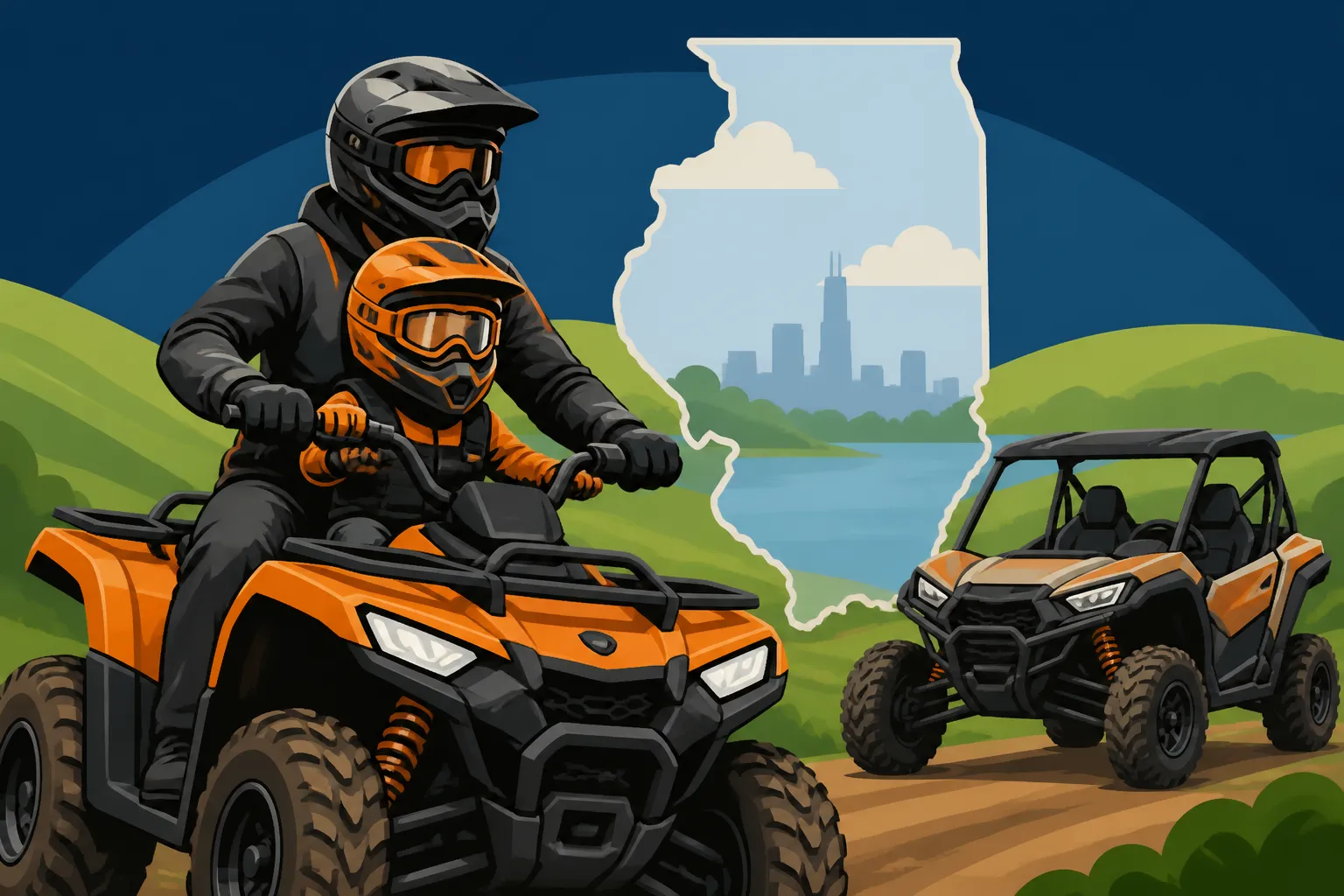
Illinois Parent Riding With a Child
Taking a child ATV or UTV riding in Illinois involves more than choosing a trail and packing a helmet. Parents need to match the child to an appropriate machine, understand supervision and passenger limits, and check which permits and site rules apply. A little planning helps prevent a fun day from turning into a gate refusal, unsafe ride, or avoidable ticket.
Decide Whether Your Child Should Ride or Ride Along
Start by separating two different plans: your child operating a machine, or riding as a passenger. They raise different safety and rule questions. A child who is ready to ride a small ATV may not be ready to handle a faster, heavier machine, while a child riding in a UTV needs an appropriate passenger seat and restraint.
Illinois has rules for young OHV operators, but legal permission is only a minimum. Requirements can depend on where you ride, the machine, and the site’s own policies. Before leaving home, confirm the current rules for the particular riding area and review Illinois ATV Age Requirements and Illinois Rules for Young Riders. A parent riding nearby does not automatically make every machine or route suitable for a child.
If your child will operate a machine
Choose the machine based on the child’s size, skill, and ability to control it, not simply their age or the fact that an adult is present. Check the manufacturer’s age guidance and operating instructions. The child should be able to reach and use the controls correctly, steer without struggling, and stop the machine reliably. If the machine feels too heavy or powerful for them to control, choose a smaller one or let them ride as a passenger in a properly equipped UTV.
For a first ride, keep the route simple and the pace slow. Explain how to start, stop, turn, and respond if the machine stalls before entering a trail. Practice in an appropriate open area if the riding site permits it. Stay close enough to monitor the child and intervene if needed; a parent several turns ahead or far behind cannot provide useful supervision.
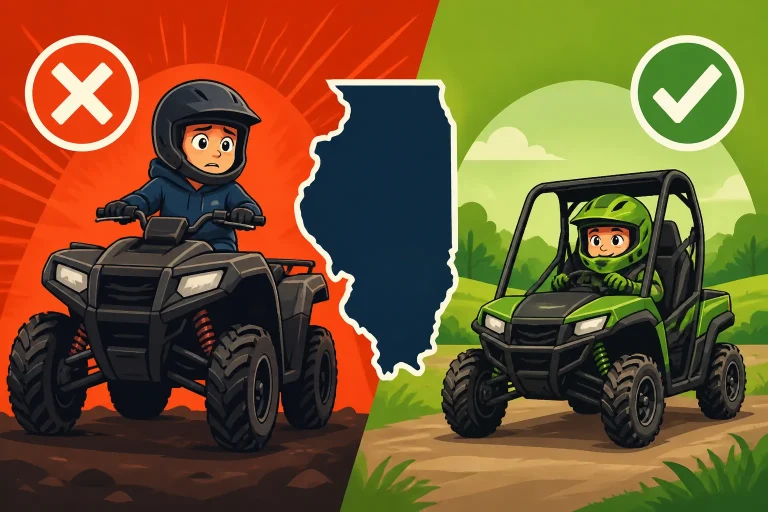
An ATV is generally designed for one rider unless its manufacturer specifically provides otherwise. Do not carry a child on an ATV that lacks a designated passenger seat and appropriate handholds or footrests. Sitting a child on a front rack, cargo box, or an adult’s lap is not a safe substitute. For a UTV, use a passenger seat intended for the child’s size and keep the seat belt fastened as directed by the manufacturer.
If your child will ride as a passenger
Check the UTV manual and riding-site rules before bringing a child along. Confirm the vehicle has a seat for each passenger and that the child can sit back against the seat, use the restraint correctly, and keep hands and feet inside the vehicle. A child who is too small for the restraint to fit properly may not be ready to ride in that seat. Never use an adult’s lap as an extra seat.
Passenger rules can vary by vehicle and property. Do not assume that a machine’s number of seat belts alone settles the question: the seat, restraint, manufacturer instructions, and park policy all matter. For more detail, see Illinois Rules for Passengers on a UTV. On a private park, ask staff directly if the rule is not clear. A site may be stricter than the general state rule.
| Riding plan | What to check before riding | Safer choice if it is not a good fit |
|---|---|---|
| Child operates an ATV | Manufacturer age guidance, controls, size, experience, supervision, and site rules | Use a smaller, suitable machine or postpone the ride |
| Child operates a UTV | Driver eligibility, ability to reach and use controls, restraints, and site rules | Have an eligible adult drive with the child in a proper passenger seat |
| Child rides as a UTV passenger | Designated seat, properly fitting restraint, and passenger policy | Do not add a passenger where no appropriate seat is available |
| Child rides on an ATV | Manufacturer-approved passenger seating, if any, and site rules | Do not carry the child on a single-rider ATV |
Supervise Closely and Set Rules Before Starting
Being present is not the same as supervising well. Before the group moves, agree on who leads, how far apart machines should stay, what to do if someone gets separated, and where the group will stop. Tell the child not to pass, leave the route, or follow another rider without permission. If the child is operating a machine, keep the group slow enough that an adult can respond quickly.
One adult should take responsibility for watching the child, rather than assuming another rider is doing it. On a busy trail, position the adult so they can see the child and the route ahead. Keep communication simple. If a child becomes tired, upset, distracted, or overwhelmed by the terrain, stop and reassess instead of pressing on to finish a loop.
A helmet should fit the child securely and stay fastened for the entire ride. Check that it does not shift around, interfere with vision, or leave the child unable to hear instructions. Wear eye protection, gloves, sturdy clothing, and footwear that protects the feet and ankles. Select gear for the conditions, but do not let bulky clothing interfere with the controls or restraint.
If shopping on Amazon or another marketplace, check the exact helmet model, sizing information, certification label, and seller details rather than relying on a broad search result or product title. Confirm that the helmet meets the riding area’s requirements, and replace gear that is damaged or no longer fits. A helmet that is too loose can move during a ride; one that is too tight can make a child reluctant to keep it on.
Parents should also set limits on speed, passing, and terrain. A child’s first outing is not the time to follow experienced riders into mud holes, steep slopes, or crowded sections. Choose a route that matches the least experienced rider in the group. Take breaks, offer water, and stop before fatigue affects attention or control.
Check Permits and Riding-Area Rules Before You Tow
A child riding with a parent does not remove the need to check paperwork. Illinois distinguishes between an OHV usage stamp and an access decal, and they serve different purposes. A stamp is not a general pass to enter every property, while an access decal is relevant to grant-assisted riding sites. The machine, the rider’s residency, exemptions, and the place you plan to ride can affect what applies.
Check whether each machine needs its own required sticker or permit. Do not assume that one adult’s paperwork covers every ATV or UTV in the group. The rules for stamps and decals are explained in Illinois OHV Permits: Two Stickers Explained and What the Stamp Covers and What the Decal Covers. For the access decal’s role at eligible sites, see Illinois Public Access Decal Rules.
These stickers are not the same as a park’s reservation, admission, or day permit. A riding area can have its own vehicle registration process, waiver, check-in, or capacity limit. If you are visiting a specific park, confirm whether children need separate registration and what paperwork an adult must complete for them. Do not assume that a state stamp or decal gives permission to ride on private land or at a site that is closed to machines.
Before you go, check the property’s current age, supervision, passenger, helmet, equipment, and operating rules. Some sites may restrict which machines are allowed or require vehicles to meet specifications. Others may require a parent or guardian to complete a waiver for a minor. A child being accompanied by a parent does not necessarily waive those requirements. Illinois Grant Site Rules for Riders and Illinois Private Park Age Minimums can help you identify questions to ask.
A quick call or check of the site’s official information can clarify details that are easy to misread. Ask whether your child may operate their own machine, whether an adult must ride alongside or directly supervise, whether the child may ride as a passenger, and what documents or waivers to bring. Also confirm opening conditions and any temporary closures before you tow a machine to the gate.
Make a Simple Pre-Ride Plan
A short checklist can catch problems while you are still at home. It is especially useful when several people are bringing machines or when the child is new to riding.
- Confirm the riding location. Make sure the property is open to the type of machine you plan to bring and that you have permission or the required reservation.
- Check the child’s role. Decide whether the child will operate a machine or ride as a passenger. Verify age, supervision, seat, and restraint requirements for that plan.
- Match the machine to the child. Review the manufacturer’s guidance and confirm that the child can manage the controls safely. Choose a different machine if they cannot.
- Verify every permit and document. Check which stamps, decals, site permits, registration details, and minor waivers apply. Keep confirmations accessible at check-in.
- Inspect the machine and gear. Check controls, tires, brakes, restraints, fuel or battery status, and the fit of the child’s helmet and protective clothing.
- Set the riding rules. Choose an adult supervisor, establish a pace and meeting point, and explain what the child should do if separated or uncomfortable.
- Reassess during the ride. Stop when the child is tired, the route becomes too difficult, or conditions change. Turning back is a sound safety decision, not a failed outing.
If you are unsure about the child’s readiness, start with a shorter, easier ride or wait until they have more practice. A successful family outing is not measured by distance or speed. It is one where the child can follow instructions, the machine suits their abilities, and everyone finishes comfortably.
Disclaimer
This article is for general informational purposes only and does not constitute professional advice. Laws, prices and regulations vary by location and change over time. Consult a qualified professional for guidance on your specific situation.