Illinois Noise Complaints About Quads
It's a familiar scenario: you're out enjoying your ATV or UTV, soaking up the thrill of the ride, only to find yourself facing a frustrated neighbor or, worse, a formal noise complaint. The joy of off-roading can quickly sour when it leads to conflict with your community. This comprehensive guide will help Illinois riders understand noise regulations, avoid common pitfalls, and maintain peace with their neighbors while still enjoying their machines.
Understanding ATV and UTV Noise in Illinois
Let's face it, off-road machines aren't exactly known for their whisper-quiet operation. The rumble of an engine, the roar of an exhaust, the churn of tires on gravel—it's all part of the experience for riders. But for those living nearby, especially in residential or semi-rural areas, that symphony of power can quickly become a nuisance, leading to exasperation and, ultimately, official complaints. Understanding why noise becomes an issue is the first step toward preventing problems.
The Frustration of Noise Pollution
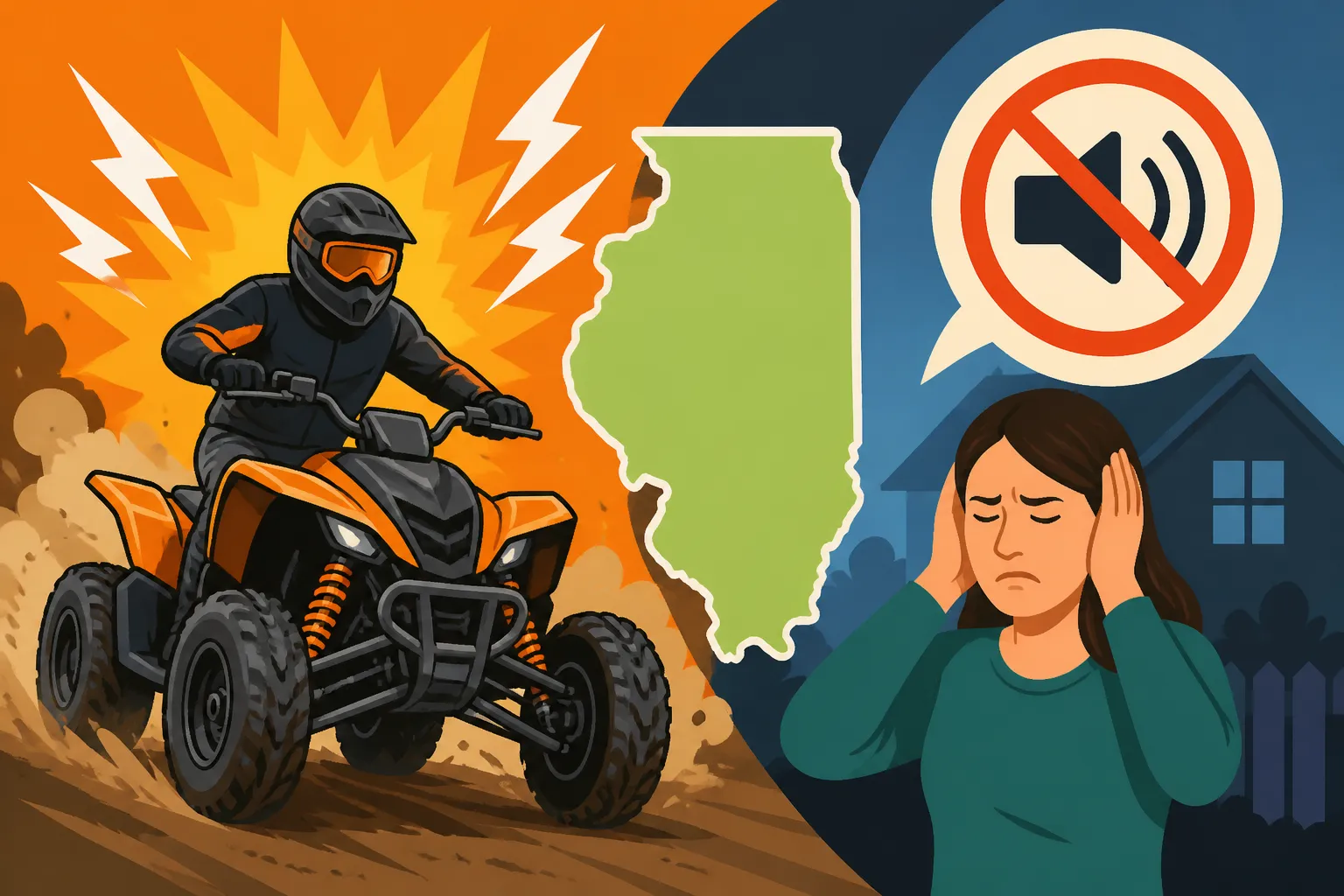
From a neighbor's perspective, persistent or excessively loud ATV and UTV noise can seriously disrupt their quality of life. Imagine trying to enjoy a quiet morning coffee on your porch, only to have it interrupted by a loud exhaust echoing through the neighborhood. Or perhaps a parent is trying to put a baby down for a nap, or someone is trying to work from home, and the constant hum and revving makes it impossible to concentrate. These are real-world situations that lead to genuine frustration.
It's not just about the volume; it's also about the duration, the time of day, and the frequency. A quick burst of engine noise might be tolerated, but continuous riding around a property for hours on end, particularly early in the morning or late at night, is almost guaranteed to generate complaints. People often feel that their peace is being invaded, and that feeling can escalate quickly into formal action if not addressed.
Moreover, if there's a perceived lack of consideration from riders—if it seems like they're intentionally being loud or ignoring their surroundings—it compounds the negative sentiment. This is where community relations really come into play. A respectful approach to riding can go a long way in de-escalating potential conflicts before they even begin.
What Does "Loud" Really Mean?
"Loud" is a subjective term, isn't it? What one person considers a pleasant engine note, another might find grating. However, from a legal standpoint, "loud" often becomes more objective when it violates specific decibel limits or "disturbing the peace" ordinances. Illinois doesn't have a blanket state law that sets specific decibel limits for all ATVs and UTVs across all contexts. Instead, the definition of "loud" frequently falls under local jurisdiction.
For instance, a rural county road might have different expectations for noise than a quiet suburban subdivision. What's considered acceptable for a machine operating on private farmland might be completely unacceptable on a village street where children are playing. This patchwork of regulations can be confusing for riders, but it highlights the importance of being aware of your immediate surroundings and the local rules.
Many local ordinances focus on "unreasonable" or "excessive" noise, often tied to a time of day (e.g., quiet hours). These ordinances might not specify decibels but rather describe noise that disturbs the "peace and quiet" of a neighborhood. This means even if your machine technically meets a certain decibel level, if its operation is consistently annoying or disruptive to neighbors, you could still be in violation of a general noise ordinance. The key is understanding that "loud" is often defined by its impact on others, rather than just a number on a sound meter.
The Legal Landscape: Who Regulates OHV Noise?
Navigating the rules around ATV and UTV noise in Illinois can feel a bit like traversing a winding trail—there are many twists and turns, and the path isn't always clearly marked by a single state sign. Instead, you'll find that much of the regulation comes down to local control, which means the rules can vary significantly from one town or county to the next.
State Laws vs. Local Ordinances
When it comes to off-highway vehicle (OHV) noise, Illinois state law provides some general frameworks but largely grants significant authority to local municipalities and counties to establish their own specific rules. For instance, while the state might have general provisions regarding nuisance or disturbing the peace, it typically doesn't set a universal decibel limit for ATVs or UTVs being operated off-road or even on public roads where allowed.
This means that if you're riding a UTV on a village street, the rules that govern [Illinois Rules for Riding a Village Street] might include specific noise restrictions that aren't found in an adjacent rural township. Counties and townships also have the power to pass resolutions or ordinances that affect noise levels, particularly regarding [Illinois Rules for Riding a County Road] or [Illinois Rules for Riding a Township Road]. It's crucial for riders to understand that just because something isn't explicitly forbidden by state law doesn't mean it's allowed by local statute. This is why checking local ordinances is so vital before you ride. Many [Illinois Municipalities That Pass Ordinances] often include provisions related to noise, especially during designated quiet hours or in residential zones.
The Role of Law Enforcement
When a noise complaint is filed, it's typically local law enforcement—your municipal police department, county sheriff's office, or even a conservation officer at a designated riding site—who will respond. Their role is to investigate the complaint and determine if a violation of a local ordinance or state law has occurred. This could involve observing the noise level themselves, interviewing the complainant, or even monitoring your riding activity.
The enforcement approach can vary. Sometimes, a first complaint might result in a warning, giving you an opportunity to correct the issue. Other times, especially if the noise is egregious, persistent, or a repeat offense, it could lead directly to a citation and fine. For example, if you're riding a highly modified machine with an excessively loud exhaust in a residential area after quiet hours, you might face immediate penalties. Law enforcement officers are tasked with maintaining peace and order within their jurisdiction, and that includes addressing disturbances caused by loud vehicles. It’s also important to remember that general laws, such as those covered in [Illinois DUI Law and Off-Road Machines], can come into play if an officer suspects other infractions during a noise complaint investigation.
Practical Steps to Avoid Noise Complaints
Nobody wants to be the cause of neighborly strife or, worse, receive a citation. Fortunately, there are many proactive steps you can take as an Illinois ATV or UTV owner to significantly reduce the likelihood of noise complaints. It's all about being a considerate rider and maintaining your machine properly.
Maintenance and Muffler Checks
One of the most common culprits for excessive ATV and UTV noise is a poorly maintained exhaust system. A small crack in the muffler, a loose exhaust pipe connection, or a worn-out gasket can turn a relatively quiet machine into a roaring beast. Regularly inspect your exhaust for any signs of damage, rust, or loose fittings. If you notice a change in your machine's sound, it's often the first place to look.
Beyond the exhaust, the overall condition of your engine can contribute to noise. A well-tuned engine runs smoother and often quieter. Regular oil changes, spark plug replacements, and air filter cleaning ensure efficient operation, which can reduce unnecessary engine strain and associated noise. Don't forget to check for loose engine mounts or vibrating body panels; these can create irritating rattles and buzzes that add to the overall sound signature. Addressing these issues not only makes your ride quieter but also extends the life of your machine.
Finally, ensure your machine meets basic requirements, such as having a [Illinois Spark Arrestor Requirements]. While primarily for fire prevention, a properly functioning spark arrestor is usually part of a complete muffler system designed to keep noise levels in check. A missing or damaged spark arrestor can often mean a louder exhaust note.
Riding Etiquette and Timing
Sometimes, it's not the machine itself, but how and when it's ridden that generates complaints. Even a relatively quiet ATV can become a nuisance if it's repeatedly revved aggressively, especially near homes. Practice smooth acceleration and deceleration, and avoid unnecessary high-RPM operation in sensitive areas. Treat your neighborhood as if it were a designated quiet zone at a riding park, where [Illinois Sound Limits at a Park] might apply.
The timing of your rides is also paramount. Most communities have "quiet hours," often from late evening until early morning. Avoid riding your ATV or UTV during these times, especially in residential areas or near others' homes. Even if you're riding on your own property, sound travels, and your neighbors might not appreciate the disturbance at 6 AM on a Sunday. Be particularly mindful if you're riding near [Illinois Rules for Riding a Subdivision Street] or where people are likely to be enjoying their yards. Opt for midday hours when general neighborhood activity is higher and your machine's sound is less likely to stand out or disturb.
Considering Aftermarket Solutions
If you've checked your maintenance and adjusted your riding habits, but still find your machine is louder than desired, aftermarket solutions can help. Many manufacturers and specialized brands offer products designed to reduce noise.
One popular option is an aftermarket exhaust system specifically designed for quiet operation. Brands like SuperATV, for instance, offer exhaust options that aim to reduce decibel levels while maintaining performance. These might include mufflers with internal baffling systems or designs that re-route exhaust flow to dampen sound more effectively. Before purchasing, always check reviews and specifications to ensure the product genuinely offers noise reduction, not just a performance boost.
Beyond exhaust systems, consider sound-dampening materials for UTV cabs. These can be adhesive mats, liners, or panels that absorb engine and road noise, making the ride more comfortable for occupants and potentially reducing sound transmission outside the vehicle. While they won't silence a roaring exhaust, they can contribute to overall noise reduction. For those who ride in areas where specific noise limits are enforced, these modifications can be a worthwhile investment to help ensure compliance and good neighborly relations.
What Happens When a Complaint is Filed?
Receiving a noise complaint can be unsettling, regardless of whether you believe your machine is excessively loud. It initiates a process that, if not handled carefully, can lead to warnings, fines, and even restrictions on your riding. Understanding the typical steps involved can help you respond appropriately and mitigate potential issues.
The Investigation Process
When a noise complaint about an ATV or UTV is filed, local law enforcement or the relevant authority (e.g., a conservation officer at a state site) will typically initiate an investigation. This usually begins with a response to the location where the noise is reported. The officer's primary goal is to verify the complaint. This might involve:
- Direct Observation: The officer may listen for the noise themselves to determine if it's indeed excessive or in violation of local ordinances. They'll consider factors like volume, duration, time of day, and proximity to residential areas.
- Interviewing the Complainant: They will speak with the person who filed the complaint to gather details about when the noise occurred, how long it lasted, and how it impacted them.
- Interviewing the Rider: If you are present or easily identifiable, the officer will likely approach you to get your side of the story, explain the complaint, and discuss the local rules.
- Assessing the Environment: The officer will consider the specific context, such as whether you were riding on private property, a designated trail, or a road where [Illinois Penalties for Illegal Street Riding] might apply if the machine isn't street-legal. They will also note the type of machine, its modifications, and your riding behavior.
It's important to remain calm and cooperative during this process. Arguing or being confrontational can escalate the situation and make things more difficult. Even if you disagree with the complaint, listen to the officer's concerns and try to understand the nature of the alleged violation.
Potential Consequences and Penalties
The consequences of a noise complaint can range from a friendly warning to significant fines and legal action, depending on the severity and frequency of the offense, as well as the specific local ordinances in place.
- Verbal Warning: For a first-time or minor infraction, an officer might simply issue a verbal warning. This is often an opportunity for you to correct the behavior or address a maintenance issue before it becomes a recurring problem. Take these warnings seriously; they are a sign that you need to adjust your riding habits or machine.
- Written Warning/Citation: If the issue persists, is more severe, or if local ordinances specify it, you could receive a written warning or a formal citation. This will typically outline the specific ordinance violated and may include a monetary fine. These fines can vary widely depending on the municipality and the nature of the violation.
- Fines and Court Costs: If you receive a citation, you will likely face a fine. The amount can differ significantly between different villages, towns, or counties. In some cases, if you choose to contest the ticket, you might also be responsible for [Illinois Court Costs for a Citation] in addition to the fine if found liable.
- Machine Impoundment: In extreme cases, particularly if the machine is being operated illegally (e.g., on prohibited roads without proper permits or with excessive noise that poses a public danger), law enforcement might have the authority to impound the vehicle. Recovering an impounded machine can involve additional fees and hassle.
- Repeated Violations: Multiple complaints or repeated violations can lead to escalating penalties, potentially including higher fines, more stringent restrictions on where or when you can ride, or even revocation of local riding permits if they are required. Some ordinances may even include provisions for nuisance abatement, which could mean further legal action to prevent future disturbances.
Understanding these potential outcomes underscores the importance of being a responsible and considerate rider. It’s always better to prevent complaints through good maintenance and respectful riding practices than to deal with the aftermath of a citation.
Common ATV/UTV Noise Sources and Solutions
| Noise Source | Common Cause | Solution |
|---|---|---|
| Loud Exhaust | Worn muffler, missing baffles, aftermarket exhaust | Replace muffler, install baffles, choose quieter aftermarket options (e.g., SuperATV quiet exhaust) |
| Engine Noise | Poor maintenance, loose parts, worn components | Regular tune-ups, tighten bolts, replace worn bearings/bushings |
| Drivetrain Whine/Clunk | Worn U-joints, loose chains, differential issues | Inspect and replace worn components, adjust chain tension |
| Tire Hum/Roar | Aggressive tread patterns, worn tires | Choose less aggressive tires for mixed-use, maintain proper pressure |
| Vibration/Rattle | Loose body panels, accessories, skid plates | Inspect and secure all loose parts, use rubber isolators |
| Abrupt Acceleration/Braking | Aggressive riding style | Practice smoother acceleration and deceleration, avoid sudden revving |
Disclaimer
This article is for general informational purposes only and does not constitute professional advice. Laws, prices and regulations vary by location and change over time. Consult a qualified professional for guidance on your specific situation.