Illinois Decals Mounted Front and Center
Navigating the rules for off-highway vehicles in Illinois can feel like a maze, especially when it comes to those little stickers that prove you're playing by the rules. One common head-scratcher for riders is exactly where to place their Illinois Public Access Decal. Stick it in the wrong spot, and you could face questions or even a citation from a conservation officer. This guide is here to clear up that confusion, diving deep into the "front and center" requirement and other decal particulars so your next ride is worry-free.
Understanding Illinois OHV Decals: Why Placement Matters
When you hit the trails or open riding areas in Illinois, showing proper identification on your off-highway vehicle (OHV) isn't just a suggestion; it's a requirement. The state has specific rules about these decals, and understanding them is crucial for every rider, from the seasoned veteran to the brand-new enthusiast. It’s not enough to simply have the decal; it needs to be visible and correctly positioned. Think of it as your machine's passport – if the official can’t easily see and verify it, you might run into some trouble.
The precise placement of these decals serves a very practical purpose for enforcement and identification. Conservation officers, park rangers, and other authorized personnel need to be able to quickly and easily identify that your machine is compliant with state regulations. If your decal is hidden under mud, tucked away in an obscure spot, or simply not where it's supposed to be, it raises questions and can lead to unnecessary delays or even fines. Proper placement demonstrates that you understand and respect the regulations designed to keep Illinois riding areas accessible and safe for everyone.
The Different Types of Illinois Decals
In Illinois, OHV owners typically deal with two main types of identification stickers, and it's easy to get them confused if you're not paying close attention. The first is the Illinois Public Access Decal, which is specifically for machines that will be ridden on designated grant-assisted OHV riding areas. This decal signifies that you've contributed to the funding and maintenance of these public-access trails. It's an annual sticker, and its purpose is quite distinct from other state requirements. For a deeper dive into what this decal means for you, check out [Illinois Public Access Decal Explained].
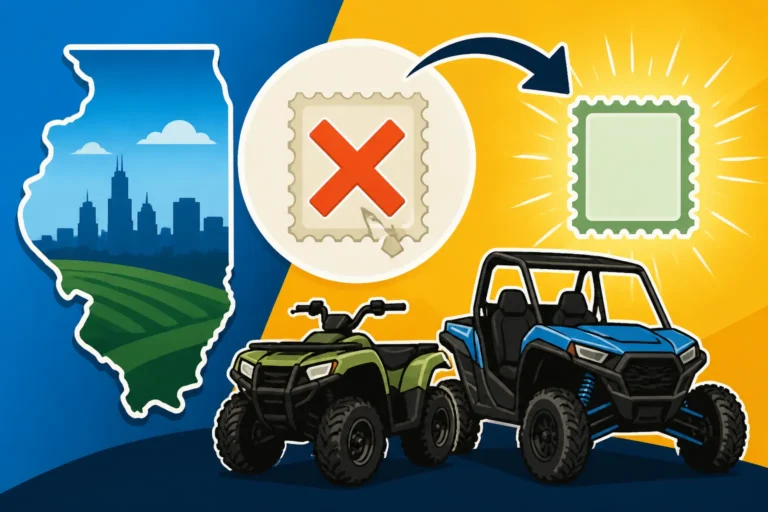
The second type of identification is the Illinois OHV Usage Stamp. While both are stickers, they serve different purposes and have different placement requirements. The usage stamp is generally required for machines operated anywhere other than solely on your own property, unless specifically exempted. It’s important to understand that having one doesn't automatically mean you have the other, and vice-versa. Many riders need both, depending on where and how they plan to ride. We'll get into the details of the usage stamp's placement shortly, but for now, just remember: two stickers, two distinct roles, and often two different spots on your machine.
The Purpose of Proper Placement
So, why all the fuss about exactly where a sticker goes? It boils down to efficient enforcement and ensuring everyone contributes their fair share to maintaining riding opportunities. When conservation officers are patrolling riding areas, they need to quickly confirm that every machine they see is compliant. If decals are placed haphazardly, it creates a lot more work, slowing things down for everyone. An officer shouldn't have to search your machine or ask you to point out your decals; they should be immediately visible.
Beyond just avoiding a ticket, correct placement helps uphold the integrity of the permit system itself. The funds generated from these decals and stamps go towards vital programs, including trail maintenance, safety initiatives, and land acquisition for new riding areas. If decals aren't clearly displayed, it becomes harder to enforce compliance, potentially undermining the funding stream for the very trails we all love to ride. Therefore, proper placement isn't just about following a rule; it's about supporting the future of OHV riding in Illinois. Without clear identification, it's also harder to prove ownership or permission, which can be particularly tricky in situations like theft or when dealing with private land permissions – though for serious legal documents like an affidavit of title, you'd be looking at a service like LawDepot.
The "Front and Center" Rule for Access Decals
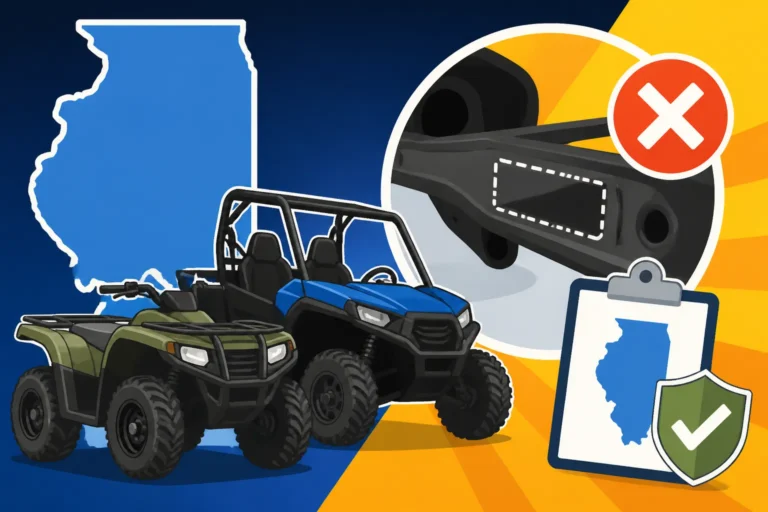
When it comes to the Illinois Public Access Decal, the rule is pretty straightforward: it needs to be mounted "front and center." This isn't just a casual suggestion; it's a specific directive from the Illinois Department of Natural Resources (IDNR). The intent is maximum visibility from the front of your machine, allowing park staff and conservation officers to easily confirm your compliance without having to walk around your OHV or ask you to point it out. It helps streamline the check-in process at grant-assisted sites and ensures smooth operations on the trails.
Imagine pulling into a busy trailhead on a sunny Saturday. There's a line of trucks and trailers, and everyone is eager to unload and get riding. If an officer has to spend extra time searching for decals on every machine, that line gets longer, and frustration mounts. By having your decal clearly visible front and center, you're not just complying with the law; you're contributing to a better experience for everyone. It's about making things easy for the folks who manage and patrol these areas, ensuring they can focus on safety and maintenance rather than playing hide-and-seek with stickers.
What "Front and Center" Actually Means on an OHV
So, what does "front and center" actually look like on your specific machine? For most ATVs, this typically means on the front fender, the handlebar fairing, or the front rack, provided it's not obscured by accessories like a winch, light bar, or cargo bag. The key is that it must be facing forward and be unobstructed. For a side-by-side (UTV), it might go on the hood, the front bumper, or the dash, as long as it meets the same visibility criteria. The idea is that someone standing directly in front of your machine should be able to see the decal clearly without difficulty.
It's not about being perfectly symmetrical or aligned with some invisible centerline; it's about functionality. If you have a custom setup or unique accessories, you might need to get a little creative to find that ideal spot. Just ensure that when you look at your machine head-on, the decal is prominent and readable. Remember, this decal isn't meant to be subtle; it's meant to be seen. You might want to refer to your owner's manual or even look at examples online if you're truly stumped, but common sense and the goal of high visibility should be your guide. For information on specific pricing for these decals, you can check out [Illinois Charges $11 for a Resident Decal] or [Illinois Charges $17 for a Non-Resident Decal].
Practical Tips for Mounting Your Access Decal
Mounting your Illinois Public Access Decal correctly isn't just about finding the right spot; it's also about ensuring it stays there, clear and intact, through all kinds of riding conditions. First, choose a clean, flat, and smooth surface. Any dirt, grease, or unevenness will prevent the decal from adhering properly, leading to peeling or loss. Give the area a good wash with soap and water, then dry it thoroughly. You might even use rubbing alcohol to ensure a perfectly clean surface, especially if there's any wax or residue.
When applying the decal, avoid trapping air bubbles. Start by peeling back a small portion of the backing, align the decal carefully, and then slowly press it down, smoothing it out with your fingers or a squeegee as you peel away the rest of the backing. Work from the center outwards to push any air bubbles to the edges. Once applied, press firmly over the entire decal to ensure maximum adhesion. Consider applying it indoors or in a garage when temperatures are moderate, as extreme cold can make the adhesive less effective, and extreme heat can make the decal too pliable. For tips on what to do if you lose your decal, see [Illinois Decal Replacement If Lost].
Contrast with Usage Stamp Placement
While the Illinois Public Access Decal requires a "front and center" placement, the Illinois OHV Usage Stamp has its own distinct rules for where it needs to go. This is a crucial distinction that often trips up new riders, and even some experienced ones, leading to potential compliance issues. The usage stamp is designed to be visible, but not necessarily from the very front of the machine in the same prominent way as the access decal. Understanding this difference is key to being fully compliant in Illinois.
Mixing up these two stickers or their placement requirements is a common mistake that can easily be avoided with a little attention to detail. Remember, each sticker serves a different purpose, and the IDNR has specified placement guidelines for a reason. Ignoring these guidelines not only puts you at risk of a penalty but also creates confusion for those enforcing the rules. It’s always best to be overly compliant than to risk a fine or having your day on the trails cut short. The good news is that once you know the rules for both, it’s quite easy to keep them straight. For a general overview, check out [Illinois OHV Usage Stamp Explained].
Where the Usage Stamp Actually Goes
Unlike the "front and center" rule for the Access Decal, the Illinois OHV Usage Stamp is required to be affixed to the forward half of the machine. This gives you a bit more flexibility but still emphasizes visibility. Common places to put the usage stamp include the front fender (though not necessarily dead center if the access decal is there), the gas tank, the frame near the handlebars, or the forks. The main objective is that it should be easily visible from the side or front-side of the machine without having to actively search for it.
The exact language often specifies "on the forward half of the vehicle, readily visible." This means it shouldn't be hidden under a seat, on the rear fender, or in any spot that requires special effort to see. It’s important to ensure it's not obscured by mud, branches, or any aftermarket accessories. If you have two machines, remember that [One Decal Per Machine] applies to both the usage stamp and the access decal. Each OHV needs its own set of stickers to be compliant. If you're wondering about the specific spot, [Where the Usage Stamp Goes on Your Machine] offers more details.
Why Decal and Stamp Placement Differ
You might wonder why Illinois has different placement rules for what are essentially two stickers related to OHV use. The reason often comes down to the primary enforcement context and historical development of the regulations. The Public Access Decal is specifically for grant-assisted riding sites, where rapid identification at entry points and on trails is critical. "Front and center" ensures maximum visibility for gatekeepers and patrolling officers.
The Usage Stamp, on the other hand, applies more broadly to general OHV operation off private property. While still needing to be "readily visible" on the forward half, its enforcement might occur in a wider variety of scenarios, not just at a designated trailhead. This slightly less stringent, yet still clear, placement allows for more practical application across diverse machine types and riding situations. For instance, sometimes a machine might only have a stamp because it's only ridden on private land with permission, not grant-assisted trails. So, the different rules are designed to best suit the enforcement needs of each type of permit. And remember, sometimes these stickers can cancel each other out, as explored in [Illinois Stamp and Decal Together] – though it's more accurate to say that holding the access decal means you skip the stamp, not that the stickers literally cancel.
Common Mistakes and How to Avoid Them
It's easy to make mistakes when dealing with OHV regulations, especially when there are multiple stickers with different rules. Many riders, even those with good intentions, find themselves on the wrong side of the rules simply due to a misunderstanding or an oversight. These errors can range from minor annoyances to significant penalties, so it's always best to be well-informed and diligent. The most common issues typically revolve around improper placement, forgetting to renew, or assuming one sticker covers all bases.
Being prepared before you head out on the trails can save you a lot of headaches. This means not only ensuring your decals are correctly placed but also that they are current and in good condition. Taking a few minutes to double-check everything before loading up your machine can prevent a disappointing experience at the trailhead or an unexpected interaction with a conservation officer. Think of it as part of your pre-ride checklist, just like checking your tire pressure or fuel level.
Mixing Up Decal and Stamp Locations
One of the most frequent errors riders make is confusing the placement requirements for the Illinois Public Access Decal and the Illinois OHV Usage Stamp. You might see a rider with their Usage Stamp prominently displayed "front and center" and their Access Decal tucked away on the side of the gas tank. This is precisely the opposite of what the regulations intend. As we've discussed, the Access Decal wants that prime, forward-facing real estate for maximum visibility at grant-assisted sites, while the Usage Stamp has a bit more flexibility on the forward half.
To avoid this, create a mental image or even a physical reminder for your machine. Think: "Access Decal = front and center, like a badge of honor for public trails," and "Usage Stamp = forward half, a bit more general." Double-check your machine against these guidelines after applying new stickers. If you're unsure, consult the official IDNR guidelines or look at examples from other compliant riders. A quick search online, or even checking out resources like LawDepot for general compliance information, can often provide helpful visual examples or legal interpretations.
Penalties for Improper Placement
Ignoring or incorrectly placing your decals and stamps isn't just a minor infraction; it can lead to tangible penalties. A conservation officer, upon noticing an improperly placed or missing decal, has the authority to issue a citation. The specific fine can vary, but generally, it's not a small amount and can quickly add up, especially if you have court costs associated with it. This is definitely one of those "an ounce of prevention is worth a pound of cure" situations. For a comprehensive look at the consequences, refer to [Illinois Penalties for No Decal].
Beyond monetary fines, there's the inconvenience and potential embarrassment of being stopped and questioned, or even turned away from a riding area. Imagine driving hours to a grant-assisted site, only to be told at the gate that your decal isn't correctly displayed, and you can't enter. It's a frustrating scenario that's entirely preventable. Always ensure your decals are current and properly affixed before you ever leave your driveway. Remember, the goal of these regulations is safe and managed access, and compliance is the first step.
Maintaining Your Decal for Visibility and Compliance
Once your decals are properly affixed, your job isn't quite done. These little stickers are exposed to the elements – mud, dust, rain, sun, and even the occasional scrape from a tree branch. To ensure they remain visible and compliant throughout their valid period, you need to take steps to maintain them. A faded, peeling, or illegible decal is just as problematic as a missing one, as it fails to serve its purpose of clear identification.
Think of your decals as vital parts of your OHV's registration, similar to a license plate on a car. You wouldn't let your license plate get so dirty or damaged that it's unreadable, would you? The same principle applies here. Regular checks and proactive maintenance will keep your decals in tip-top shape, ensuring you always meet Illinois's OHV requirements and avoid any unnecessary hassles during your rides.
Protecting Your Decal from Wear and Tear
OHV riding is a rugged sport, and your machine, along with its decals, takes a beating. To protect your investment in these compliance stickers, there are a few things you can do. Firstly, when cleaning your machine, be gentle around the decals. Avoid using high-pressure washers directly on the edges, as this can cause them to lift or tear. Use a soft cloth and mild soap, cleaning around them carefully.
Secondly, consider where you store your machine. Prolonged exposure to direct sunlight can cause decals to fade over time. If possible, park your OHV in a garage, shed, or under a cover when not in use. This protects not only your decals but also the plastics and other components of your machine. While decals are designed to be durable, a little extra care goes a long way in extending their life and keeping them clearly visible. For insights into decal costs by residency, consider [Illinois Decal Prices by Residency], as understanding the value of your decal might encourage better preservation.
What to Do If Your Decal Is Damaged or Lost
Despite your best efforts, sometimes decals get damaged or lost. Maybe a branch scraped it off, or perhaps it simply faded beyond recognition after a few seasons. If this happens, don't just ignore it and hope for the best. Riding with a damaged or missing decal is essentially riding without proper identification, and it carries the same risks as not having one at all. It's crucial to address the issue promptly.
Your first step should be to replace the decal. The Illinois DNR provides a process for obtaining replacement decals. This usually involves contacting them directly, often through their website or a local office, and paying a small fee. It's a straightforward process, but you'll want to get it done before your next ride to avoid any issues. For specific guidance on how to replace a lost decal, check out [Illinois Decal Replacement If Lost]. The same principles apply to the usage stamp; if that goes missing, you'll want to review [Illinois Stamp Replacement If Lost]. Always ensure you have valid, clearly visible decals and stamps to enjoy your Illinois OHV adventures responsibly.
Decal and Stamp Information Summary
To help keep all the information straight, here's a quick summary of the key differences and requirements for Illinois OHV decals and usage stamps. This table highlights the critical distinctions that every rider needs to know to stay compliant.
| Feature | Illinois Public Access Decal (Grant Site Decal) | Illinois OHV Usage Stamp |
|---|---|---|
| Purpose | Required for riding on IDNR grant-assisted OHV riding areas (e.g., Sahara Woods). Funds trail maintenance. | Required for riding OHVs anywhere other than solely on private property (unless exempt). |
| Placement | Front and Center of the machine (front fender, hood, dash) for maximum visibility. | Forward Half of the machine (front fender, tank, frame, forks), readily visible. |
| Visibility | Must be clearly visible from the front of the machine. | Must be clearly visible from the side or front-side of the machine. |
| Validity Period | Annual, typically expiring on March 31st each year. | Annual, typically expiring on March 31st each year. See [Illinois Usage Stamps Expire March 31]. |
| Exemptions | Exemptions apply if not riding on grant-assisted sites (e.g., private land only, competition use, specific farm use). See [Illinois Grant Site Decal Exemption]. | Exemptions apply (e.g., riding solely on own land, farm use, governmental use). |
| Interchangeable? | No. One does not substitute for the other. However, if you have the Access Decal, you typically don't need the Usage Stamp at grant sites. | No. If you only have the Usage Stamp, you cannot ride at grant-assisted sites without the Access Decal. |
| Replacement | Contact IDNR for a replacement if lost or damaged. | Contact IDNR for a replacement if lost or damaged. |
This table should serve as a quick reference when you're preparing your machine for a ride. Always prioritize clear visibility and correct placement for both types of identification.
Disclaimer
This article is for general informational purposes only and does not constitute professional advice. Laws, prices and regulations vary by location and change over time. Consult a qualified professional for guidance on your specific situation.