Illinois Farm and Livestock Exemption
Navigating the rules and regulations for ATVs and UTVs here in Illinois can feel like trying to find a specific straw in a very large haystack. One of the biggest points of confusion, especially for those of us living and working in our rural communities, revolves around the "Illinois Farm and Livestock Exemption." It's easy to assume your work machine is automatically exempt from everything, but that's not always the case. This guide will thoroughly break down what this specific exemption truly means for your off-highway vehicle, clarifying who qualifies, what paperwork you might still need, and where the exemption's limits lie, so you can ride and work with peace of mind.
Decoding the Illinois Farm and Livestock Exemption for ATVs and UTVs
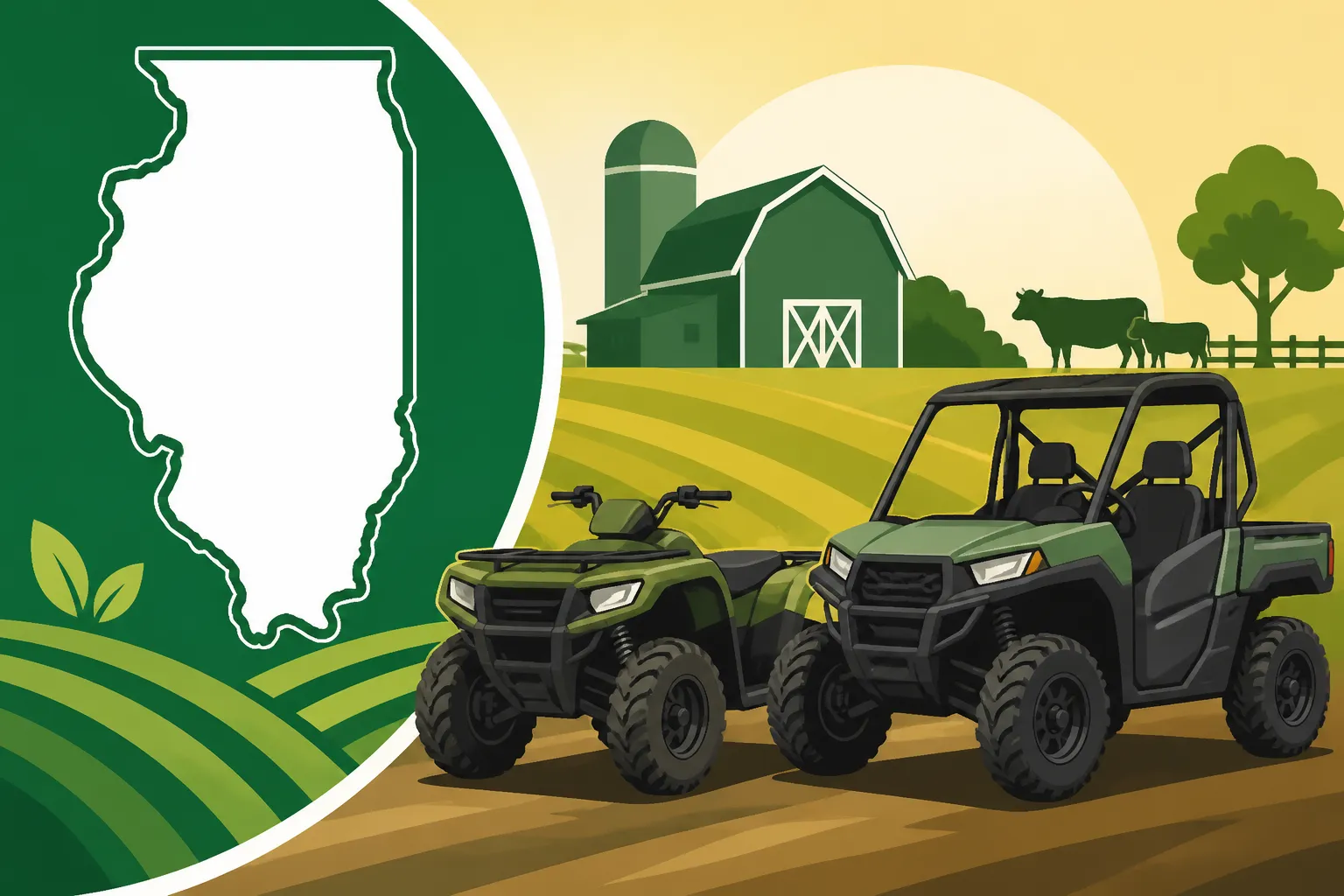
Many folks in Illinois rely on their ATVs and UTVs not for recreation, but as indispensable tools for daily operations on the farm. Whether you’re checking fences, herding livestock, or hauling feed, these machines are truly the workhorses of the countryside. Because of this vital role, the state of Illinois has carved out a specific exemption designed to ease the regulatory burden on farmers and agricultural businesses. This isn't just a small loophole; it’s a recognition of the essential function these vehicles play in our agricultural economy. However, it’s crucial to understand that "exemption" doesn't always mean "no rules at all." It typically refers to specific requirements like registration, usage stamps, or access decals, not necessarily things like titling.
What the Exemption Actually Covers
At its core, the Illinois Farm and Livestock Exemption, as found within the state's Off-Highway Vehicle Act, exempts certain machines used exclusively for agricultural purposes from specific registration and decal requirements. This is a huge relief for farmers who might own multiple machines, each performing different tasks across their land. Imagine having to purchase an annual usage stamp or public access decal for every single quad or side-by-side that never leaves your property – the costs would add up quickly, and the administrative hassle would be a nightmare. This exemption aims to cut through that red tape, making it easier for you to focus on your livelihood. It’s important to realize, though, that this exemption specifically addresses the usage stamp and access decal, not the requirement to obtain a title. [Illinois Titles but Does Not Register ATVs] is a concept that often surprises new owners.
The exemption essentially says, "If your machine is solely dedicated to farming or livestock operations on private land, you don't need to get the annual sticker that allows you to ride on designated public trails or pay the fee that generally funds those public areas." This distinction is vital because it highlights the difference between a working machine and a recreational one. Your machine isn't being used to enjoy state-funded trails; it's being used to manage your farm. This distinction saves you money and eliminates unnecessary paperwork for machines that truly serve an agricultural purpose.
The "Farm and Livestock" Definition
So, what exactly does "farm and livestock" mean in the eyes of Illinois law for this exemption? It boils down to machines primarily used for activities directly related to farming, ranching, and the care of livestock. This isn't just about planting crops and raising cattle; it extends to a wide array of supporting activities crucial to agricultural production. Think about moving tools between fields, inspecting irrigation systems, hauling fencing materials for repairs, or even transporting feed to animals in different pastures. If the ATV or UTV is being used as a functional part of the farm operation, it generally falls under this umbrella.
This definition excludes, however, using the machine for general personal transportation around the farm that isn't directly tied to agricultural work, or, more importantly, any kind of recreational riding. If you're using your UTV to take the kids for a joyride around the back forty after chores are done, that specific use isn't covered by the farm exemption. The key word here is "exclusively." The machine's sole purpose must be agricultural. The exemption is not a blanket pass for anything done on private farmland; it's very specific about the purpose of the machine's use. Illinois Farm and Livestock Exemption is one of several types of specialized exemptions that exist.
Why This Exemption Matters to You
For Illinois farmers, this exemption is a significant practical and financial relief. Imagine a large farming operation with a dozen ATVs and UTVs, each designated for different tasks – checking crops, tending to livestock, managing equipment in various fields. Without this exemption, each of those machines would likely require an annual usage stamp and potentially an access decal if they were ever used on grant-assisted sites, adding hundreds, if not thousands, of dollars in annual fees, not to mention the time spent processing that paperwork every year. This exemption prevents those recurring costs for your dedicated farm fleet.
Beyond the immediate cost savings, the exemption simplifies compliance for agricultural entities. It reduces the administrative burden, allowing farmers to focus their valuable time and resources on their actual work rather than navigating complex recreational vehicle regulations. It’s a testament to the state's understanding of the unique operational needs of the farming community, acknowledging that these machines are tools of the trade, not simply leisure vehicles. For many, it's the difference between a viable operating cost and an unnecessary expense.
Who Qualifies for This Special Status?
The Illinois Farm and Livestock Exemption isn't a free-for-all; there are specific criteria that must be met for an ATV or UTV to qualify. It's not enough to simply own farmland; the machine's use, location, and the operator's intent are all considered. This helps prevent recreational riders from claiming a farm exemption just because they have a small plot of land or know someone who does. Understanding these nuances is key to ensuring you're genuinely compliant and not accidentally exposing yourself to potential fines or penalties.
Defining "Agricultural Purpose"
The crux of qualifying for this exemption lies in the definition of "agricultural purpose." This term is interpreted broadly but firmly in the context of commercial farming, ranching, and forestry operations. It includes, but is not limited to:
- Crop Production: Plowing, planting, cultivating, harvesting, and transporting crops on the farm.
- Livestock Management: Herding, feeding, watering, and moving livestock; inspecting fences and enclosures.
- Farm Maintenance: Transporting tools, equipment, and supplies for upkeep of farm buildings, fields, and infrastructure.
- Pest and Weed Control: Applying herbicides or pesticides within the farm boundaries.
- Logging and Timber Operations: When these activities are part of an agricultural or forestry business.
Essentially, if the machine is being used in direct support of generating income or sustaining the farm's primary operations, it generally fits the bill. However, if that same machine is used for a weekend trail ride with friends, even if it’s on your own property, that specific instance of use would technically fall outside the "agricultural purpose" definition for that moment, potentially negating the exemption for that use. The consistent, day-to-day application of the machine defines its exempt status. [Illinois Machines Used Only on a Farm] is a great resource if you want to explore this further.
Understanding the "Private Land" Clause
A critical component of the Illinois Farm and Livestock Exemption is the "private land" clause. This exemption almost exclusively applies to machines operated on land owned, leased, or otherwise controlled by the farmer for agricultural purposes. It does not extend to public roads, highways, or designated public recreational trails, even if those trails happen to pass through or near your farmland. If your machine needs to cross a public road to get from one part of your farm to another, the exemption for stamps and decals doesn't cover that public road travel.
If you regularly cross public roads, even small county roads, with your ATV or UTV, you need to be aware of other regulations that might apply, such as local ordinances, insurance requirements, or specific equipment needs for street-legal use. The beauty of this exemption is for machines that stay entirely on private ground, dedicated to the task. [Illinois Residential Property Exemption] offers a similar protection for machines used strictly within the confines of a homeowner's yard, highlighting the emphasis on private, contained use across different exemptions.
Machines That Fit the Bill
Almost any ATV (All-Terrain Vehicle) or UTV (Utility Terrain Vehicle) can potentially qualify for the farm and livestock exemption, provided it meets the usage criteria. This includes traditional four-wheelers, side-by-sides of various sizes, and even smaller utility vehicles often seen on larger properties. The exemption isn't about the make, model, or specific horsepower of the machine; it's about how it's being used. A brand-new, powerful UTV hauling feed bags is just as exempt as an older, well-worn quad used for checking fences, as long as both are exclusively for agricultural purposes.
The key takeaway here is that the machine itself doesn't inherently carry the exemption; its function on your farm does. You don't need a special "farm vehicle" designation on its title or registration. What matters is the consistent, verifiable application of that machine to agricultural tasks on your private land.
Navigating Titling and Registration Under the Exemption
While the Illinois Farm and Livestock Exemption provides relief from certain annual sticker requirements, it doesn't mean your farm machine is entirely free from all state oversight. One of the most common misunderstandings revolves around the difference between titling and registration. In Illinois, ATVs and UTVs are titled, but they are generally not "registered" in the same way a car or truck would be with annual license plates. The exemption specifically targets the usage stamp and access decal, leaving the titling requirement intact for most machines.
Titling Your Farm ATV/UTV
Even if your ATV or UTV is used exclusively for farm and livestock purposes, Illinois law generally still requires it to be titled. [Illinois Titles Required Since 1998] means that any off-highway vehicle (OHV) manufactured or purchased after December 31, 1997, must have a certificate of title. This title acts as proof of ownership and is a crucial document for legal purposes, such as buying, selling, or inheriting the machine. It links the vehicle's unique VIN to you as the legal owner.
Applying for an off-road title for a farm machine follows the same process as any other OHV. You'll typically need to submit the proper application form (VSD-190), provide proof of purchase (like a bill of sale or Manufacturer's Certificate of Origin), and pay the required titling fee. While it might seem like extra paperwork for a machine that never leaves the farm, having a clean title protects you from theft and helps establish clear ownership should there ever be a dispute or if you decide to sell the machine down the line. For guidance on getting this done, [Illinois Title for a Farm Machine] is a good place to start.
Usage Stamps and Access Decals: What You Don't Need
Here’s where the Illinois Farm and Livestock Exemption really shines: it exempts your qualifying farm machine from the need to acquire an [Illinois OHV Usage Stamp Explained] and an [Illinois Public Access Decal Explained]. Let's break down why this is important:
- Usage Stamp: The usage stamp is generally required for any ATV or UTV operated on public lands or designated OHV trails that are not part of the state's grant-assisted riding program. It's a general permit for off-road use. If your machine never leaves your private farm land for agricultural work, you don't need this. [Illinois Usage Stamp Exemptions] clearly outlines this and other scenarios where the stamp isn't required.
- Access Decal: The public access decal is specifically required for riding on "grant-assisted" sites – those parks or trails that receive state funding to maintain their facilities. Since your farm machine isn't going to be hitting those recreational trails, the exemption means you don't need this decal either.
This is a significant distinction. While you still need to prove ownership through a title, the recurring annual costs and administrative steps associated with permits for recreational use are removed for your bona fide farm equipment.
The Difference from Other Exemptions
It's easy to confuse the Farm and Livestock Exemption with other provisions in Illinois law, but each has its specific scope. For example, the [Illinois Residential Property Exemption] allows machines to be used on an owner's private residential property without a usage stamp or access decal. This is great for someone just riding their quad around their yard or property for personal tasks.
The key difference for the farm exemption is the purpose of the use and the scale of the property. While both involve private land, the farm exemption is explicitly for agricultural work. It's not about casual riding or property maintenance; it's about commercial farming. Understanding these distinctions ensures you are applying the correct legal interpretation to your specific situation and avoiding potential issues.
Beyond the Farm Gate: When the Exemption Ends
The Illinois Farm and Livestock Exemption is powerful, but it's not boundless. It has very specific limits, and straying outside those boundaries, even unintentionally, can lead to legal issues. Many owners make the mistake of assuming the "farm use" status covers every possible scenario, but the moment an ATV or UTV leaves the private agricultural property or is used for a non-agricultural purpose, the exemption generally ceases to apply. This is where many well-meaning farmers can run into trouble, especially when interacting with public roads or when combining work with a little bit of fun.
Public Road Restrictions
This is perhaps the most critical boundary for the farm and livestock exemption. The exemption for usage stamps and access decals does not apply if your ATV or UTV is operated on public roads or highways. Even crossing a gravel township road to get from one field to another, or driving a short distance down a county road to reach an adjoining pasture, falls outside the scope of this particular exemption. For that specific act of public road travel, your machine would typically be subject to the same rules as any other OHV on a public road, which in Illinois is largely prohibitive unless a specific local ordinance allows it.
If your farm operations require you to use public roads, even briefly, with your ATV or UTV, you must investigate local ordinances in your township, county, or village. Many rural areas have passed specific ordinances allowing UTVs (and sometimes ATVs) on certain public roads, but these usually come with their own set of requirements:
- Permits: Many towns require a local permit.
- Equipment: Machines often need specific equipment like turn signals, rearview mirrors, and a slow-moving vehicle emblem. [Illinois Requires a Slow-Moving Vehicle Emblem] is one such example.
- Insurance: Proof of liability insurance is usually mandatory. [Illinois Farm Use Exemptions From Insurance] covers certain farm vehicles but typically not ATVs/UTVs on public roads.
Simply put, the farm exemption doesn't grant you carte blanche to use public roads. Always check local laws before venturing off your private property onto public roadways with your farm ATV or UTV.
Recreational Use: A Clear Distinction
The Illinois Farm and Livestock Exemption is fundamentally about work, not play. If your ATV or UTV, even one primarily used for farm tasks, is taken out for recreational riding – whether it’s on a designated public trail, a friend's property, or even just joyriding on your own farm in a non-agricultural context – it generally loses its exempt status for that particular use. At that point, the machine would typically need the appropriate usage stamp or access decal for public land use, or simply remain on private land where permission is granted.
This distinction is crucial. You can't claim a machine is exempt because it's sometimes used for farming if it's also regularly used for recreation. Law enforcement typically looks at the primary and consistent use. If you have a dedicated farm machine and a separate recreational machine, the distinction is clear. If you use one machine for both, you'll need to ensure you meet the requirements for its recreational use when you're not farming. It is imperative to remember that this exemption is based on purpose of use, not simply ownership.
Penalties for Misinterpreting the Rules
Ignorance of the law is rarely an acceptable defense, and misinterpreting the farm and livestock exemption can lead to unwelcome consequences. If a conservation police officer or local law enforcement official encounters you operating an un-stamped or un-decaled ATV or UTV off your private farm property, or for non-agricultural purposes on public roads, you could face penalties.
These penalties typically include fines, which can vary depending on the specific violation and the county or municipality. For example, [Illinois Penalties for No Stamp] or [Illinois Penalties for No Decal] can involve significant financial costs. In some cases, repeated violations could lead to more severe actions. The best way to avoid these frustrating situations is to be absolutely clear about the boundaries of the exemption and to ensure that if your farm machine ever leaves private property for any reason, you've taken the necessary steps to comply with other applicable laws, such as local street-legal ordinances. It's always better to be safe than sorry when dealing with state regulations.
Essential Documentation and Best Practices
Even with an exemption, it's always wise to have your ducks in a row when it comes to documenting your ATV or UTV. While you might not need an annual usage stamp, having certain paperwork readily available can save you a lot of hassle and prove your machine's exempt status if ever questioned. Think of it as your "proof of farm use" toolkit. This isn't just about avoiding penalties; it's about smooth operations and clear ownership for your valuable farm assets.
Proof of Farm Ownership and Use
When relying on the Illinois Farm and Livestock Exemption, being able to demonstrate that you are indeed a farmer and that the machine is used for agricultural purposes is key. This doesn't mean you need to carry around your tax returns, but having readily accessible documentation that links you to the farm and the machine to its agricultural role is a smart move.
Consider having:
- Your ATV/UTV Title: As mentioned, [Illinois Titles for a Machine Bought Out of State] or within Illinois are mandatory for most machines. This is your primary proof of ownership.
- Proof of Farm Ownership/Lease: Documents like property deeds, lease agreements, or farm tax statements can establish your connection to the agricultural land.
- Bill of Sale (if applicable): If you recently purchased the machine, the bill of sale can support its acquisition for farm purposes. Resources like LawDepot can provide customizable bill of sale templates if you're dealing with a private sale, ensuring all the necessary details are captured.
- Business Registration (if applicable): If your farm operates as a formal business, a business registration certificate can further validate your agricultural enterprise.
In the rare event you are stopped or questioned, having these documents can quickly confirm your situation and clarify any misunderstandings about the exemption.
Keeping Your Records Organized
Just like any other piece of farm equipment, keeping your ATV and UTV records well-organized is a best practice. This means creating a dedicated file, either physical or digital, where you store all relevant documents.
Here’s a simple checklist of what to keep:
| Document Type | Purpose | Notes |
|---|---|---|
| Certificate of Title | Proof of ownership | Keep original in a safe place, copy in the machine (or on phone). |
| Bill of Sale | Proof of purchase & declared intent (farm use) | Crucial for new purchases, especially from private sellers. |
| Property Deed/Lease | Links you to the farm property | Shows you own/manage the land where the machine is used. |
| Insurance Policy | Proof of liability coverage (if applicable) | Essential if riding on public roads or for general protection. |
| Maintenance Records | Demonstrates responsible ownership and care | Good for resale and validating machine history. |
Having these documents neatly organized can expedite any process, whether it's a title transfer [Illinois Title Transfer After a Sale] or simply proving your exemption status. It shows you're a responsible owner and operator.
Seeking Clarity When in Doubt
The rules for ATVs and UTVs in Illinois can be complex, and the nuances of exemptions are no exception. If you are ever unsure about whether your specific use case qualifies for the farm and livestock exemption, or if you're venturing into gray areas like crossing county roads, it is always best to seek clarity before you ride.
Your primary resources for definitive information are:
- The Illinois Department of Natural Resources (DNR): They oversee OHV regulations and often have resources online or a contact number for specific questions.
- Local Law Enforcement: Your county sheriff's department or local police can provide guidance on local ordinances, especially regarding public road use.
- Legal Counsel: For complex agricultural operations or unique situations, consulting with an attorney specializing in agricultural law or property law can offer tailored advice.
Don't guess when it comes to compliance. A quick phone call or email can save you significant time, money, and stress down the road. It’s important to understand the regulations completely to protect your investment and avoid unnecessary fines.
Disclaimer
This article is for general informational purposes only and does not constitute professional advice. Laws, prices and regulations vary by location and change over time. Consult a qualified professional for guidance on your specific situation.