Helmet Rules at an Illinois Riding Park
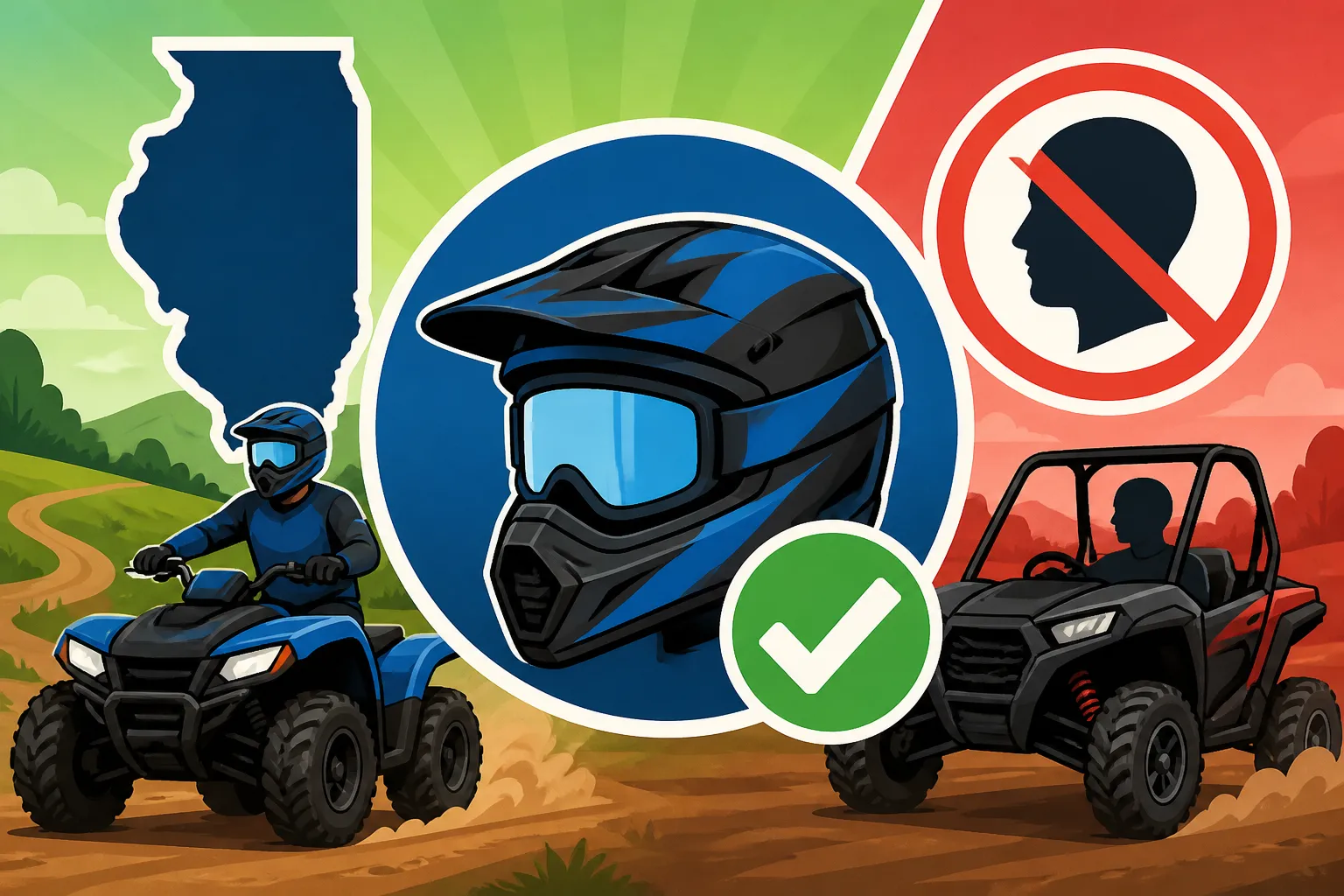
An Illinois riding park may have a helmet rule that is stricter than the minimum rules you expect, and requirements can differ between public and private sites. The safest plan is to check the specific park’s current policy before loading up, then bring a properly fitting helmet for every rider and passenger who may need one.
Which helmet rule applies at an Illinois riding park
There is no single helmet policy that can be assumed to cover every place where people ride ATVs and UTVs in Illinois. A park may set its own entry conditions, while a public or grant-assisted site may have requirements tied to how that site operates. Rules can also depend on the activity, the machine, the rider’s age, or whether someone is driving or riding as a passenger.
That means “Illinois allows it” is not enough to establish that a helmet is acceptable at a particular park. The site’s rules may require helmets for everyone on a machine, specify acceptable helmet standards, or impose additional conditions such as eye protection. A private park may have its own written policy and waiver; public riding areas can have different requirements. For a broader comparison, see Illinois Helmet Rules on State Areas and Illinois Private Park Helmet Rules.
Before your trip, check the policy for the exact park and the exact type of riding you plan to do. Look for rules on the park’s official website or registration materials, and call the site if the wording is unclear. Ask about both the helmet itself and who must wear one. A rule that says “helmets required” may not answer whether it applies to every passenger, every age group, or every machine.
| Riding situation | What to confirm before you go |
|---|---|
| Private riding park | Whether the park requires helmets and what standards or features it accepts |
| Public or grant-assisted site | Which site-specific rules apply and whether helmet requirements differ by area |
| UTV with passengers | Whether every passenger must wear a helmet, including children |
| Youth rider | Whether age-based rules or manufacturer guidance affect who may operate or ride |
| Rental machine | Whether the rental provider supplies a helmet and whether it meets the site’s requirements |
| Riding beyond the park | Whether separate street-use or other location-specific requirements apply |
A park’s general description is not always the same as its current entry policy. Check the rule for the day you are visiting, especially if you are relying on an older waiver, a social media post, or advice from another rider. A park may update its requirements, and an event can have additional rules.
Some sites are supported through public recreation programs or grants, but that does not mean they share every rule with a privately operated riding area. Review Illinois Grant Site Rules for Riders if you are heading to a grant-assisted site. For a private facility, read the written rules and waiver before unloading; Illinois Private Park Waivers and Rules explains why those documents matter beyond helmets.
If you plan to ride on a public road before or after visiting a park, do not assume the park’s helmet policy answers the road-use question. Road use can bring separate equipment and operating requirements. Keep those issues distinct from the riding-area rules and confirm them for the specific route and jurisdiction.
Choosing a helmet the park is likely to accept
Start with the park’s written requirements, not with a style preference or a product listing. If the park names a recognized safety standard, make sure the helmet’s label or documentation identifies that standard for the exact model. If the park does not state a standard, ask staff what they accept before purchasing or traveling.
A helmet made for powersports should be intended for the kind of riding you will do and should fit securely. A bicycle or construction helmet is not a substitute for a powersports helmet. Likewise, a helmet’s appearance, brand name, or high price does not prove it meets a particular certification. Check the product’s permanent label and manufacturer information rather than relying on a listing headline.
When shopping online, including on Amazon, confirm the manufacturer, model, size, safety information, and return policy. Be cautious of a listing that uses vague phrases such as “racing style” or “DOT look” without clear documentation for the specific helmet. If you cannot verify what the park requires or what the helmet is certified to, ask the park or the manufacturer before buying.
A full-face helmet offers more coverage around the face and chin than an open-face design, but the park’s rules determine what it accepts. Whatever style you choose, check that it is designed for motorized off-road riding and that it does not have damage or missing parts. A visor or goggles may help protect your eyes from dust, branches, and debris; some sites may also require eye protection separately. Confirm whether goggles can be worn with the helmet and whether the site requires a particular setup.
Fit matters as much as the label. A helmet should sit level and snug, without rocking freely or shifting over the eyes when the chin strap is fastened. The strap should close securely and stay in place. A helmet that is too loose can move during a crash; one that is uncomfortably tight may be difficult to wear consistently. Follow the manufacturer’s sizing instructions, and try the helmet on with any goggles you plan to use.
Before the trip, check the shell, liner, strap, buckle, and visor. Do not use a helmet with cracks, damaged retention hardware, or an interior that has deteriorated. Follow the manufacturer’s guidance after an impact; a helmet can have hidden damage even when the outside looks acceptable. If you are unsure about its condition, use another helmet rather than treating it as good because it still fastens.
For a straightforward preparation routine:
- Find the riding area’s current helmet policy.
- Confirm the accepted standards and whether eye protection is required.
- Match each rider and passenger with a properly fitting helmet.
- Check labels, straps, shells, and interiors before packing.
- Bring the written policy or registration confirmation if a requirement was clarified by staff.
- Recheck the rules if the destination or riding activity changes.
Children, passengers, rentals, and groups
Do not assume that a child is exempt from a helmet requirement because of age, size, or the type of machine. A park may require all riders and passengers to wear helmets, and it may have separate restrictions for young operators or passengers. Ask the site how its helmet rule applies to children, then check the relevant age and supervision rules as well. Illinois Rules for Young Riders covers a related issue: who may ride and under what conditions.
A child’s helmet needs to fit that child now. An adult helmet adjusted with extra padding or a loose chin strap is not a safe replacement for a correctly sized helmet. Children may also outgrow helmets, so check fit rather than assuming last season’s helmet still works. If a child will ride as a passenger in a UTV, verify both that the park allows that passenger and that the child has an appropriate place to sit and a helmet the park accepts. See Illinois Rules for Passengers on a UTV for passenger-related questions beyond head protection.
For a group, assign someone to check the rules and communicate them before departure. It is easy for one rider to assume helmets are optional while another assumes they are mandatory. Set a group standard that meets the strictest applicable park rule, and make sure every passenger is included. If one person arrives without a suitable helmet, the group may lose riding time while trying to find a replacement or may be unable to ride as planned.
Rental arrangements need their own check. Ask the rental provider whether helmets are included, what sizes are available, and whether the equipment meets the destination’s stated requirements. Do not assume a supplied helmet fits every rider or that a helmet available at the park will be the right size. If you prefer to bring your own, confirm that the park allows it and that the helmet meets its policy.
A helmet rule is only one part of a young rider’s preparation. Parks may have age, supervision, vehicle, or skill restrictions, and a helmet does not make an otherwise prohibited ride acceptable. Read the park’s full requirements and ask staff about any situation involving a child, an adult riding with a child, or a passenger who may not fit standard equipment.
Confirm the details before unloading
The most useful time to resolve a helmet question is before the drive, not at the gate. Start with the park’s official rules, registration page, waiver, or direct response from staff. If the information is unclear, ask a specific question: “Does every ATV and UTV rider and passenger need a helmet, and what standard must the helmet meet?” That is more likely to get a useful answer than asking simply whether helmets are recommended.
Keep a note of any important clarification, including the date and the staff member or office you contacted. This is not a guarantee that a policy cannot change, but it can help you remember exactly what was said when planning the trip. Reconfirm if the park’s posted rules differ from the response, or if your visit includes a special event or a different riding area.
Use this checklist the day before leaving:
- Confirm the exact location and the current helmet policy.
- Check whether requirements apply to both drivers and passengers.
- Confirm whether the park identifies an accepted helmet standard.
- Ask whether goggles or other eye protection are required.
- Check that every helmet fits its intended wearer and closes securely.
- Pack a backup only if it also fits and meets the park’s requirements.
- Review the waiver and any youth, passenger, or rental rules.
- Keep helmets protected from crushing or damage during transport.
At the site, follow staff directions even if you have ridden somewhere else under a different policy. A neighboring park may make different choices, and a helmet accepted at one facility may not meet another facility’s rule. If staff say a helmet is not acceptable, ask what specific requirement it fails and what alternatives the park allows. Do not try to solve the problem by removing a label, changing the strap, or relying on a verbal assumption that conflicts with the written rule.
Helmet preparation also has practical benefits beyond admission. Dust, brush, flying debris, and uneven terrain can make head and eye protection important even when a rider is experienced. A helmet that fits and stays fastened is more likely to be worn properly throughout the ride. Choose equipment that works with the riding conditions and with the park’s requirements, rather than treating the helmet as a last-minute item.
Rules may be only one part of getting ready for a riding area. Some parks require waivers, check-in, or other forms of preparation; Illinois Safety Certificates at an Illinois Riding Park can help with questions about safety-related requirements, while Illinois Permit Questions Riders Ask addresses common permit issues. Check each requirement separately: having a helmet does not replace a permit, waiver, or other entry condition.
When in doubt, contact the riding area directly and wait for a clear answer before setting out. Confirm the policy for every rider and passenger, bring helmets that fit, and avoid relying on assumptions about what another Illinois park allowed. That simple check can prevent a denied entry and help everyone arrive ready to ride.
Disclaimer
This article is for general informational purposes only and does not constitute professional advice. Laws, prices and regulations vary by location and change over time. Consult a qualified professional for guidance on your specific situation.