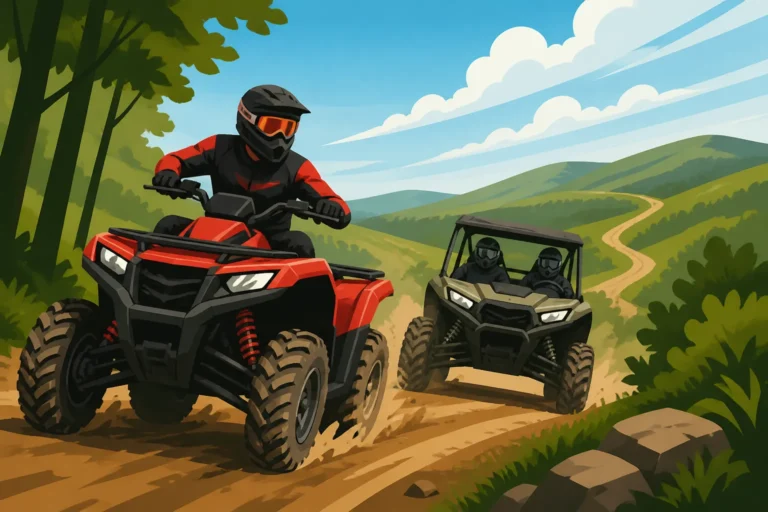
Gates Open at Eight at a Pay-to-Ride Park
An eight o’clock opening sounds straightforward until you’re unloading a quad, looking for the check-in line, and trying to find a waiver while your riding group waits. At an Illinois pay-to-ride park, the gate time is only one part of the morning. This guide helps you plan the drive, prepare for check-in, and get onto the trails without turning opening time into a scramble.
Plan Around the Gate Opening
Work backward from when you want to ride
If a park says the gates open at eight, treat that as the start of the arrival and entry process—not a promise that you’ll be riding at eight. You may still need to park, unload, check in, complete paperwork, get any required wristbands or vehicle stickers, and make sure everyone in your group is ready.
A useful approach is to choose a realistic “first ride” time and work backward. Consider how long it takes your group to drive to the site, locate the entrance, park a trailer, unload, and complete the park’s check-in steps. A family with children or a group arriving in several trucks may need more time than two experienced riders traveling together.
Before setting out, confirm the park’s posted opening and check-in instructions. Hours, reservation rules, and entry procedures can vary by riding area and may change with the season or a special event. Start with Checking Hours Before a Long Drive and Illinois Riding Areas That Take Reservations so you’re not relying on an old memory or a friend’s account of a previous visit.
Prepare the night before
The easiest way to lose time on arrival is to leave small decisions until you reach the gate. Put ownership documents and any required confirmations somewhere accessible, check that everyone knows the meeting point, and make sure your trailer is ready for the drive. If you’re traveling with a group, agree in advance on who is bringing tools, first aid, food, and any shared equipment.
It also helps to check the route to the riding area, not just the destination address. Some Southern Illinois riding areas are reached by rural roads where fuel, cell service, or a convenient place to turn around may be limited. Save your route before leaving, and check the park’s directions for the correct entrance. If you use onX Offroad to review nearby roads or plan navigation, compare that route with the park’s own directions before you tow.
| Part of the morning | What to prepare | Why it helps |
|---|---|---|
| Before leaving home | Check hours, reservations, directions, and any posted entry instructions | Prevents a long drive to a closed or full site |
| Before reaching the entrance | Keep confirmations and required paperwork accessible | Avoids searching through bags at check-in |
| After parking | Unload, secure the trailer, and organize helmets and gear | Reduces congestion and forgotten equipment |
| At check-in | Follow the park’s instructions for waivers, wristbands, and vehicle checks | Helps your group enter in the right order |
| Before riding | Review trail conditions, group plans, and the route back | Makes the first loop safer and easier to manage |
What to Expect During Check-In
Complete the paperwork before unloading if possible
A pay-to-ride park may ask riders to complete a waiver, confirm a reservation, or follow other entry procedures. The exact process differs by location, so check the park’s own instructions before you arrive. Some steps may be completed online in advance; others may need to happen at the entrance.
If your group includes minors, make sure the responsible adult knows what the park requires before reaching the gate. A child who cannot complete a form independently may need a parent or guardian to handle it. Read Illinois Waivers Signed Before You Ride and Parents Must Sign the Waiver for a Child before the trip, then confirm the specific park’s process.
Keep the group together during check-in when practical. If one person handles paperwork while another unloads, make sure you understand the park’s layout and directions first. Unloading in the wrong place or leaving a vehicle blocking an entrance can create unnecessary delays for everyone.
Expect park-specific requirements for riders and machines
Some parks use wristbands to identify checked-in riders and stickers to identify machines. Others may have different procedures. Follow staff instructions and don’t assume that a wristband, permit, or vehicle sticker from another site will meet the requirements where you are riding. For examples of common check-in steps, see Every Rider Gets a Wristband at Check-In and Every Machine Gets a Sticker at the Gate.
The park may also have rules about helmets, passengers, machine condition, noise, or permitted vehicle types. A machine that runs well at home may still need attention before a ride: check tires, brakes, lights if relevant, fuel, and any loose cargo. If the site checks machines or applies restrictions, staff—not a map app or a friend’s past visit—are the authority on what can enter.
Keep your paperwork and required items easy to reach, but don’t leave valuables visible in an unattended vehicle. Once the administrative steps are done, take a moment to confirm that each rider has the gear they need before the group moves away from the staging area.
Make the First Ride Deliberate
Choose a route that fits your group
Opening time can create a little pressure: everyone is ready, the machines are unloaded, and the trails are calling. That’s when it’s tempting to choose the longest or most challenging route immediately. A better first ride is often a short, manageable loop that lets everyone get comfortable with the terrain, check communication, and confirm the group is moving at a safe pace.
That matters especially when riders have different experience levels or machines with different capabilities. A new rider may be comfortable on a broad access road but not on a narrow, rutted section. Before leaving, agree on who leads, who rides at the back, where the group will stop, and what to do if someone needs to turn around.
Trail conditions can change with rain, maintenance, and traffic. Check the park’s current guidance before you choose a route, and don’t treat a downloaded map as proof that every trail is open. Illinois Trail Conditions Before You Tow is a useful reminder to check conditions as part of trip planning. onX Offroad can help you orient yourself and review a planned route, but use park signage and staff directions for site-specific closures and restrictions.
Give your group a simple communication plan
Cell service may be unreliable in some rural or wooded areas, so don’t build your plan around every rider being able to call or message. Before setting out, choose an obvious regroup point and agree on what the group will do if riders become separated. Keep the plan simple enough that children and less experienced riders can remember it.
Pack water, basic first aid, and any tools your group may need. A small issue—such as a loose strap, a minor scrape, or a machine that needs a quick check—can take longer to address when your group is far from the staging area. Carrying First Aid on a 30-Mile Loop offers a helpful way to think about what belongs in your riding kit, even if your planned ride is shorter.
Good trail manners also help prevent a fun morning from becoming a stressful one. Ride at a pace suited to the trail and your group, leave space between machines, and be patient when meeting other riders. Review Illinois Trail Etiquette Locals Expect before heading out, especially if some members of your group are new to shared trails.
Handle Delays, Crowds, and Changing Conditions
Have a backup plan if you arrive late
A late arrival does not always mean the day is lost, but it can change what is practical. You may need extra time to park, wait for check-in, or get your group organized. If reservations or daily capacity apply, being late may also affect whether you can enter. Confirm the park’s policy instead of assuming that an online booking guarantees entry at any time.
If you’re running behind, contact the park using its published instructions before making a last-minute change to the plan. Don’t stop on a narrow approach road to reorganize, and don’t unload until you know where the site allows trailers and vehicles to park. A quick check of Booking Before You Drive Down can help you plan around entry requirements and avoid arriving without a needed reservation.
For a group traveling in multiple vehicles, decide on a backup meeting point before the trip. If one truck gets delayed or separated, the rest of the group should know whether to continue to the entrance, wait at a safe location, or contact the park. onX Offroad can be useful for sharing or reviewing a route with your group, but make sure everyone also has the park’s address and directions.
Adjust the plan when the trail or weather changes
The morning plan should be flexible. Rain can make some routes slick or muddy, while heat can make a long ride harder than expected. If staff close a trail or recommend a different route, follow that guidance even if your map still shows the trail. Conditions on the ground take priority over a route you planned at home.
Before the group leaves the staging area, check that everyone understands the rules for the site: where riding is permitted, where to stop, and how to respond to signs or staff directions. Don’t assume that public land nearby is open to off-road riding just because the paid park is close to it. Illinois Grant-Assisted Riding Areas and Illinois Trails Closed to Machines can help clarify why access is site-specific rather than something to infer from the surrounding landscape.
An eight o’clock opening can make for an excellent start, but the smoothest mornings come from arriving prepared, checking the park’s own instructions, and giving the group time to settle in. Once you’re checked in and ready, choose a route that suits the riders with you, stay alert to changing conditions, and enjoy the ride without rushing through the parts that keep the day safe and manageable.
Disclaimer
This article is for general informational purposes only and does not constitute professional advice. Laws, prices and regulations vary by location and change over time. Consult a qualified professional for guidance on your specific situation.