Riding Etiquette at a Pay-to-Ride Park
A pay-to-ride park can turn a weekend into a great ride, but crowded trails, dust, muddy bottlenecks, and unclear passing habits can make the day stressful fast. Good etiquette helps protect other riders, the trails, and your own machine. This guide covers what to do before unloading, how to share the trail, and how to handle changing conditions at an Illinois ATV or UTV park.
Get Ready Before You Unload
Learn the park’s rules before arrival
A paid riding area is not automatically a free-for-all. Each park can set its own rules for hours, speed, vehicle types, passengers, sound, alcohol, pets, camping, and trail access. Read the park’s current information before you tow out, and pay close attention to anything you sign during registration. A waiver explains some of the risks you accept, while the park’s operating rules tell you what behavior is expected on its property. For more on what may differ from one private area to another, see Illinois Private Park Waivers and Rules.
It is tempting to skim the rules while someone else is unloading the trailer, especially if the family is eager to get riding. That is also when small but important details get missed: where to park, which trails are off-limits to a side-by-side, whether passengers are permitted, or how the park handles a trail closure. Decide who in your group will check the rules, and make sure everyone hears the essentials before the engines start.
A helmet and other protective gear are part of preparing responsibly, but do not assume every park sets identical requirements. Check the site’s rules for your machine and riding group, and make sure children have properly fitting gear. The park-specific considerations are covered in [Illinois Private Park Helmet Rules]. If a rule is unclear, ask staff before riding rather than guessing at the trailhead.
Keep check-in and unloading orderly
The area near the gate or unloading zone often has people on foot, machines being tied down, trailers maneuvering, and riders trying to get organized. Move slowly, follow staff directions, and avoid revving or spinning tires while others are nearby. Once your machine is off the trailer, park it where directed instead of blocking the next person’s access. A few calm minutes at check-in can prevent a damaged fender or a tense start to the day.
Get your group ready before occupying a busy launch area. Secure loose items, check that everyone knows how to stop and regroup, and make sure each rider understands where the meeting point is. If the park issues a wristband, vehicle sticker, or other proof of entry, follow the instructions for displaying or wearing it. Keep registration confirmations or other requested paperwork accessible rather than buried under riding gear.
| Before you ride | Why it helps |
|---|---|
| Read the park’s rules and waiver | Prevents surprises about access, passengers, or conduct |
| Check the permitted vehicle types and trails | Avoids taking a machine onto an unsuitable route |
| Secure loose gear and inspect the machine | Reduces the chance of items falling onto a trail |
| Agree on a meeting point | Makes regrouping easier if riders get separated |
| Follow parking and unloading directions | Keeps the entrance and launch area clear |
If the park takes reservations or limits access, verify your plans before making a long drive. Conditions and procedures can differ by park and by riding day. Illinois Riding Areas That Take Reservations offers related planning context, while Illinois Trailheads With Trailer Parking can help you think through trailer access when comparing places to ride.
Share the Trail With Care
Give other riders room
On a narrow trail, leave enough space between machines to react if the rider ahead slows down, stops, or encounters an obstacle. Riding close behind someone can throw dust into their face, limit their view, and leave them no room to choose a safe line. The problem is especially noticeable on dry, open stretches, where a UTV or ATV can stir up a cloud that hangs over the trail.
Do not assume a rider ahead has seen you. They may be focused on a rut, a turn, or a passenger. If you need to pass, wait until there is a clear, legal place with enough room for both machines. Make your presence known calmly, without crowding, startling, or forcing the other rider toward the edge. If passing is not clearly safe, wait. Saving a minute is not worth a collision or a damaged machine.
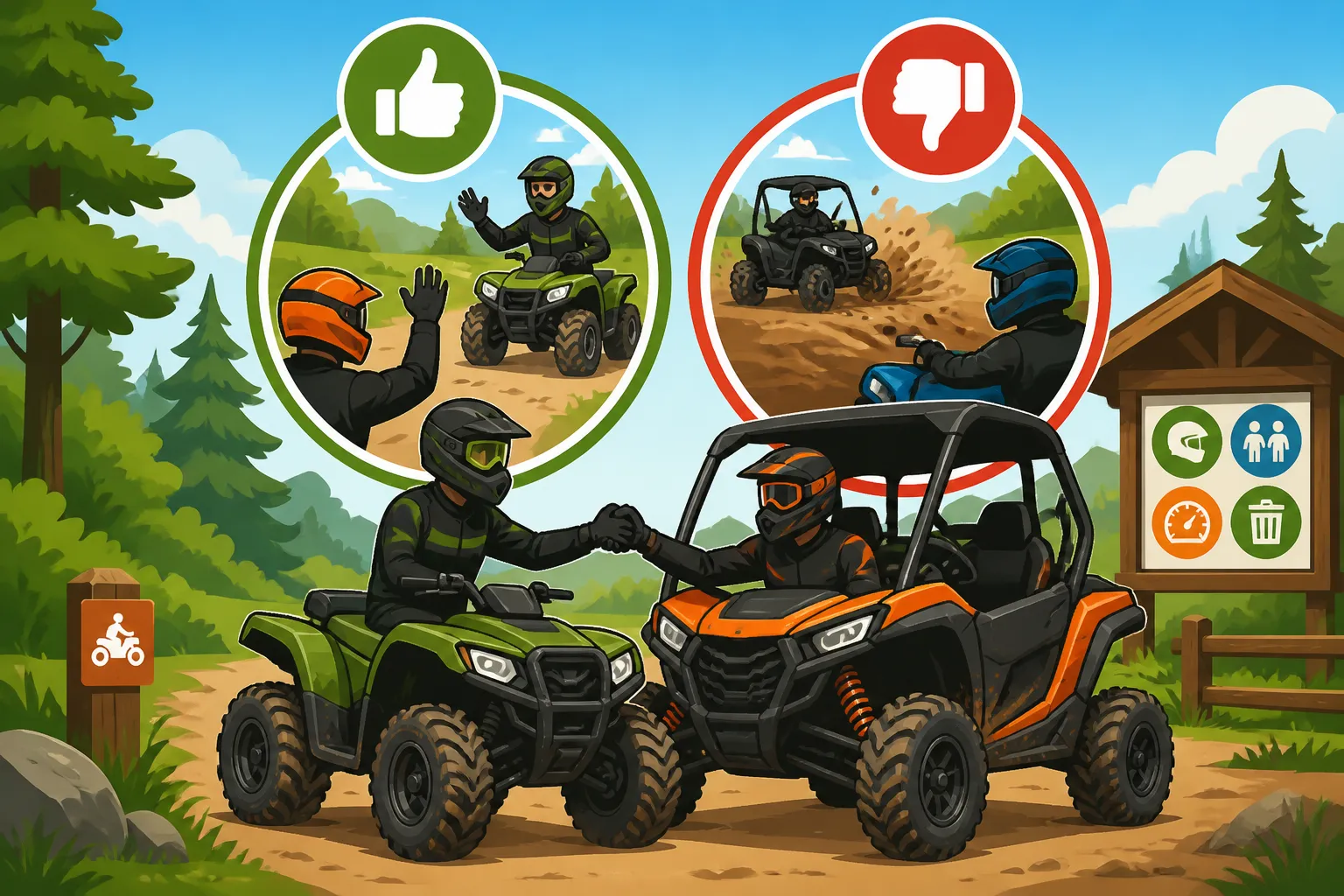
When approaching someone going the opposite direction, slow down and make space where the trail allows. Avoid cutting across the trail or kicking up debris as you pass. A friendly wave is welcome, but keep your hands in control whenever the terrain requires them. Trail courtesy is less about a formal gesture and more about making your speed and intentions predictable.
Ride in a way your group can manage
Groups often spread out without noticing. The faster riders get impatient, the newer riders feel pressured, and the group loses track of who is behind. Set a pace that matches the least experienced rider, not the most confident one. Agree on where to stop, and wait at turns or junctions long enough to confirm that the last rider has followed the correct route. These are useful habits whether you are riding with family or planning a larger outing; Illinois Group Ride Planning covers more ways to organize a ride.
Before leaving the staging area, choose a regroup point everyone can recognize. If you use a route-planning tool such as onX Offroad, or rely on a paper map, make sure riders know the agreed route and what to do if they become separated. A map does not replace signs, staff instructions, or park boundaries; it simply helps everyone share the same plan. Avoid stopping in the middle of a narrow trail to discuss navigation. Move to a safe pull-off first, where other riders can pass without squeezing by.
Trail difficulty is another group decision. A rider who is comfortable with steep, uneven ground should not pressure someone else into following. Pick routes that suit the least experienced person and the capabilities of the machines in the group. If you are unsure how a route is rated or described, ask park staff before committing. Illinois Trail Difficulty Ratings is a helpful related topic when comparing trail types and rider comfort.
Respect Trail Conditions and Park Property
Adjust your riding when the trail changes
A trail that felt easy in the morning can become slick, rutted, or crowded as the day goes on. Slow down when visibility drops, when the surface gets loose, and when you approach a blind bend or crest. Keep a safe distance from the machine ahead, and avoid sudden acceleration that sends mud, gravel, or dust toward other riders. In southern Illinois, clay and changing weather can make footing and traction feel different from one section to the next.
After rain, use particular restraint. Deep mud may be tempting, but repeated wheelspin can widen ruts and make a route harder for the next group. If a marked section is closed or staff direct riders away from it, respect the closure rather than trying to find a way around. Do not cut through brush or create a new path to bypass a muddy patch. For more context on why conditions matter, see Illinois Trail Closures After Rain.
A machine that is losing traction is a reason to pause and reassess, not to keep charging forward. Back out carefully if you can do so without putting yourself or others at risk, and ask for help if the machine is stuck. If you need to winch or recover a vehicle, keep bystanders clear and use equipment as intended. Do not attach a strap to a tree or park fixture unless the park permits it and the attachment method is appropriate.
Leave the property as you found it
Stay on designated routes. Shortcuts through grass, woods, fields, or closed areas can damage property and create hazards that the park may not be able to inspect quickly. Do not move signs, barriers, or trail markers, even if a route appears open beyond them. A closure may be in place for maintenance, erosion, safety, or a private-property boundary that is not obvious from the trail.
Pack out trash, including small items that are easy to overlook: drink lids, food wrappers, zip ties, and broken pieces of gear. Secure cargo before riding so it does not scatter along the route. If you find someone else’s dropped item, take it to the office or staging area rather than leaving it where it could become a hazard.
Noise and dust affect the experience for people beyond the group immediately behind you. Use a steady pace near campsites and gathering areas, and do not rev unnecessarily while waiting. If the park has quiet hours, follow them even if your group is still socializing. Illinois Private Park Quiet Hours is relevant if your ride includes an overnight stay. Riders who use onX Offroad or another navigation aid should still follow posted park signs and staff directions; a digital route line is not permission to leave the designated trail.
Handle Problems Calmly and Close Out the Day
Speak up early when something feels unsafe
If you see a rider heading toward a closed route or behaving in a way that could cause an immediate collision, prioritize your own safety and alert park staff. Do not chase, confront, or try to physically block another machine. Staff are better placed to address rule violations and decide what action is appropriate. If there has been a crash or injury, get help and follow the park’s emergency instructions.
A minor disagreement can often be handled with a short, respectful conversation. For example, if someone passes too close and covers your group in dust, wait until you are both in a safe place to speak. A calm comment such as “Could you give us a little more room next time?” is more likely to help than an argument shouted over engines. If the behavior continues, let staff handle it.
Make sure everyone in your group knows what to do if a machine breaks down or a rider is separated. Pick a simple plan: stay together when safe, move off the main trail if possible, and contact staff using the park’s stated procedure. If you use onX Offroad to keep track of your intended route, that may help with orientation, but do not assume a phone will have service everywhere. A paper map or a clear meeting-point plan can be useful backup.
Finish the ride without creating a last-minute hazard
When the group is ready to return, leave enough time to reach the staging area without rushing. Riders sometimes speed up near closing time or try to squeeze in one last loop, even when they are tired. Fatigue makes it harder to judge turns, obstacles, and other people’s movements. If someone is worn out, stop riding and head back at a controlled pace.
At the staging area, lower your speed and watch for people walking between trailers. Let the engine cool as needed before loading, and keep the loading zone clear for the next rider. Check the machine and trailer for loose equipment, trash, or anything that could fall during the drive home. If you damaged a trail, had a mechanical problem, or noticed a hazard, tell park staff before leaving. A quick report may help them address an issue before another group encounters it.
The best park etiquette is often simple: know the rules, ride predictably, give others room, and treat closures and property with respect. Those habits make the day safer and more enjoyable for everyone sharing the trails.
Disclaimer
This article is for general informational purposes only and does not constitute professional advice. Laws, prices and regulations vary by location and change over time. Consult a qualified professional for guidance on your specific situation.