Snorkels for a Mud Park Weekend
A mud-park weekend can turn into a long, expensive cleanup when water reaches an ATV or UTV’s air intake, electrical connections, or drivetrain. A snorkel can help relocate vulnerable intake and vent openings higher on the machine, but it does not make a vehicle waterproof. This guide explains what snorkels do, how to prepare for an Illinois mud-park trip, and what to check before and after riding.
What an ATV or UTV snorkel does and does not do
How a snorkel helps protect an engine
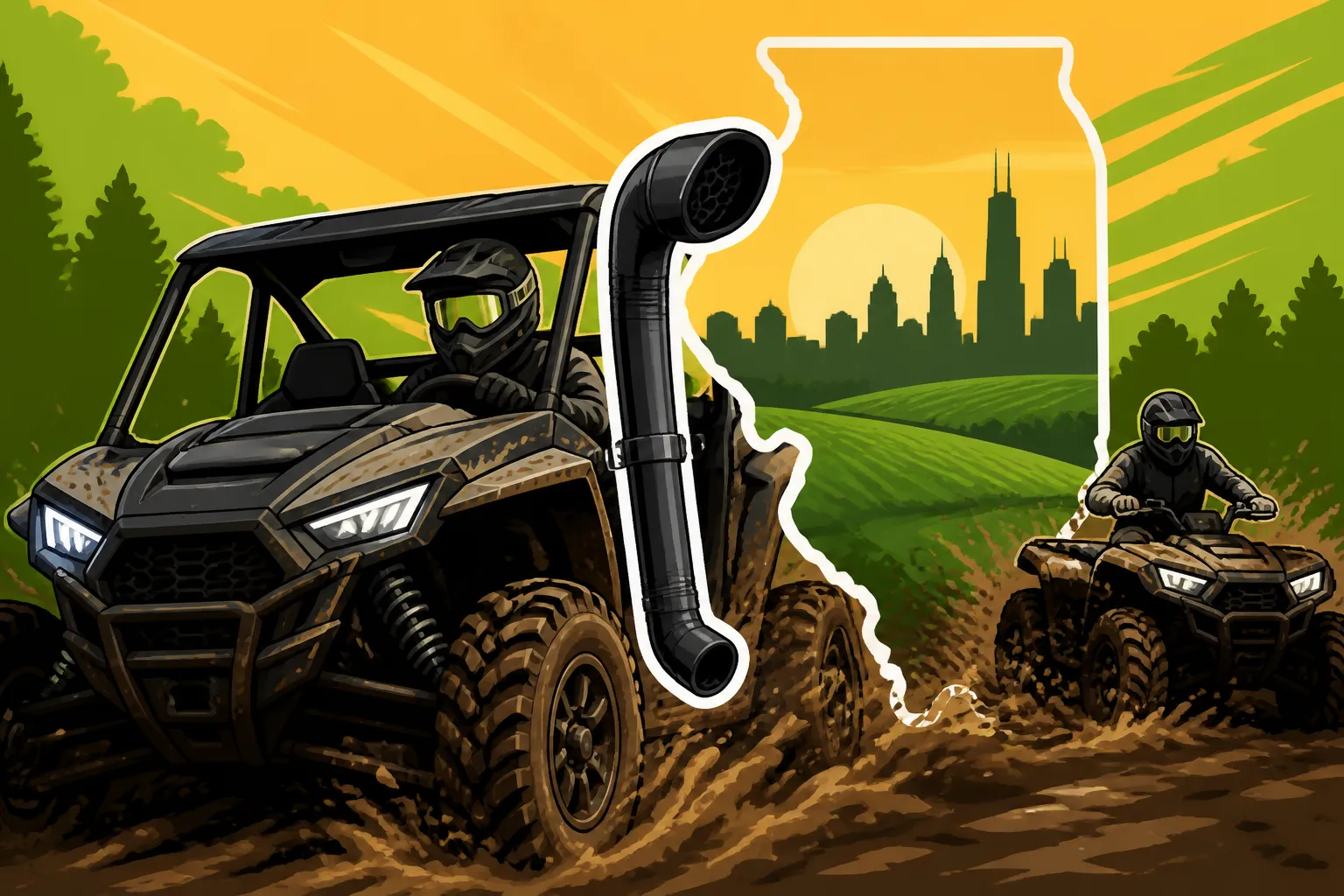
An engine needs air to run. On many ATVs and UTVs, the air intake opening sits relatively low, where deep water, splashing, or thick mud can reach it. A snorkel relocates the intake opening higher, often near the upper bodywork or cab area, using ducting connected to the airbox. Raising that opening can lower the chance of drawing water into the engine during a crossing or in muddy conditions.
Snorkel-related changes may also raise the openings of certain drivetrain vents, such as those for the transmission or differentials. Those vents let components breathe as they heat and cool. If an opening is submerged, water can sometimes enter as the component cools. Raising vent lines can help reduce that risk, but the details vary by machine and installation.
Think of a snorkel as one part of a preparation plan, not a protective bubble around the whole vehicle. It can help keep the engine’s air intake above water in some situations, but it cannot prevent water from entering through an unsealed electrical connector, a damaged seal, a low-mounted bearing, or another vulnerable opening.
What a snorkel cannot make safe
Even a well-installed snorkel does not give an ATV or UTV a guaranteed safe water depth. The vehicle’s actual limit depends on its design, the height and routing of the intake, the depth and movement of the water, and the condition of its seals and electrical components. Mud can hide holes, ledges, branches, and sudden drop-offs, so a route that looks shallow from the bank may be much deeper than it appears.
Water can also affect brakes, wheel bearings, sensors, clutches, and lubricants. A machine might keep running after a crossing and still have a problem that shows up later. If water gets into an airbox or engine, continuing to crank or ride can make damage worse. If a vehicle stalls in water, avoid repeatedly trying to restart it; get it to a safe place and inspect it before attempting to run it again.
Before relying on a snorkel, read the vehicle and snorkel manufacturers’ instructions and consider having the work checked by a qualified technician. For broader riding preparation, see Choosing Tires for Southern Clay and Mud and Illinois Private Off-Road Parks. A snorkel is most useful when the rest of the machine, the rider’s choices, and the riding area’s rules all make sense together.
Common snorkel and preparation mistakes
A snorkel can be installed incorrectly, damaged by a branch, or routed in a way that restricts airflow. Loose joints or poor sealing can undermine the setup. A clean-looking exterior is not proof that the intake system is properly sealed, so inspect the connections and follow the manufacturer’s maintenance guidance.
It is also easy to focus on engine intake height and overlook other openings. Depending on the vehicle, the airbox, transmission, differentials, electrical connections, and other components may need attention. Do not assume that every vent or connector is protected just because a snorkel is visible.
Finally, avoid treating the snorkel as a reason to ride through water you would otherwise bypass. Deep water, fast-moving water, and muddy holes with unknown bottoms can create risks that equipment alone cannot remove. If you cannot judge the depth or see a safe exit, choose another route.
Preparing your machine and weekend plan
Check the vehicle before installing or using a snorkel
Start with the owner’s manual and any instructions supplied with the snorkel kit. Confirm that the setup is intended for your exact machine and that any required installation or maintenance steps are understood. If you have bought a used ATV or UTV, check for prior modifications, missing covers, cracked intake parts, damaged wiring, or evidence of water exposure before heading to a mud park.
Inspect the airbox and intake area for a secure cover, clean sealing surfaces, and a properly seated filter. Check that snorkel ducting is firmly attached and routed away from hot parts and moving components. Look for pinched sections, loose clamps, rubbed-through spots, and openings that could take in water or debris. If anything seems uncertain, have a qualified shop inspect it rather than trying to improvise a repair at the trailhead.
Plan for the whole vehicle, not just the intake. Check fluids and follow the service schedule for any components that may be exposed to water or mud. Confirm that the brakes work, the tires are in suitable condition, and recovery gear is secure. The article Washing Clay Out of a Radiator and Frame is useful to review before you ride, since heavy clay can pack into places that are easy to miss during a quick rinse.
Choose a riding area and check its rules
Illinois riding opportunities include private parks and grant-assisted areas, and they do not all have the same terrain, access rules, operating hours, or equipment requirements. Check directly with the specific site before you load the trailer. Ask whether mud riding is allowed, whether machines with modifications must meet particular specifications, and whether there are restrictions on tire type, sound, vehicle width, or trail use.
Do not assume that a snorkel changes a park’s rules or gives permission to enter a water feature. Follow posted closures, staff instructions, marked routes, and any restrictions on riding through standing water. A park may close trails after rain or limit access to protect the land and riders. Review Illinois Trail Closures After Rain and Illinois Grant-Assisted Riding Areas when deciding where to go.
For navigation and trip planning, onX Offroad can help you organize a route and keep track of where you intend to ride. Use it as a planning aid, not as permission to ride on land or trails that are closed or unauthorized. Confirm access and conditions with the riding area itself, especially if your drive takes you near unfamiliar property or trail connections.
Pack for the ride and the return trip
A mud-park weekend needs more than a machine and a helmet. Bring basic tools appropriate for your vehicle, a tire repair kit if you know how to use it, gloves, eye protection, drinking water, and a first-aid kit. Secure loose items so they do not fall into the mud or interfere with the controls. Pack clean clothes and a way to protect the vehicle interior or trailer from wet gear on the drive home.
Bring supplies for a careful cleanup, too: clean water where permitted, brushes, and equipment for removing packed mud without forcing it into electrical connectors or seals. Ask the park what washing facilities are available and what cleanup practices it expects. Some facilities have specific rules about washing machines or draining mud and water.
A map or offline route information can be useful when phone reception is poor. You can use onX Offroad while planning, but save the details you need before arriving and follow the park’s own map, signs, and staff directions. Keep the trip modest if it is your first time riding a newly snorkeled machine; a shorter ride gives you a chance to spot loose fittings or other problems before committing to a full day.
| Before the weekend | What to check | Why it matters |
|---|---|---|
| Snorkel and intake | Ducting, clamps, seals, routing, and airbox condition | Helps identify loose or damaged connections |
| Vehicle condition | Brakes, tires, fluids, wiring, and visible seals | Mud and water can expose existing wear or faults |
| Riding area | Access, trail status, equipment rules, and closures | Rules and conditions vary by site |
| Recovery and cleanup | Tools, recovery gear, water, brushes, and clean clothing | Makes it easier to handle a problem and clean up afterward |
Riding in mud and water without taking unnecessary risks
Use a conservative approach to water crossings
Before entering water, stop and assess it from a safe location. Look for a clear entry and exit, signs of a sudden drop, current, floating debris, or a bottom that changes unexpectedly. If the water is opaque and you cannot judge its depth or what lies below, do not assume it is manageable just because another machine crossed earlier.
Avoid following another rider into a hole without checking it yourself. The first vehicle may have taken a different line, and the bottom can be churned up by tires. A hole can also change as machines pass through. If you are riding with a group, agree that nobody will pressure another rider into a crossing they are uncomfortable with.
If a crossing appears questionable, turn around or choose a marked alternative. A snorkel may reduce one specific risk, but it does not make deep or moving water predictable. Keeping the vehicle on designated routes also protects the riding area and helps avoid conflict with staff and other visitors. Illinois Trail Etiquette Locals Expect offers more guidance on sharing trails responsibly.
Protect the machine while riding
Ride at a pace that lets you respond to changing terrain. Sudden acceleration can throw mud and water into places you did not intend to expose, while a hard impact in a concealed hole can damage the machine or injure a rider. Keep a safe gap between vehicles so that the person ahead does not obscure your view or send debris directly toward you.
Stay alert for signs that the machine is not behaving normally: a change in engine sound, a warning light, poor throttle response, unusual vibration, or a wet or muddy airbox. Stop in a safe place if something seems wrong. Continuing to ride because the engine has not stopped can turn a small issue into a more serious one.
Follow park guidance on where you can ride and what equipment is permitted. If you are visiting a grant-assisted location, make sure you understand the applicable access requirements before unloading. Illinois OHV Permits: Two Stickers Explained explains why different permits or stickers may apply to Illinois riding, while Illinois Trails That Allow Side-by-Sides can help you think through whether a particular type of machine is appropriate for the destination. Verify the details with the site before leaving home.
Keep the group plan realistic
A group ride can make a mud weekend safer and more enjoyable, but only if everyone agrees on boundaries. Decide on a meeting point, a plan for a separated rider, and a clear rule that nobody has to attempt a crossing they consider unsafe. Pair newer riders with experienced companions and avoid turning a difficult obstacle into a competition.
If conditions change during the day, adjust the plan. Heavy rain, rising water, poor visibility, or a vehicle that is running badly are good reasons to stop or head back. A route that was reasonable in the morning may become slick or difficult later. Use onX Offroad or another navigation aid to support your planning, while keeping the park’s posted routes and staff instructions as the authority on where riding is allowed.
Respect other users, keep speed appropriate for visibility and trail conditions, and avoid blocking an access route while checking a machine. A stuck vehicle can quickly draw a crowd, so move to a safe location when possible and follow the park’s recovery procedures. A weekend that ends with everyone and every machine safely back at the trailer is a better result than pushing through one more hole.
Cleaning and inspecting the machine after a mud-park weekend
Wash carefully instead of blasting everything
After riding, remove heavy mud before it dries and hardens. Use a gentle, controlled wash and work methodically around the frame, underbody, suspension, and radiator area. Avoid forcing high-pressure water directly at electrical connectors, seals, bearings, or the snorkel’s joints. A powerful spray can push water and grit into places that ordinary splashing might not reach.
Pay attention to the airbox and intake system. Follow the vehicle and snorkel manufacturer’s instructions for checking and cleaning them. If you find water in the airbox or filter area, do not simply reinstall the filter and start the engine. Check the guidance for your machine and get qualified help if water may have reached the engine.
Mud can hide damage, so inspect the vehicle again once it is clean. Look for loose clamps, cracked ducting, rubbed wiring, bent guards, damaged tires, and packed debris around moving parts. Check that the snorkel openings are clear and that the ducting remains securely attached. Illinois Riding Season Considerations can help with broader planning for conditions that affect a machine throughout the year.
Check fluids and watch for delayed problems
Water exposure can have effects that are not obvious at the trailhead. Follow the maintenance schedule and instructions for checking fluids after wet riding. If a fluid looks milky, contaminated, or otherwise unusual, do not dismiss it. Ask a qualified technician to inspect the affected component before the next ride.
Pay attention to changes after cleaning: a new noise, a warning light, difficulty starting, unusual vibration, or a brake that feels different. Keep notes about where you rode and what the machine went through. That context can help a service shop diagnose an issue if one appears later.
Do not treat routine maintenance as optional just because the machine kept running through the weekend. A snorkel can help with intake placement, but it cannot prevent every kind of water intrusion or mud-related wear. Regular checks, sensible route choices, and following manufacturer guidance remain part of responsible ownership.
Make the next trip easier to plan
After the weekend, note what worked and what did not. Did the snorkel stay secure? Were there areas where the machine struggled? Did the group have enough time for cleanup? Write down any maintenance needs before the next trip so they do not become last-minute surprises.
If you found that a trail or feature was beyond your comfort level, choose a more suitable route next time. If a venue’s rules were unclear, contact staff before booking or driving down. onX Offroad may help you organize your route planning, but confirm current access and conditions with the riding area rather than relying on a map alone.
The best snorkel setup is not the one that encourages the deepest crossing. It is the one that is correctly installed, maintained, and used as part of a careful plan. Pair it with conservative decisions, proper cleanup, and respect for park rules, and you are far more likely to bring the machine home ready for its next ride.
Disclaimer
This article is for general informational purposes only and does not constitute professional advice. Laws, prices and regulations vary by location and change over time. Consult a qualified professional for guidance on your specific situation.