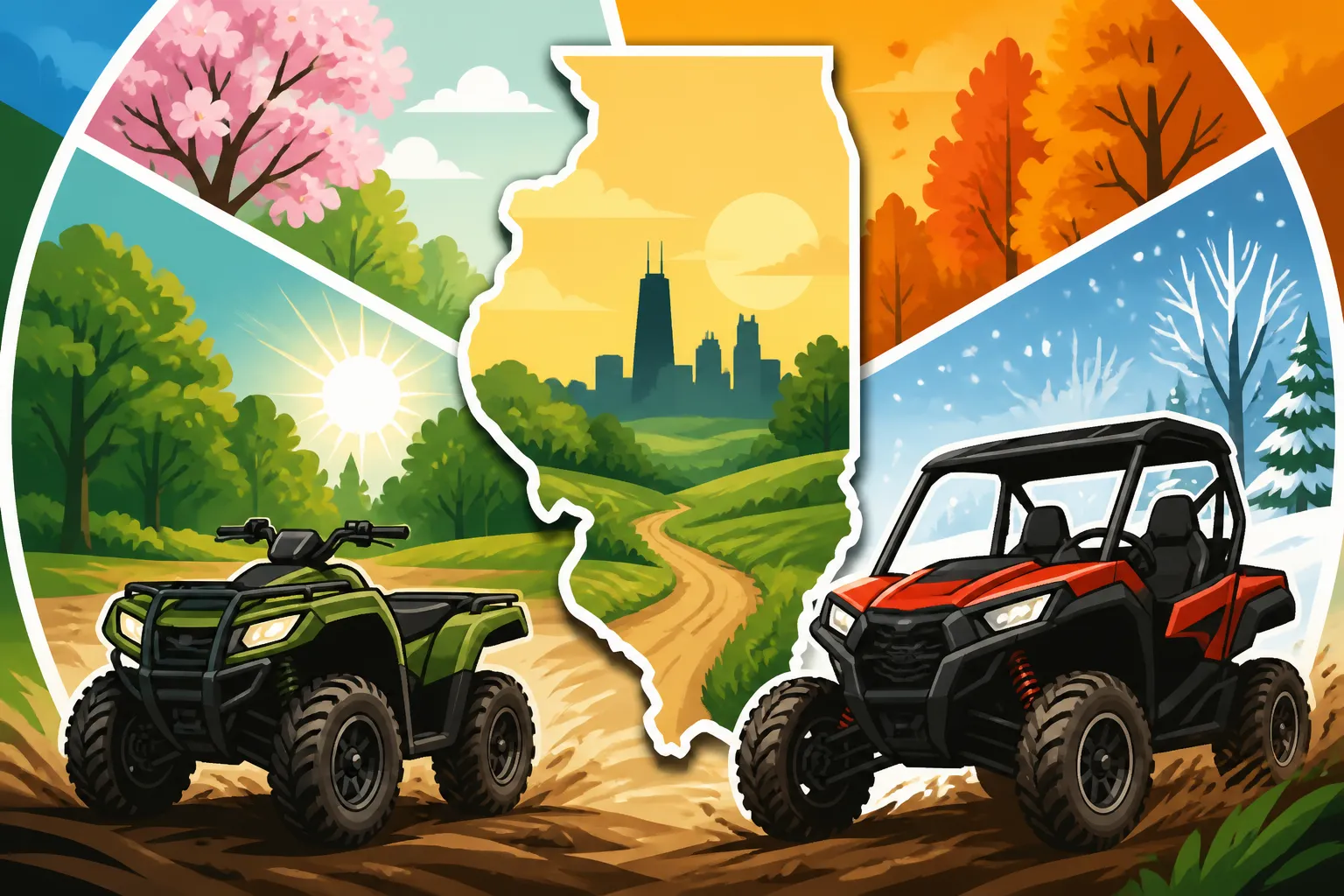
Illinois Riding Season Month by Month
Illinois does not have one riding season that fits every ATV and UTV trail. Southern clay can stay slick after rain, northern trails may be muddy or frozen, and individual parks set their own opening dates. This month-by-month guide helps you choose a realistic time to ride, plan around weather, and avoid towing to a closed or unsuitable area.
How Illinois riding seasons work
There is no single statewide riding calendar
The best time to ride depends on where you are going and what kind of experience you want. A private off-road park, a club-run area, and a grant-assisted riding site may all have different operating schedules, admission requirements, and rules. A date that works at one destination does not automatically mean another is open.
Weather also varies across Illinois. Southern areas around Harrisburg, Marion, and the Shawnee region generally have a longer stretch of milder riding weather than northern Illinois, but a warm afternoon does not guarantee dry trails. Spring rain can leave clay ruts soft, while summer heat can make a full day in riding gear exhausting. In fall, cooler air is welcome, but shorter daylight hours affect how much trail you can cover.
Before choosing a weekend, check the destination’s own calendar and rules, then look for recent information about trail conditions. The broad seasonal patterns in [Illinois Riding Season Considerations] are useful for planning, but the park or land manager determines whether riding is actually allowed on a particular day.
Trail surface matters as much as temperature
Illinois trail conditions can change quickly. A route that felt firm when the ground was dry may become deeply rutted after a storm. Clay can cling to tires and frames, while gravel and mine-area surfaces may drain differently. Even two nearby riding areas can behave differently depending on soil, shade, elevation, and maintenance.
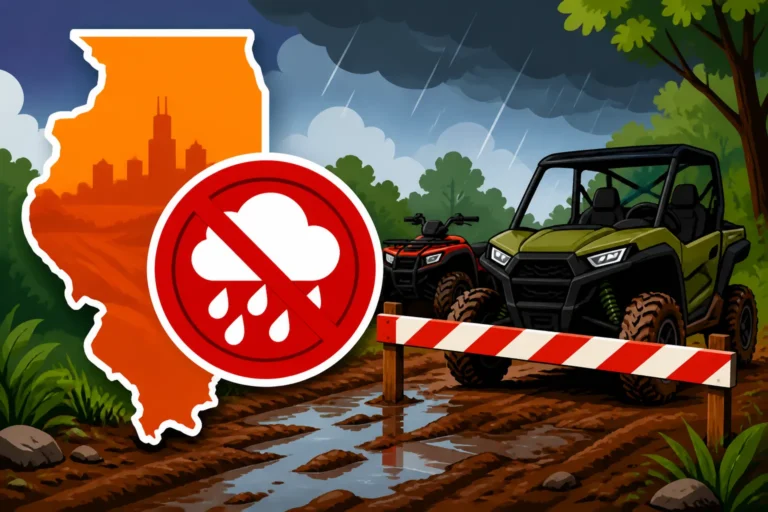
Rain is not just an inconvenience. Riding a saturated trail can damage the surface, create deep holes, and make recovery harder if a machine gets stuck. Some operators close trails or sections after wet weather to protect the land and keep riders safe. Check [Illinois Trail Closures After Rain] and the destination’s own updates before leaving home.
A map can help you understand the route and nearby roads, but it cannot tell you whether a trail is open right now. Tools such as onX Offroad may help with route planning and orientation; still, confirm access, closures, and permitted routes directly with the riding area. Keep a backup plan in case conditions change after you arrive.
Plan for the kind of ride you want
If you prefer firm trails and comfortable temperatures, spring and fall can be appealing, provided recent weather has not left the ground too wet. Summer offers longer daylight and more opportunities to camp, but calls for extra attention to hydration, shade, and machine temperature. Winter can bring quiet, uncrowded days, but cold, ice, and limited operating schedules make it a less predictable choice.
The right month also depends on your group. A family ride with younger riders may call for shorter loops, milder weather, and convenient facilities. A long weekend with experienced riders may suit a more remote destination, as long as everyone is prepared for changing conditions. For planning around known closures, site rules, and access requirements, use [Illinois Trail Conditions Before You Tow] as part of your pre-trip check.
Illinois riding season month by month
The table below describes typical planning considerations, not guaranteed conditions or opening dates. Always verify the specific park or trail before traveling.
| Month | What riding may be like | Practical planning note |
|---|---|---|
| January | Cold, short days, and possible snow or ice | Confirm the site is open and check for winter closures |
| February | Conditions can shift between thawing and freezing | Be ready for mud and changing access |
| March | Early spring can bring wet ground and unstable trails | Call or check updates before loading the trailer |
| April | Milder days, but rain and soft soil remain common concerns | Avoid assuming a warm forecast means dry trails |
| May | More riding opportunities as temperatures rise | Check seasonal openings and holiday availability |
| June | Longer days and warmer conditions | Carry water and plan breaks |
| July | Heat and humidity can make riding demanding | Start early and watch riders and machines for heat stress |
| August | Hot conditions may continue, with possible heavy rain | Check trail status and bring extra fluids |
| September | Cooler weather often makes longer rides more comfortable | Confirm operating dates as schedules may change |
| October | Crisp days and fall colors can make for pleasant rides | Plan for shorter daylight and busy weekends |
| November | Cooler, wetter, and darker conditions become more likely | Check hours and pack for a quick weather change |
| December | Cold, limited daylight, and possible winter closures | Verify that riding is permitted before departing |
January through April bring uncertainty
January and February are often the least predictable months for casual trail planning. Frozen ground may be firm in the morning, then turn slick as temperatures rise. Snow, ice, and wind can make exposed routes uncomfortable, while shaded areas may remain slippery longer than expected. A destination may also operate on a reduced schedule or close for the season, so don’t assume that a clear forecast means the gate will be open.
March and April can feel like the start of riding season, especially when a sunny stretch arrives. The catch is that the ground may still be saturated from rain or snowmelt. If your destination is in southern Illinois, check local conditions rather than assuming the region’s milder weather has dried every trail. [Illinois Riding in Spring] offers more seasonal considerations, including how to think about changing surfaces and gear.
In these months, be flexible. Call the riding area, check its official updates, and ask whether the trails are open to your type of machine. If staff say conditions are poor, postponing is usually better than risking a stuck machine or damaging a trail. Having a second destination in mind can also prevent a frustrating day if the first option is closed.
May through August offer long days and warm-weather riding
May often feels like a turning point: temperatures are more comfortable, daylight stretches later, and more riding opportunities may become available. But the month can still bring heavy rain, and seasonal opening dates differ from site to site. For example, Sahara Woods has a defined seasonal schedule, while private parks and club-run areas set their own calendars. Check [Illinois Riding Areas That Take Reservations] if you are planning a visit where advance booking may be important.
June, July, and August bring the longest daylight hours, which can make a day trip or camping weekend easier to plan. Heat and humidity are the tradeoff. Wear gear that protects you without trapping unnecessary heat, take regular breaks, and bring more water than you expect to use. Dust may also become an issue during dry stretches, while a sudden storm can change trail conditions quickly.
A simple heat plan makes the day more comfortable. Agree on a meeting point before riding, check that everyone has water, and take breaks before anyone feels depleted. On a group ride, the fastest rider should not set the pace for the whole day. A route-planning app such as onX Offroad can help your group orient itself, but use the park’s marked routes and instructions as the authority on where you may ride. For more specific warm-weather preparation, see [Illinois Riding in Summer Heat].
September through December bring cooler weather and shorter days
September can be one of the most comfortable months for riding: the worst summer heat may ease, but days can still be long enough for a full outing. October often brings crisp weather and fall color, making it a favorite time for scenic rides. These months can also be busy at popular parks, especially on weekends and holidays, so verify the schedule and reserve ahead where required.
By November, temperatures drop and daylight fades earlier. Dress in layers, inspect lighting before leaving, and avoid planning a route that depends on finishing at the very end of the day. Wet leaves can conceal ruts, rocks, and other surface changes, so reduce speed where visibility or traction is limited. [Illinois Riding in Fall] covers more of the seasonal adjustments that make cooler rides safer and more comfortable.
December riding depends heavily on the destination’s schedule and the weather. Some sites may be closed, while others may allow riding under specific conditions. Ice can form in shaded areas even when the rest of the route seems clear. Check the rules and operating hours before you drive, and be prepared to turn around if the ground is unsafe or the site has closed.
A practical month-by-month trip planning routine
Check the destination before you load
Start with the riding area’s own website or phone line. Confirm that it is open on your chosen date, that your ATV or UTV is allowed, and that your group meets any age, equipment, permit, or reservation requirements. Publicly accessible riding areas can have different rules from private parks, and a general trail map is not proof that a route is open to motorized use.
Next, check for recent rain, closures, and restrictions. A forecast for your home town may not reflect conditions at a destination several hours away. If you are heading to southern Illinois from Chicago, Rockford, or Peoria, the weather and trail conditions can change substantially along the drive. For a multi-day outing, [Illinois OHV Camping With Trail Access] can help you think through lodging and riding logistics.
Use onX Offroad as a planning aid if it helps you follow routes or understand the area, but do not treat a mapped line as permission to ride. Access can change, and private property or closed routes may sit close to an otherwise rideable area. Confirm the legal route with the land manager and follow posted signs once you arrive.
Match your packing list to the season
A useful packing list changes with the month. In spring, bring gear that handles mud and damp weather, along with a way to clean mud from essential parts of the machine. In summer, prioritize water, sun protection, breathable layers, and a plan for cooling down. In fall and winter, add warm layers, gloves suited to the conditions, and lighting for the shorter days.
Regardless of season, carry basic recovery and safety supplies appropriate to the route and your group. Let someone know where you are going and when you expect to return. In areas with limited cell service, don’t rely on a phone as your only source of directions or emergency communication. A downloaded map or paper backup can be useful when reception is poor.
Before heading out, inspect tires, brakes, lights, and other essential equipment. Mud and water can conceal mechanical problems, while cold weather can make a small issue harder to manage. If you ride with friends, agree on a simple plan for regrouping at intersections and handling a breakdown.
Use a backup plan rather than forcing a ride
Good planning includes accepting that a trip may need to change. A park can close because of rain, a reservation may be unavailable, or a trail can be too difficult for a beginner after conditions shift. Decide in advance what you will do if your first choice is not suitable: postpone, visit a different permitted site, or switch to another activity.
That flexibility also applies once you are on the trail. If the surface becomes dangerously slick, visibility drops, or a rider is tiring, shorten the route. Do not pressure a less experienced member of the group to continue just because the trailer has already been unloaded. A comfortable ride that ends early is better than a preventable injury or damaged machine.
Be considerate of other riders and the land. Stay on designated routes, follow speed and noise rules, and pack out what you bring in. If a trail is closed or posted against motorized use, do not enter it as a shortcut. Reviewing [Illinois Trail Etiquette Locals Expect] before a group outing can help keep the experience enjoyable for everyone.
Choosing the best month for your ride
Start with comfort, then check conditions
If comfortable temperatures are your priority, look first at late spring or early fall, while remembering that rain can make trails unsuitable. If you want long daylight hours and are ready for heat, summer may be a better fit. If quiet trails appeal to you and you are comfortable with cold-weather preparation, a winter outing may work where the destination is open and conditions are safe.
The “best” month is not necessarily the month with the nicest forecast. It is the month when the riding area is open, the trail surface suits your machine and experience, and your group can ride without rushing. A dry, cool day in October may be ideal for one group; a summer weekend with camping may suit another.
Make the decision with a final checklist
Before you leave, confirm the site is open, check its latest trail update, and verify any permit, reservation, or equipment requirement. Check weather at the destination, not only where you live. Think through daylight, clothing, water, fuel, and the route back to the trailer. If any essential detail is uncertain, ask the site manager rather than guessing.
That small amount of preparation can save hours of frustration. It helps you avoid arriving at a closed gate, protects trails from unnecessary damage, and gives everyone a better chance of enjoying the ride. Illinois offers different experiences across the year, but a successful trip always starts with the conditions and rules at the specific place you plan to ride.
Disclaimer
This article is for general informational purposes only and does not constitute professional advice. Laws, prices and regulations vary by location and change over time. Consult a qualified professional for guidance on your specific situation.