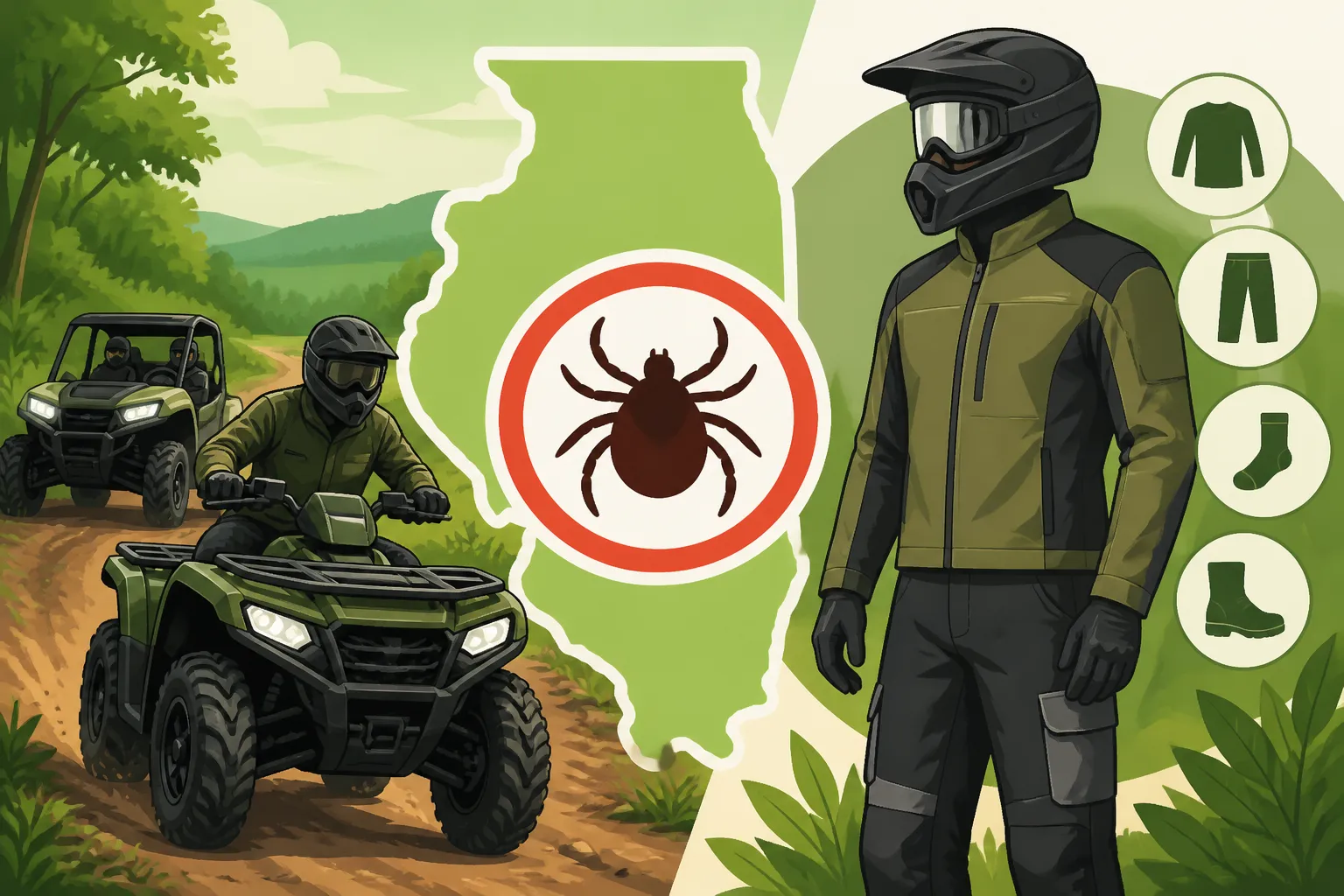
Illinois Tick Season and Riding Gear
A warm ride through Illinois brush can leave you wondering whether that crawling speck is a tick—and whether it has already attached. Ticks are a practical concern on wooded trails, grassy edges, and campsites, but the right clothing, repellents, and after-ride routine can reduce exposure. This guide explains how to prepare for tick season and check yourself, passengers, and gear after riding.
When Illinois riders are most likely to encounter ticks
Think about habitat and weather, not just the calendar
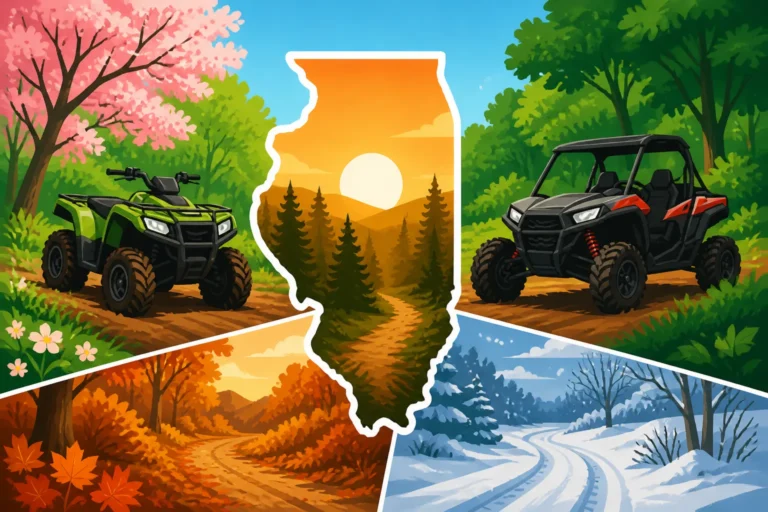
Tick exposure is not confined to a single month. In Illinois, riders may encounter ticks during much of the warmer riding season, especially when they travel through wooded areas, tall grass, leaf litter, or brush along a trail. Mild weather can also mean that ticks are active outside the stretch of summer when many people expect to see them. A useful rule is to take precautions whenever you ride through suitable habitat, rather than assuming a particular month is automatically safe.
The route matters as much as the date. A wide, mown trail through an open area may involve less contact with vegetation than a narrow track where grass and branches brush against your legs. Trail margins, parking areas, and campsites deserve attention too: riders often step into grass while unloading, walking a dog, setting up camp, or taking a break. Areas in and around Southern Illinois, including wooded riding country near the Shawnee region, can combine shaded trails, brush, and warm conditions that make protective habits worthwhile.
Check the riding site’s rules and route information before you head out, and stay on authorized trails. A map can help you understand where a route goes and avoid wandering into unfamiliar vegetation or off-limits areas. Tools such as onX Offroad can help with route planning, but a map cannot tell you whether ticks are present on a particular trail that day. Use it to plan your ride, not as a substitute for protective clothing and tick checks. For broader preparation, see [Illinois Trail Conditions Before You Tow] and [Illinois Riding Season Considerations].
Match your precautions to the ride
A short, dry ride on a broad trail may call for different clothing choices than a long day weaving through brush, stopping repeatedly, or camping overnight. Before you leave, consider how much vegetation is likely to touch you, how long you will be outside, and whether anyone in your group may need extra help with a tick check. Children, passengers, and riders with long hair can all benefit from a planned check rather than a rushed look in the parking lot.
Conditions can change during a ride. A route that begins in open terrain may lead into shaded woods; a dry trail may have overgrown edges; and a stop for lunch may put you in tall grass. If you are riding in spring, when layers are already part of the plan, use them to cover exposed skin without overheating. In summer, balance coverage with ventilation and frequent water breaks. The seasonal guides [Illinois Riding in Spring], [Illinois Riding in Summer Heat], and [Illinois Riding in Fall] can help you think through those changing conditions.
What to wear and carry for tick protection
Choose clothing that creates a barrier
Wear long pants and a long-sleeved shirt when the terrain makes contact with brush likely. Tuck pants into socks or boots where practical, and choose snug cuffs that make it harder for ticks to reach skin unnoticed. Light-colored clothing can make crawling ticks easier to spot. It will not prevent a tick from attaching, but seeing one early gives you a chance to remove it before it settles in.
Riding gear still has to work for the ride. Choose breathable layers that allow you to move comfortably and do not interfere with controls, protective equipment, or safe operation. Avoid loose fabric that could snag on a machine or obscure your vision. If you are wearing a helmet, gloves, boots, and other protective equipment, treat tick protection as one part of the whole setup—not a reason to compromise fit or safety. On a hot day, plan water and cooling breaks rather than stripping down in the middle of brushy terrain.
Some clothing can be treated with products containing permethrin, but follow the product label carefully. Such products are intended for clothing or gear as directed, not for direct application to skin. Do not assume that every garment or treatment lasts indefinitely; follow the label’s instructions about use, washing, and retreatment. If you have questions about using a repellent on your skin, check the label and ask a healthcare professional or pharmacist about what is appropriate for you.
Use repellents according to their labels
An EPA-registered insect repellent may be part of your routine when you will be outdoors in tick habitat. Products with ingredients such as DEET or picaridin are commonly used for this purpose. Read the label before applying: it explains where the product can be used, how often it may be reapplied, and any age-related precautions. Do not apply repellent to irritated or broken skin, and take care around eyes, mouth, and hands.
If you are riding with children, choose and apply products according to the label’s directions for their age. An adult can apply repellent to their own hands first and then carefully apply it to a child’s exposed skin when the product instructions allow. Avoid spraying directly onto a child’s face, and do not let children handle the container. If someone in your group has sensitive skin, allergies, or another concern, check with a clinician or pharmacist before the ride rather than improvising with a product.
Pack a small, easy-to-reach kit with repellent, fine-tipped tweezers, a sealable bag or container, and a change of clothes. A compact first-aid kit can help keep the essentials together, though tick removal supplies should be easy to find without unpacking everything. For longer routes, see [Carrying First Aid on a 30-Mile Loop]. If your route plan includes a private park or campground, check its rules before you arrive; [Illinois Private Park Waivers and Rules] covers the kinds of site-specific requirements riders should expect.
| Riding situation | Practical preparation | After the ride |
|---|---|---|
| Short ride on an open, mown route | Wear riding gear that covers skin; carry repellent and tweezers | Check exposed skin, clothing, and footwear |
| Wooded or brushy trail | Add long sleeves and pants; secure cuffs; use repellent as labeled | Do a full-body check and change clothes |
| Long ride with repeated stops | Reapply products only as directed; keep a tick kit accessible | Check again after breaks and at the end of the day |
| Overnight ride or campsite stay | Pack clean clothes and a separate bag for worn gear | Inspect bedding, bags, and clothing before settling in |
How to check for ticks after a ride
Check yourself, passengers, and children carefully
Make tick checks part of packing up, not an afterthought once you are home and exhausted. Look over clothing before getting into a vehicle, paying attention to cuffs, seams, waistbands, and places where fabric has been in contact with brush. A tick may be crawling on clothing before it reaches skin. Change into clean clothes when possible, and keep worn riding clothes separate until you can inspect or wash them.
At home, check your whole body using a mirror or ask someone you trust to help with areas that are difficult to see. Pay attention to the hairline and scalp, behind the ears, under the arms, around the waist, behind the knees, and in and around the groin. Also check where clothing fits tightly, such as sock lines and waistbands. Parents should help children with their checks; a quick glance at the arms and legs can miss less visible areas.
A shower soon after coming indoors can help you look for ticks and wash away unattached ones. It is not a replacement for a careful body check, especially if you have been in brush or tall grass. Check pets as well, following advice from their veterinarian and using products intended for the animal. A tick on a dog can end up in a vehicle, tent, or home even if the rider never noticed it during the trip.
Inspect equipment and deal with an attached tick promptly
Ticks can be carried home on clothing, packs, towels, and camping gear. Inspect gloves, boot tops, seat covers, helmets, and bags, especially if they were placed on the ground or brushed against vegetation. Keep dirty gear in a separate container or bag until you can check it. If you are camping, look over blankets and sleeping areas before turning in, and avoid putting gear directly into clean bedding.
If you find an attached tick, use fine-tipped tweezers to grasp it as close to the skin as possible and pull upward with steady, even pressure. Avoid crushing the tick with your fingers or using folk remedies such as heat, petroleum jelly, or nail polish. After removal, clean the bite area and your hands. If the tick is difficult to remove, the bite area becomes concerning, or you are unsure what to do, contact a healthcare professional for advice.
Note when and where you think the bite happened, and watch for symptoms afterward. Tick-borne illnesses can have different signs, and not everyone develops the same symptoms or a noticeable rash. Seek medical advice if you feel unwell after a possible bite, develop a rash, or have other symptoms that concern you. Prompt professional guidance is especially sensible when the person bitten is a child or has a health condition that may affect their risk.
Build tick checks into your Illinois ride plan
Make the routine easy for your whole group
Tick prevention works best when it is simple enough to repeat. Before unloading, agree on who has repellent and tweezers. At the trailhead, remind everyone to stay on marked routes and avoid brushing through tall grass when there is a clear alternative. During breaks, check socks and pant cuffs, especially after walking through vegetation. At the end of the ride, make a quick clothing check before anyone climbs into the truck or camper.
A group leader can make the routine feel normal rather than alarming. For example, after a ride near Marseilles or a wooded Southern Illinois trail, the group can inspect clothing while loading machines, then do a more thorough check after changing at home. If children are riding, build in a parent-assisted check before the ride home and another once everyone is settled. A small bit of planning is easier than trying to remember every detail after a tiring day.
Use maps and site information to plan where you will ride, park, and stop—but keep expectations realistic. onX Offroad may be useful for reviewing routes and terrain before departure, while the riding area’s own guidance should determine what is open and allowed. A route app cannot confirm trail maintenance, site rules, or tick activity in real time. For access and planning, [Illinois ATV Trails: Where You Can Actually Ride] and [Illinois OHV Camping With Trail Access] can help you think through the bigger trip.
Adjust your habits when conditions change
If a trail is overgrown, wet, or recently affected by heavy rain, contact with vegetation may be harder to avoid. Do not assume a route is safe or open simply because it appears on a map; check with the riding site before making a long drive. Conditions can change the character of a route, and a planned stop or campsite may put you in brush even if most of the ride is on a cleared track. [Illinois Trail Closures After Rain] offers more context on checking conditions before setting out.
A good plan is flexible. If the group arrives and finds a trail too overgrown for the clothing or conditions they have, choose a more suitable authorized route rather than pushing on unprepared. Keep water, a clean shirt, and tick-check supplies available, particularly when summer heat makes covered clothing uncomfortable. The goal is not to eliminate every outdoor risk; it is to make sensible choices that let you enjoy the ride while reducing avoidable exposure.
Before leaving, make sure everyone knows the after-ride routine: inspect clothing, check skin, separate worn gear, and speak up if a tick is found or someone feels unwell later. Repeating these steps after rides in different parts of Illinois makes them more automatic. With the right layers, label-directed repellent, and a careful check, tick season does not have to derail your riding plans.
Disclaimer
This article is for general informational purposes only and does not constitute professional advice. Laws, prices and regulations vary by location and change over time. Consult a qualified professional for guidance on your specific situation.