Towing a Small Trailer Behind an Illinois UTV
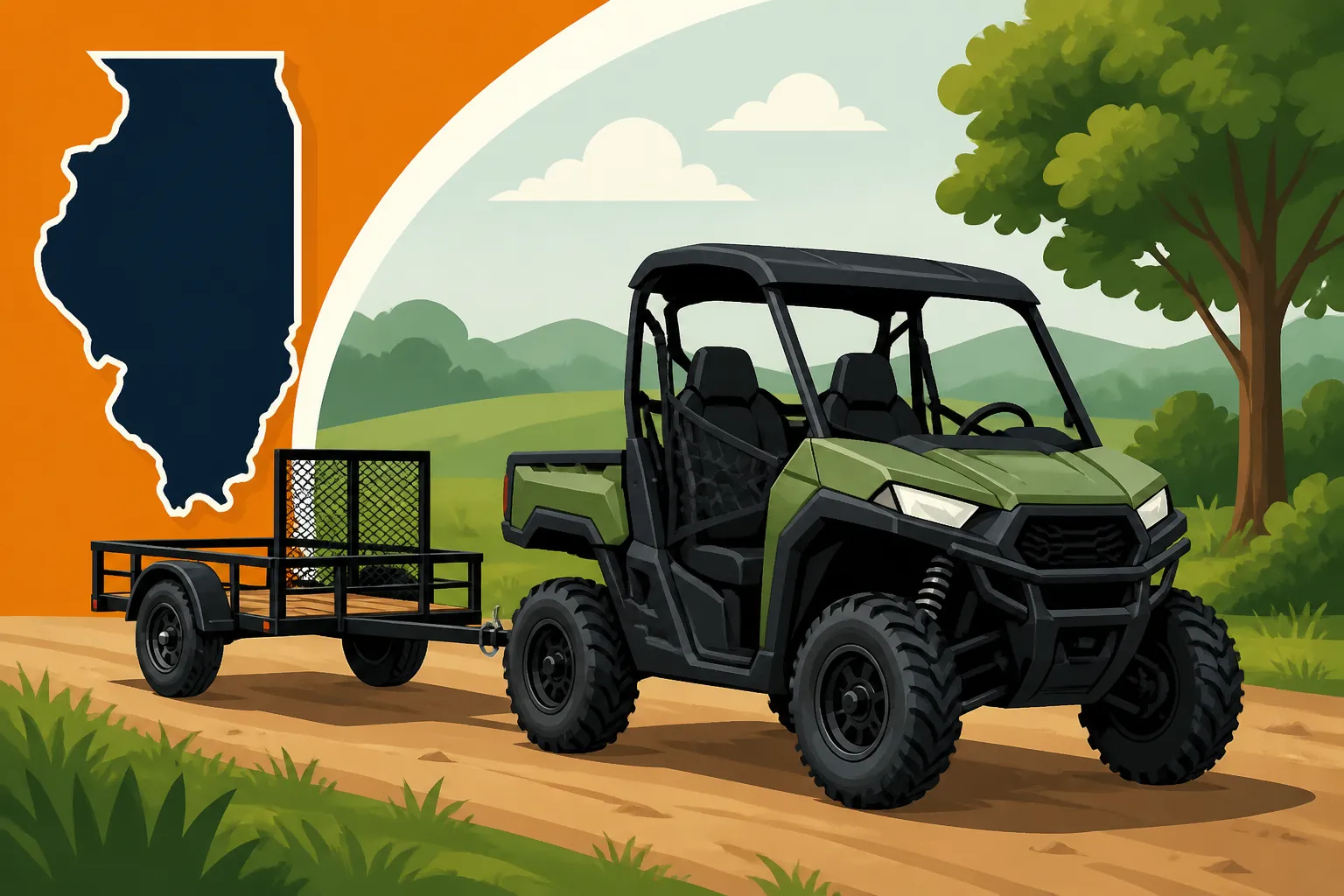
It's a common scenario: you've got a utility terrain vehicle (UTV) that's a workhorse around your property, and you're thinking about hitching up a small trailer to haul firewood, feed, or even camping gear for an adventure. But the thought of taking that combo onto an Illinois road often brings a wave of questions and uncertainty, making you wonder if you'll run afoul of the law or just look plain silly. This guide will cut through the confusion and help you understand the rules for towing a small trailer behind your UTV in Illinois, ensuring you can haul safely and legally, whether on your own land or where local ordinances permit.
Understanding Illinois' General Stance on UTVs and Roads
Let's start with the fundamental truth: Illinois law, at its core, generally views UTVs as off-highway vehicles (OHVs), meaning they are not inherently designed or legal for general public road use. This can be a huge source of frustration for owners who see their UTVs as versatile machines perfectly capable of light road duty, especially in rural areas. However, the state has provided avenues for local jurisdictions—like villages, cities, townships, and counties—to pass their own ordinances allowing UTVs on certain public roads. This local control is key, and it means that the rules can vary dramatically from one municipality to the next.
When you're thinking about towing a trailer, this patchwork of local rules becomes even more critical. What might be perfectly acceptable on your sprawling farm property could land you a hefty ticket just a few miles down the road if you haven't checked the specific regulations for that area. It's not just about if your UTV can be on the road; it's about whether your UTV with a trailer is permitted. You have to consider both the vehicle and its attachment.
Where Towing a Trailer is Generally Permitted
Before we dive into the nitty-gritty of equipment, let's establish the common places where towing a small trailer with your UTV is typically allowed or understood. This often boils down to a clear distinction between private property and public thoroughfares.
On Private Property
This is usually the most straightforward scenario. If you're on your own land, your private farm, a leased hunting ground, or any other property where you have explicit permission to operate, you generally have a lot more leeway. There aren't specific state laws dictating how you must equip your UTV or trailer when exclusively operating on private land. You can haul tools, feed, hunting blinds, or anything else your UTV can safely pull, within the manufacturer's recommended towing capacity.
For instance, imagine you're a farmer near Sterling, Illinois. You use your side-by-side to pull a small utility trailer loaded with fencing supplies from the barn to the back forty. On your own land, you don't need turn signals on the trailer or a special emblem; common sense and manufacturer guidelines for safe towing are your best friends. This freedom allows UTVs to be invaluable assets for property management, agricultural tasks, and recreational hauling.
On Farm Roads and Agricultural Use
Illinois law does offer some specific exemptions for vehicles used primarily for agricultural purposes. These exemptions often relate to licensing, registration, and sometimes even certain equipment requirements. If your UTV and trailer are genuinely being used to cross public roads between fields, haul agricultural products, or transport farm equipment within a limited scope, you might fall under these provisions.
However, it's crucial to understand that "agricultural use" has a specific legal definition and isn't a blanket pass to use your UTV and trailer for any purpose on public roads. You're typically expected to have the distinctive orange [The Orange Farm Emblem Your UTV Must Carry] displayed, and the travel must be directly related to farm operations. For example, moving a trailer of harvested corn from one field to another across a township road might be permissible, but hauling your fishing boat to the lake (even if you're a farmer) would not. Always verify the specifics of the agricultural exemption with your local authorities or the Illinois Department of Natural Resources (DNR) to ensure compliance.
Within Permitted Local Jurisdictions
As mentioned, many Illinois towns and counties have embraced the idea of allowing UTVs on their local roads. If a village like Byron or Ramsey has passed an ordinance permitting UTVs on certain streets, these ordinances often include provisions (or lack thereof) for towing trailers. This is where it gets really important to do your homework. You cannot assume that just because your UTV is allowed, your UTV with a trailer is also allowed.
For example, a village ordinance might state that UTVs are allowed on roads posted 35 mph or less, provided they have specific safety equipment. It might then add a clause about towing: "Trailers towed by UTVs must also be equipped with functional tail lights and turn signals if they obstruct the UTV's original equipment." If you're looking to tow within one of these areas, you'll need to carefully review the specific local ordinance. Don't be afraid to visit your village or county clerk's office and ask for a copy of their recreational vehicle or UTV ordinance. [Illinois Ordinance Lookups Before You Ride] can be a great starting point for research.
Essential Equipment for Towing a Trailer on Illinois Roads
If you plan to tow a trailer with your UTV on any public road in Illinois, even if a local ordinance permits it, you absolutely need to focus on safety equipment. Many of the requirements for UTVs themselves extend to anything they are towing. This isn't just about avoiding a ticket; it's about ensuring visibility and safety for everyone on the road.
Hitches and Towing Capacity
First things first: your UTV needs a proper hitch. Most modern UTVs come equipped with a receiver hitch, typically a 2-inch receiver, which makes connecting a trailer fairly straightforward. Ensure your hitch is securely mounted and rated for the weight you intend to tow. Never exceed your UTV manufacturer's stated towing capacity. This figure accounts for the engine, transmission, frame, and braking capabilities of your machine. Overloading can lead to dangerous situations, including loss of control, brake failure, and damage to your UTV.
While a simple ball hitch is common, consider the type of trailer you're using. For heavier loads, a pintle hitch or a more robust ball mount might be necessary. Companies like SuperATV offer a range of heavy-duty hitches and towing accessories designed to integrate seamlessly with various UTV models, helping you achieve safe and reliable towing within your machine's limits.
Lighting Requirements for the Trailer
This is perhaps the most critical aspect when towing on public roads. If your trailer obstructs the UTV's brake lights or turn signals, or if you're towing at night, your trailer must have its own functioning lights. This typically includes:
- Tail Lights: Red lights visible from the rear.
- Brake Lights: Red lights that illuminate when the UTV's brakes are applied.
- Turn Signals: Amber lights that flash to indicate turns, synchronizing with the UTV's signals.
- Reflectors: Red reflectors on the rear and amber reflectors on the sides, especially if the trailer is wide or long.
Many small utility trailers sold today come with basic lighting kits, but you'll need to ensure they are properly wired to your UTV's electrical system. Aftermarket wiring harnesses are often available for UTVs, making this connection easier. If your trailer doesn't have lights, or if they are damaged, you will need to add them. [Illinois Non-Highway Vehicle Equipment List] touches on some of these requirements for the UTV itself, and you should consider how these principles apply to the towed unit.
Safety Chains
Safety chains are non-negotiable when towing on public roads. These chains provide a backup connection between your UTV and the trailer in case the primary hitch connection fails. They must be crossed under the tongue of the trailer and securely attached to the UTV's frame or designated hitch points. This crossing pattern helps cradle the trailer tongue if it detaches, preventing it from digging into the pavement.
Always use chains that are rated for the weight of your trailer and its load. Inspect them regularly for rust, wear, and damage. A broken safety chain could lead to a runaway trailer, creating a severe hazard for other drivers and pedestrians.
Slow-Moving Vehicle Emblem
If your UTV and trailer combination cannot maintain normal highway speeds (which is likely if you're on a public road where UTVs are permitted), you should display a [Illinois Requires a Slow-Moving Vehicle Emblem] on the rear of your trailer. This triangular, orange-and-red reflective emblem is a clear signal to other drivers that you're moving slower than typical traffic. It's a vital safety device, especially on rural roads or at dusk. While the UTV itself might have one, ensuring one is clearly visible on the trailer adds an extra layer of protection, particularly if the trailer obscures the UTV's rear.
Brake Systems for Heavier Trailers
For larger or heavier trailers, you might need to consider a trailer with its own braking system. While most small utility trailers used behind UTVs don't have independent brakes, if you're approaching your UTV's upper towing capacity, or if you're frequently descending hills, trailer brakes can significantly enhance safety. These can be surge brakes (which activate when the trailer pushes against the UTV) or electric brakes (which require a controller in the UTV). This is a less common requirement for the typical "small trailer" scenario but something to be aware of for specialized hauling.
Practical Considerations and Best Practices
Beyond the legal requirements, there are several practical tips and best practices that can make towing a trailer with your UTV safer and more efficient.
Weight Distribution and Load Security
Proper weight distribution is crucial for stable towing. Roughly 10-15% of the trailer's total weight (trailer + cargo) should be on the hitch. Too much tongue weight can overload your UTV's rear suspension, affecting steering and braking. Too little tongue weight can cause the trailer to sway violently, making it extremely difficult to control. Always load heavier items over the trailer axles and secure all cargo to prevent shifting during transit. Use straps, ropes, or cargo nets to tie everything down tightly. A shifting load can quickly destabilize your UTV and trailer combination.
Tire Pressure
Ensure your UTV tires and trailer tires are properly inflated according to manufacturer specifications. Under-inflated tires can lead to instability, increased rolling resistance, and tire failure, especially when carrying a heavy load. Over-inflated tires can reduce traction and make for a harsher ride. [Illinois Rules for Towing a Trailer] indirectly relates to maintaining your vehicle and trailer in roadworthy condition.
Braking Distance and Maneuvering
Remember that towing a trailer significantly increases your braking distance. Anticipate stops and leave extra space between your UTV and other vehicles. Your UTV's braking system is designed for the UTV's weight, not for an additional few hundred or thousand pounds.
Maneuvering with a trailer, especially in reverse, takes practice. Make wider turns than usual to avoid the trailer clipping curbs or other obstacles. When backing up, small steering inputs go a long way; turn the steering wheel in the opposite direction you want the trailer to go initially, then correct. Consider practicing in an open, empty space before heading out on any public roads.
Visibility and Mirrors
While UTVs are typically required to have a rearview mirror for street legal operation, a trailer can significantly obstruct your rear view. Consider adding extended mirrors to your UTV or even a camera system if you regularly tow a wide or tall trailer. Being able to see what's happening behind you is essential for safe lane changes, turns, and backing up. Aftermarket solutions, perhaps from a brand like SuperATV, could offer versatile mirror options or even small camera systems to aid visibility. [Illinois Requires a Rearview Mirror] is a core requirement for UTVs on public roads.
Weather and Road Conditions
Towing in adverse weather conditions like heavy rain, snow, or high winds introduces additional risks. Wet roads reduce traction and increase braking distances. High winds can cause a trailer to sway dangerously. If the weather turns bad, it's often best to delay your trip or find a safe place to pull over. Similarly, be mindful of the road surface. Gravel roads, potholes, and uneven terrain can be more challenging when towing.
Insurance
While Illinois does not require specific insurance for off-road use unless riding on public roads, if you are operating your UTV and trailer on public roads, even locally permitted ones, you should definitely have adequate liability insurance. Many local ordinances explicitly require it. This isn't just about meeting a legal minimum; it's about protecting yourself financially in case of an accident. Check your current UTV policy to see if it covers towing and if your trailer is included. [Illinois Insurance Minimums for Street Use] are generally 25/50/20, and while these typically apply to full-sized vehicles, they are a good benchmark to consider for UTV street use.
The Fine Line: When Not to Tow
There are definite situations where towing a trailer with your UTV on public roads is either illegal, unsafe, or simply not worth the risk.
Without Local Ordinance Permission
This is the biggest hurdle. If your local village, city, township, or county has not passed an ordinance specifically allowing UTVs on its roads, then you cannot be there, with or without a trailer. Period. Attempting to do so risks significant fines, vehicle impoundment, and potential liability issues if an accident occurs. [Illinois Penalties for Illegal Street Riding] can be quite steep.
Exceeding Manufacturer's Capacities
As mentioned, exceeding your UTV's towing capacity is a recipe for disaster. This includes gross trailer weight and tongue weight. An overloaded UTV can struggle to accelerate, steer, and, most importantly, stop effectively. It puts undue stress on the engine, transmission, and frame, potentially leading to costly damage or catastrophic failure.
When the Trailer Obscures Lights or License Plates (If Applicable)
If your trailer is so large or awkwardly shaped that it completely blocks your UTV's tail lights, brake lights, turn signals, or any required registration (like a usage stamp or access decal), and you haven't equipped the trailer with its own corresponding lights, you're breaking the law. Even if you're not required to have a specific license plate on your UTV, you must ensure any identification or safety markers are clearly visible.
Ignoring Local Speed Limits and Equipment Rules
Even if a local ordinance allows UTVs, it will likely stipulate speed limits (often 35 mph or less) and specific equipment requirements (like mirrors, turn signals, headlights, brake lights, and a slow-moving vehicle emblem). If your UTV isn't properly equipped, or if you exceed the posted speed limit while towing, you're still in violation. This applies to the trailer's equipment as well, as discussed earlier.
Summary of Towing Rules and Requirements
Here's a quick overview to help clarify the nuances of towing with your UTV in Illinois:
| Scenario | Legality for UTV + Trailer Combo | Key Considerations |
|---|---|---|
| Private Property | Generally Allowed | Follow UTV manufacturer's towing capacity; common sense for safety. |
| Farm Use on Public Roads | Potentially Allowed | Must be for genuine agricultural purposes; display SMV emblem; check local agricultural exemptions. |
| Public Roads (Local Ordinance) | Allowed if Ordinance Permits | Must follow all local ordinance rules for UTVs AND trailers; adequate lighting, safety chains, SMV emblem required. |
| Public Roads (No Ordinance) | Generally Illegal | Do not operate. Risks significant penalties. |
| Interstates/Tollways | Absolutely Not Allowed | UTVs are banned, regardless of towing status. |
The bottom line when it comes to towing a small trailer behind your UTV in Illinois is that you need to be informed and cautious. What's acceptable on your farm might be illegal on the county road. Always prioritize safety, understand your UTV's limitations, and most importantly, know the specific rules of any jurisdiction where you plan to operate. A little research can save you a lot of headache and keep you enjoying your UTV for years to come.
Disclaimer
This article is for general informational purposes only and does not constitute professional advice. Laws, prices and regulations vary by location and change over time. Consult a qualified professional for guidance on your specific situation.