Towing a Load Across Your Own Farm Ground
Anyone who has spent time on an Illinois farm knows the sheer amount of work that goes into keeping things running, day in and day out. From hauling feed to moving tools or pulling a small trailer full of debris, your ATV or UTV often becomes an indispensable workhorse. But even on your own property, you might wonder about the best practices, equipment, and unspoken "rules" for safely and effectively towing loads. This guide will walk you through everything you need to know about using your off-road machine to tow across your private farm ground, helping you make the most of your hardworking equipment without unnecessary headaches or hazards.
The Freedom of Your Own Farm Ground: What the Law Says
When you're out on your own property, whether it's vast fields, a small hobby farm, or just a few acres with livestock, the rules are fundamentally different than when you're on public roads or designated riding trails. Illinois law generally grants landowners significant leeway on their private property, recognizing that off-road machines are often essential tools for agricultural operations. This means you have more freedom, but it also means understanding where the boundaries lie and what exemptions might apply to your machine when used for farm work.
Understanding the "Private Property" Exemption
The beauty of operating an ATV or UTV on your own farm ground is that many of the typical state regulations regarding usage stamps, decals, and even certain equipment requirements simply don't apply. The state of Illinois understands that a farmer isn't riding for recreation but for livelihood. This is a huge relief for many, as navigating all the different permits can sometimes feel like a full-time job. For instance, if your machine is exclusively used for agricultural purposes on your own land, you're generally exempt from needing an [Illinois Usage Stamp Explained] or an [Illinois Public Access Decal Explained]. These stickers are primarily for machines that will be ridden on public lands or grant-assisted trails.
It's critical to note the "exclusively" part of that statement. If you ever take your farm machine off your private property to ride a state park or a grant-assisted trail, then you will need the appropriate permits. But for machines that live and work solely within the boundaries of your farm, you're usually in the clear from these specific registration requirements. Many farmers appreciate this practical approach to off-road machine regulation, allowing them to focus on the tasks at hand.
When an Illinois Title Is Still Required for Farm Use
While some of the usage-related permits might be waived for farm machines, the requirement for an [Illinois ATV Title Certificates Explained] generally still stands. Since 1998, Illinois has required titles for off-highway vehicles, regardless of their intended use. This is primarily for ownership verification and to help combat theft, not necessarily to regulate how or where you ride. So, even if your quad or side-by-side spends its entire life on your acreage hauling hay, it should still have a valid Illinois title.
When you purchase a machine, whether new from a dealer or used from a private seller, part of that transaction involves transferring the title into your name. If you bought a machine many years ago, especially before 1998, and never titled it, you might find yourself in a tricky spot if you ever need to sell it or prove ownership. It's always a good idea to ensure your paperwork is in order for all your valuable equipment. This title proves you're the rightful owner, which is important for insurance, for future sales, or even just for your peace of mind. For more on this, check out [Illinois Titles for a Farm Machine].
Insurance Considerations for Farm Machines
Another common question for farmers is about insurance. While Illinois has specific minimum liability insurance requirements for ATVs and UTVs used on public roads, these typically don't apply to machines used strictly on private land. This is a significant point, as street-legal insurance can add up. The good news is that for farm-only use, you might qualify for [Illinois Farm Use Exemptions From Insurance], which means you're not legally mandated to carry liability coverage.
However, "not legally mandated" doesn't mean "not a good idea." Accidents can happen, even on your own property. A machine can roll over, catch fire, or sustain damage, and if it's a valuable piece of equipment, you'll want to protect that investment. Many farmers opt to add their ATVs or UTVs to their existing farm or homeowner's insurance policies, often as an "off-road vehicle" rider. This can provide coverage for damage to the machine itself (collision, comprehensive) or even some liability protection if someone else is injured on your property involving your machine. It's always wise to chat with your insurance agent about the best way to cover your farm workhorse.
Equipping Your Machine for the Haul: Hitches, Weight, and More
Towing on your farm isn't just about hooking up a trailer and going. It involves understanding your machine's capabilities, selecting the right accessories, and making sure everything is up to the task. Overlooking these details can lead to mechanical problems, unsafe situations, or just inefficient work.
Hitch Types and Their Uses
Most ATVs and UTVs designed for utility work come equipped with some form of a hitch receiver, or at least a point where a hitch ball can be attached. The most common types you'll encounter are:
- Ball Hitches: These are your standard trailer hitches, where a ball of a specific size (e.g., 1 7/8 inch or 2 inch) fits into a coupler on the trailer. They are great for small utility trailers, wagons, and anything you'd typically pull behind a lawn tractor.
- Pin Hitches (Drawbar Hitch): Often found on older or simpler utility machines, these involve a clevis-style hitch where a pin secures the trailer's tongue. They are robust but offer less flexibility in articulation compared to a ball hitch, often used for implements with single-point attachments.
- Receiver Hitches (2-inch Receiver): Increasingly common on UTVs and larger ATVs, these allow you to insert various accessories, including ball hitches, pintle hitches, or even specialized implements. The 2-inch receiver is incredibly versatile, letting you swap out attachments as needed. Many aftermarket accessory companies, like SuperATV, offer a wide range of receiver-mounted attachments that can significantly expand your towing capabilities.
The type of hitch you need depends entirely on what you're towing. If you're hauling a small dump cart for yard waste, a simple ball hitch is usually sufficient. If you're planning to pull a heavier livestock trailer or a sprayer, you'll want the robust connection and versatility that a receiver hitch can provide. Always match the hitch type to your trailer's coupler and ensure it's rated for the load you intend to pull.
Understanding Your Machine's Towing Capacity
This is perhaps the most critical factor in safe and effective towing. Every ATV and UTV has a specified towing capacity, which is the maximum weight the manufacturer recommends you pull. This figure takes into account the machine's engine power, frame strength, braking capability, and suspension. Exceeding this limit is not just risky, it's dangerous. It can lead to:
- Loss of Control: An overloaded trailer can push your machine, especially downhill or during braking, making it difficult to steer or stop.
- Component Damage: Stressing the engine, transmission, frame, and suspension beyond their design limits can lead to premature wear or catastrophic failure. Imagine snapping an axle because you're pulling twice what your machine is rated for.
- Reduced Braking Performance: The extra weight of an overloaded trailer significantly increases your stopping distance, which can be disastrous if you need to stop suddenly.
Always check your owner's manual for your machine's specific towing capacity. Don't guess, and don't assume. If you're unsure of the weight of your load, it's better to be conservative or break it down into multiple trips. Many manufacturers will also specify a maximum tongue weight, which is the downward force the trailer's tongue exerts on the hitch. Too much or too little tongue weight can affect handling and stability.
Essential Towing Accessories and Upgrades
Beyond the basic hitch, there are several accessories and upgrades that can make farm towing safer and more efficient.
- Heavy-Duty Ball Mounts and Balls: Don't skimp on these. Ensure they are rated for your machine's towing capacity or higher. A good quality, solid steel ball mount can make a huge difference in durability.
- Winch: While primarily for recovery, a winch can be incredibly useful for positioning heavy loads, pulling out stuck equipment, or even loading items onto a trailer. Companies like SuperATV offer powerful and reliable winches that can be invaluable on the farm.
- Cargo Management: For open trailers, tie-downs, ratchet straps, and cargo nets are non-negotiable. Loose loads can shift, fall off, and create hazards. Securing your load properly prevents accidents and ensures you don't lose valuable materials.
- Suspension Upgrades: If you frequently haul near your machine's weight limit, or if you notice sagging, consider suspension upgrades. Heavy-duty springs or aftermarket shocks can help maintain proper ride height and improve stability under load.
- Heavy-Duty Tires: The right tires can make a world of difference. For farm use, you might want tires with a more aggressive tread for traction in soft ground, but also a robust sidewall for carrying heavier loads without flexing too much.
Smart Towing on the Farm: Best Practices for Safety and Efficiency
Towing on the farm isn't just about having the right equipment; it's also about adopting smart practices to ensure safety for yourself, others, and your valuable equipment. Think of it as developing a routine that minimizes risks and maximizes productivity.
Pre-Towing Checklist: Before You Hit the Fields
Before you even start your engine, take a few moments to run through a quick inspection. This simple habit can prevent many common towing mishaps.
| Item | Check | Why It Matters |
|---|---|---|
| Tires | Proper inflation (machine & trailer), no visible damage, good tread | Correct pressure ensures stability, prevents blowouts, and aids traction |
| Hitch Connection | Securely attached, coupler locked, safety pin in place | Prevents accidental detachment of the trailer |
| Safety Chains/Cables | Properly crossed (if applicable), securely attached to machine | Backup if the primary hitch fails |
| Lights/Reflectors | All lights working (if equipped), reflectors clean and visible | Essential for visibility, especially if near roads or in low light |
| Load Security | Material is tied down, balanced, not exceeding trailer capacity | Prevents shifting, falling off, or overloading machine |
| Brakes | Machine brakes feel firm, trailer brakes (if any) are functioning | Critical for stopping safely, especially with heavy loads |
| Fluid Levels | Engine oil, coolant, hydraulic fluid (if applicable) at correct levels | Ensures machine runs smoothly and prevents overheating under strain |
Taking just a couple of minutes to review these points can save you hours of trouble, potential repairs, or even injury. It's a small investment of time for a big return in safety and peace of mind.
Loading Your Trailer Correctly
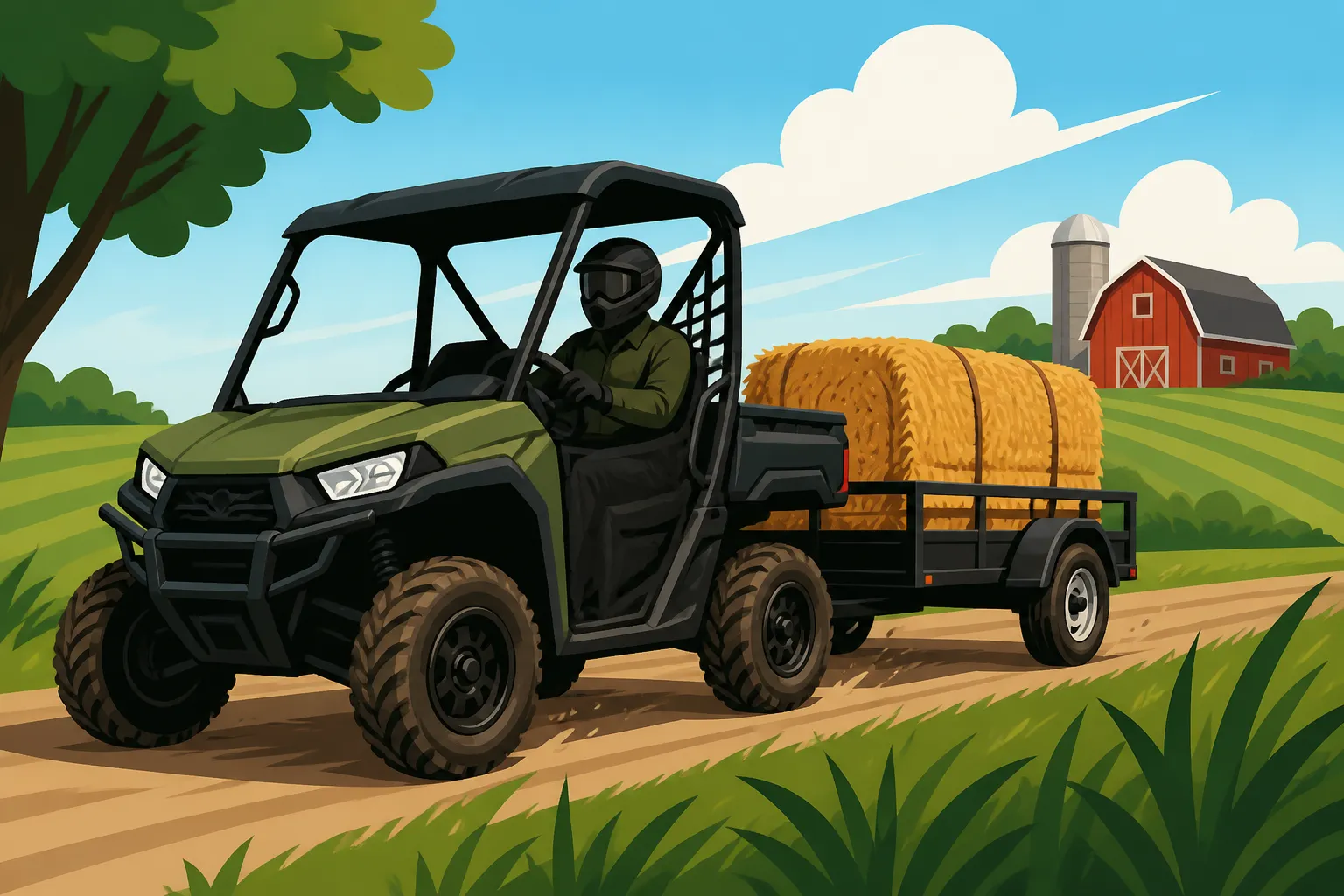
How you load your trailer significantly impacts stability and handling. A poorly loaded trailer is a hazard waiting to happen. The general rule of thumb is to aim for about 10-15% of the total trailer weight to be on the tongue (the part resting on your hitch).
- Too much tongue weight: This can press down too heavily on your machine's rear suspension, affecting steering and potentially lifting the front wheels, reducing traction.
- Too little tongue weight: This is often worse, leading to a "tail-wags-the-dog" scenario where the trailer sways wildly and can cause you to lose control, especially at speed or on uneven terrain.
Distribute the heaviest items over the trailer axles or slightly forward. Always secure your load tightly with straps or ropes so nothing shifts during transit. Even on your own relatively flat farm ground, bumps, dips, and turns can cause an unsecured load to move, leading to instability or objects falling off. This is where durable straps from a brand like SuperATV can really prove their worth, holding everything in place even over rough terrain.
Navigating Farm Terrain with a Load
Towing on a farm often means dealing with varied terrain: muddy fields, gravel lanes, uneven pastures, and sloped areas. Here are some tips for safe navigation:
- Go Slow: This is the golden rule of towing. Slower speeds give you more time to react to obstacles, control sway, and reduce strain on your machine.
- Anticipate: Look ahead for potholes, ruts, soft spots, or sudden changes in elevation. Plan your path to avoid rough areas when possible.
- Use Low Range (if available): Many UTVs and some ATVs have a low-range gear. Use it! Low range provides more torque for pulling heavy loads, especially uphill, and offers better engine braking on descents. It reduces strain on the engine and transmission.
- Braking: Brake early and gently. Remember that your stopping distance is significantly increased with a trailer. Avoid sudden, hard braking, which can cause the trailer to jackknife or lose traction.
- Turns: Take turns wide and slow. The trailer will cut inside your turning radius, so allow extra room to prevent it from clipping fences, trees, or other obstacles.
- Hills: Approach hills carefully. Downhill, let engine braking do most of the work in a low gear, only applying brakes gently if needed. Uphill, maintain a steady speed and avoid sudden acceleration that can cause wheelspin. Never attempt to turn sharply on a steep incline or decline with a heavy load.
For detailed information on general towing rules, you might find [Illinois Rules for Towing a Trailer] helpful, even though it primarily covers public roads, the safety principles are universal.
Keeping Your Workhorse Ready: Maintenance After Heavy Farm Use
Your ATV or UTV works hard on the farm, often in demanding conditions. Regular and proactive maintenance isn't just a suggestion; it's essential for longevity, reliability, and protecting your investment. Overlooking basic service can lead to costly repairs and downtime when you need your machine most.
The Impact of Farm Work on Your Machine
Farm work, especially towing, puts unique stresses on your ATV or UTV:
- Engine & Drivetrain: Constant pulling, especially in low gear or over uneven ground, can cause the engine to work harder and generate more heat. The transmission and drive shafts also bear a greater load.
- Suspension & Chassis: The weight of trailers, combined with rough terrain, continually tests your shocks, springs, bushings, and the frame itself.
- Brakes: Hauling heavy loads significantly increases brake wear. Your brakes have to work much harder to slow and stop the combined weight of your machine and the trailer.
- Tires: Carrying heavy loads and navigating varied terrain can accelerate tire wear, especially if inflation isn't optimal. Sharp rocks or debris can also cause punctures more easily.
- Dust & Debris: Farm environments are often dusty or muddy. This can quickly clog air filters, radiators, and contaminate bearings and moving parts.
Understanding these impacts helps you anticipate where maintenance attention is most needed. For general annual budgeting for your machine's upkeep, you can also look into [Illinois Maintenance Costs Per Year].
Essential Maintenance Schedule for a Farm Workhorse
Since your machine is working harder, you'll likely need to perform maintenance more frequently than if it were just a weekend recreational rider.
- Oil and Filter Changes: Check your owner's manual for severe-duty service intervals. Often, farm machines will need oil changes more frequently, perhaps every 50-75 hours of heavy use, rather than the standard 100 hours or so. Fresh oil protects the engine from the added heat and strain of towing.
- Air Filter Inspection and Cleaning/Replacement: This is absolutely critical in dusty farm environments. A clogged air filter starves the engine of air, reduces power, and can lead to premature engine wear. Check it daily or weekly, and clean or replace as needed.
- Coolant Levels and Radiator Cleaning: Keep an eye on coolant levels, especially after hard work. Regularly clean out your radiator fins to ensure proper airflow and prevent overheating. Mud, dust, and chaff can quickly pack in there.
- Brake Inspection: Check brake pads for wear and rotors for scoring more often. Ensure brake fluid levels are correct and that the brakes feel firm. Don't let them wear down to metal-on-metal.
- Suspension and Chassis Check: Periodically inspect all suspension components – A-arms, bushings, ball joints, and tie rod ends – for wear or damage. Lubricate grease points as recommended. Also, check the frame for any cracks or signs of stress, especially around the hitch area.
- Tire Pressure: Maintain correct tire pressure, especially when hauling. Under-inflated tires can cause excessive heat buildup, premature wear, and instability. Over-inflated tires reduce traction and can make the ride overly harsh.
- Drive System Inspection: Check drive belts (for CVT machines), universal joints, and CV boots for cracks or tears. Catching a torn boot early can prevent costly CV joint replacement down the line.
Protecting Your Machine During Downtime
Even a farm workhorse gets a break, especially during the off-season or when specific tasks are complete. Proper storage is key to extending its life. If you're parking your machine for an extended period, especially over the colder months, consider the guidance in [Illinois Machines Stored Over Winter]. This includes steps like stabilizing fuel, disconnecting the battery, and ensuring it's cleaned thoroughly to prevent rust and corrosion.
By combining an understanding of Illinois's private property exemptions, equipping your machine correctly for the task at hand, practicing safe towing techniques, and diligently following a maintenance schedule tailored to heavy farm use, your ATV or UTV will remain a reliable partner on your farm for years to come.
Disclaimer
This article is for general informational purposes only and does not constitute professional advice. Laws, prices and regulations vary by location and change over time. Consult a qualified professional for guidance on your specific situation.