Illinois Rules for Riding a Farm Lane
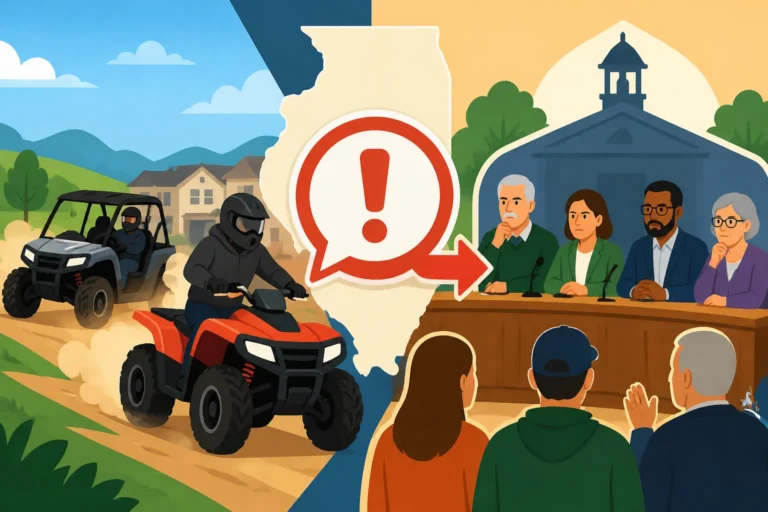
It can be incredibly frustrating trying to figure out where you can and can't legally ride your ATV or UTV in Illinois, especially when it comes to those seemingly innocuous farm lanes. Many of us use these machines daily for work on our property, and it just makes sense to use them on the farm lanes too. But what happens when that lane connects to a public road, or isn't entirely on your property? This guide is here to clear up the confusion surrounding Illinois rules for riding an ATV or UTV on a farm lane, helping you understand your rights and responsibilities.
The General Rule: Illinois Law and Private Property
Let's start with the basics, because understanding the fundamental distinction between private and public land is key to navigating ATV/UTV rules in Illinois. The vast majority of our state's off-road vehicle laws are designed to regulate how and where you can operate these machines on public property—things like designated riding parks, state land, or public roads that have been specifically opened to them. But what about the ground you own, or the property where you have explicit permission to ride? That's where the waters often get a little murky.
Understanding "Private Property" for Off-Road Vehicles
When we talk about "private property" in the context of ATVs and UTVs, we're generally referring to land that is owned by an individual or a private entity, not the state, county, or a municipality. On your own private land, you usually have a lot more leeway to decide how you and others use your off-road machine. This means if you have a sprawling property with miles of trails or even just a backyard, you can typically ride your ATV or UTV there without needing special state permits like an [Illinois OHV Usage Stamp Explained] or an [Illinois Public Access Decal Explained], as long as you're not disturbing neighbors or breaking local noise ordinances. The same generally applies to a farm lane that is entirely contained within your private property boundaries.
The common assumption, and often a correct one, is that farm lanes are inherently "private." They’re usually built and maintained by the landowner for specific agricultural purposes, not for public travel. However, the nuance here is crucial: not all lanes that look like private farm lanes are legally private. Some might have public easements running through them, or they might actually be unpaved township roads that merely serve as access to farms. It's a critical distinction, because if that farm lane is, in fact, a public road, even if it looks like a private path, then the full force of public road laws for ATVs and UTVs immediately applies. This is why a simple assumption can lead to a big headache.
The Illinois Vehicle Code's Stance on Public vs. Private Use
The Illinois Vehicle Code, which is the big book of rules governing vehicles in our state, is primarily concerned with public safety and the orderly flow of traffic on public roadways. Most of the prohibitions against operating ATVs and UTVs on roads stem from this core purpose. These machines generally aren't designed or equipped for road use, and mixing them with cars, trucks, and other standard vehicles can be dangerous. Because of this, the state tends to ban their operation on most public roads unless a specific exemption or local ordinance allows it.
However, the Vehicle Code also recognizes that certain types of vehicles, including ATVs and UTVs, have legitimate uses on private land, especially in agricultural settings. This is where the concept of "exemptions" comes in. Instead of broadly banning these machines everywhere, the law carves out specific situations where their use is permitted, even if it might otherwise seem contrary to the general spirit of the public road rules. For instance, you might not be able to ride your UTV down Main Street, but you can often drive it across your fields or along your private farm lane to get to your barn. The focus shifts from general public safety to supporting practical, private activities. This means that while there's a blanket restriction on public roads, the rules become much more specific when you're talking about land owned and operated by an individual, especially for purposes like farming.
Exemptions That Apply to Farm Lanes
Thankfully, Illinois law isn't completely blind to the practical realities of farm life. Many farmers and landowners rely on ATVs and UTVs daily for tasks that make their operations run smoothly. Lugging tools, checking fences, moving feed, or just quickly getting from one end of a large property to another – these machines are indispensable. Recognizing this, the state has put specific exemptions in place that largely cover the use of these vehicles on bona fide farm lanes, provided you're adhering to the spirit of the law.
The Agricultural Use Exemption
This is arguably the most important exemption for anyone looking to use their ATV or UTV on a farm lane in Illinois. The state provides a clear [Illinois Farm and Livestock Exemption] for off-highway vehicles when they are being used for legitimate agricultural purposes. What does "agricultural purposes" actually mean? It's pretty broad, covering anything directly related to farming, ranching, or other agricultural operations. This could include checking on crops in various fields, moving supplies or equipment between buildings, inspecting livestock pastures, transporting feed, or even supervising field hands. The key here is that the machine is actively being used as a tool for the farm's operation.
If your farm lane is an integral part of your working farm, and you are using your ATV or UTV to conduct farm business, then this exemption is likely to apply. It means you generally don't need to worry about street-legal equipment requirements or specific permits that would otherwise be required for public road use. The state recognizes that a farmer needs to get around their land efficiently. However, it’s crucial to remember that this exemption is tied to the purpose of the ride. Joyriding on a farm lane for recreation, even if it's on your farm, technically falls outside the scope of agricultural use. While it might still be permitted if the lane is entirely private, relying solely on the agricultural exemption requires a clear link between your ride and your farming activities. For more details on this, you might want to read up on [Illinois Machines Used Only on a Farm]. This exemption also extends to financial matters, with [Illinois Farm Use Exemptions From Insurance] possibly applying to certain situations.
Riding on Your Own Property or With Permission
Beyond the specific agricultural use exemption, there's the more general principle of private property rights. If the farm lane is entirely situated on land that you own, and you're the one operating the ATV or UTV, you generally have the right to do so. This falls under the basic premise that you control access and activities on your own property. You're not subject to public road laws because you're not on a public road. This is the simplest scenario, where you have maximum freedom to use your machine as you see fit, as long as you're not creating a nuisance or danger to others (e.g., excessively loud noise, dangerous stunts near property lines).
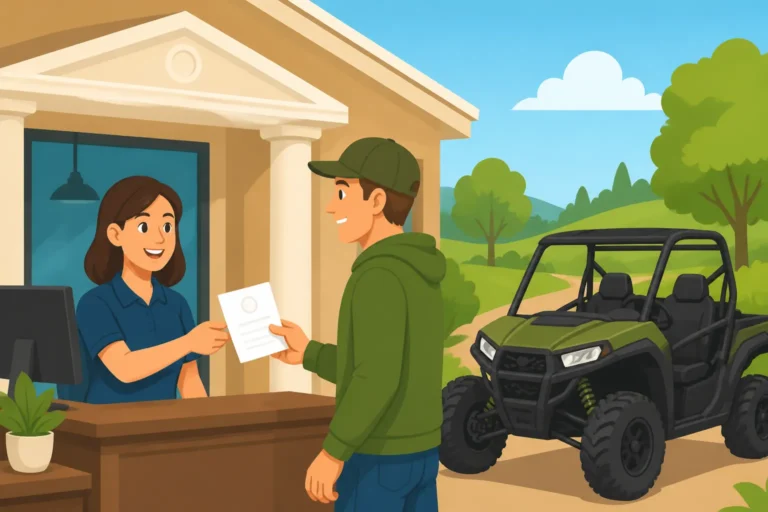
The situation becomes a little different, but still manageable, if you're riding on someone else's farm lane. In this case, obtaining explicit permission from the landowner is not just a good idea, it's absolutely essential to avoid legal trouble. Without permission, even if you're doing farm work for them, you could be considered trespassing. It's always best to have that permission in writing, especially if you're riding frequently or if there's any potential for misunderstanding. A simple signed note can save you a lot of hassle if you're ever questioned. This clear documentation is vital, and you can learn more about it in [Illinois Private Land Permission Rules] and [Keeping a Landowner's Written Permission on You]. Having that piece of paper in your pocket, even for a short ride down a farm lane, offers a level of security and peace of mind that's invaluable.
When a Farm Lane Blurs the Lines (and What to Watch Out For)
Here's where things can get a bit tricky for ATV and UTV riders in Illinois. Not every path that looks like a farm lane is exclusively private. Sometimes, these lanes might actually be shared access points, or even unpaved public roads that just happen to lead to farms. Understanding these nuances is crucial, because mistaking a public way for a private one can lead to fines and legal issues.
Farm Lanes That Are Also Public Roads
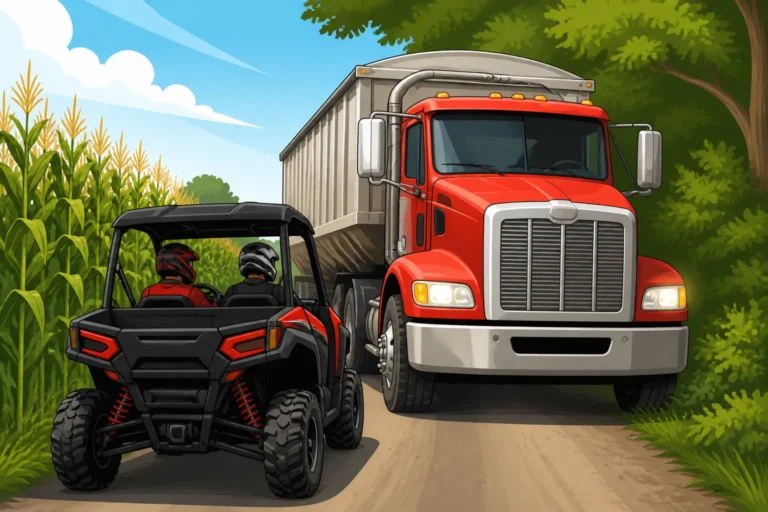
This is perhaps the biggest pitfall for riders. Many rural areas in Illinois have roads that, to the untrained eye, appear to be nothing more than private farm lanes. They might be gravel, dirt, or even just two ruts through a field, but legally, they could be a township road, a county road, or even a public easement that provides access to multiple properties. If a lane is legally considered a public road, then all the standard rules for operating ATVs and UTVs on public roads apply, regardless of how "farm-like" it appears. This means you might need to meet specific street-legal equipment requirements, possess a valid driver's license, and adhere to local ordinances that permit or restrict OHV use.
How do you tell if a farm lane is actually a public road? It's not always easy. The best way is to check with your local township supervisor, county highway department, or the county clerk's office. They can often provide maps or records showing which roads are public and which are private. Don't rely on assumptions or how it "feels." If you find out it's a public thoroughfare, then you need to know about [Illinois Rules for Riding a Township Road] or [Illinois Rules for Riding a County Road], as your machine must comply with any local ordinances and state regulations for operating on those specific types of roads. This distinction can literally be the difference between a pleasant ride and a hefty ticket.
Crossing Public Roads to Access Farm Lanes
Another common scenario that often leads to trouble is needing to cross a public road to get from one part of your farm to another, or to access a specific farm lane from your residence. While you might be perfectly legal to ride on your private property or farm lanes under the agricultural exemption, the moment your wheels touch a public road, even briefly, you enter a different legal landscape. Illinois law is very clear: ATVs and UTVs are generally prohibited on state highways, interstates, and most public roads unless specifically permitted by local ordinance.
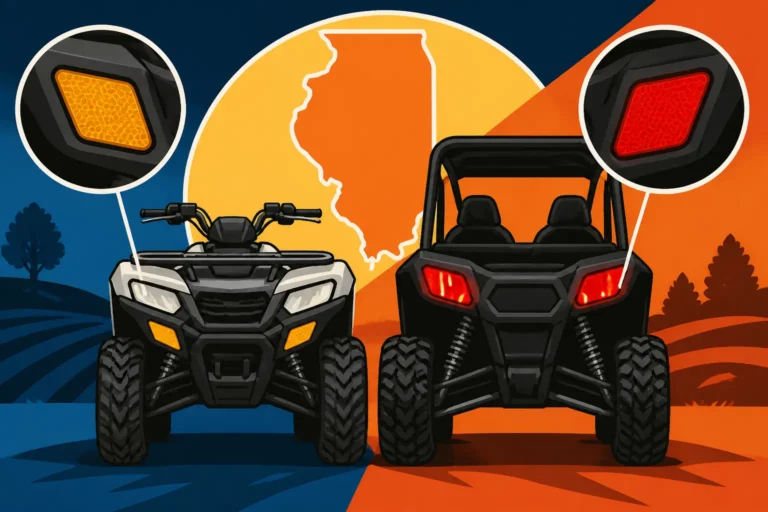
However, there are usually specific rules for crossing roads. For instance, you might be allowed to cross a public road at a 90-degree angle, only at an intersection, and after yielding to all traffic, even if you can't ride along that road. Your machine may also need certain basic safety equipment, like headlights, taillights, and reflectors, even for a quick crossing. Always check local ordinances and state statutes for exact crossing rules. This is a common area for enforcement, so make sure you understand the nuances. For more information on this, refer to [Illinois Crossing Rules at Intersections] and [State Highways May Be Crossed Only at an Intersection]. Ignoring these rules, even for a short hop across the blacktop, can quickly lead to penalties for illegal street riding.
Equipment and Safety Considerations on Farm Lanes
Even when you're riding purely on private farm lanes and fall under an exemption, basic safety and common sense still apply. While the law might not mandate specific equipment like turn signals or a rearview mirror for private farm use, that doesn't mean you should forgo all safety measures. For instance, wearing a helmet and eye protection is always a smart choice, especially if you're dealing with uneven terrain, dusty conditions, or operating machinery around livestock. A rollover, even at low speeds, can cause serious injury.
Furthermore, maintaining your machine in good working order is crucial. This includes ensuring your brakes are functioning perfectly, your tires (perhaps heavy-duty options from a brand like SuperATV for better traction on muddy farm lanes) are in good condition, and your lights work, especially if you'll be out at dawn, dusk, or after dark. You never know when you might need to quickly stop, navigate an unexpected obstacle, or be seen by a fellow farm worker. While [Illinois Non-Highway Vehicle Equipment List] mostly applies to street-legal situations, many of those items represent fundamental safety practices that are wise to adopt regardless of the legal requirement. Thinking proactively about safety not only protects you but also those working around you on the farm.
Practical Advice and Avoiding Penalties
Riding your ATV or UTV on farm lanes in Illinois can be an incredibly efficient and enjoyable part of farm life, but it's essential to do it smart and stay on the right side of the law. A little preparation and understanding can save you a lot of grief, from unexpected fines to potential legal battles. Let's talk about some best practices.
Best Practices for Farm Lane Riding
First and foremost, always, always carry documentation. This means having your proof of ownership, like an [Illinois ATV Title Certificates Explained], and any written permission if you're riding on land that isn't solely your own. This small step can de-escalate a situation quickly if you're ever questioned by law enforcement or a conservation officer. It demonstrates that you're a responsible operator and not just someone illegally joyriding. Beyond the paperwork, be a good neighbor. Even if you're on your own private farm lane, excessive noise, dust, or reckless driving can cause friction with adjacent landowners. Being mindful of your speed, especially near property lines or residences, and keeping your machine in good repair to minimize noise can go a long way in maintaining good community relations.
Another critical piece of advice is to be aware of local ordinances. While state law provides broad exemptions for agricultural use on private land, some counties or townships might have their own specific rules or interpretations, especially if your farm lane connects to, or could be mistaken for, a public access point. A quick call to your local county or township office can clarify any unique local regulations. Remember, ignorance of the law is rarely an excuse. Taking these proactive steps can help you avoid situations that might lead to [Illinois Penalties for Trespass Riders] or other citations.
Documenting Your Agricultural Use
If your primary justification for riding an ATV or UTV on a farm lane is for agricultural purposes, it's wise to be prepared to demonstrate that. This doesn't mean you need to carry a detailed manifest of your daily tasks, but having a clear understanding and ability to articulate how your machine is being used for farming can be invaluable. For example, if you're pulling a small sprayer, hauling fencing materials, or checking irrigation lines, those are clear indicators of agricultural use. Some machines are even equipped with specific attachments like plows, cultivators, or sprayers, which visually confirm their utility on a farm.
Consider keeping basic records if your farm operations are complex, or if you regularly have different people operating machines for farm work. This could be as simple as a logbook. If you've invested in accessories from companies like SuperATV that enhance your machine's utility for farm work – such as cargo bed extenders, winches, or specialized agricultural tires – those can also serve as visual proof of your machine's purpose. Being able to explain, confidently and clearly, the agricultural context of your ride will solidify your position and reinforce that you're operating within the spirit of Illinois's exemptions for farm use.
Here's a quick look at common farm lane riding scenarios in Illinois:
| Scenario | Legal Status (Generally) | Key Considerations |
|---|---|---|
| On your own private farm, purely for agricultural tasks. | Generally Permitted (Agricultural Exemption) | No state permit/decal needed for private land. Focus on safety and common sense. |
| On your own private farm, purely for recreation (not agricultural). | Generally Permitted | No state permit/decal needed for private land. Be mindful of noise/neighbors. |
| On a friend's farm with explicit permission, for agricultural tasks. | Generally Permitted (Agricultural Exemption, with permission) | Crucial to have landowner's written permission. Ride responsibly. |
| On a friend's farm with explicit permission, for recreation. | Generally Permitted (with permission) | Written permission is key. Ensure it's truly private land and not a public thoroughfare. |
| Farm lane that is also a public township/county road. | Restricted (Treated as public road) | Must comply with [Illinois Rules for Riding a Township Road] or [Illinois Rules for Riding a County Road]. Requires local ordinance, street-legal equipment, valid license, etc. |
| Crossing a public road to get to another farm section. | Restricted (Permitted only under specific conditions) | Must follow [Illinois Crossing Rules at Intersections]. Often requires 90-degree crossing, yielding, and basic lighting. Do not ride along the road. |
| Riding a farm lane that crosses a nature preserve or protected area. | Restricted (Generally Prohibited) | Even if "private," protected lands may have strict access rules. Always check specific regulations for that parcel. |
| On land you lease for farming, for agricultural tasks. | Generally Permitted (Agricultural Exemption, with permission) | Lease agreement should specify OHV use. Written permission from landowner is highly recommended. |
Disclaimer
This article is for general informational purposes only and does not constitute professional advice. Laws, prices and regulations vary by location and change over time. Consult a qualified professional for guidance on your specific situation.