Illinois Slow-Moving Vehicle Emblem Rules
It can be incredibly confusing to figure out all the little details that go into making your side-by-side or ATV legal to ride on certain Illinois roads. You’ve heard talk about plates, titles, permits, and then there’s this mysterious "slow-moving vehicle emblem." What is it, why do you need it, and where does it even go? This guide is here to clear up the confusion about Illinois Slow-Moving Vehicle Emblem Rules, ensuring you can ride with confidence and stay on the right side of the law.
Understanding the Illinois Slow-Moving Vehicle Emblem Requirement
When you're out on a UTV or even an ATV in Illinois, especially if you're riding on roads where allowed by local ordinances, you become a part of the general traffic flow. This means you need to adhere to certain rules designed to keep everyone safe, and one of the most visible of these is the slow-moving vehicle (SMV) emblem. It's not just a suggestion; it's a specific legal requirement for many off-highway vehicles that venture onto public roadways.
What Exactly is a Slow-Moving Vehicle Emblem?
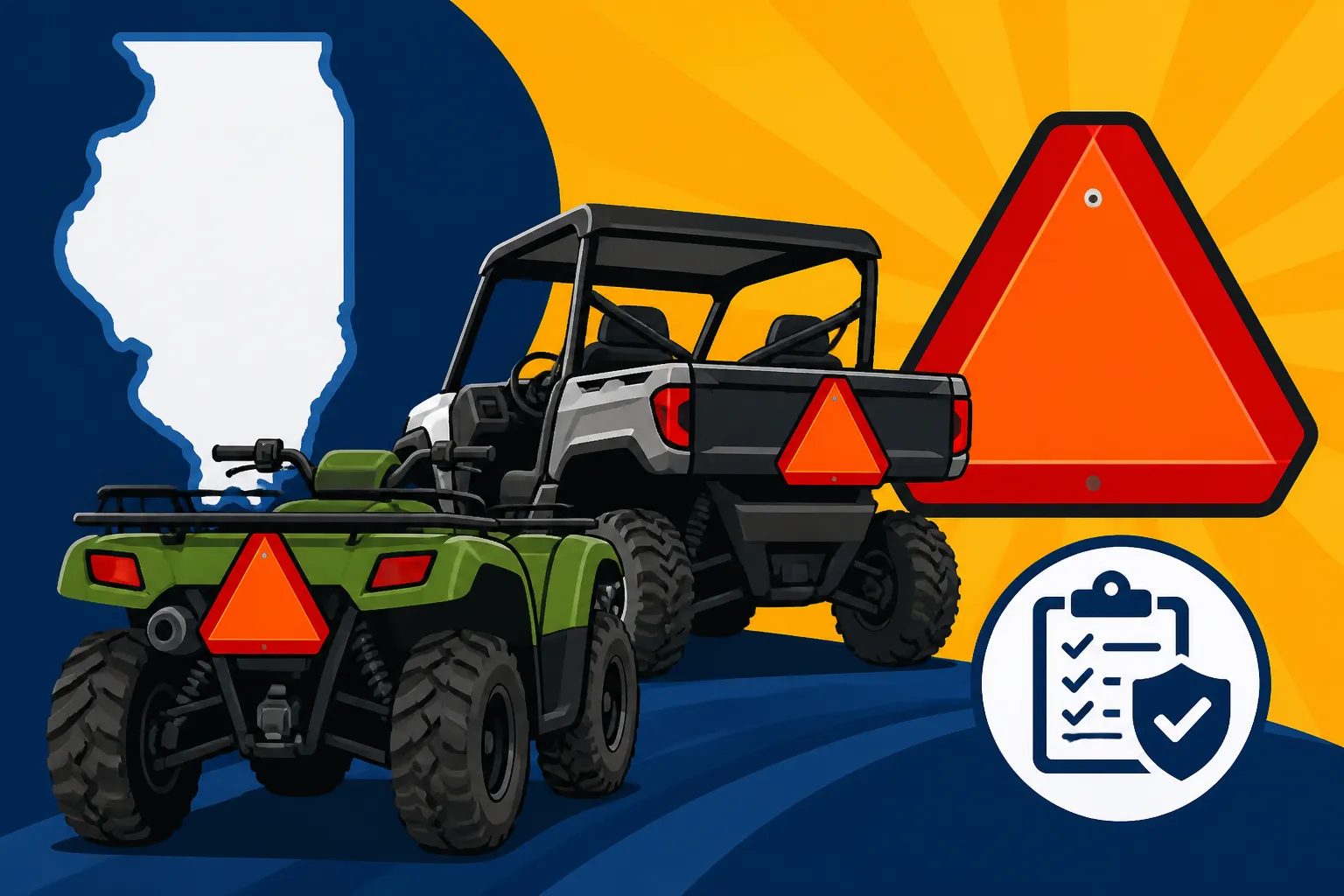
Think of the slow-moving vehicle emblem as a universal sign that screams, "Hey, I might be moving slower than you!" It's a distinct, reflective orange-red triangle with a dark red border. This isn't just a random design; its shape and colors are specifically chosen for maximum visibility, especially during daylight hours and in low-light conditions when headlights might catch its reflective surface. The inner triangle is fluorescent orange, designed to be seen in the daytime, while the red reflective border kicks in after dusk.
The primary purpose of this emblem is a simple but critical one: to alert other drivers, particularly those in faster-moving cars and trucks, that your vehicle is operating at a significantly lower speed. On Illinois roads, where speed limits can range from 25 mph in residential areas to 55 mph or more on rural routes, a UTV or ATV might typically travel much slower. Without a clear indicator, a driver approaching from behind might not realize the speed difference until it's too late, leading to dangerous situations. The SMV emblem gives them an unmistakable heads-up, providing crucial extra seconds to react and adjust their speed safely.
Why Your UTV (and Sometimes ATV) Needs One in Illinois
Illinois state law broadly dictates the use of SMV emblems, and when a local municipality passes an ordinance allowing UTVs on its streets, it generally adopts these state-level equipment requirements. For most side-by-sides, which are often heavier and not designed for high speeds, operating on roads often means traveling below the typical flow of traffic. This is precisely the scenario the SMV emblem was created for. Without one, you're not just risking a ticket; you're creating a potential hazard for yourself and others on the road.
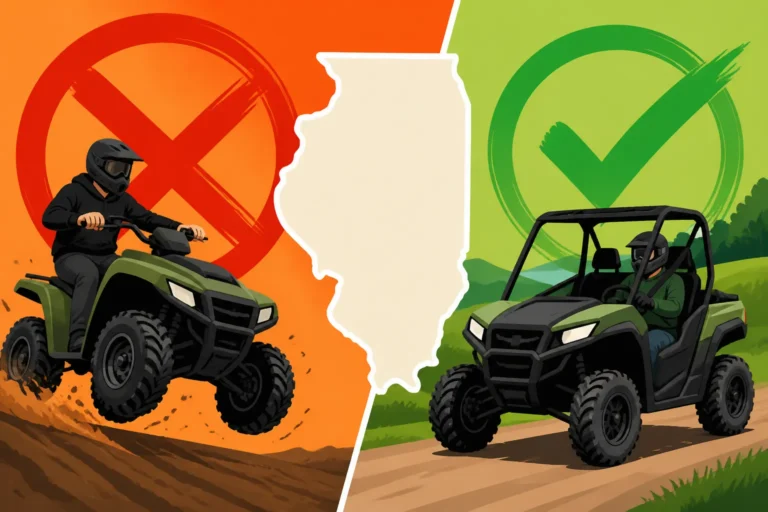
While ATVs are generally less likely to be street-legal in Illinois, if your specific ATV is permitted on a certain road under a local ordinance, then the SMV emblem requirement will almost certainly apply to you as well. It's all about the operating speed relative to other traffic, not just the type of machine. So, if your four-wheeler is traversing a paved street in a village that has said "yes" to off-road vehicles, that bright orange triangle needs to be on its rear. This applies whether you're just cruising through town, heading to a local fishing spot, or using your machine to run a quick errand. The rule is consistent: if you're on a public road and your machine is capable of less than 25 mph, or if the ordinance simply states it, the emblem is a must-have. [The Orange Farm Emblem Your UTV Must Carry] is not just a farm implement identifier; it's a vital safety device for off-road machines on the pavement.
Proper Mounting and Maintenance of Your SMV Emblem
Having the slow-moving vehicle emblem is one thing, but having it mounted correctly is another entirely. A poorly placed or damaged emblem defeats its entire purpose, potentially leaving you vulnerable to both accidents and citations. Visibility is the name of the game here, and Illinois law, or at least common sense derived from vehicle codes, prioritizes it.
Placement for Maximum Visibility
The Illinois Vehicle Code generally requires the SMV emblem to be mounted on the rear of the vehicle. More specifically, it should be positioned as close to the center of the vehicle as practical, and at a height that allows it to be easily seen by drivers approaching from behind. Think eye-level for a passenger car or truck driver. It shouldn't be too low to the ground where it might get obscured by road spray or too high where it's hard to distinguish from other items on your machine. The goal is an unobstructed view from at least 500 feet away during daylight hours, and its reflective properties need to be fully utilized at night.
This means you need to be mindful of any cargo you might be carrying on your rear rack or in your UTV's bed. A cooler, a toolbox, or a hunting blind strapped down can easily cover up your emblem, rendering it useless. If your UTV has a tailgate, consider mounting it directly to the tailgate itself, or on a sturdy bracket that extends slightly above it if you plan to carry gear. Some riders even opt for a mounting plate that attaches to a receiver hitch, allowing for quick removal if not needed, but ensuring it's clearly visible when it is. Prioritize an area free from obstructions like spare tires, fuel cans, or even an overly tall flag pole.
Ensuring Your Emblem Meets Legal Specifications
Not just any orange triangle will do. The SMV emblem needs to meet specific standards for size, shape, and reflectivity to be legally compliant. Generally, these emblems are a 14-inch equilateral triangle, with a fluorescent orange center and a red reflective border. You can usually find these at farm supply stores, auto parts retailers, or specialized off-road accessory shops. For instance, reputable brands that also offer other street-legal conversion parts, like SuperATV, will have compliant emblems. It's always a good idea to ensure what you're buying specifically states it meets ASAE (American Society of Agricultural Engineers) or other applicable standards.
Beyond initial purchase, regular maintenance is crucial. Over time, sunlight, dirt, mud, and general wear and tear can fade the fluorescent orange and diminish the reflectivity of the red border. A faded emblem is as good as no emblem in the eyes of an approaching driver or a law enforcement officer. Make it a habit to give your emblem a quick wipe-down before each ride, especially if you've been off-roading in muddy conditions. If you notice it's starting to look dull, or if the reflective material is peeling or cracked, it’s time for a replacement. A fresh, clean emblem ensures you're doing your part for road safety and avoiding potential [Illinois Penalties for Illegal Street Riding] related to equipment violations.
Navigating Local Ordinances and Enforcement
The biggest hurdle for street-legal ATV and UTV use in Illinois isn't just about equipping your machine; it's understanding the patchwork of local laws. Illinois state law generally restricts ATVs and UTVs from public roads, but it grants local units of government—like villages, cities, townships, and counties—the power to create exceptions through ordinances. This means that whether you need an SMV emblem, and indeed whether you can even ride on a particular road, hinges entirely on local decisions.
How Local Ordinances Dictate SMV Emblem Use
Imagine you live in a small town downstate. The village board decides to embrace the growing popularity of UTVs and passes an ordinance allowing them on most municipal streets. When they do this, they don't just say "yes" to UTVs; they adopt the framework of the Illinois Vehicle Code for such machines. This framework includes essential equipment requirements, and you can bet the slow-moving vehicle emblem will be explicitly or implicitly part of it. The village isn't creating new equipment rules from scratch; it's applying the state's existing safety standards to these newly permitted vehicles. This means that if you're riding your UTV on a town street, that prominent orange triangle is just as important as your headlights, tail lights, and rearview mirrors.
It's absolutely vital to check the specific ordinance of any village or county where you plan to ride. What's legal in "Town A" might be strictly prohibited in "Town B" just a few miles down the road. You can often find these ordinances on the municipality's website or by contacting the village or county clerk's office. Many towns also require permits and may conduct [Illinois Equipment Inspections by a Village] before issuing them, during which they will definitely check for a compliant SMV emblem. So, before you even think about hitting the pavement, make sure you know the local rules for [Illinois UTV Street Legal Rules by Town].
Penalties for Non-Compliance
Let's talk about what happens if you get caught without a required SMV emblem. A law enforcement officer on patrol, whether it's a municipal police officer, a county sheriff's deputy, or even an Illinois State Police trooper, can issue a citation if your vehicle is operating on a public road without the necessary equipment. This isn't just a slap on the wrist. A ticket for an equipment violation can carry fines and court costs, which can quickly add up. Beyond the financial hit, repeated violations could lead to more serious consequences, especially if you're deemed to be operating unsafely.
Consider a hypothetical scenario: You're riding your side-by-side on a county road that permits UTVs, but you forgot to reattach your SMV emblem after loading some gear. A deputy pulls you over. They'll likely approach the situation as a routine traffic stop. They'll ask for your [Illinois Requires a Driver's License] and proof of [Illinois Requires Insurance for Street Use], and then point out the missing emblem. Even if you explain that it was an oversight, the fact remains that your vehicle was not legally equipped. You could be facing a fine that puts a damper on your whole weekend. It's a frustrating situation that's easily avoided by a quick check before you head out. Don't give law enforcement a reason to pull you over; make sure your SMV emblem, and all other required equipment, is in place and clearly visible.
Beyond the Emblem: Other Essential Equipment for Illinois Street Use
While the slow-moving vehicle emblem is a crucial safety component for UTVs and ATVs on Illinois roads, it's just one piece of a larger puzzle. Operating these machines on public thoroughfares means they need to meet a comprehensive set of equipment standards designed to integrate them safely into traffic alongside cars and trucks. Overlooking any single requirement can put you at risk of a citation and, more importantly, increase the danger of an accident.
A Complete Look at Street-Legal Requirements
When a local ordinance opens up roads to off-highway vehicles, it generally does so under the condition that these machines are properly equipped for road use. This isn't just about the SMV emblem. You'll need a functional lighting system that includes [Illinois Requires a 500-Foot Headlight] and [Illinois Requires a 100-Foot Tail Lamp]. These aren't just for seeing where you're going; they're vital for being seen by others, especially during dusk, dawn, or bad weather. You'll also need [Illinois Requires Brake Lights] that illuminate when you slow down, signaling your intentions to traffic behind you.
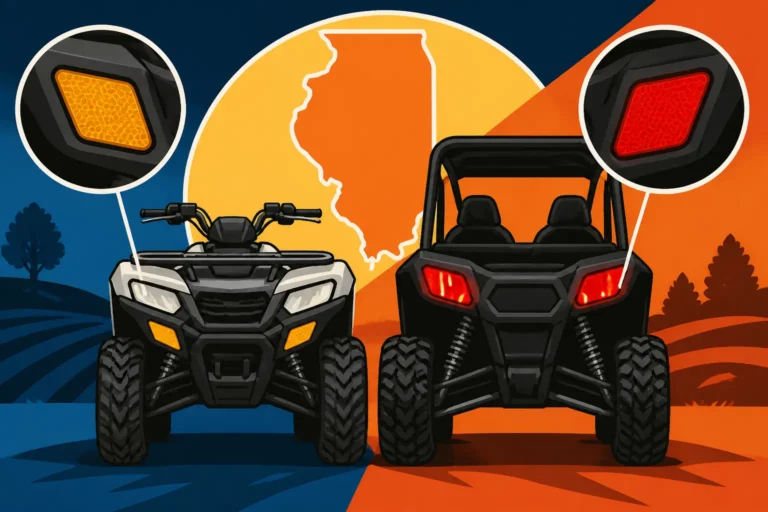
Turn signals are another critical item, allowing you to clearly communicate lane changes or turns, rather than relying on hand signals which can be difficult to see on an off-road machine. A [Illinois Requires a Rearview Mirror] is non-negotiable, giving you a clear view of traffic approaching from the rear without having to constantly turn your head. Don't forget [Illinois Requires Red Reflectors] at the rear for added passive visibility. Many riders turn to aftermarket accessory providers like SuperATV for these conversion parts, as they often offer robust, trail-tested solutions that meet road-legal specifications. Ensuring all these components are installed correctly and functioning perfectly is paramount for safe and legal street operation.
The Importance of Insurance and Licensing
Beyond the physical equipment on your machine, there are two other fundamental requirements you absolutely cannot overlook if you plan to operate your ATV or UTV on Illinois roads: proper licensing and adequate insurance. These aren't just bureaucratic hurdles; they are foundational elements of responsible vehicle operation. Just like driving your car, operating a UTV on a public street means you are subject to the same basic legal obligations.
First, you must have a valid driver's license. [Illinois Requires a Driver's License] to operate any motor vehicle on public roads, and your UTV is no exception when it's on the pavement. This isn't about having an "off-road license"; it's about holding a standard state-issued driver's license. Second, you are legally required to carry liability insurance. [Illinois Requires Insurance for Street Use] for any vehicle operating on its roads. This means you need a policy that meets the state's minimum coverage limits, typically referred to as 25/50/20 ($25,000 for bodily injury to one person, $50,000 for bodily injury to two or more people, and $20,000 for property damage). These protections are in place not just for your sake, but for anyone you might accidentally injure or any property you might damage. Showing proof of insurance and your driver's license is often part of the permit process in towns that allow street riding, and it's certainly what a police officer will ask for if you're ever pulled over. Combine these with your properly equipped machine, and you're well on your way to enjoying the freedom of street-legal riding responsibly.
Here's a quick reference for Illinois's equipment requirements for street-legal ATVs and UTVs:
| Requirement | Description | Purpose |
|---|---|---|
| Slow-Moving Vehicle Emblem | Fluorescent orange triangle with red reflective border, mounted on the rear. | Alerts faster traffic to your lower speed. |
| Headlights | Visible from 500 feet, working in tandem. | Illuminates your path and makes you visible to oncoming traffic. |
| Tail Lamp | Shows red from 100 feet. | Makes you visible from the rear, especially at night. |
| Brake Lights | Illuminates when brakes are applied. | Signals slowing or stopping to traffic behind you. |
| Turn Signals | Front (amber) and Rear (amber or red) indicators. | Clearly communicates turns and lane changes. |
| Rearview Mirror | Provides clear view to the rear of the machine. | Essential for situational awareness and safe lane changes. |
| Red Reflectors | Mounted on the rear, visible from 100-600 feet. | Passive visibility from the rear, especially at night or in low light. |
| Driver's License | Valid, state-issued driver's license. | Legal authority to operate a motor vehicle on public roads. |
| Liability Insurance | Minimum 25/50/20 coverage. | Financial protection for damages or injuries you might cause. |
Disclaimer
This article is for general informational purposes only and does not constitute professional advice. Laws, prices and regulations vary by location and change over time. Consult a qualified professional for guidance on your specific situation.