Illinois Rules for Riding With a Dog
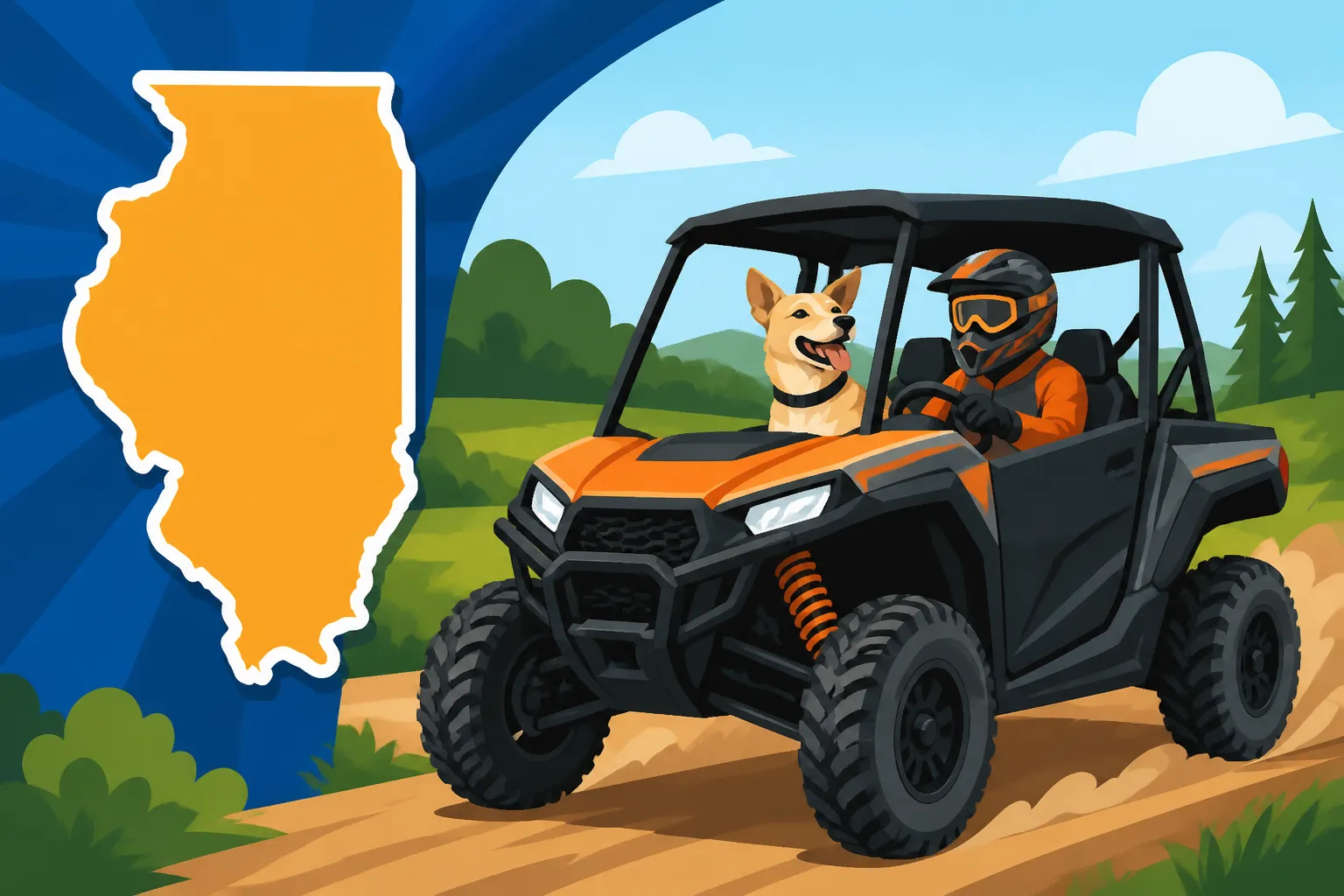
It’s a natural human inclination to want to share our passions with our best furry friends. If you own an ATV or UTV in Illinois, you've probably thought about bringing your dog along for a ride, imagining them enjoying the wind in their fur as you explore trails or cruise down a country road. But then the nagging questions start: Is this even allowed? What are the rules? Is it safe? It’s a common frustration, especially since official guidance often feels silent on this particular topic. This guide will cut through the confusion and equip you with the knowledge and best practices for safely and legally riding with your dog in the Prairie State.
The General Absence of Specific Dog-Riding Laws
One of the first things many riders discover when researching the legality of riding with their dog is a surprising silence in the Illinois statutes. Unlike explicit regulations for titling, registration, or even helmet use, there isn't a dedicated section detailing whether Fido can hitch a ride on your quad or side-by-side. This lack of specific legislation can feel like a green light to some, but it more accurately places a greater burden of responsibility on you, the owner and operator.
Why Illinois Law Stays Silent Mostly
Most Illinois Off-Highway Vehicle (OHV) laws are meticulously crafted to address human safety, environmental impact, machine specifications, and land access. They focus on things like what constitutes a street-legal UTV, where you can ride, age restrictions for operators, and the necessity of titles. For instance, laws concerning impairment, such as [Illinois DUI Law and Off-Road Machines], are squarely focused on human behavior and responsibility. Dogs, while cherished companions, simply don't fall into these primary categories of concern for legislators.
This silence doesn't mean dogs are universally permitted to ride along in any manner. Instead, it means that general rules regarding animal welfare, public nuisance, and property owner rights come into play, often trumping any perceived permission from the lack of a specific "no dogs on ATVs" law. Think of it less as a loophole and more as an unaddressed area that requires riders to apply a heightened level of common sense and ethical judgment. When rules are absent, the default position of landowners, park staff, or law enforcement will often lean towards caution and minimizing potential hazards.
The Importance of Common Sense and Good Judgment
Because explicit laws are rare, your personal judgment becomes the primary guiding principle when considering a ride with your dog. A lack of specific prohibition doesn't grant you carte blanche to simply plop your pooch on the seat and take off. In fact, it's quite the opposite. You bear the full responsibility for your dog's safety, the safety of others, and for ensuring your pet doesn't become a nuisance or a hazard.
Consider the myriad dangers: an unrestrained dog could be ejected during a sudden stop or turn, becoming severely injured or causing an accident. A dog could become a dangerous distraction, jumping for a squirrel or getting underfoot. Moreover, other trail users or private landowners might not appreciate an uncontrolled animal, even if friendly. Understanding the potential risks and proactively mitigating them is paramount. Your good judgment in these situations will dictate not only the safety of your pet but also how other riders, park rangers, and property owners perceive the OHV community as a whole.
Riding With Your Dog on Public Lands and Grant Sites
When venturing onto public lands or designated riding areas in Illinois, the rules governing pets often become a bit clearer, even if they don't explicitly address dogs on your ATV or UTV. These sites prioritize general safety, environmental protection, and a positive experience for all visitors. Therefore, while you might not find a sign saying "No Dogs in UTV Beds," you will encounter broader pet policies that strongly imply how your dog should behave and be contained.
Sahara Woods and State Park Regulations
Illinois's only state-managed OHV park, Sahara Woods, operates under general state park regulations concerning pets. Typically, these rules mandate that dogs must be on a leash, usually no longer than 10 feet, and under the owner's direct control at all times when outside of a vehicle or designated camping area. Owners are also universally required to clean up after their pets. You can find more details about general park access in guides like [Illinois State Park Riding Rules].
What this means for riding with your dog on your machine is generally a strong discouragement, if not an outright prohibition, from park staff. While your dog might be allowed in your tow vehicle or at your campsite on a leash, having them unsecured in an ATV basket or even in the bed of a UTV while actively riding the trails could be seen as a violation of safety rules or general pet policies. Park rangers prioritize the safety of all users, and a dog that could potentially fall out, jump off, or distract the operator poses a clear risk. Remember that specific park operations, including permit requirements and daily caps, are essential to know before your visit, as detailed in resources like [Sahara Woods' Permit Prices in Illinois].
Grant-Assisted Riding Areas and Their Pet Policies
Grant-assisted riding areas, which often receive funding through programs related to the [Illinois Usage Stamp vs Access Decal], are typically managed by county park districts or private clubs. Because of this, their specific pet policies can vary more widely than those at a state park. However, the overarching principles remain the same: safety, control, and cleanliness.
Many of these sites will have rules posted regarding pets, usually echoing the state park guidelines of leashed animals in designated areas and strict cleanup requirements. The managers of these sites, who might be operating on tighter budgets and with volunteer staff, are often particularly sensitive to potential liability issues. A dog riding unsecured on an OHV could be viewed as a significant liability, not just for the dog's safety but for the safety of other riders who might encounter an animal on the trail. It’s always best to check the specific rules of the site before you go. What a specific riding area is and how it's funded can sometimes give you a clue about its operational philosophy; for example, understanding [What a Grant-Assisted Riding Site Actually Is] helps clarify the oversight. In general, assume that dogs are welcome at the park on a leash, but not on the machine while riding.
Bringing Your Dog on Private Land Rides
Riding on private land, whether it’s a friend's sprawling farm or a dedicated private off-road park, offers a different dynamic when it comes to riding with your dog. The rules here are often more flexible, but they are absolutely dictated by the landowner or park operator. This is where your personal discussions and adherence to specific agreements become paramount.
Landowner Permission Is Paramount
When you’re riding on someone else’s property, their word is law. This is a fundamental principle of off-road riding in Illinois. Whether you're planning a casual ride across a neighbor's field or enjoying a weekend at a commercial private riding park, you absolutely must get explicit permission to bring your dog, and even more specifically, to ride with your dog on your machine. For more on this, check out [Illinois Private Land Permission Rules].
A landowner might be perfectly comfortable with your well-behaved dog riding in your UTV's bed, especially if it’s a working farm dog accustomed to vehicles. Or, they might have strict rules against pets on machines, or even against pets on the property at all, due to livestock, other pets, or general liability concerns. Never assume. A quick conversation can prevent misunderstandings and potential issues, including being asked to leave or facing penalties, as discussed in [Illinois Trespass Penalties for Riders]. Always confirm the specific pet policy, especially if you plan for your dog to be a passenger on your OHV.
Safety Considerations on Private Property
Even if a private landowner gives you the green light to bring your dog along for the ride, the ultimate responsibility for your dog's safety and well-being still rests squarely on your shoulders. Just because you can doesn't mean you shouldn't take every precaution. Private land often presents its own unique hazards that might not be found on manicured public trails, such as hidden obstacles, barbed wire, varied terrain, and even wildlife.
Consider the environment: Is it dusty? Hot? Are there sharp thorns or burrs that could injure paws? Will your dog be exposed to unfamiliar animals or chemicals? Even if the landowner is okay with it, ensure your dog is securely contained. This is where investing in proper pet transport solutions for your UTV becomes critical. For instance, SuperATV offers robust cargo boxes and bed enclosures that, with proper ventilation and padding, could be adapted for safe pet transport in a UTV, offering a much safer alternative to an open bed. Prioritizing your dog’s comfort and protection, even on private land, demonstrates responsible pet ownership and good trail etiquette. [Illinois Private Park Pet Rules] also often include safety guidelines even when dogs are permitted.
Equipment and Best Practices for Riding with Your Canine Companion
Alright, so you've got permission (or you're planning for private land where it's more feasible), and you're committed to doing it safely. This is where the practical side comes in. Taking your dog along for an OHV ride isn't just about strapping them down; it's about preparation, the right gear, and understanding your dog's limits.
Securing Your Dog Safely on an ATV or UTV
This is, without a doubt, the most critical aspect of riding with your dog. An unsecured dog is a massive liability and a danger to itself, to you, and to others. In the event of a sudden stop, swerve, or collision, an unrestrained animal becomes a projectile, risking severe injury or worse.
- ATVs: Let's be frank: ATVs are generally not suitable for safely carrying most dogs. Their open design, aggressive handling, and lack of passenger security make them extremely risky. For very small, calm dogs, some riders might attempt a front-mounted basket or a secure rear cargo box, but this should only be considered for the absolute slowest, gentlest rides on perfectly smooth terrain. Even then, the risk of ejection, injury from debris, or overheating is high. Extreme caution and perhaps reconsidering this option are advisable.
- UTVs: Side-by-sides offer a much safer and more practical platform for canine companions. Their enclosed cabins provide a degree of protection, and the cargo bed offers space for secure containment. The best options include:
- Crates/Kennels: A sturdy, well-ventilated crate secured in the UTV bed or even strapped into an empty passenger seat (if it fits snugly and doesn't impede the driver) is ideal. Make sure the crate is securely fastened to the machine to prevent shifting or tipping. Many aftermarket companies, including SuperATV, offer cargo management solutions like bed extenders or cargo anchors that can help in securing a pet carrier.
- Seatbelt Harnesses: For larger dogs riding in a passenger seat, a crash-tested safety harness that connects to the UTV's seatbelt system can provide some restraint, preventing them from roaming the cabin or being thrown forward. This is akin to rules for human passengers, like those found in [Illinois Rules for Passengers on a UTV].
- Enclosures/Nets: For UTV beds, you can also consider specific bed enclosures or cargo nets that create a contained space. Again, ensure proper ventilation, especially in warm weather.
Always ensure that your dog has enough room to stand, turn around, and lie down comfortably. Never allow your dog to ride with its head out a window where flying debris could cause serious eye injuries.
Essential Gear for Your Riding Dog
Just as you wouldn your helmet and goggles, your dog needs its own specialized gear to stay safe and comfortable on the trail:
- Doggles (Protective Eyewear): This is non-negotiable. Dust, bugs, branches, and other debris can cause severe eye injuries at speed. Doggles are designed to fit a dog's face and protect their eyes from impact and UV rays.
- Paw Protection (Boots): Depending on the terrain, paw pads can get cut by sharp rocks, burned by hot surfaces, or irritated by abrasive gravel. Dog boots can offer crucial protection, especially on longer rides or in harsh conditions.
- Harness and Leash: Always use a well-fitting harness (never just a collar, which can choke if pulled) when securing your dog or walking them at rest stops. Have a sturdy leash readily available.
- Water and Portable Bowl: Dogs can dehydrate quickly, especially with excitement and exertion. Always carry more water than you think you'll need.
- Pet First Aid Kit: Accidents happen. A kit with bandages, antiseptic wipes, tweezers, and any necessary medications for your dog is vital.
- Waste Bags: Be a responsible pet owner and clean up after your dog. Leaving waste behind is not only disrespectful but can also lead to fines or restrictions on pet access.
- Shade and Ventilation: Ensure your dog has access to shade and good airflow, especially if riding in a UTV bed or enclosed space. Prolonged exposure to sun and heat can quickly lead to heatstroke. You might even consider SuperATV's cooler and storage solutions to keep water chilled and gear organized.
Training and Acclimation
You wouldn't jump on a brand-new machine and immediately hit the toughest trails; the same goes for your dog. Acclimation and training are key to a positive and safe experience.
- Gradual Introduction: Start by simply letting your dog get used to being around the OHV while it's off. Let them sniff it, explore it. Then, turn it on for short periods while they're nearby but secured. This helps them get accustomed to the noise and vibrations.
- Short, Slow Rides: Begin with very short, slow rides on smooth, familiar terrain. Observe your dog's reactions. Are they stressed? Anxious? Do they seem to enjoy it?
- Positive Reinforcement: Use treats, praise, and comfort to create a positive association with riding. Make it a fun experience, not a scary one.
- Know Your Dog's Temperament: Not all dogs are cut out for OHV riding. Some are naturally anxious, prone to motion sickness, or simply don't enjoy the loud noises and vibrations. If your dog shows signs of severe stress or discomfort despite your best efforts, it's kinder to leave them home. Pushing a dog beyond its comfort zone can create a negative experience for both of you.
Your pet's personality and training play a huge role. A calm, well-trained dog will adapt far better than an excitable, untrained one. Remember, the goal is to enhance your adventure, not to create stress or danger.
| Feature / Consideration | Riding with Dog on ATV (Generally Discouraged) | Riding with Dog on UTV (More Feasible) | Common Essential Gear |
|---|---|---|---|
| Safety for Dog | Very Low – High Risk of Ejection/Injury | Moderate to High – Better Containment Options | Doggles, Paw Boots, Secure Harness |
| Space & Containment | Extremely Limited, Hard to Secure | Ample (Cab, Bed), Easier to Secure Crate | Travel Crate/Kennel, Seatbelt Attachment |
| Exposure to Elements | High – Wind, Dust, Debris | Moderate – Cab offers some protection | Water Bottle, Portable Bowl, First Aid Kit |
| Distraction Risk | High – Dog can easily shift/jump | Moderate – If contained, less distraction | Waste Bags, Leash |
| Comfort | Low – Rough ride, vibrations | Moderate to High – Smoother ride, more stable | Cooling Mat (hot weather), Warm Blanket (cold) |
| Legal Status | No explicit law, but highly discouraged on public lands | No explicit law, but better compliance with general pet rules on public lands | |
| Cost | Low (if attempting) | Moderate to High (for proper securing gear) |
Ultimately, sharing your passion for the outdoors with your canine companion is a rewarding experience. But when it comes to riding an ATV or UTV in Illinois, the lack of specific regulations means you, the rider, carry the full weight of responsibility. Always prioritize your dog’s safety, respect the rules of the land you’re on, and equip yourself with the knowledge and gear to ensure every adventure is a happy and healthy one for both you and your furry co-pilot.
Disclaimer
This article is for general informational purposes only and does not constitute professional advice. Laws, prices and regulations vary by location and change over time. Consult a qualified professional for guidance on your specific situation.