Where the Serial Number Hides on an Older Quad
Trying to locate that all-important serial number or Vehicle Identification Number (VIN) on an older ATV or UTV can feel like a treasure hunt without a map. Whether you've just bought a used quad, inherited a beloved family side-by-side, or simply need to sort out the paperwork for your existing machine, finding that elusive string of characters is often the first, and most frustrating, step. This guide is here to help you navigate the common hiding spots and offer practical advice for uncovering the VIN on those vintage, mud-caked, or well-loved off-road vehicles, especially as you prepare for titling and other crucial steps here in Illinois.
The Elusive VIN: Why Older Machines Make You Play Hide-and-Seek
It’s a common scenario: you’ve got a fantastic older quad, maybe one of those indestructible models from the 90s, and you’re ready to get it officially recognized by the state. You might need to transfer the title, apply for a new one, or perhaps you're thinking of selling it and want to ensure all your ducks are in a row. You start looking for that VIN, and… nothing. Just dirt, rust, or a smooth piece of frame where you think it should be. It’s enough to make you pull your hair out!
The reality is, older machines weren't always designed with the same accessibility or robust VIN placement that newer models feature. Manufacturers had different standards, and over decades of use, weather exposure, and enthusiastic riding, those crucial identifying marks can become obscured or even damaged. This isn’t a reflection on your machine, or your ability to find things; it's simply a challenge inherent to older off-road vehicles.
But don't despair! With a little patience and the right approach, you can significantly increase your chances of finding what you need. Understanding why it's so important will also motivate you through the grimiest parts of your search.
The Importance of the VIN for Illinois Compliance
In Illinois, the Vehicle Identification Number isn't just a random string of letters and numbers; it's the unique DNA of your ATV or UTV. Without it, your machine is essentially an anonymous object, and that creates significant hurdles when it comes to legal ownership and use. For instance, [Illinois ATV Title Certificates Explained] delves into how pivotal the VIN is to the entire titling process. Every single off-road vehicle operating in the state needs a clear, identifiable VIN to establish legal ownership and prevent theft.
Since 1998, Illinois has required titles for off-highway vehicles (OHVs), which means if you have a machine from that era or newer, its VIN is intrinsically linked to its legal history. [Illinois Titles Required Since 1998] highlights this legislative requirement. Trying to obtain an [Illinois Title Without a Bill of Sale] or for [Illinois Machines With No Paperwork] becomes exponentially more difficult, if not impossible, without a readable VIN. It’s the cornerstone of proving your machine is legitimately yours and not a stolen or questionable acquisition.
Beyond titling, the VIN is critical for insurance, recovery if stolen, and even just for looking up parts for maintenance. It's the key identifier that connects your machine to its manufacturer, model year, and specifications. Without it, you're flying blind, and that's not a position you want to be in with any significant asset, especially one that can cost a pretty penny.
Common Locations to Start Your Search
When you begin your VIN quest, it helps to know the most common places manufacturers typically stamped or affixed these numbers. Think of it as starting your search in the most likely rooms of a house before you start looking under the floorboards. On most ATVs and UTVs, the VIN is part of the frame itself, often in a spot that’s less likely to sustain direct impact during riding.
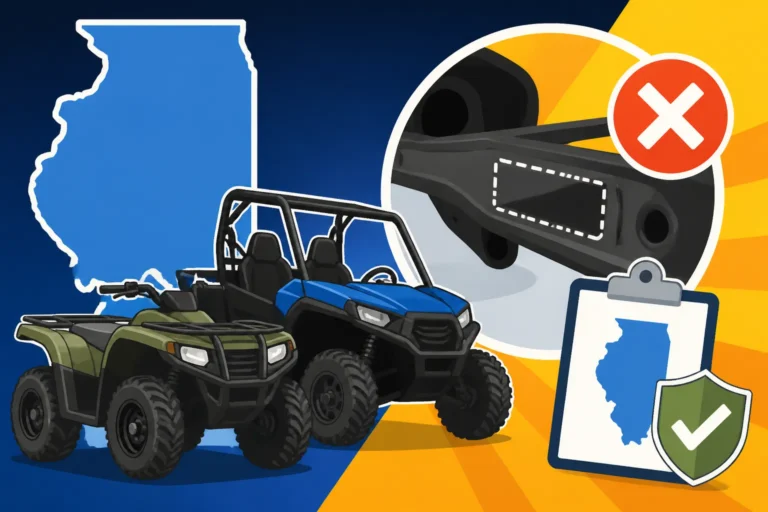
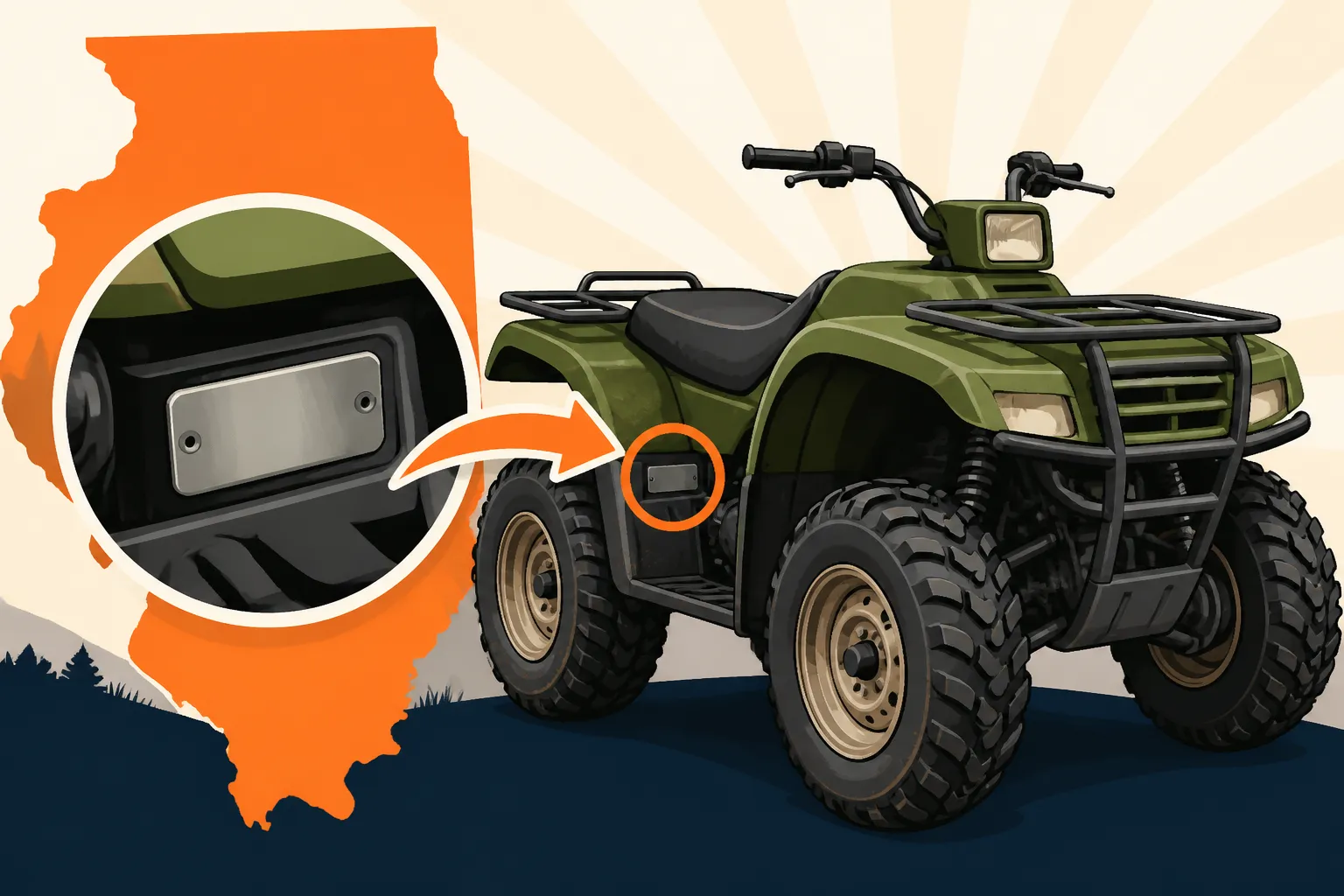
A primary location is usually on the frame near the steering head or handlebars. This is a robust part of the frame, often covered by plastic bodywork but usually accessible once you know where to look. Another very common spot is along one of the main frame rails, typically on the front right side of the machine, as if you were sitting on it. You might need to crouch down and look underneath the plastic fenders or footwells.
For some UTVs, especially those with full cabs, you might find the VIN stamped on the firewall or inside the driver's side door jamb, similar to a car. And don't forget the engine block itself! While not usually the primary VIN, many engines have their own serial numbers stamped on them, which can sometimes be cross-referenced or used as supporting evidence if the main frame VIN is completely gone. Always start with these high-probability areas before moving on to more obscure spots.
Challenges with Older Machines
Finding a VIN on an older machine isn't just about knowing where to look; it's also about overcoming the physical challenges that decades of life throw at these vehicles. Rust is a huge culprit, especially on metal frames that have been exposed to the elements or frequently ridden through mud and water without proper cleaning. That distinctive alphanumeric code can literally be eaten away or covered by layers of corrosion.
Then there's the mud and grime. Many older machines have seen countless trails, mud bogs, and creek crossings. Over time, layers of caked-on dirt, grease, and debris can completely obscure the VIN, making it look like a smooth, unblemished surface. Previous owners might have even painted over parts of the frame, inadvertently covering the VIN in the process.
Beyond natural wear and tear, sometimes aftermarket modifications or repairs can accidentally or intentionally obscure the VIN. A custom bumper, a welded frame repair, or even poorly installed accessories can end up right over the critical stamping. These challenges mean you can't just glance over the frame; you need to be prepared for a detailed, and often dirty, investigation.
A Deep Dive into Common ATV/UTV Brands and Their VIN Habits
While general locations are a good starting point, specific manufacturers often had their preferred spots for VIN placement. Knowing these common tendencies can give you a significant advantage in your search, helping you narrow down the possibilities based on your machine's make. It's a bit like knowing a specific author's writing style; you can often predict where they'll place key information.
Keep in mind that while there are general patterns, manufacturers sometimes changed their placement slightly from year to year or model to model, even within the same brand. So, consider these more as strong suggestions than absolute rules. The key is to be methodical and thorough in your exploration of these areas.
Japanese Manufacturers (Honda, Yamaha, Suzuki, Kawasaki)
These "Big Four" Japanese manufacturers have been producing ATVs for decades, and they often share similar design philosophies, including where they put their VINs. For many older Honda ATVs, you'll frequently find the VIN stamped on the front frame tube, right behind the front bumper, often on the right side. On some models, it might be on the main frame rail, just below the front A-arm mount.
Yamaha, Suzuki, and Kawasaki often favored the front portion of the main frame rail, typically on the right side, just under the front fender or engine area. Sometimes, especially on utility quads, it could be along the frame down tube that runs from the steering head towards the engine. For older sport quads, also check the left-hand lower frame rail, near where your left footpeg would be, as some manufacturers placed it there to be less exposed to direct impacts from the front. Always be prepared to remove some plastic to get a clear view.
American & European Manufacturers (Polaris, Can-Am, Arctic Cat, John Deere, etc.)
For American manufacturers like Polaris and Arctic Cat, and Canadian giant Can-Am, VIN placement can vary a bit more, especially as UTVs became more prevalent. Polaris often places its VINs on the front frame strut or the lower left-hand frame rail, sometimes very close to the driver's side front wheel well on side-by-sides. On older Polaris ATVs, check the front of the frame, often under the plastic radiator cover or near the A-arm attachment points.
Can-Am (formerly Bombardier) machines frequently have the VIN on the right-hand lower frame rail, often towards the front or mid-section of the machine. On their UTVs, also look on the firewall or even a sticker inside the glove compartment if the primary frame stamp is difficult to find. Arctic Cat often uses the front frame cross-member or the right-hand frame rail as a primary location. For specialized machines like John Deere Gators, the VIN is usually on the frame near the front right wheel or sometimes on a plate inside the utility bed or under the hood.
The important takeaway here is that while there are common zones, you need to be flexible in your search. Don't assume that if it's not in the "Honda spot," it's not there at all on your Honda. Expand your search to similar areas that other brands use.
What to Look For: Stamping, Plates, Stickers, Specific Formats
When you're scrutinizing the frame, you're not just looking for any random marks. You're specifically seeking a VIN, which is a standardized 17-character alphanumeric code for vehicles made after 1981. This code will usually be stamped directly into the metal frame (the most durable method) or, less commonly on older machines, affixed as a riveted metal plate or a durable sticker. The stamped VIN is almost always the definitive one, as plates and stickers can be replaced or peel off over time.
The VIN characters themselves will typically be uniform in size and neatly aligned. They won't look like random scratches or welder's marks. You're looking for a sequence of capital letters and numbers (excluding I, O, and Q to avoid confusion with 1 and 0). If you find something that looks like a serial number but isn't 17 characters long, it might be an engine serial number or an older pre-1981 VIN format, which can be trickier to verify but still useful.
Once you find a potential VIN, compare it to any existing paperwork you have, like an old bill of sale or previous title. Take a clear photograph for your records. This initial verification is crucial, especially if you plan to get a new title or sell the machine. A clear, readable VIN is essential for a smooth process, whether you're working with the Illinois DNR or the Secretary of State.
Tools and Techniques for Unearthing a Hidden Serial Number
Finding a VIN on an older quad often requires more than just a quick glance. You might need to get a little dirty, use a few simple tools, and approach the task systematically. Think of yourself as a forensic investigator, carefully examining the scene for crucial evidence. Patience and persistence are your greatest allies here.
Rushing through the process or simply giving up after a cursory look is how many people miss the VIN altogether. Remember, these machines are often exposed to harsh conditions, and manufacturers sometimes placed these numbers in surprisingly inconspicuous spots, or spots that simply become inconspicuous after years of use and grime accumulation.
The good news is that you don't need highly specialized equipment. Most of what you'll need can be found in a typical garage or household toolbox. It's more about strategic application than expensive gear.
Cleaning and Lighting Are Your Best Friends
Before you even think about scraping, start with a good cleaning. Mud, grease, and old paint are the VIN's best camouflage. Begin by hosing down the entire frame, paying extra attention to the areas where VINs are commonly found. Once the heavy grime is off, get in there with a stiff wire brush (a softer nylon brush might not be enough for caked-on mud) and some degreaser or a strong multi-purpose cleaner. Old toothbrushes or small detail brushes can be incredibly useful for getting into tight crevices and around welds.
After cleaning, good lighting is paramount. A bright LED flashlight or a portable work light will reveal details that are invisible in ambient light. Hold the light at different angles; sometimes, the stamped characters will only cast a shadow from a particular direction, making them pop out. A small, flexible inspection mirror (like those used by mechanics) can be a lifesaver for looking behind components or into tight spots where you can't get your head. Once you've cleaned the area and have good light, systematically scan every inch of the frame in the common locations, feeling for raised or indented characters with your fingertips.
Documentation and Verification
Once you think you've found a sequence of characters, the next step is careful documentation and verification. First, clean the area meticulously so that every character is legible. Then, take multiple clear, well-lit photographs from different angles. These photos will serve as crucial evidence for titling, sales, or insurance purposes. Ensure the photos capture the surrounding area of the frame, not just a close-up, to prove it's still attached to the original machine.
Write down the VIN exactly as you see it. Double-check for any potential misinterpretations (e.g., is it an '8' or a 'B'? A 'D' or a '0'?). If you have any old paperwork, like a previous title, a manufacturer's certificate of origin (MCO), or even a service record, compare the newly found VIN to those documents. This cross-referencing is vital to ensure you have the correct and original VIN. If you're buying a machine, this is also the moment to perform a [Running a Stolen Vehicle Check Before You Pay] using the VIN you've found. This simple step can save you a world of heartache.
What to Do If You Still Can't Find It (or It's Damaged)
Okay, you've cleaned, you've scraped, you've shined your brightest light, and still, nothing. Or perhaps you found a VIN, but it's so corroded or damaged that it's unreadable. This is a tough spot, but it's not necessarily the end of the road for your machine. Illinois does have provisions for situations like these, but they typically involve more effort and official scrutiny.
If the VIN is completely missing or unreadable, you'll likely need to go through a process to apply for a new VIN or a state-assigned identification number. This usually involves an inspection by law enforcement or a designated state agency to verify the machine isn't stolen and to confirm the VIN is genuinely unidentifiable. You might need to fill out specialized affidavits attesting to how you acquired the machine and the circumstances of the missing VIN. [Illinois Title When the VIN Is Gone] explains this in more detail. In such cases, having a paper trail for ownership, even if it's just a signed statement from a previous owner, can be immensely helpful.
Sometimes, legal assistance can be beneficial here, especially if you need to create an affidavit or understand the precise wording required by the state. While not a law firm, platforms like LawDepot offer templates for various legal documents, such as bills of sale or affidavits of ownership, which can be adapted to help you formally document your situation before presenting it to the Illinois DNR or Secretary of State. They can provide a structured way to formalize your statement about the machine's history and the VIN's condition.
What Happens After You Find It: The Next Steps for Illinois Riders
Congratulations! You've successfully located and documented the VIN on your older quad or side-by-side. That's a huge hurdle cleared. But finding the VIN is usually just the first step in a larger process, especially here in Illinois. Now, it's about using that VIN to ensure your machine is fully compliant with state regulations, whether you plan to keep it, sell it, or pass it on.
The VIN is your golden ticket to unlocking the legal ownership and usage of your off-road machine. Without it, you’d be stuck in bureaucratic limbo. With it, a world of possibilities opens up for official registration, titling, and responsible ownership. It’s also your primary tool for protecting yourself and your investment when dealing with others.
So, let's look at the critical next steps you'll need to take to move forward confidently with your newly identified machine.
Titling Your Machine in Illinois
With a legible VIN in hand, your immediate next step is usually to title your off-road vehicle in Illinois. This is a mandatory process for most OHVs in the state. [How to Title an ATV in Illinois] provides a comprehensive walkthrough, but generally, you'll need to complete a Vehicle Transaction Request form (VSD-190) and submit it, along with any proof of ownership (like a bill of sale or previous title), and the required fee, to the Illinois Secretary of State's office.
When you're dealing with an older machine, particularly if it's been out of the titling system for a while, you may need additional documentation. This is where your diligently photographed and documented VIN comes into play. If you're buying from a private seller, ensure they also have the title or can provide a clear bill of sale with the VIN clearly stated. [Applying for an Illinois Off-Road Title] will detail exactly what paperwork you should gather before you head to the facility. Remember, the VIN is what the state uses to officially link you to your machine, so accuracy is paramount. You might visit [Titling a Quad at a Secretary of State Facility] to complete this in person.
Preparing for a Sale
If your goal in finding the VIN was to sell your older machine, you're now in a much better position. A clear, readable VIN is non-negotiable for a smooth and legal sale in Illinois. No reputable buyer will purchase an ATV or UTV without a verifiable VIN, as they won't be able to title it themselves. [Selling a Titled Machine in Illinois] outlines the importance of having your paperwork, including the VIN, ready for the transaction.
When [Buying From a Private Seller in Illinois], the buyer will rely heavily on the VIN to perform their own background checks and ensure they are not purchasing a stolen machine. They'll also need it to complete their own titling process. If you're the seller, make sure the VIN on the machine matches the VIN on your title exactly. Any discrepancies can raise red flags and complicate the sale. Having a well-prepared bill of sale, clearly listing the VIN, is also crucial for both parties.
Legal Assistance and Record Keeping
Beyond the immediate titling or selling process, maintaining clear and comprehensive records of your VIN and all related documentation is a lifelong commitment for any vehicle owner. This includes copies of titles, bills of sale, insurance policies, and any correspondence with state agencies regarding your machine. This proactive approach can save you immense headaches down the line if you ever need to prove ownership, deal with an insurance claim, or resolve a dispute.
In situations where ownership is complex (e.g., inherited machines, unclear previous titles), or if you encounter issues with the VIN itself, seeking some form of legal guidance might be beneficial. While a lawyer offers direct legal advice, online resources like LawDepot can be useful for obtaining standardized legal forms. For instance, if you need to create a sworn affidavit about the history of your machine or draft a comprehensive bill of sale that includes specific clauses for an older vehicle, LawDepot provides customizable templates that can help you structure these documents correctly, ensuring all necessary information, including the VIN, is clearly stated and legally sound. This ensures your records are not just informal notes but official documents.
| Common VIN Location | Type of Machine | Potential Challenges | What to Look For |
|---|---|---|---|
| Front Right Frame Rail | Most ATVs/UTVs | Mud, rust, aftermarket accessories | Stamped characters, often uniform |
| Steering Head/Tube | Sport ATVs | Plastic covers, rust around welds | Stamped into a robust metal part |
| Driver's Side Firewall | UTVs (cab models) | Dirt build-up, interior panels | Metal plate or stamp |
| Engine Block | All OHVs | Grease, difficult access | Manufacturer's serial number |
| Under Front Fender | Utility ATVs | Hard-to-reach, plastic blocking | Stamped, may require plastic removal |
| Door Jamb (UTVs) | Some UTVs | Stickers might peel or fade | Sticker or small metal plate |
Disclaimer
This article is for general informational purposes only and does not constitute professional advice. Laws, prices and regulations vary by location and change over time. Consult a qualified professional for guidance on your specific situation.