Financing a Side-by-Side at an Illinois Dealer
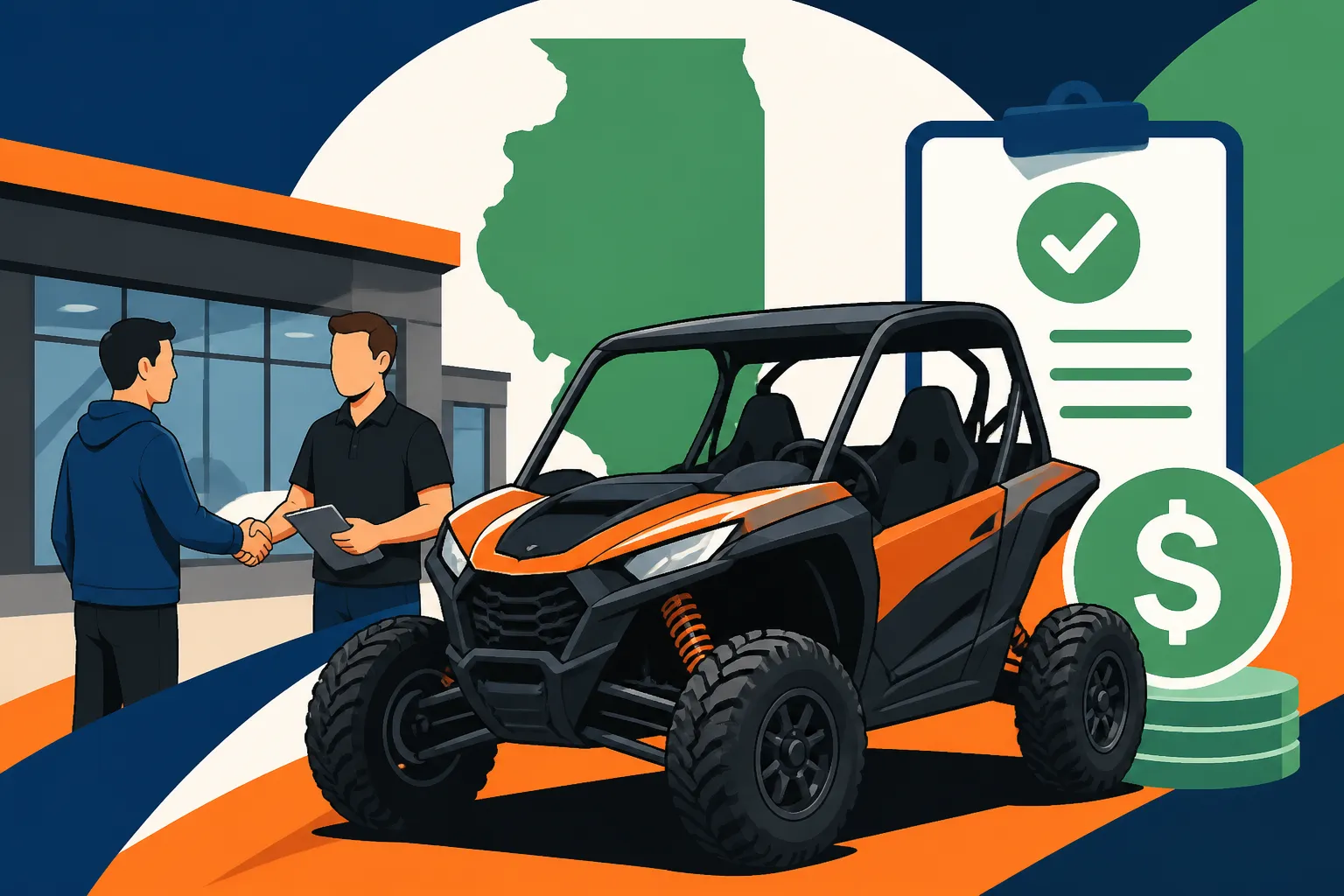
So, you've been dreaming of hitting those Illinois trails, exploring the Sahara Woods, or maybe just making quick work of chores around your property with a brand-new side-by-side. But let's be real, these machines are a significant investment, and for many of us, dropping a huge chunk of cash all at once just isn't feasible. This comprehensive guide is here to walk you through the process of financing a side-by-side right at an Illinois dealer, demystifying the steps and helping you understand what to expect.
Understanding Your Financing Options at an Illinois Dealer
When you're ready to bring home that powerful new side-by-side, one of the most common ways to make it happen is through financing directly at the dealership. It’s convenient, and often, dealers have streamlined processes that can get you approved quickly.
Dealership Financing vs. Other Lenders
Many folks assume going directly to their bank or credit union is always the best bet for a loan, and sometimes it is! These institutions often offer competitive rates if you have excellent credit and a long-standing relationship. You'd apply for a personal loan or a specific recreational vehicle loan, get approved, and then show up at the dealership as a cash buyer. This gives you a lot of leverage and allows you to separate the buying process from the financing process.
However, dealerships frequently work with a network of specialized lenders who focus on powersports vehicles. These lenders understand the value and market for side-by-sides, which can sometimes result in more flexible terms or even approval for buyers who might have a harder time getting a traditional bank loan. Dealers can often shop your application to several of these lenders at once, giving you a range of options without you having to fill out multiple applications yourself. It's a "one-stop shop" approach that many buyers find incredibly appealing, especially when they're excited to get their new machine home. Think of it as having an expert on your side, navigating the lending landscape for you.
The Application Process at a Dealer
Applying for financing at an Illinois dealership is typically a straightforward process. You'll usually sit down with their finance manager, who will guide you through the paperwork. This often involves filling out a credit application form with your personal details, employment history, income, and any existing debts. Be prepared to provide identification, like your driver's license, and potentially proof of income, such as recent pay stubs or tax returns if you're self-employed. The finance manager will then submit this information to their network of lenders.
The beauty of this system is that it often provides a quick turnaround. In many cases, you might receive an approval, or at least a preliminary decision, within minutes or a few hours. This means you could potentially drive your new side-by-side off the lot the same day, assuming all other paperwork is in order. It's exhilarating to go from browsing to owning so quickly! Remember that securing the actual [Illinois ATV Title Cost] will be part of these initial steps.
What Dealers Look For in an Applicant
Just like any lender, powersports dealers and their financing partners are looking for assurances that you can and will repay your loan. The main factors they consider are often referred to as the "5 Cs of Credit": Character, Capacity, Capital, Collateral, and Conditions.
- Character relates to your credit history – your track record of paying bills on time. A strong, positive credit history demonstrates reliability.
- Capacity is your ability to make payments. Lenders look at your income versus your existing debts (your debt-to-income ratio) to ensure you're not overextending yourself.
- Capital refers to any money you're putting down upfront, or the equity you have in a trade-in. A larger down payment reduces the loan amount and the lender's risk.
- Collateral is the side-by-side itself. It serves as security for the loan, meaning if you default, the lender can repossess the machine.
- Conditions relate to the terms of the loan, such as the interest rate and the length of the repayment period, as well as broader economic conditions.
They want to see a stable financial picture. Having a steady job, a reasonable debt load, and a history of responsible borrowing will all work in your favor. Even if your credit isn't perfect, don't despair! Some lenders specialize in different credit tiers, and a good down payment can sometimes help offset a less-than-stellar credit history.
Key Factors Affecting Your Loan Terms
When you finance a side-by-side, the specific terms of your loan—like the interest rate, the monthly payment, and the total cost of borrowing—are influenced by several critical factors. Understanding these can help you better prepare and potentially save you money in the long run.
Your Credit Score and History
Your credit score is essentially a numerical representation of your creditworthiness. It's a snapshot of how reliably you've managed debt in the past. Lenders use this score, along with your full credit report, to assess the risk of lending you money. A higher credit score generally indicates a lower risk, which translates to more favorable loan terms for you, including lower interest rates. Conversely, a lower credit score might still get you approved, but it could come with a higher interest rate to compensate the lender for taking on more risk. This is a crucial element when you are [Financing With Fair Credit in Illinois].
Your credit history goes beyond just the score; lenders will look at the length of your credit history, the types of credit you've had (credit cards, mortgages, auto loans), your payment consistency, and how much credit you're currently using relative to your limits. It's a comprehensive review designed to predict your future payment behavior. If you know you have some dings on your credit, taking steps to improve it before applying can significantly impact your financing options.
The Down Payment and Trade-In Value
One of the most impactful ways to reduce the amount you need to finance—and potentially secure better loan terms—is by making a substantial down payment. When you put more money down upfront, you reduce the principal amount of the loan, which means you'll pay less interest over the life of the loan and likely have lower monthly payments. It also signals to lenders that you're serious about the purchase and have a financial stake in the machine.
If you have an existing ATV or UTV, or even a car, that you're willing to part with, trading it in at the dealership can serve a similar purpose to a down payment. The value of your trade-in is applied directly to the purchase price of the new side-by-side, effectively reducing the amount you need to borrow. This can simplify the sale process, as the dealer handles all the transfer paperwork for your old machine. Remember to look into [Illinois Trade-In Credit for a Quad] as it can be very beneficial. It's a smart way to leverage an older asset to make a new purchase more affordable.
Loan Term Lengths and Interest Rates
The loan term is the period over which you agree to repay the loan, typically expressed in months (e.g., 36, 48, 60, or even 72 months). The interest rate is the cost of borrowing money, expressed as a percentage of the principal. These two factors are intrinsically linked and significantly impact your monthly payment and the total cost of the side-by-side over time.
- Shorter Loan Terms: Generally come with higher monthly payments but lower total interest paid over the life of the loan. You pay off the machine faster and own it outright sooner.
- Longer Loan Terms: Offer lower monthly payments, making the purchase more accessible, but you'll pay more in total interest because you're borrowing the money for a longer period.
It's a balancing act between affordability today and total cost tomorrow. Always look at the total amount you'll pay back, not just the monthly payment, to get a clear picture of the deal. Your interest rate will be heavily influenced by your creditworthiness and current market rates for recreational vehicle loans. Dealers often have promotions with special low rates, but these are usually reserved for applicants with top-tier credit. Make sure you understand the difference between dealer financing and [Illinois Dealer Promotions in Winter] or other seasonal offerings.
Navigating the Paperwork and Finalizing the Deal
Once you've been approved for financing and agreed on the terms, there's still a bit of paperwork and planning to do before you can take your new side-by-side home. This stage ensures everything is legally sound and your investment is protected.
Essential Documents You'll Need
Beyond the initial credit application, you'll need a few key documents to finalize the purchase. This typically includes:
- Valid Driver's License: For identification and proof of address.
- Proof of Insurance: Lenders almost always require you to carry comprehensive and collision insurance on a financed vehicle to protect their investment. We'll dive more into insurance in a moment, but know you'll need to show proof of coverage before you can leave the lot.
- Proof of Income/Employment: While often part of the application, some lenders may require final verification before releasing funds.
- Trade-in Title (if applicable): If you're trading in a machine, you'll need its clean title ready to transfer. This is a critical step in the [Selling a Titled Machine in Illinois] process.
Make sure to have these items readily available to avoid any delays in getting your new machine. It can be frustrating to have everything else set, only to be held up by a missing document. Keep a folder dedicated to your side-by-side purchase so you have all your important papers in one place. You can find more detail on this in [Illinois Title Paperwork Checklist].
Understanding the Purchase Agreement and Disclosure
Before you sign on the dotted line, you'll be presented with a purchase agreement and a loan disclosure statement. These are critical documents, and you should read them thoroughly, even if you're excited to get riding.
The purchase agreement outlines the sale details, including the price of the side-by-side, any accessories, taxes (like [Illinois Dealer Sales Tax on a Machine]), fees (including [Illinois Dealer Doc Fees] and freight charges), your down payment, and trade-in value. It also includes any rebates or promotions applied. Ensure every number matches what you've discussed and agreed upon.
The loan disclosure statement (often called the Truth-in-Lending Disclosure) is legally mandated and provides a clear breakdown of your financing terms. It will show:
- The Annual Percentage Rate (APR), which is the true cost of your loan, including interest and certain fees.
- The finance charge, which is the total dollar amount you will pay in interest over the life of the loan.
- The total number of payments and the total amount you will pay over the life of the loan.
- Your monthly payment amount.
Don't hesitate to ask questions if anything is unclear. This is your chance to understand every aspect of your financial commitment. While dealers handle a lot, for complex situations or if you want to double-check anything, resources like LawDepot can offer general templates for understanding contracts or creating supplemental agreements if needed, though for a dealership sale, their forms are usually standard. This step is about securing your [Illinois Cost of Ownership Year One] from a budgetary perspective.
The Role of Titling and Registration in Your Financing
When you finance a side-by-side through an Illinois dealer, they will typically handle the titling and registration paperwork on your behalf. This is a huge convenience, as they know the specific requirements of the Illinois Department of Natural Resources (DNR) and the Secretary of State (SOS).
Crucially, because the machine is financed, the lender will be listed as a lienholder on your [Illinois Title and Lien Records]. This means the lender legally owns a portion of the machine until you've paid off the loan in full. Once the loan is satisfied, the lien will be released, and you'll receive a clear title in your name. You cannot sell or transfer the machine without satisfying the lien. The dealer will collect the necessary fees for the title and any required usage stamps or decals at the time of purchase. For instance, an [Illinois OHV Usage Stamp Cost] or [Illinois Public Access Decal Cost for Residents] will be part of the final transaction. They will also submit the paperwork to the state to process your new [Illinois Title Processing Time].
Protecting Your Investment: Insurance and Extended Warranties
Beyond the initial purchase, two crucial considerations for protecting your new side-by-side are insurance and extended warranties.
Insurance: As mentioned, if you're financing, your lender will mandate certain insurance coverage. This typically includes comprehensive and collision coverage to protect the machine itself against theft, damage, and accidents. While Illinois doesn't require liability insurance for off-road use, it's highly recommended to carry it to protect yourself financially if you cause an accident involving another person or property. Think about what kind of [Illinois Insurance a Lender Requires] versus what you might want for peace of mind. Discuss your options with your insurance agent to find a policy that fits your needs and budget. [Illinois ATV Insurance Cost Per Year] will be a recurring expense to factor into your budget.
Extended Warranties: A new side-by-side typically comes with a manufacturer's warranty, covering defects for a specific period. However, given the nature of off-road riding, parts can wear out, and unexpected repairs can be costly. An extended warranty, purchased through the dealer or a third party, can offer peace of mind by covering repairs beyond the manufacturer's warranty period. While it's an additional upfront cost, it can save you significantly if a major component fails down the road. Weigh the cost against the potential for expensive repairs and your comfort level with risk.
| Feature | Dealer Financing | Bank/Credit Union Loan |
|---|---|---|
| Convenience | One-stop shop, handled at dealership | Requires separate application process |
| Lender Network | Access to specialized powersports lenders | Often traditional personal/RV loan providers |
| Approval Time | Often quick, sometimes same-day | Varies, can take a few days for approval |
| Rates/Terms | Competitive, special promotions possible | Potentially lower rates for top credit |
| Paperwork | Dealer handles most titling/registration docs | Buyer often responsible for some aspects |
| Down Payment Impact | Reduces loan amount, can improve terms | Reduces loan amount, can improve terms |
| Credit Flexibility | May have options for various credit tiers | Typically favors strong credit profiles |
| Brand Mentions | LawDepot for contract review (if needed) | N/A |
Disclaimer
This article is for general informational purposes only and does not constitute professional advice. Laws, prices and regulations vary by location and change over time. Consult a qualified professional for guidance on your specific situation.