Reporting a Crash to a Village Officer
Experiencing an ATV or UTV crash on a village street can be a jarring, confusing, and outright scary event. Beyond the immediate shock and concern for safety, the question of "what now?" quickly arises, especially when it comes to dealing with local authorities. This guide aims to walk you through the essential steps for reporting a crash to a village officer in Illinois, helping you understand your responsibilities and navigate the aftermath with a bit more clarity and confidence.
The Initial Shock: What to Do Immediately After a Crash
When a crash happens, whether it's a minor fender-bender or something more serious, your adrenaline immediately kicks in. It's easy to feel overwhelmed, but focusing on a few immediate actions can make a world of difference for your safety and the subsequent reporting process.
Assessing Injuries and Securing the Scene
First and foremost, take a deep breath and check yourself and any passengers for injuries. Even if you feel fine in the moment, sometimes injuries aren't immediately apparent. Ask everyone involved if they're okay. Your physical well-being is the top priority. If anyone is hurt, even slightly, that dictates your very next step.
Once you've done a quick self-assessment, make sure the scene is as safe as possible. If your ATV or UTV is still running, turn it off. If your machine has hazard lights, activate them. If it's safe to do so and your machine can be moved without further damage or risk, consider moving it to the side of the road or out of active traffic lanes. This helps prevent further collisions and keeps you and others safe from oncoming traffic.
Contacting Emergency Services (911)
If there are any injuries—even minor ones—or if the crash has caused significant property damage, blocked a roadway, or involved another vehicle, calling 911 immediately is crucial. Don't hesitate. The 911 dispatchers are trained to assess the situation and will send the appropriate emergency personnel, whether that's an ambulance, fire department, or law enforcement.
When you call, be prepared to give clear and concise information. State that you've been in an ATV or UTV accident, provide your exact location (street names, nearest cross street, any recognizable landmarks like a specific business or park), and briefly describe what happened and if there are any injuries. Even if your village has its own police department, a 911 call will ensure that the correct local authority is notified and dispatched, whether it’s a village officer, county sheriff, or even Illinois State Police, depending on the specifics of the road.
Understanding Your Obligation to Report to a Village Officer
Riding an ATV or UTV on a village street in Illinois means you're operating under specific local ordinances. These aren't just suggestions; they're legal requirements that dictate not only how you can ride but also how you must act in the event of an incident.
Village Ordinances and Reporting Thresholds
The legality of riding your UTV or ATV on village streets in Illinois is entirely dependent on whether that specific municipality has passed an ordinance allowing it. [Illinois Municipalities That Pass Ordinances] are common, but they vary widely. If your village permits street use, it will likely have clear rules about accident reporting. These rules often mirror state vehicle codes for traditional cars, requiring you to report crashes that involve injuries, fatalities, or significant property damage. While I can't give you exact dollar figures, "significant" typically means damage exceeding a certain threshold, often in the hundreds or low thousands of dollars. Always check your specific village's ordinance for detailed requirements. You can often find this information on the village's website or by contacting the village clerk's office. This also applies to things like [Illinois Penalties for Illegal Street Riding] if you're operating without permission.
If you're unsure whether your machine is allowed on village streets, or what the specific reporting rules are, it’s always best to err on the side of caution and contact local law enforcement. It's far better to make a report that might not be strictly necessary than to fail to report an accident that later proves to have serious consequences. For more details on local rules, check out [Illinois UTV Street Legal Rules by Town].
What Information a Village Officer Will Need
When a village officer arrives on the scene, they will be there to gather facts and ensure public safety. They’ll need specific information from you to complete an accident report. Be prepared to provide your driver's license (yes, [Illinois Requires a Driver's License] for street use), proof of insurance if your UTV is street-legal (which [Illinois Requires Insurance for Street Use]), and any relevant information about your ATV or UTV. Remember, off-highway vehicles like ATVs and UTVs in Illinois are "title only" and generally not registered in the same way cars are, so you won't have a traditional vehicle registration card unless your machine is specially plated for street use in a very specific context.
The officer will ask you for details about the incident: the exact time and location, weather and road conditions, how the crash occurred from your perspective, and if other vehicles or parties were involved. They'll also want to know about any witnesses and their contact information. They'll document damage to your machine, other vehicles, or property, and take statements from everyone involved. It's a thorough process designed to create an official record of what happened, which is vital for insurance claims and potential legal proceedings.
The Reporting Process and Follow-Up
Interacting with law enforcement after a crash can be intimidating, but knowing what to expect can help you remain composed and provide the necessary information effectively.
Interacting with the Responding Officer
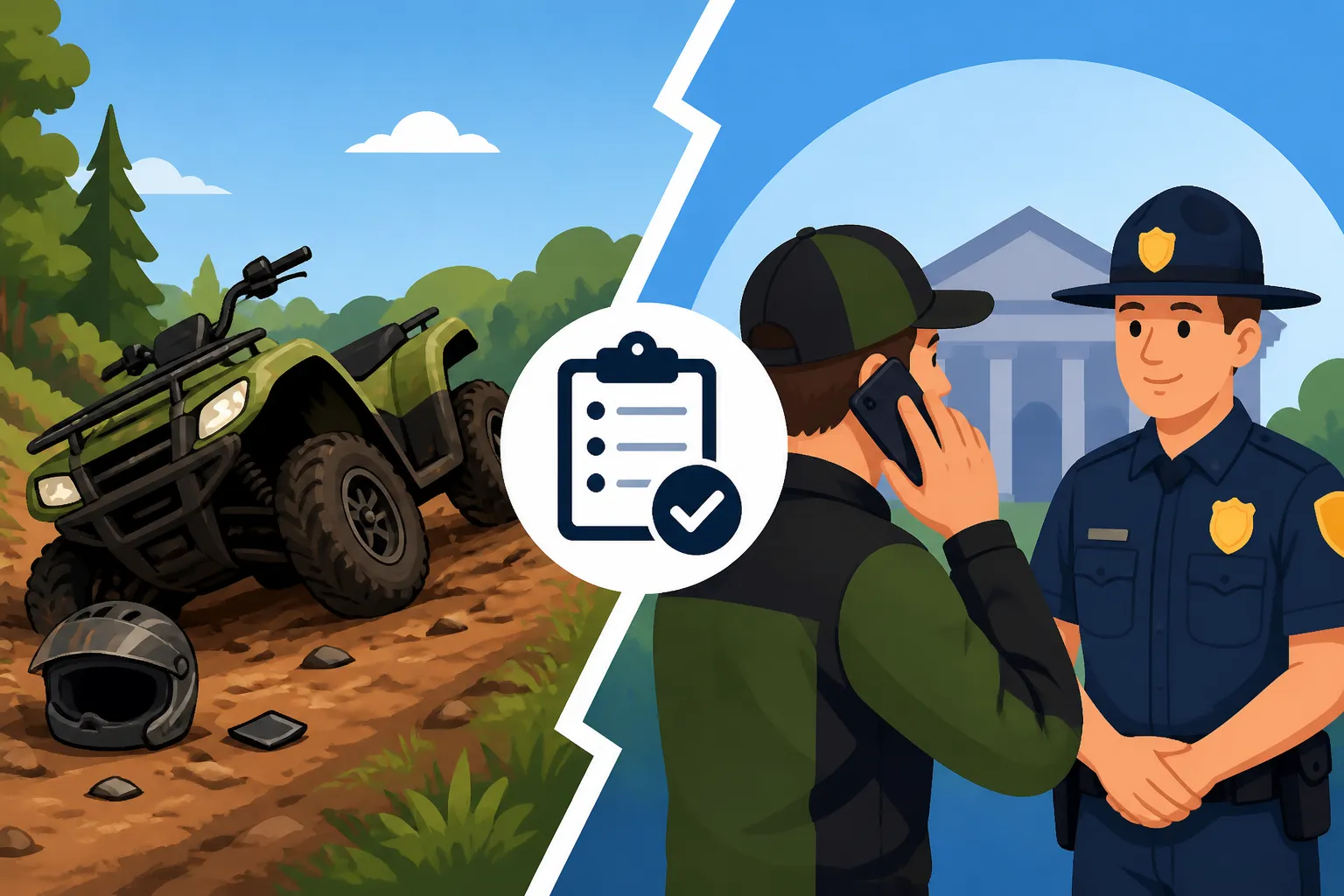
When the village officer arrives, approach them calmly and cooperatively. Stick to the facts of the incident and avoid speculating, guessing, or admitting fault. Simply describe what happened from your viewpoint, without adding any unnecessary details or personal opinions. Remember, anything you say can be included in the official report. If you're asked about street-legal equipment, know that your machine should be up to spec, possibly with aftermarket additions from a company like SuperATV that provide required items such as [Illinois Requires a Rearview Mirror] or [Illinois Requires Turn Signals].
Before the officer leaves the scene, make sure to get their name, badge number, and, most importantly, the accident report number. This report number is your key to accessing the official documentation later. Ask the officer about the process for obtaining a copy of the report, as you'll need it for your insurance company. Often, these reports are available a few days after the incident through the village police department or the county sheriff's office, depending on which agency responded.
After the Officer Leaves: Insurance and Next Steps
Once the officer has completed their on-scene investigation and you've exchanged information with any other parties involved, your next immediate step should be to contact your insurance company. Do this as soon as possible, even if the damage seems minor. Provide them with the accident report number you received from the officer. Your insurance provider will guide you through the claims process, explaining what documentation they need and how to proceed with repairs or medical claims. Remember, [Illinois Insurance Minimums for Street Use] apply if your machine is legally operating on roads.
Depending on the extent of the damage to your ATV or UTV, you'll need to decide on repairs. If you're looking for replacement parts or upgrades after a crash, many riders turn to reputable brands. For instance, if you need to replace a damaged windshield or an A-arm, companies like SuperATV offer a wide range of parts and accessories that can help get your machine back in riding shape, and sometimes even stronger than before. Be sure to document all damage with photos and keep a record of all communications. For a more comprehensive overview of how to handle the aftermath, you can refer to [Illinois Accident Reporting for a UTV Crash].
Here's a quick checklist to help you remember key steps after a crash:
| Action Item | Description |
|---|---|
| Assess Injuries | Check yourself and all passengers for any injuries, no matter how minor. |
| Secure the Scene | Turn off engines, activate hazard lights, and move machines to safety if possible. |
| Call 911 | Immediately if there are injuries, significant damage, or if the roadway is blocked. |
| Identify Other Parties | Exchange names, contact info, and insurance details with anyone else involved. |
| Document the Scene | Take photos of all vehicles, damage, road conditions, and any relevant surroundings. |
| Cooperate with Officer | Provide factual information, avoid speculation, and get the officer's name and report number. |
| Contact Insurance | Report the incident to your insurance provider promptly, using the official report number. |
| Seek Medical Attention | If you have any concerns about injuries, see a doctor, even if you didn't feel pain at the scene. |
Avoiding Future Incidents on Village Streets
While crashes can sometimes be unavoidable, many are preventable. Taking proactive steps to ensure you're riding safely and responsibly on village streets is paramount.
Understanding Village Driving Rules and Equipment
The privilege of riding your ATV or UTV on village streets comes with the responsibility of knowing and obeying all local traffic laws and ordinances. This includes speed limits, stop signs, traffic signals, and yielding rules. Many villages in Illinois have specific equipment requirements for UTVs and ATVs to be street legal, often including headlights, taillights, brake lights, turn signals, mirrors, and a slow-moving vehicle emblem. [Illinois Non-Highway Vehicle Equipment List] can provide more detail on these requirements.
Always ensure your machine is properly equipped and that all lights and safety features are in good working order before you head out. Driving defensively, anticipating the actions of other motorists, and being highly visible are crucial when sharing the road with cars. Remember, your off-road machine handles differently than a car, so give yourself extra space and time for braking and turns.
Regular Machine Maintenance and Safe Riding Habits
Consistent maintenance of your ATV or UTV isn't just about performance; it's about safety. Before every ride, especially on public roads, perform a quick pre-ride check: test your brakes, check your tire pressure and tread, ensure all lights are working (headlights, taillights, brake lights, and turn signals), and confirm your mirrors are properly adjusted. Addressing minor issues before they become major problems can prevent a lot of headaches, and potentially, serious accidents.
Beyond machine maintenance, cultivate safe riding habits. Never operate your ATV or UTV under the influence of alcohol or drugs – [Illinois DUI Law and Off-Road Machines] applies to off-road vehicles too, even on private property, let alone public streets. Always ride within your skill level and the capabilities of your machine. Avoid distractions, such as using your phone, and always wear appropriate safety gear, including a helmet. By being prepared, knowledgeable, and responsible, you significantly reduce your risk of needing to report another crash to a village officer.
Disclaimer
This article is for general informational purposes only and does not constitute professional advice. Laws, prices and regulations vary by location and change over time. Consult a qualified professional for guidance on your specific situation.