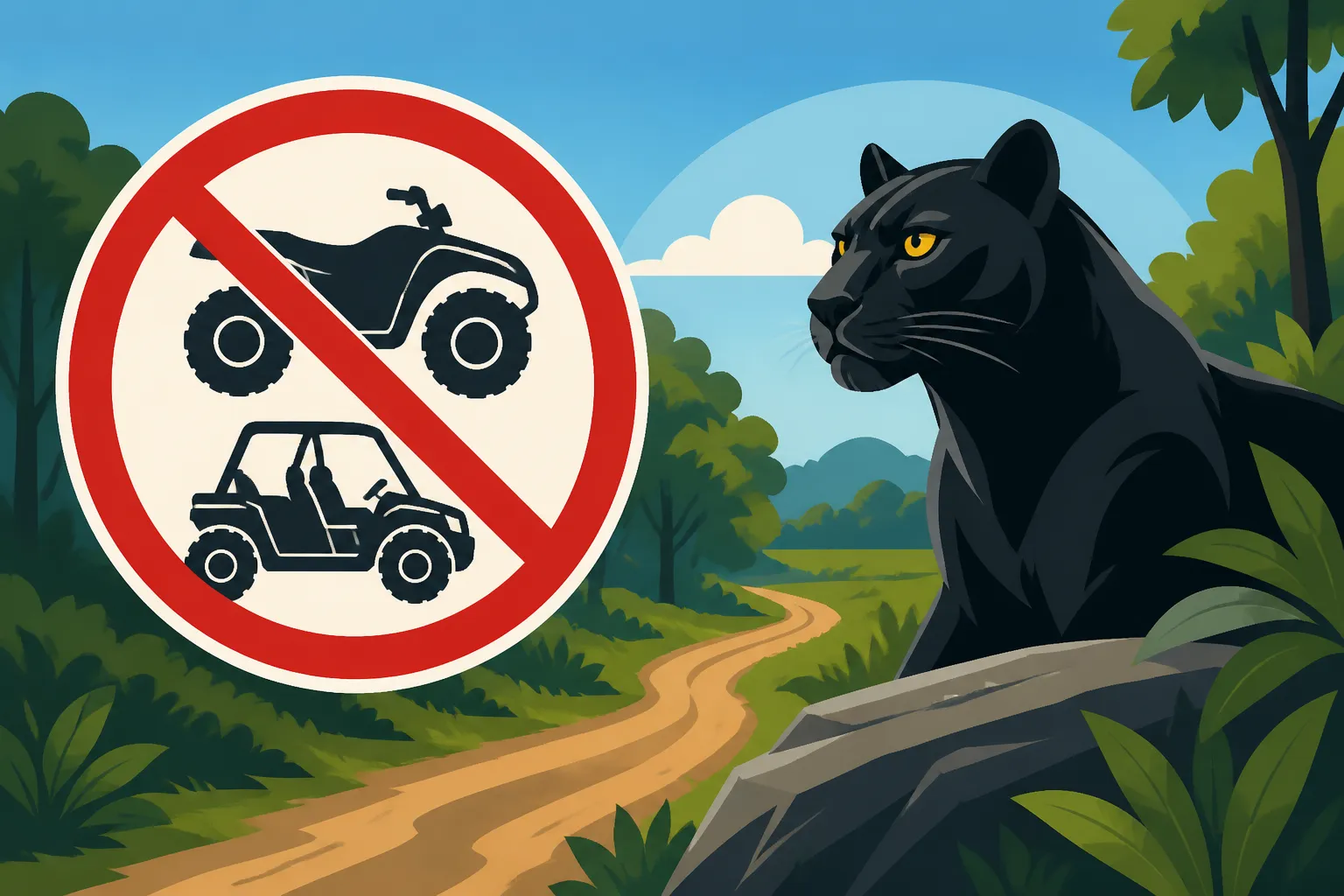
Jim Edgar Panther Creek Has No OHV Trail
If you’re planning to haul an ATV or side-by-side to Jim Edgar Panther Creek, the key detail is easy to miss: the site does not have a designated OHV trail system. This guide explains what that means, how to avoid an unplanned turn-around, and how to find a legal place to ride instead.
Why Jim Edgar Panther Creek Is Not an ATV Riding Destination
Public land does not automatically mean motorized trail access
Jim Edgar Panther Creek State Fish and Wildlife Area is a large public recreation area in central Illinois, near Chandlerville. But “public land” does not mean every kind of recreation is allowed everywhere. Access depends on the site’s purpose and rules, and the presence of roads or trails does not make them open to ATVs or UTVs.
The important distinction is between being able to visit a site and being permitted to ride a machine there. A place can welcome activities such as hiking, fishing, camping, hunting, or horseback riding while offering no designated OHV routes. An ATV’s ability to fit down a road or path is not permission to use it.
That can be frustrating if you have already loaded the machine, packed riding gear, and made the drive. Before setting out, check the site’s official information for the activities and routes it actually allows. The broader distinction is covered in Illinois Public Land Not Designated for ATVs and Illinois Trails Closed to Machines.
What “no OHV trail” means for your plans
For riding purposes, treat Jim Edgar Panther Creek as having no designated ATV or UTV trail system. Do not plan on unloading your machine and riding around the property, and do not assume a hunting or fishing road is an OHV route. A trail shown on a map may be intended for pedestrians, equestrians, or another permitted use.
The same caution applies to GPS tracks, social media posts, and older descriptions from other riders. A route may be outdated, may refer to a different kind of trail, or may cross land where motorized use is prohibited. Even if someone has ridden a path in the past, that does not establish that it is currently legal to do so.
If you are unsure about a particular road or activity, ask the site manager before you unload. A quick confirmation is much easier than discovering a restriction after you have arrived—or receiving a citation for riding somewhere machines are not allowed.
How to Check Access Before You Tow
Confirm the rules with the site, not just a map
Use maps to plan your trip, but use the site’s official rules to decide whether you can ride. Look for explicit wording about OHV, ATV, UTV, or off-highway vehicle use. If the information lists hiking, fishing, hunting, or camping but says nothing about motorized trails, do not take that silence as approval.
You can also contact the managing office and ask a direct question: “Are ATVs or UTVs allowed on any designated riding trail at this site?” If the answer is no, ask whether machines are permitted for any limited purpose, such as access to a specific area. Do not assume that permission for one use allows recreational riding.
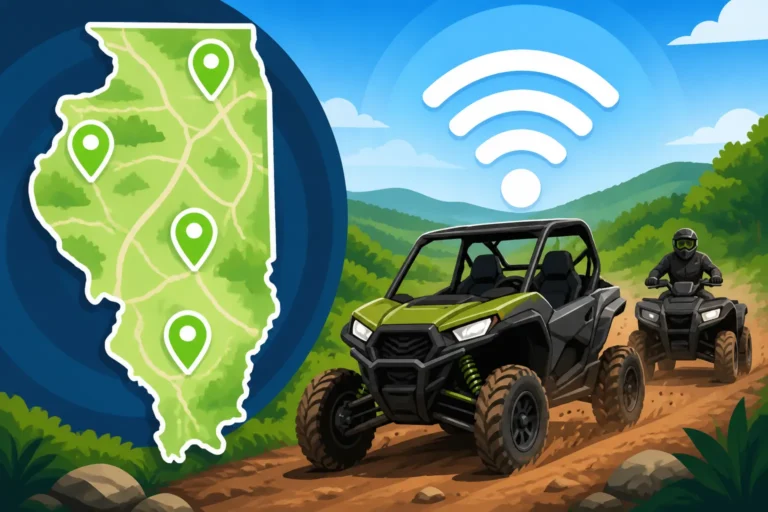
Mapping apps can still help with the trip itself. For example, onX Offroad may be useful for checking your route and keeping your navigation organized, but an app display is not a substitute for current site rules. If you use onX Offroad or another mapping tool, compare what you see with official information before treating a line on the screen as a legal riding trail.
Check more than the trail label
Before leaving home, check the site’s current notices, posted rules, access restrictions, and any seasonal closures. Conditions and permitted activities can differ by area and time of year. A trail that is open to one kind of use may be closed to another, and a road that is open to ordinary vehicle traffic is not necessarily a recreational ATV route.
It also helps to confirm the basics of your day: where you may park, whether trailers are accommodated, what facilities are open, and whether the activity you want is permitted. If you are planning to ride elsewhere after visiting the site, check the requirements for that riding area separately. A permit or sticker for one location does not automatically grant permission at another.
A simple pre-trip checklist can prevent a wasted drive:
- Confirm that the destination has a designated OHV trail.
- Verify the machine types allowed on those trails.
- Check closures, operating rules, and seasonal restrictions.
- Confirm parking and unloading arrangements.
- Review the permit, decal, and safety requirements for that specific site.
- Save the official contact information in case a rule is unclear.
For a wider overview of legal options, start with Illinois ATV Trails: Where You Can Actually Ride. If you are comparing mapped routes, Illinois ATV Trail Map Downloads can help you organize your search, but the site’s official rules still determine where you may ride.
Where to Ride Instead
Look for a site that clearly identifies OHV access
If your main goal is to ride, choose a location that explicitly describes designated ATV or UTV trails. Illinois has a mix of public grant-assisted riding areas and private off-road parks, and their rules can differ considerably. Some sites may require permits, vehicle stickers, waivers, advance reservations, or compliance with equipment rules.
Do not select a destination solely because it appears close to Jim Edgar Panther Creek on a map. Check the riding area’s own information for trail types, vehicle limits, operating dates, parking, fees, and any registration process. A site that welcomes dirt bikes, for example, may not allow a full-size side-by-side on every route.
For public options, Illinois Grant-Assisted Riding Areas is a useful place to understand the category. If you are considering a privately operated park, review Illinois Private Off-Road Parks and confirm directly with the individual facility before making the trip. A listed riding area is a starting point for research, not a guarantee that it suits your machine or your preferred riding style.
Know what the stamp and decal do—and do not do
Illinois riders may encounter both a usage stamp and a public access decal. They are not interchangeable permission slips for every public property. In general, the usage stamp and access decal serve different purposes, and a decal requirement is tied to use of qualifying grant-assisted riding sites. Neither one turns a site without OHV trails into an ATV park.
Before purchasing anything, identify the destination and its requirements. Check whether the place is a grant-assisted site, whether your machine needs a particular permit, and whether the rules differ for residents, visitors, or rental machines. The overview at [Illinois Public Access Decal Rules] explains why the decal matters at applicable locations, while Checking Whether a Site Is Grant-Assisted can help you understand what to verify.
If you plan several rides at different locations, make a small trip-by-trip list of requirements rather than assuming one sticker or permit covers all of them. For background on how the two Illinois stickers differ, see Illinois OHV Permits: Two Stickers Explained. The safest habit is to check the destination’s own instructions every time you plan a ride.
If You Are Visiting Jim Edgar Panther Creek Anyway
Enjoy activities the site does allow
A lack of OHV trails does not mean there is no reason to visit. The area may suit people looking for other outdoor recreation, depending on the facilities and rules available during their visit. If your group includes both riders and non-riders, you could plan the day around activities the site permits and choose a separate OHV destination for the riding portion.
That kind of split plan works best when you are clear about where the machine will remain. Do not unload just to “take a quick look” along a road or trail unless the site explicitly allows that use. Keep the ATV or UTV secured and use the site for its permitted activities.
If your visit is connected to hunting, fishing, or another specific purpose, check the rules for that activity too. A hunting-related authorization, for example, should not be treated as a recreational riding permit. Your Hunting License Is Not a Riding Permit explains that distinction, and Illinois Land You May Not Ride offers broader context about places where riding is not allowed.
Make a backup plan before you leave
A practical backup plan is not just a second pin on your map. It is a confirmed destination with compatible trails, open dates, parking information, and the right permits for your machine. If the first location does not offer OHV access, having that information ready can save the day.
When comparing alternatives, consider the type of riding your group wants. Beginners may prefer clear routes and straightforward site rules. Riders looking for technical terrain should confirm that the park offers trails appropriate to their machines and experience. Families may need to check age, passenger, helmet, and supervision rules before booking or setting out.
You can use onX Offroad to keep possible destinations and route notes organized, but verify each site with its own official information before you drive. A map can help you navigate to a legal riding area; it cannot make a closed trail open or replace permission from the property manager.
The central takeaway is simple: do not plan an ATV or UTV ride at Jim Edgar Panther Creek. Confirm the rules, keep your machine off trails that are not designated for motorized use, and choose a separate riding area that explicitly allows your vehicle. That little bit of checking ahead can spare you a long, disappointing day with a trailer full of gear and nowhere legal to ride.
Disclaimer
This article is for general informational purposes only and does not constitute professional advice. Laws, prices and regulations vary by location and change over time. Consult a qualified professional for guidance on your specific situation.