Illinois Rules for a Visiting Indiana Rider
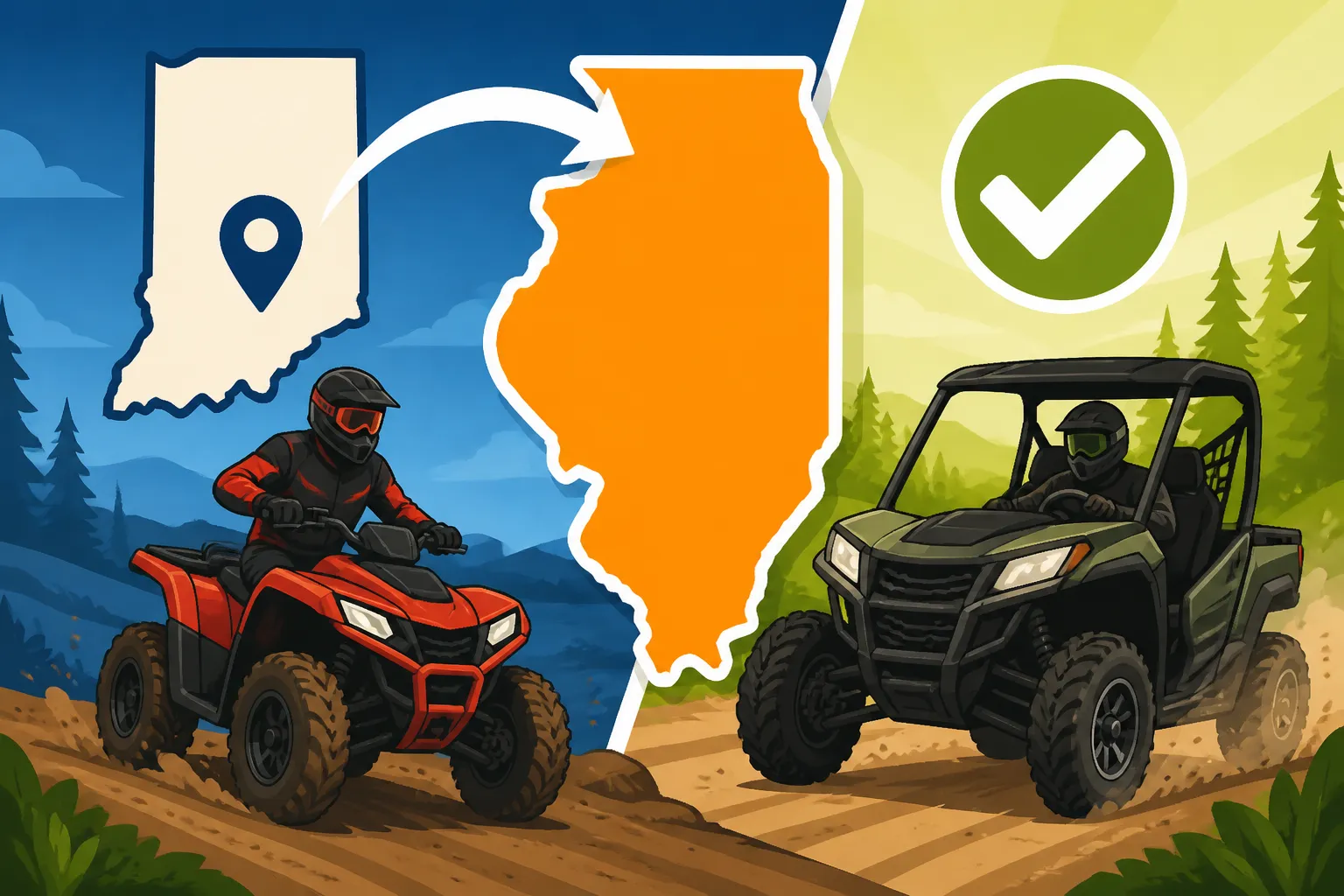
Alright, fellow off-road enthusiasts and Hoosier friends! So, you're eyeing the vast open spaces and potential riding opportunities across the state line in Illinois, and you're bringing your trusty ATV or UTV from Indiana. It’s natural to assume that what flies in your home state will automatically apply here, but let me tell you, that assumption can lead to a world of frustration, confusion, and even hefty fines. Illinois has its own unique, and sometimes tricky, set of rules, especially when it comes to riding off-highway vehicles (OHVs) on public roads. This guide is going to walk you through exactly what an Indiana rider needs to know to stay legal and enjoy their time in the Prairie State, whether you're looking for trails or hoping to cruise through a small town.
Understanding Illinois's Approach to Street Legal OHVs
Illinois's stance on ATVs and UTVs on public roads is quite a bit different than what many Indiana riders might be used to. While some states have blanket rules, Illinois operates on a more localized, granular system that can feel like navigating a patchwork quilt of regulations. It's not always straightforward, but once you understand the basic premise, it becomes much easier to plan your ride.
The Fundamental Ban and Local Ordinances
Let's start with the big one: Illinois law generally prohibits ATVs and UTVs from being operated on public streets, highways, and roads. This is the baseline. However, and this is a crucial however for anyone looking to ride on pavement, this statewide ban comes with a significant exception. Individual municipalities, meaning cities, towns, and even some counties, have the authority to pass their own ordinances allowing OHV use on certain public roads within their jurisdiction.
This means you can't just assume that because you see someone riding a UTV on a street in one Illinois town, you can do the same in the next town over. Each local government gets to decide for itself, and these decisions often come with specific conditions, equipment requirements, and permit processes. It's a stark contrast to a state where a statewide registration might grant broader street access. For an Indiana rider, this often means your well-equipped machine that's perfectly legal on the roads back home might not meet the criteria just across the border, or you might need to jump through some extra hoops.
What Your Indiana Registration Does (and Doesn't Do) Here
Back home in Indiana, you likely have your ATV or UTV registered with the Bureau of Motor Vehicles, and you might even have a license plate if it's street-legal. That's fantastic for riding in Indiana! However, when you cross into Illinois, your Indiana registration alone doesn't grant you any special privileges for street use. Illinois does not register ATVs and UTVs for street use at a state level in the same way your home state might. [Illinois Titles but Does Not Register ATVs].
While your Indiana title is valid proof of ownership, and you'll definitely want to have it with you, it doesn't translate into automatic street legality in Illinois. This is a common point of confusion. Illinois is more concerned with whether your machine meets their specific non-highway vehicle equipment standards and if the local municipality you're in has an ordinance allowing such use. So, while your Indiana paperwork is important for proving you own the machine, don't rely on it to get you out of a ticket for illegal street riding in Illinois.
The "Non-Highway Vehicle" Designation
Illinois refers to ATVs and UTVs, along with golf carts and mini-trucks, as "Non-Highway Vehicles" (NHVs). This designation is key because it underpins the state's entire approach to these machines. By definition, they are not designed or intended for general use on public highways. This is why the default is a ban on public roads.
However, the NHV definition also sets the stage for what’s required if a local ordinance does permit street use. If a town allows NHVs on its streets, it's typically under very specific conditions that treat them differently than regular automobiles. This can include speed limits, road restrictions, and the aforementioned equipment requirements. Understanding that your machine is categorized as a "Non-Highway Vehicle" in Illinois helps explain why the rules are so particular and why you can't just treat it like any other car or truck when you're visiting.
Essential Requirements for Street-Legal Riding in Illinois (When Permitted)
So, you've done your homework, and you've found a friendly Illinois town that actually allows OHVs on its streets – fantastic! But before you hit the pavement, your machine and you, as the operator, need to meet specific Illinois requirements. These aren't suggestions; they are legal necessities, and failing to meet them can quickly turn a fun ride into a legal headache.
Equipment Checks for Your Machine
Even if a town permits street riding, your ATV or UTV won't be allowed on the road unless it's properly equipped to meet Illinois's Non-Highway Vehicle standards. This isn't just about safety; it's about legality. Many Indiana riders might have basic safety gear, but Illinois has a distinct list for street-legal operation.
First off, your machine needs functional headlights and tail lamps. The headlight must be visible from at least 500 feet, and the tail lamp must show a red light visible from at least 100 feet. Brake lights are also a must-have, illuminating when you apply the brakes. Beyond lighting, turn signals are typically required for UTVs, though sometimes ATVs are exempt if hand signals are used, but having them is always safer and less ambiguous. You'll also need a rearview mirror (or mirrors, depending on the machine and local rule) to see what's behind you. And perhaps one of the most distinctive Illinois requirements is a slow-moving vehicle (SMV) emblem mounted prominently on the rear of your machine. This bright orange triangle with a reflective border signals to other drivers that your vehicle will be traveling at slower speeds. Many riders find themselves looking at aftermarket solutions, perhaps from brands like SuperATV, to ensure their machines are fully compliant with these specific requirements before attempting street use in Illinois. [Illinois Non-Highway Vehicle Equipment List].
Driver's License and Insurance Requirements
It's not just your machine that needs to be ready; you, the operator, do too. In Illinois, if you're operating an ATV or UTV on any public road where it's legally permitted, you must possess a valid driver's license. Your Indiana driver's license is perfectly acceptable for this, so you don't need to worry about getting an Illinois-specific license. Just make sure it's current and in your possession. [Illinois Requires a Driver's License].
Beyond the license, liability insurance is also a non-negotiable requirement for street use. Illinois law mandates minimum liability coverage for any vehicle operated on public roads. This is generally referred to as 25/50/20 coverage: $25,000 for the injury or death of one person, $50,000 for the injury or death of more than one person, and $20,000 for property damage. You'll need proof of this insurance with you, whether it's an insurance card or a digital copy on your phone. Even if your machine is covered by your Indiana auto policy, confirm that it explicitly extends to street-legal ATV/UTV use in Illinois and meets these minimums. Don't assume your trail-riding-only coverage is enough. [Illinois Insurance Minimums for Street Use]. This is one of those areas where taking a few minutes to call your insurance agent before your trip can save you a lot of grief.
Navigating Local Ordinances and Permits as a Visitor
This is where things can get particularly tricky for out-of-state riders. Illinois's reliance on local ordinances means that a significant amount of your pre-trip planning will involve researching specific locations, rather than just understanding statewide laws.
Researching Your Destination is Key
Because there's no blanket "street legal" status in Illinois, you absolutely must research the specific city, village, or county you plan to visit. Do not skip this step! Many municipalities have websites where they post their local ordinances. Look for terms like "Off-Highway Vehicle," "Non-Highway Vehicle," "UTV ordinance," or "ATV ordinance." You're trying to find out if they allow OHVs on their streets at all, and if so, what the specific rules are.
Some towns might allow UTVs but not ATVs, or they might restrict riding to certain hours or certain roads (e.g., only roads posted 35 mph or lower). They might have specific age restrictions for drivers or passenger rules. If you can't find the information online, don't hesitate to call the village or city clerk's office. They are the best resource for accurate, up-to-date local rules. Showing up unprepared and getting a ticket is a surefire way to spoil your trip, and fines can add up quickly. [Illinois UTV Street Legal Rules by Town].
Permit Systems and Fees
Many Illinois towns that allow OHVs on their streets require a local permit, even for visitors. This isn't just a formality; it's often a source of revenue for the municipality and helps them regulate local use. These permits typically involve an application process, a fee, and sometimes even a physical inspection of your machine to ensure it meets all the local equipment requirements.
The permit fees and renewal schedules vary widely from town to town. Some might charge a one-time fee, others an annual fee. For example, some villages might charge a permit fee in the range of fifty to one hundred dollars for the first year, with a lower renewal cost. You'll usually need to display a sticker or decal from the town on your machine as proof of the permit. If you're planning a day trip or weekend visit, factor in the time and potential cost of acquiring one of these permits, as they are often required before you can legally ride on their streets. Sometimes, you might even need to apply in person at the village hall.
Crossing State Highways and Restricted Roads
Even in towns that permit OHV street use, there are almost always restrictions on where you can ride. Generally, your ATV or UTV will be limited to streets with lower speed limits, typically 35 mph or less. Major state highways, which often cut through towns, are usually off-limits for continuous riding.
However, many ordinances will allow you to cross a state highway at an intersection, but only at a 90-degree angle, and you must proceed immediately across to the permitted street on the other side. You cannot travel along the state highway itself. This is a critical distinction that often trips up riders. Furthermore, Illinois explicitly prohibits ATVs and UTVs from operating on interstates and tollways under any circumstances. These are absolute bans, regardless of local ordinances. Always be aware of the type of road you're on and if it's part of the permitted network. [Illinois Crossing Rules at Intersections].
Illinois OHV Stickers: Usage Stamps vs. Access Decals (and Why They Matter to Visitors)
Beyond any local street permits, Illinois has a separate system of stickers for off-road riding, primarily for use on designated trails. These are the Illinois Usage Stamp and the Public Access Decal. Understanding these, and how they interact, is crucial for any out-of-state rider planning to hit the dirt.
The Illinois Usage Stamp for Trail Use
The Illinois Usage Stamp is primarily for machines that will be ridden off-road on public lands, specifically on trails that aren't grant-assisted. Think of it as a general permit for off-road riding in areas designated for OHVs within the state, where applicable. The cost of a usage stamp is generally quite modest, and it's valid for a specific period, usually expiring on March 31st each year, regardless of when you buy it. [Illinois OHV Usage Stamp Explained].
As an Indiana rider, if you plan to visit any non-grant-assisted public OHV riding areas in Illinois, you'll need one of these. It's available through various vendors, including many that sell hunting and fishing licenses, or directly from the Illinois Department of Natural Resources (DNR). It’s a physical sticker that needs to be displayed on the forward half of your machine.
The Illinois Public Access Decal
Now, here's where it gets a little more specific. The Illinois Public Access Decal is specifically for use on public OHV riding areas that have received state grant funding. These are often referred to as "grant sites." The money from these decals goes directly back into maintaining and developing these specific trails. [Illinois Public Access Decal Explained]. The price for a non-resident decal is typically a bit higher than for a resident, and it also expires annually. [Why Illinois Charges Visitors More for a Decal].
So, if you're planning a trip to a well-known riding park like Sahara Woods (Illinois's only state OHV park) or other grant-assisted sites, you'll need this decal. It’s also a physical sticker, and usually needs to be mounted front and center on your machine.
Why a Visiting Rider Needs Both (or One or None)
This is the part that often confuses people: do I need both the stamp and the decal? The key thing to remember is that the Public Access Decal cancels out the need for the Usage Stamp when you're riding at a grant-assisted site. In other words, if you buy the Public Access Decal, you don't also need to buy the Usage Stamp for riding at a grant site. The decal essentially covers you for grant sites and any other areas where a Usage Stamp would normally be required. [Why the Two Stickers Exist].
So, if your entire trip is focused on riding at Sahara Woods, you'd buy the Public Access Decal (the non-resident version). If you're exploring some lesser-known, non-grant-assisted public lands, you might just need the Usage Stamp. However, if you plan to ride both kinds of areas, simply getting the Public Access Decal is usually the most straightforward option, as it covers both scenarios for trail use. Neither of these stickers, it's important to note, grant you permission to ride on public streets; that's entirely up to the local municipal ordinances and their separate permit systems. It's a two-tiered system: one for dirt, one for pavement (if allowed).
Here's a quick comparison to help solidify these differences:
| Feature | Indiana (General) | Illinois (General) |
|---|---|---|
| Street Use | Varies, some statewide allowances/registrations. | Generally prohibited; local ordinances may permit. |
| Driver's License | Required for street use. | Required for street use. |
| Insurance | Required for street use. | Required for street use (specific minimums). |
| Equipment | Varies by state/local law for street use. | Specific Non-Highway Vehicle list for street use. |
| OHV Permits/Stickers | State registration/plates for street use. | Local street permits (if allowed); separate Usage Stamp/Access Decal for trails. |
| Reciprocity | Generally recognizes other state's registration. | Does not grant street access based on out-of-state registration alone. |
Remember, fellow riders, the most important thing is to do your homework before you load up the trailer. Illinois offers some fantastic riding, both on trails and, in some specific towns, on the streets. But understanding these nuances, especially coming from a different state, is key to a hassle-free and enjoyable experience. Check those local ordinances, get your machine equipped, and grab the right stickers for the type of riding you plan to do. Ride safe and have fun out there!
Disclaimer
This article is for general informational purposes only and does not constitute professional advice. Laws, prices and regulations vary by location and change over time. Consult a qualified professional for guidance on your specific situation.