Hauling a Machine to a Grant Site
So, you're planning a trip to one of Illinois' fantastic grant-assisted riding sites, ready to hit the trails with your ATV or UTV? That's awesome! But before you hitch up the trailer and point your rig down the highway, it's super important to make sure you've got all your ducks in a row. It can be a real headache to drive all that way, only to find out you're missing a crucial piece of paperwork or your machine isn't quite up to snuff. This guide is here to walk you through everything you need to know about preparing your machine, gathering your essential documents, and understanding what to expect when you arrive, so your adventure starts smoothly and stays fun.
Understanding Illinois Grant-Assisted Riding Sites
Illinois offers some truly incredible opportunities for off-road enthusiasts, and a big part of that comes from its grant-assisted riding sites. These aren't just any old patch of woods; they're specially managed areas that come with their own set of rules and expectations. Knowing what these sites are all about is the first step to ensuring a hassle-free trip.
What is a Grant-Assisted Site?
Unlike state-run parks that are solely funded and managed by the Illinois Department of Natural Resources (DNR), grant-assisted sites are a bit different. These are typically owned or operated by local government entities, private clubs, or other organizations. What makes them "grant-assisted" is that they've received financial aid from the Illinois DNR through programs designed to enhance and expand off-highway vehicle (OHV) riding opportunities. This funding helps them build new trails, maintain existing ones, improve facilities like parking areas or restrooms, and ensure the overall quality of the riding experience.
Because they receive public funds, these sites are open to the public, but they operate under specific guidelines set forth by the grant agreement. Think of places like Little Egypt Off Road near Marion, or Mill Creek Park in Marshall—these are examples of sites that benefit from these kinds of programs, offering dedicated spaces for you to enjoy your quad or side-by-side. The whole idea behind these grants is to make sure Illinois riders have safe, well-maintained places to enjoy their sport, fostering a community around responsible off-roading. You can learn more about what these places entail by checking out [What a Grant-Assisted Riding Site Actually Is].
Why the Rules Differ from Private Land
It's easy to assume that if you can ride on your buddy's back forty without a fuss, you can do the same at a grant-assisted site. But that's where you'd be mistaken, and understanding why is key. When a site accepts DNR grant money, it's not a free pass; it comes with requirements and responsibilities. These obligations are in place to protect the environment, ensure rider safety, and manage public access fairly.
For instance, while you might not need a specific sticker to ride your machine on private property you own or have explicit permission for, grant-assisted sites almost always require a special permit or decal. This is because the grant conditions mandate specific ways of operating to ensure sustainability and safety, which often includes funding staff or volunteers to enforce these rules. These sites have clear boundaries, designated trails, and often specific operating hours that wouldn't necessarily apply to riding on someone's farm. The DNR wants to ensure that the public funds are used to create a managed, safe, and sustainable riding environment for everyone, which necessitates a more structured approach than casual private land use. Therefore, always anticipate a more formal check-in process and stricter adherence to rules at these locations compared to informal private riding spots. It’s always a good idea to familiarize yourself with [Illinois Grant Site Rules for Riders] before you go.
Essential Paperwork for Your Machine and Trailer
Arriving at a grant-assisted riding site with your machine ready to roll is only half the battle. The other, equally critical half, is having all your documentation in order. Nothing can derail a fun riding day faster than being turned away at the gate because of missing or incorrect paperwork. Let's break down what you absolutely need to have on hand.
The Illinois OHV Usage Stamp and Access Decal
This is often where new riders get confused, and for good reason! Illinois has two main stickers for off-highway vehicles, and it's vital to know the difference, especially when heading to a grant-assisted site.
First, there's the Illinois OHV Usage Stamp. This stamp is generally required for machines operated on designated public lands that are not grant-assisted. Think of small, often undeveloped DNR properties, although these are less common for extensive ATV/UTV riding. You can find more detail on this at [Illinois OHV Usage Stamp Explained].
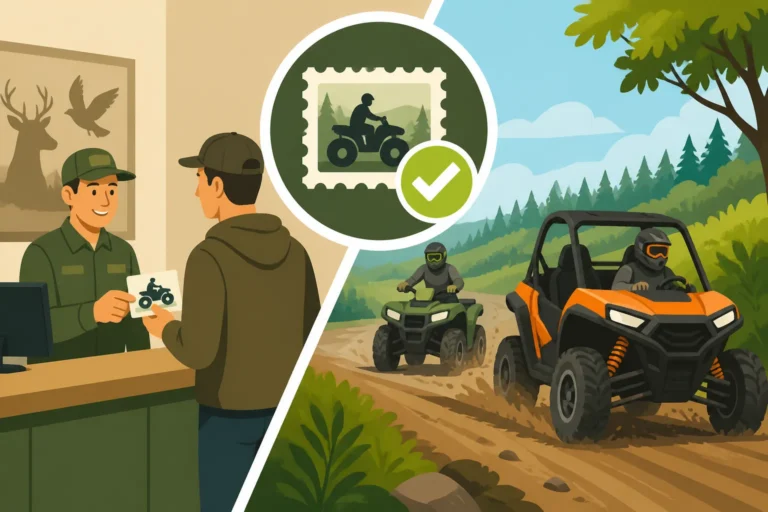
Second, and most importantly for your trip, is the Illinois Public Access Decal. This decal is specifically designed for use at the state's grant-assisted OHV riding areas, the very places you're planning to visit. Here's the key: if you have a current Public Access Decal displayed on your machine, you do not need the separate Usage Stamp for riding at these grant-assisted locations. The Access Decal essentially covers your permission to ride at these publicly funded, managed sites.
Failing to have the correct sticker visible on your machine could mean being denied entry or even facing a fine if a conservation officer or park staff member spots you. These stickers are how the state ensures that those who benefit from the trails are contributing to their maintenance and oversight. You can typically purchase these decals and stamps from authorized DNR direct vendors (like many sporting goods stores or ATV dealerships) or sometimes online through the DNR's portal. Make sure you understand how to properly mount your decal; generally, it needs to be clearly visible on the forward half of your machine, usually front and center. For specific placement instructions, check out [Illinois Decals Mounted Front and Center]. It’s a common mix-up, so understanding [Why an Access Decal Cancels the Usage Stamp] can save you a headache.
Proof of Ownership and Identification
Beyond the required decals, you'll need to clearly establish who you are and that you legally own the machine you're hauling. This is standard procedure at most riding parks and is vital for preventing theft and ensuring accountability.
Your primary proof of ownership will be your Illinois ATV Title Certificate. Since 1998, all off-highway vehicles operated in Illinois are required to be titled. This document is like the deed to your machine; it formally states you are the legal owner. If you've recently purchased your ATV or UTV, especially in a private sale, make absolutely certain that the title has been properly transferred into your name well before your trip. A delay in title transfer could mean you don't technically own the machine in the state's eyes, and that could cause problems at the gate. Keep the original title in a safe place at home, but carry a clear photocopy with you, or be prepared to show the original if requested. For more information on this crucial document, see [Illinois ATV Title Certificates Explained] and [Illinois Title Transfer After a Sale].
If you've just bought the machine and are waiting for the official title to come back from the Secretary of State, a comprehensive Bill of Sale can act as temporary proof of purchase. This document should detail the buyer, seller, machine VIN, purchase price, and date of sale. Services like LawDepot offer customizable bill of sale templates that can ensure you cover all the necessary legal bases, providing a strong interim document while you await your official title.
Finally, every operator will need valid photo identification, typically a state-issued driver's license or ID card. This is not just to verify who you are, but also to confirm your age, as there are often age restrictions for operating certain types of machines or at specific sites. If you're bringing along younger riders, be aware that sites often have strict rules for minors, including specific age requirements and the need for a parent or legal guardian to be present and sign waivers on their behalf. Familiarize yourself with [Illinois Rules for Young Riders] if you're planning a family outing.
Trailer Registration and Insurance
Don't forget the equipment that gets your OHV to the trails! Your tow vehicle and the trailer itself also need to meet legal requirements.
First, your trailer must be properly registered and plated with the Illinois Secretary of State. This is a separate registration process from your ATV or UTV and needs to be current. Just like your car, your trailer must display valid license plates and have up-to-date registration. Law enforcement may pull you over if your trailer's registration is expired or if it lacks proper plates.
Second, insurance is paramount. While dedicated off-road insurance for your ATV or UTV is generally not required for riding on private or grant-assisted trails in Illinois, your tow vehicle and trailer are legally required to carry liability insurance when on public roads. This means if you get into an accident while hauling your machine to the grant site, your standard auto policy should cover damage to other vehicles or property, as well as injuries you cause. However, it's highly advisable to consider comprehensive coverage for your ATV or UTV itself. Many riders add their off-road machines to their existing auto or homeowner's policies, or purchase a separate OHV policy. This additional coverage can protect your valuable machine against theft, vandalism, or damage during transport or while out on the trails. Imagine a road hazard causing your machine to come loose from the trailer; a good comprehensive policy could save you a significant out-of-pocket expense. Before you leave, always perform a pre-trip check: ensure your trailer lights, brake lights, and turn signals are fully functional, and that safety chains are properly crossed and secured to your tow vehicle.
Preparing Your Machine and Hauling Setup
Once your paperwork is in order, your focus shifts to the physical preparation of your off-road machine and your entire hauling setup. A properly prepared machine isn't just about fun; it's about safety, compliance, and avoiding unexpected issues that could cut your riding day short.
Machine Inspection and Spark Arrestor
Before you even think about loading your machine onto the trailer, give it a thorough once-over. This pre-ride inspection can catch small issues before they become big problems on the trail. Check your tire pressure, ensure your brakes are working effectively (both front and rear), test all lights, and confirm fluid levels (oil, coolant). You don't want to find out you have a leaky tire or fading brakes when you're miles into a remote trail.
One critical item for virtually all public and grant-assisted riding areas in Illinois is a USFS-approved spark arrestor. This device is a specialized muffler component designed to prevent hot carbon particles from exiting your exhaust system and potentially igniting dry grass or leaves, leading to devastating wildfires. It's a non-negotiable requirement at most sites, and staff often perform spot checks. If your machine's exhaust has been modified or if you're unsure, have it inspected by a reputable dealer to ensure it meets federal and park standards. Getting turned away at the gate because of a missing or non-compliant spark arrestor is a frustrating way to start your day. For more details on this requirement, check out [Illinois Spark Arrestor Requirements].
Additionally, some grant sites, especially those near residential areas or with specific environmental concerns, might enforce sound limits. Aftermarket exhaust systems can sometimes exceed these limits. It's worth checking the specific park's rules beforehand to ensure your machine complies, preventing potential issues upon arrival. Learning about [Illinois Sound Limits at a Park] is a good pre-ride step. For side-by-sides, also be mindful of width restrictions. Some older ATV trails were not designed for the wider footprint of UTVs, so verify the trails you plan to ride can accommodate your machine's dimensions.
Secure Loading and Hauling
The journey to the grant site is just as important as the ride itself. Ensuring your machine is securely loaded and your trailer is properly hitched is paramount for your safety and the safety of others on the road.
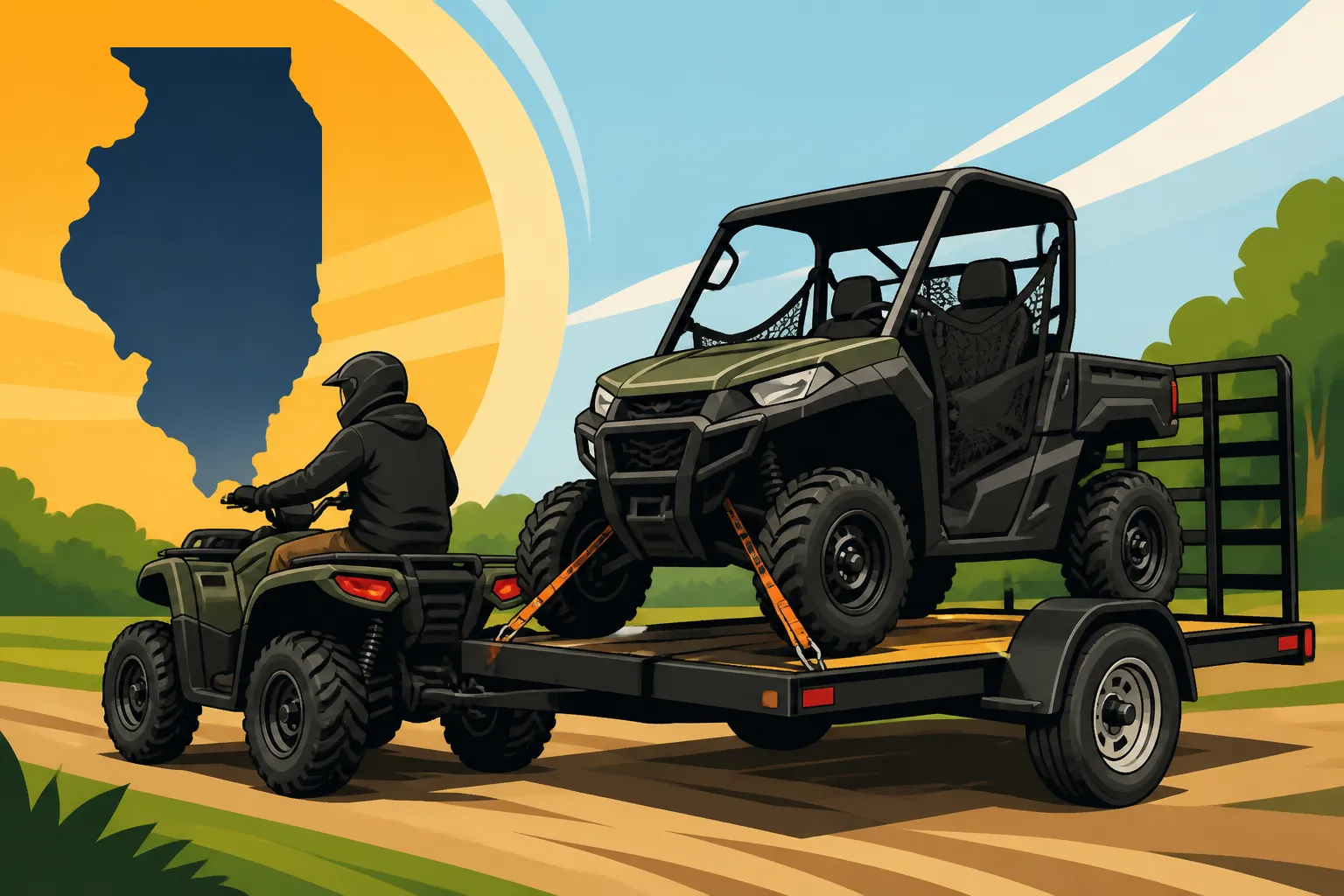
Start with proper tie-downs. Don't skimp on quality here. Invest in heavy-duty ratchet straps, not just flimsy rope or bungee cords. Use at least four tie-down points—one at each corner of your ATV or UTV—securing it to the trailer. Many experienced riders recommend crossing the straps (e.g., front-left to rear-right) to create a stronger, more stable hold that resists lateral movement. Make sure the straps are tight, checking them again after driving a short distance to ensure they haven't loosened.
Weight distribution on your trailer is crucial for safe towing. As a general rule, you want approximately 10-15% of your total trailer weight (trailer plus machine) to be on the tongue (the part that connects to your tow vehicle). This usually means positioning your ATV or UTV so that about 60% of its weight is forward of the trailer's axle(s). Improper weight distribution—too much weight at the rear, for example—can cause dangerous trailer sway, making your rig difficult to control, especially at highway speeds or in windy conditions.
Finally, always double-check your lights and connections. Before pulling out of your driveway, walk around your entire setup. Ensure your trailer's brake lights, running lights, and turn signals are all functioning properly and synced with your tow vehicle. Confirm that your hitch is securely connected and locked, and that your safety chains are crossed under the hitch and attached to your tow vehicle. If your tow vehicle's standard mirrors don't give you a clear view around your loaded trailer, consider using extension mirrors to improve visibility and eliminate blind spots. Neglecting these checks is not only dangerous but can also lead to citations from law enforcement. You want to ensure that your trailer is appropriately plated for the haul, and details for that can be found at [Plating a Trailer That Hauls an Unplated Quad].
What to Expect Upon Arrival and Beyond
You've made the drive, your machine is secure, and your paperwork is tucked away. Now, you're at the entrance to the grant-assisted riding site! Understanding the check-in process and what's expected of you on the trails will help you transition smoothly from hauling to riding.
Check-in Procedures at the Grant Site
Most grant-assisted riding sites will have a clear gate or office where you'll need to stop before proceeding to the parking or unloading areas. This is where the formal part of your visit begins.
Be prepared to present your documents. This typically includes your valid photo ID (driver's license), the Illinois Public Access Decal displayed on your machine, and possibly proof of ownership for your ATV or UTV (a photocopy of your title is usually sufficient). The staff or volunteers at the gate will verify this information.
A standard part of the check-in process is signing liability waivers. These documents release the park and its operators from responsibility in case of injury or accident. Read them carefully. If you are bringing minor riders, their parent or legal guardian will almost certainly need to sign a waiver on their behalf, often requiring additional identification to confirm the relationship. It’s a good idea to know what to expect with [Illinois Private Park Waivers and Rules]. While the forms at these sites will be specific to them, understanding the general structure of waivers, perhaps through resources like LawDepot, can give you an idea of the type of legal language involved.
After completing the paperwork, many parks will issue wristbands for riders and/or stickers for your machine. These serve as proof that you've checked in and paid any necessary fees. It's crucial to keep your wristband on and the machine sticker visible throughout your visit, as park staff may check them on the trails. You can find more about these requirements at [Illinois Wristband Rules for Riders] and [Illinois Wristbands and Vehicle Stickers]. Some sites might even offer a brief orientation to new visitors, covering current trail conditions, specific hazards, or any temporary rules in effect, so pay attention!
Navigating the Site and Staying Safe
Once you're checked in and on the trails, the real fun begins, but always with safety and respect in mind. Riding at a grant-assisted site isn't just about hitting the gas; it's about being a responsible member of the off-road community.
Always stick to designated trails. Grant-assisted sites are often built on sensitive land or reclaimed areas, and going off-trail can damage fragile ecosystems, create erosion, or even put you in a hazardous, unmapped area. Respect other riders you encounter, giving them space and yielding right-of-way as appropriate. Good [Illinois Trail Etiquette Locals Expect] ensures everyone has a pleasant experience.
Be mindful of any speed limits posted within the park, especially in parking lots, near trailheads, or in crowded areas. These limits are in place for everyone's safety, including pedestrians and other riders.
Emergency preparedness is paramount. While these sites are managed, cell service can be spotty in remote areas. Always carry a basic first-aid kit, plenty of water, and perhaps a small tool kit for minor repairs. Let someone know your riding plans and expected return time. It’s also wise to check [Illinois Trail Conditions Before You Tow] for any recent closures or warnings, especially after heavy rain.
Finally, remember to respect the land. Grant-assisted sites are a privilege, not a right. Pack out everything you pack in, including all trash. Avoid littering, don't damage vegetation, and do your part to keep the trails clean and enjoyable for future riders. Riding under the influence of alcohol or drugs is not only illegal (check [Illinois DUI Law and Off-Road Machines]) but incredibly dangerous, both for you and for others. These trails are a shared resource, and responsible riding helps ensure they remain open for years to come.
| Item | Purpose | Where to Get/Verify | Key Reminder |
|---|---|---|---|
| Illinois Public Access Decal | Required for grant-assisted sites | IDNR Direct Vendor, Online | Mount front and center on your OHV |
| OHV Title | Proof of ownership for your ATV/UTV | Illinois Secretary of State | Keep a copy on hand; original kept secure at home |
| Driver's License/ID | Rider identification and age verification | State DMV | Required for all operators on the trails |
| Trailer Plate/Registration | Legal hauling of your OHV on public roads | Illinois Secretary of State | Ensure current tags and visible plate |
| Insurance Card | Proof of tow vehicle liability coverage | Your insurance provider | Covers accidents on public roads while hauling |
| Spark Arrestor | Prevents wildfires from hot exhaust particles | Machine manufacturer, local dealer | Must be USFS-approved for most public/grant sites |
| Signed Waivers | Liability release for park entry | Grant site check-in office/gate | Parents/guardians must sign for minors |
Disclaimer
This article is for general informational purposes only and does not constitute professional advice. Laws, prices and regulations vary by location and change over time. Consult a qualified professional for guidance on your specific situation.