Crossing Only at an Intersection
It's a common frustration for ATV and UTV owners in Illinois: you just want to get from Point A to Point B, perhaps crossing a quiet road to access another section of trail or even just to reach a friend's property. But the rules of the road for off-highway vehicles (OHVs) in the Prairie State can feel like a tangled mess, leaving many riders confused and worried about breaking the law. This guide will unravel one of the most crucial and often misunderstood aspects of riding on or near public roads: the strict requirement to cross only at an intersection, and what that truly means for your adventures.
The Foundational Rule: Illinois Generally Bans OHVs from Public Roads
Before we dive into the specifics of crossing, it's vital to understand the baseline in Illinois: off-highway vehicles, which include ATVs and UTVs, are generally not designed or permitted for widespread street use. The state law starts with a clear prohibition against riding these machines on public streets, highways, or roadways. This isn't just a suggestion; it's the foundation of all other rules and exceptions, and it's intended to keep both OHV riders and the general motoring public safe.
Why Illinois Keeps OHVs Off the Asphalt
The reasoning behind this general ban is pretty straightforward when you think about it. ATVs and UTVs are built for different environments than cars and trucks. They often have different braking capabilities, handling characteristics, and safety features that aren't optimized for paved roads, high speeds, or interaction with heavy traffic. Imagine trying to stop a nimble sport quad quickly on slick pavement, or a utility side-by-side with aggressive tires trying to maneuver through rush hour. It's a recipe for disaster. The state prioritizes the safety of everyone, and that means limiting where these powerful machines can operate. This overarching rule is why you won't see an ATV or UTV with a license plate cruising down the interstate like a regular car. [Why an Illinois ATV Title Comes With No Plate]
Limited Exceptions to the Rule: When Streets Are Allowed
Now, like many rules, there are exceptions, and this is where it gets a little nuanced. Illinois law does provide avenues for local units of government – villages, cities, townships, and counties – to pass ordinances that allow OHVs on specific roads within their jurisdiction. This is why you might hear about one town allowing UTVs on its streets while a neighboring town absolutely forbids it. It's a patchwork, and it's up to you, the rider, to know the local rules wherever you plan to ride. Even in these towns, however, there are often strict requirements regarding equipment, permits, and designated routes. [Illinois Municipalities That Pass Ordinances]
Navigating the Exception: What "Crossing at an Intersection" Truly Means
Even when full street use isn't allowed, Illinois law recognizes that riders might need to briefly cross a public road to get from one legal riding area to another, or to access private property. This is where the "crossing only at an intersection" rule comes into play. It's a critical safety measure, and misunderstanding it can lead to serious legal trouble.
The Purpose of Crossing at an Intersection
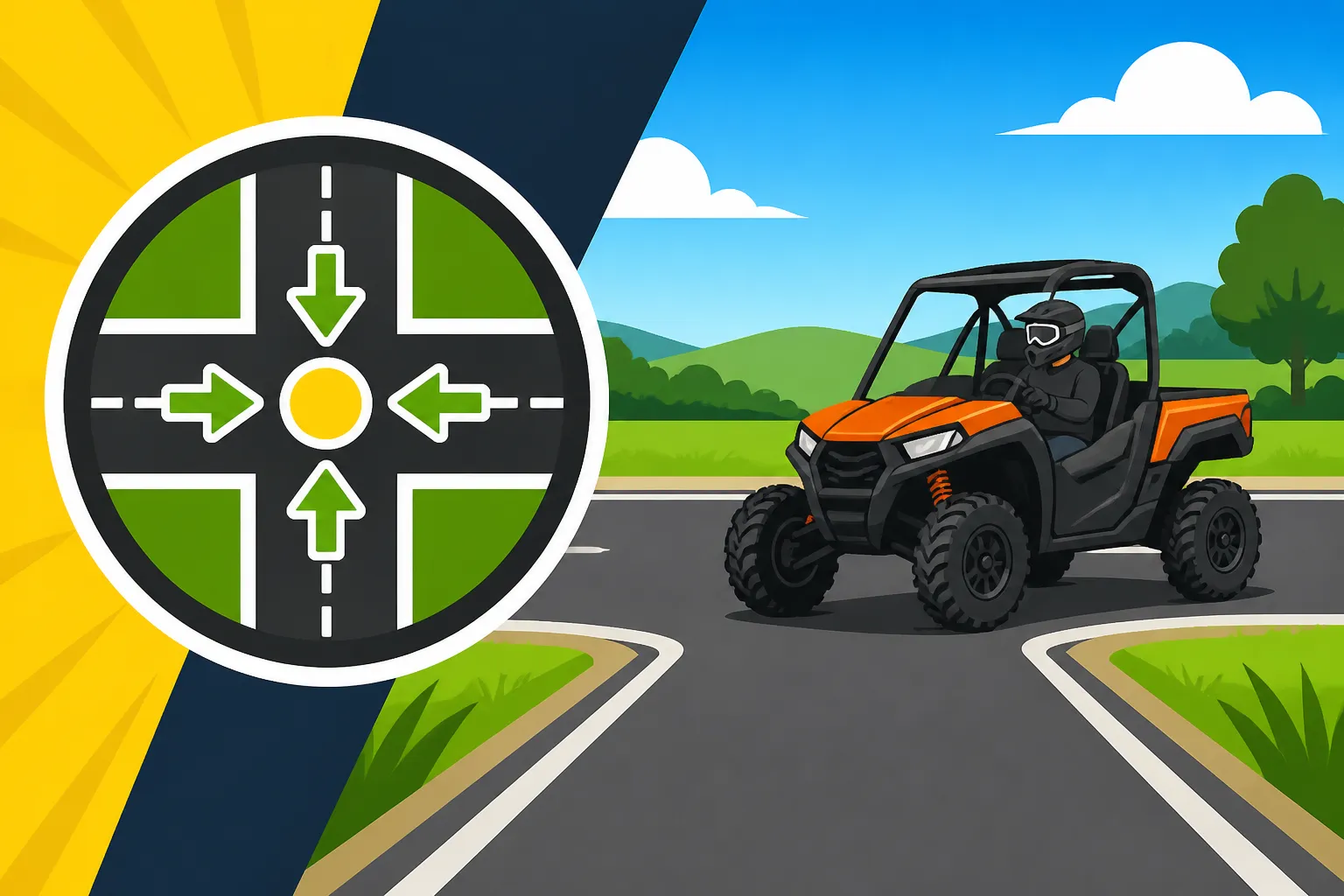
The core idea behind this rule is visibility and predictability. Intersections are places where drivers expect traffic to merge, turn, or cross. There are usually traffic control devices like stop signs or traffic lights, and drivers are generally more alert to potential conflicts. By requiring OHV riders to cross only at intersections, the law attempts to minimize unexpected encounters between off-road machines and traditional road vehicles. It's about creating a predictable point of interaction rather than letting OHVs dart across roads randomly where motorists might not anticipate them.
Imagine a busy two-lane highway. If an ATV could cross anywhere, a driver might suddenly see a machine emerge from a ditch or field, leaving no time to react. At an intersection, however, even if there isn't a traffic light, there's usually a clear line of sight, and drivers are more prepared for cross-traffic. This helps everyone stay safer.
The "How-To" of Legal Intersection Crossing
So, how do you actually execute a legal intersection crossing? It's not just about pointing your machine straight and gunning it. There are specific considerations:
- Approach Safely: Always approach the intersection cautiously, as you would in any other vehicle. Come to a complete stop, and look both ways multiple times.
- Yield to Traffic: You must yield to all oncoming traffic, just like you would if you were in a car pulling out from a stop sign. Do not assume other drivers see you, or that they will yield to you. Wait for a clear and safe gap in traffic before proceeding.
- Proceed Directly: The law specifies "crossing." This means you should travel the shortest distance across the road, usually perpendicular to the flow of traffic. You are not meant to turn onto the road and travel down it, even for a short distance, unless a local ordinance specifically permits it (and you meet all those local requirements). The goal is to get from one side of the road to the other as efficiently and safely as possible.
- Stay Alert: Your concentration should be 100% on the crossing. Keep an eye on traffic, potential hazards, and be ready to react. This isn't the time to be looking at your phone or distracted by your passengers.
- Consider Equipment: While not always explicitly required for just crossing (unless a local ordinance dictates otherwise for general road use), having good visibility equipment like proper mirrors can be incredibly helpful for seeing oncoming traffic. Products from companies like SuperATV can offer enhanced visibility and safety features that give you a better situational awareness, even for quick intersection crossings.
Remember, this rule applies to all public roads, from quiet township lanes to busier state highways. [Illinois Crossing of State Highways]
Practical Considerations and Safety When Crossing
Simply knowing the rule isn't enough; you need to apply it with common sense and a strong emphasis on safety. Even a quick crossing can become dangerous if you're not fully prepared.
When to Rethink Your Crossing
Sometimes, even if you're at an intersection, a crossing might not be safe. This includes:
- Poor Visibility: Fog, heavy rain, or even just dense tree lines can obscure your view of oncoming traffic or make your machine less visible to drivers. If you can't see clearly, or you feel drivers won't see you, it's better to find an alternative route or wait for conditions to improve.
- High Traffic Volume: A busy intersection during rush hour is not the place for an OHV crossing, even if technically permitted. The risk of an accident dramatically increases when there are constant streams of cars, trucks, and other vehicles.
- Unfamiliar Intersections: If you're riding in a new area, take extra time at intersections. Observe the traffic patterns, look for hidden driveways or turns, and make sure you understand the flow before attempting to cross.
It’s always better to be late or find a different path than to put yourself or others at risk. Your machine is an investment, but your life and the lives of others are priceless.
Essential Gear and Pre-Checks for Any Road Encounter
While Illinois doesn't generally require street-legal modifications for simply crossing a road, common sense dictates that certain equipment will make you safer. This includes:
- Working Lights: Headlights and tail lights are critical, especially during dawn, dusk, or overcast conditions. Make sure they are functioning properly before you ever consider approaching a road.
- Good Brakes: Your brakes are your primary safety mechanism. Test them before each ride, and ensure they are responsive and effective.
- Mirrors: While perhaps not mandated for a quick crossing in some areas, a good set of mirrors can dramatically improve your ability to see approaching vehicles. Companies like SuperATV offer robust aftermarket mirrors designed for off-road use that can stand up to the rigors of the trail while providing excellent visibility on the road.
- Helmet: Always, always wear a helmet. It’s your most important piece of safety gear, protecting you from serious injury in the event of an accident. [Illinois ATV Helmet Rules]
- High-Visibility Clothing: Bright colors, reflective vests, or even just lighter-colored clothing can make a huge difference in how easily drivers spot you, particularly in challenging light conditions.
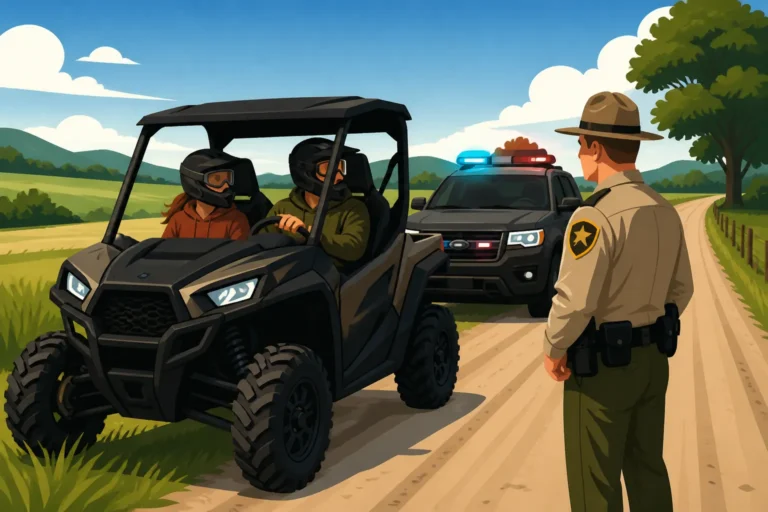
- Proof of Insurance and Ownership: Even for a quick crossing, you should always have your [Illinois Insurance Minimums for Street Use] paperwork with you, along with proof of ownership, such as your [Illinois ATV Title Certificates Explained]. A conservation officer or local law enforcement might ask to see these. [What a Conservation Officer Can Ask to See]
Take a moment before each ride to do a quick walk-around of your machine, checking tires, lights, brakes, and fluids. This simple routine can prevent a lot of headaches and keep you safe.
Penalties and Enforcement: What Happens If You Don't Follow the Rules
Ignoring the "crossing only at an intersection" rule, or any other road-use regulations for OHVs in Illinois, can lead to significant consequences. Law enforcement takes these rules seriously, not just for revenue, but because illegal street riding is a genuine safety hazard.
Fines and Citations
The most immediate consequence of violating road-use laws is a citation, which comes with a fine. The exact amount can vary depending on the specific violation, the county, and whether it's a first offense. These aren't just minor parking tickets; they can be substantial, often ranging from hundreds of dollars. Furthermore, you might also incur court costs on top of the fine, making a quick, illegal jaunt across the road a very expensive mistake. [Illinois Ticket Costs for Street Riding]
Impoundment of Your Machine
In more severe cases, or for repeat offenses, law enforcement has the authority to impound your ATV or UTV. This means your machine is taken away and stored at a tow yard, and you'll be responsible for all towing and storage fees to get it back. These costs can quickly add up, easily exceeding the original fine, and it can be a significant hassle to retrieve your vehicle. Imagine your pride and joy sitting in an impound lot, racking up fees daily. [What It Costs to Recover an Impounded Machine]
Potential for Criminal Charges
While less common for a simple crossing violation, more egregious infractions, such as reckless driving, driving under the influence (DUI) on an OHV, or causing an accident, can lead to more serious criminal charges. Driving an OHV under the influence on any public land, including roads, is illegal and carries penalties similar to those for operating a car while impaired. [Illinois DUI Law and Off-Road Machines]
Civil Liability in an Accident
Perhaps the most devastating consequence is involvement in an accident. If you're illegally operating your OHV on a public road and cause an accident, you could be held civilly liable for damages to other vehicles, property, and, most importantly, for injuries to other people. This could result in lawsuits that drain your finances for years, regardless of your insurance coverage. Your ATV or UTV insurance policy might even deny coverage if you were operating the machine in an illegal manner at the time of the incident. This is a risk no rider should ever take. [Illinois Accident Reporting for a UTV Crash]
The Bottom Line: Know Before You Go
Ultimately, navigating the roads in Illinois with your ATV or UTV requires diligence. Never assume a road is open to you, even for a quick crossing. Always check local ordinances, understand the state's baseline rules, and prioritize safety above convenience. A little research and caution on the front end can save you a world of trouble and expense down the road.
Common Mistakes and Misconceptions About Road Crossings
Riders often fall into traps when it comes to road use, usually due to misunderstandings or misinterpretations of the law. Let's clear up some of the most frequent ones.
"It's Just a Short Distance, No One Will Care"
This is a dangerous mindset. Even a short distance, a quick sprint across a road, or a brief ride down the shoulder is a violation if it's not done legally. The law doesn't have a "minimum distance" exemption. Accidents can happen in a split second, and even if you think you're alone, you never know when law enforcement might be present or when another vehicle might appear. The risk of collision doesn't scale with distance; it's present from the moment you illegally enter the roadway.
"I Saw Someone Else Do It"
Just because you observe another rider breaking the law doesn't make it legal or safe for you to do so. That other rider might have been caught later, or they just hadn't been caught yet. Following bad examples can lead you straight into trouble. Your responsibility is to know and follow the rules yourself, not to mimic others who may be acting illegally.
"My Machine is Street-Legal in Another State"
This is a common misconception, especially for riders visiting Illinois. Each state has its own specific laws regarding OHV registration, titling, and street-legal modifications. What might be perfectly acceptable in, say, Wisconsin or Missouri, is not automatically valid in Illinois. The Illinois law applies to all machines operating within its borders. While your out-of-state driver's license generally counts, your vehicle's registration and modifications might not. [Illinois Rules for an Out-of-State Machine] Always check Illinois's specific requirements, including titling [Illinois Titles but Does Not Register ATVs] and any decal or stamp requirements, before bringing your machine to ride here. [Does Illinois Accept Another State's OHV Registration?]
"It's a Rural Road, So It Doesn't Count"
Whether a road is a busy multi-lane highway or a quiet, gravel township road, it's still a public roadway. The general prohibition and the "crossing only at an intersection" rule apply universally across all public thoroughfares unless a specific local ordinance provides an exception. The level of traffic might change the risk somewhat, but it doesn't change the legality. Law enforcement patrols rural areas too, and they are well aware of the common temptations for OHV riders on less-traveled roads.
Summarizing Road Crossing Best Practices
To help solidify these rules, here’s a quick overview of what you should always keep in mind when your off-highway vehicle encounters a public road in Illinois:
| Action / Situation | Legal Status in Illinois (Generally) | Key Considerations |
|---|---|---|
| Riding on Any Public Road | Generally Illegal | Only permitted if a local ordinance specifically allows it and you meet all local requirements (e.g., permits, equipment). |
| Crossing at an Intersection | Permitted (statewide exception) | Must yield to all traffic. Cross directly and perpendicularly. Observe all traffic laws (stop signs, lights). |
| Crossing Mid-Block | Illegal | Never cross between intersections. This is unpredictable and highly dangerous for both OHV riders and motorists. |
| Riding on Road Shoulder | Illegal (considered part of the roadway) | The shoulder is still part of the road right-of-way. Do not use it as a substitute for legal riding areas. |
| Entering/Exiting Private Land | Use a legal access point (intersection) if crossing a public road is required. | If your private land connects directly to public land, you might access it without crossing, but verify. |
| Required Equipment | Varies by local ordinance for general road use. | For any road interaction, at minimum, ensure working lights, brakes, and a helmet. Visibility aids are crucial. |
Always remember that safety is paramount. The rules are designed to protect you, your fellow riders, and everyone else on the roads.
Disclaimer
This article is for general informational purposes only and does not constitute professional advice. Laws, prices and regulations vary by location and change over time. Consult a qualified professional for guidance on your specific situation.