Choosing Tires for Southern Clay and Mud
Southern Illinois mud can turn a promising ride into a slow, frustrating slog, especially when your tires pack with clay or spin on slick, uneven ground. The right setup depends on where you ride, what machine you use, and how much road or hardpack you cover between muddy sections. This guide explains how to choose ATV and UTV tires for southern clay and mud without buying more tire than you need.
Understand Southern Illinois Clay Before Choosing Tires
Clay is tricky because its grip changes with moisture. A trail that feels firm when dry can become slick after rain, while wet clay may cling to tread until the tire loses its ability to bite. Conditions can also shift within one ride: you might cross packed paths, rutted ground, rocky sections, and soft mud in the same outing.
That is why a tire advertised as a mud tire is not automatically the best choice. A very aggressive tread can help in deep, sticky sections but feel less predictable on hard ground. A more moderate tire may be easier to live with if your usual route mixes mud with firm trail.
Think about the ground you ride most
Start by describing your typical ride honestly. Is the machine usually on maintained trails with occasional muddy patches? Do you seek out deep mud? Are you riding a private property loop, a club area, or a trail system with changing surfaces? Your most common conditions should guide the purchase, not the most dramatic mud hole you hope to tackle once.
Trail difficulty matters, too. If you are still learning how a machine behaves on loose or slippery ground, an extremely aggressive tire may not make the ride easier. It can encourage you to enter terrain that is beyond your comfort level, and it may be harder to manage on firm ground. Reviewing Illinois Trail Difficulty Ratings can help you match tire ambitions to the type of riding you actually plan to do.
Check conditions before you load the trailer. Recent rain can change a familiar route, and some areas may close trails to prevent damage or unsafe riding. Use a mapping tool such as onX Offroad to help plan where you intend to go, then confirm access and conditions with the riding area itself. A map can help with preparation; it should not be treated as proof that a trail is open or suitable after rain. Illinois Trail Conditions Before You Tow is useful background for building that pre-trip check into your routine.
Match the tire to your riding mix
A machine used for farm work, hauling, and occasional trails has different needs from a recreational ATV ridden mainly in mud. A utility machine may benefit from a durable, versatile tread that remains manageable under load. A dedicated mud machine can use a more open pattern if deep, wet terrain is the regular goal.
Also think about the ground between the muddy sections. A tire that excels in soft clay may feel rougher or less comfortable on packed trails, gravel, or pavement. If you ride a mix, a balanced all-terrain tread can be the more practical choice—even if it does not look as aggressive in a product photo.
Southern Illinois riding areas can include more than mud. Some routes pass over hard, uneven, or rocky ground, so consider sidewall protection and the overall construction of the tire, not just the tread. For a wider look at riding conditions, Illinois Mud and What It Does to a Machine explains why mud affects more than traction.
Check whether trails are open before you test new tires
Mud can be tempting precisely when a rider wants to see what a new tread pattern can do. But a soft trail can rut quickly under repeated passes. Ruts may make the route harder for the next rider and can damage the trail surface. A closed or saturated trail is not a testing ground.
Before a trip, check the riding area’s rules and closure notices. Do not assume that a route is open because it appears on a map or because you rode it previously. If you arrive and find a section closed, choose another permitted route rather than riding around a barrier. For more on how conditions affect access, see Illinois Trail Closures After Rain and Illinois Trail Etiquette Locals Expect.
Compare Tire Types for Clay, Mud, and Mixed Trails
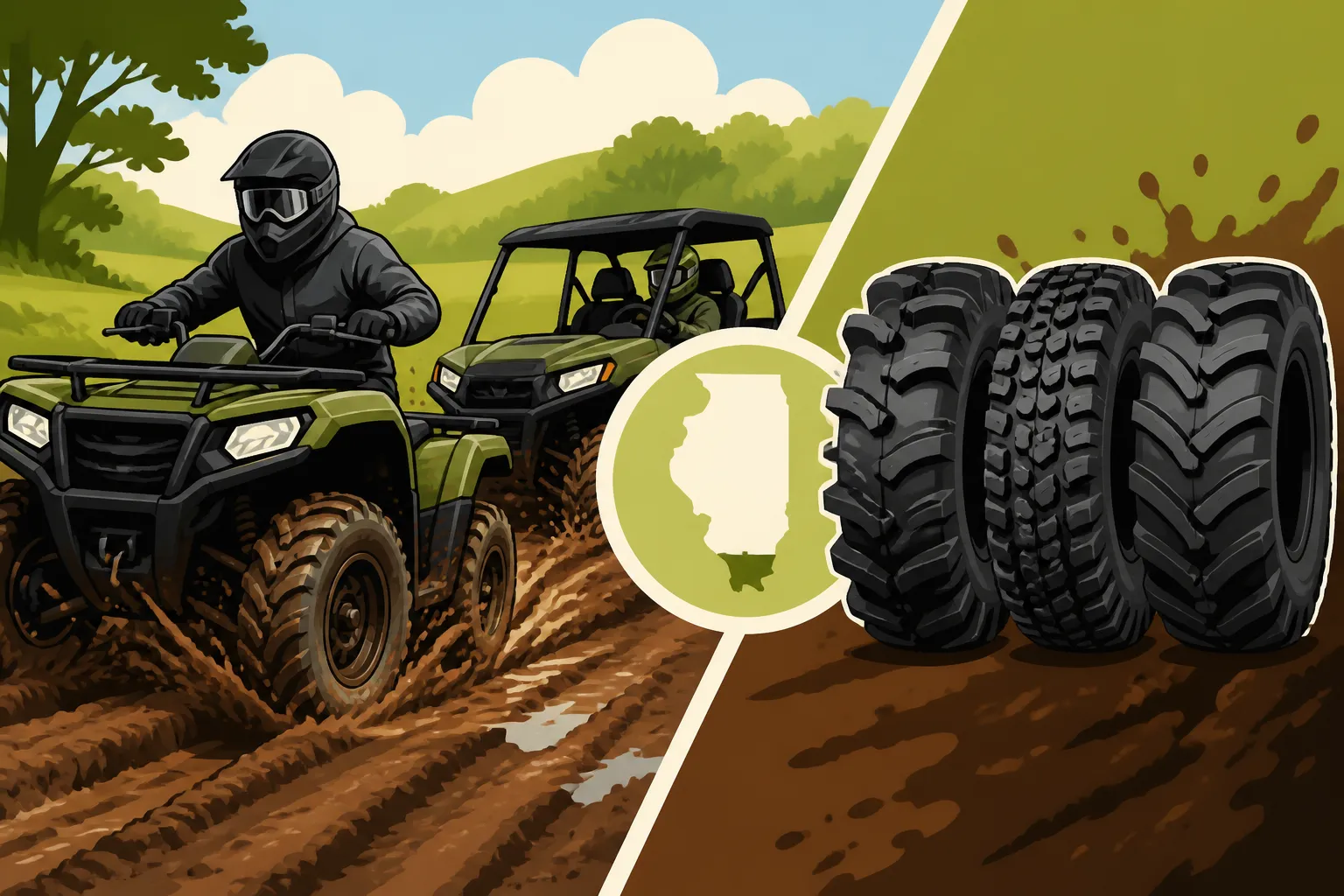
Tire labels can be helpful, but they do not tell the whole story. Tread depth, spacing, tire shape, construction, and your machine’s weight all affect how a tire works. A useful way to compare options is to start with the riding conditions each type suits best.
| Tire style | Best fit | Potential drawbacks | A sensible choice when |
|---|---|---|---|
| All-terrain | Mixed surfaces and occasional mud | May not clear sticky clay as readily as an open mud tread | You ride trails, hardpack, and muddy patches in one outing |
| Mud-focused | Frequent soft, deep, or sticky terrain | Can feel less settled on hard ground and may affect comfort | Mud is a regular part of your riding, not an occasional surprise |
| Trail-focused | Packed paths and varied recreational riding | May struggle when clay becomes deep or heavily rutted | Your routes are mostly established trails |
| Utility or work-oriented | Mixed use, hauling, and general-purpose riding | May be less specialized for deep mud | You use the machine for chores as well as recreation |
Treat this as a starting point, not a guarantee. Tire models within the same category can behave differently, and conditions change from one ride area to another.
All-terrain tires for mixed use
All-terrain tires are often the comfortable middle ground. Their tread generally aims to work across several surfaces rather than specialize in one. If you ride packed trail, gravel, and occasional muddy sections, that balance may be more useful than a tread built only for deep mud.
The tradeoff is that a moderate tread can lose traction when clay becomes especially slick or deep. If your usual ride includes only a few muddy patches, that may be an acceptable limitation. If you spend most of your ride trying to move through soft clay, it may feel like you are asking the tire to do a job it was not designed to prioritize.
A good question to ask before buying is: “What do I want this tire to do most often?” If the answer is “handle a little of everything,” compare all-terrain options first. If the answer is “keep moving through regular mud,” focus on tires designed for that use and consider the rideability tradeoffs elsewhere.
Mud tires for soft and sticky ground
Mud tires typically use a more open tread pattern, which can give the tire space to shed material as it rotates. That matters in clay because packed tread can become smooth and lose useful edges. The tire still needs the right conditions and enough clearance to work; aggressive tread does not make every bog safe to enter.
There are compromises. On firm trail, the same open tread may feel less smooth or predictable than a less aggressive pattern. Deep lugs can also change how the machine behaves during turns and braking. That does not mean mud tires are a poor choice. It means they are best selected for a riding pattern that genuinely calls for them.
Think about the whole machine as well. A tire that is wider, taller, or heavier than the original setup may affect steering, clearance, gearing, or suspension response. Before changing tire dimensions, check the machine manufacturer’s guidance and ask a knowledgeable tire or powersports shop whether the proposed size is suitable.
Radial, bias-ply, and construction choices
Radial and bias-ply describe how a tire is built, not how much mud it can handle. Construction can influence how the tire flexes and feels, but a construction label alone does not tell you whether the tread suits southern clay. Compare the specific tire’s intended use, size, load rating, and compatibility with your ATV or UTV.
Sidewall strength deserves attention if you ride rocky or uneven ground. A puncture or sidewall problem can end a trip even when the tread still has plenty of life. If your routes include rough surfaces, ask whether the tire’s construction fits that use instead of choosing solely by tread depth.
Do not assume that the largest or most aggressive option is automatically an upgrade. Added size or weight can place different demands on the machine. Confirm fitment with the manufacturer’s recommendations, and be cautious about combinations that require modifications or place extra strain on drivetrain components.
Choose a Setup That Fits Your Machine and Riding Habits
A tire purchase is not just a tread decision. Your machine’s size, weight, load, and intended use all matter. Two riders can ride the same muddy trail and need different setups because one is on a light ATV and the other is driving a loaded side-by-side with passengers and gear.
Start with the machine’s recommended size
Find the tire size specified for your machine and use it as your baseline. A larger tire may seem appealing for added ground clearance, but fitment affects more than appearance. It can change clearance around the fenders and suspension, alter how the machine accelerates, and affect steering feel.
Before changing size, check the owner’s manual or manufacturer guidance and consider the complete setup: front and rear tire dimensions, wheel compatibility, load requirements, and any effects on the machine. If you are uncertain, ask a qualified shop to check the exact model and proposed tire, rather than relying on a general statement that a size “should fit.”
For UTV owners, include the usual passenger and cargo load in the decision. A machine that is often carrying people, tools, or camping equipment needs tires suitable for that load. An unloaded test ride around the yard does not reveal how the setup will behave on a muddy trail with passengers aboard.
Set pressure carefully and check it before each ride
Tire pressure affects how the tread meets the ground. Too much pressure can reduce the tire’s contact patch, while too little can increase the chance of damage or instability. There is no single pressure that is right for every ATV, UTV, tire, load, and terrain combination.
Use the tire and vehicle manufacturer’s recommendations as your starting point. Check pressure when tires are cool, and use a reliable gauge rather than judging by eye. If you adjust pressure for a particular surface, stay within the relevant manufacturer guidance and recheck it before returning to firmer ground. A setup suitable for one muddy route may not be appropriate for a loaded machine or a fast, hard-packed section.
Keep a small pressure gauge and a way to restore pressure in your trailer or riding kit. It is easy to forget a change made before a ride, especially when loading several machines. A note in your maintenance log—what pressure you used, the machine’s load, and how it handled—can be more useful than trying to remember after a long day.
Avoid buying a tire based only on appearance
A deep, dramatic tread can look like the obvious answer to mud, but photos do not show how a tire behaves on your usual terrain. Ask about the specific tire’s intended application, verify its size and load suitability, and look for feedback from riders using a similar machine in similar conditions.
It also helps to decide what you are willing to trade. Are you comfortable with a rougher ride on hardpack if you gain traction in mud? Would you rather keep one versatile set of tires, or have a specialized setup for a dedicated mud machine? Those practical questions often lead to a better purchase than simply choosing the most aggressive pattern.
If you regularly ride rocky or reclaimed ground, consider protection for the machine as part of the setup. Tires help with traction, but they cannot shield vulnerable components from impacts. Skid Plates for Strip Mine Rock covers a related part of preparing a machine for rough terrain.
Prepare for Mud Before and After the Ride
Good tires help, but they cannot replace sound judgment or basic preparation. Clay can hide ruts and soft spots, and a machine that looks capable on level ground may become difficult to recover once it is bogged down. Take a moment to plan for the ride you are actually making, not just the one you hope to have.
Ride within the tire’s limits
Approach unfamiliar mud cautiously. Look for changes in depth, hidden obstacles, water, and ruts before committing the machine. If you cannot tell what is underneath, avoid charging into it. Momentum is not a substitute for knowing the ground, especially when a rut or buried object can steer a tire unexpectedly.
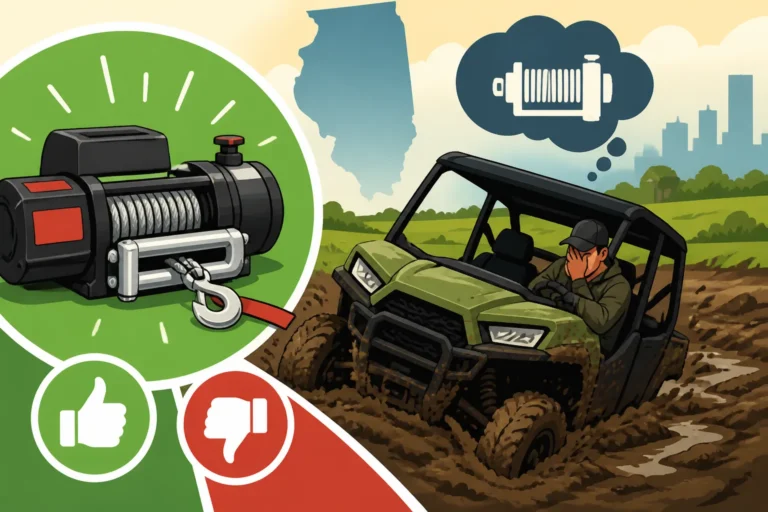
If the machine begins to lose traction, repeated hard acceleration may dig it in further. Ease off, assess the situation, and use a safe recovery method. Travel with another rider when conditions are challenging, and agree on a plan for stopping or helping each other before anyone gets stuck. A winch can be useful when appropriate, but it must be installed and used safely. Choosing a Winch Before You Sink in Clay explains what to consider.
Some riders modify machines for deep-water or mud use. That can introduce its own risks and maintenance needs, and it does not make a route safe to enter. Before making changes such as a snorkel, understand the installation and operating requirements for your specific machine. Snorkels for a Mud Park Weekend provides additional context.
Clean the machine before clay hardens
Clay left on a machine can be difficult to remove after it dries, and buildup can hide damage or interfere with moving and cooling components. After riding, rinse mud from the tires, suspension, underside, and frame. Follow the machine manufacturer’s cleaning guidance, and avoid directing high-pressure water at seals, bearings, electrical connectors, or other sensitive areas.
Pay special attention to the radiator area on a liquid-cooled machine. Mud and debris can restrict airflow, so inspect the radiator and clean it carefully according to the manufacturer’s instructions. Do not assume that the visible outer surface is the only place mud can collect. For a more detailed cleaning routine, read Washing Clay Out of a Radiator and Frame.
Once the machine is clean, look over the tread and sidewalls for cuts, embedded debris, missing chunks, or unusual wear. Check that the tires still hold pressure and that the wheels appear secure. Catching a small problem at home is much easier than discovering it beside a trail when the group is ready to head back.
Keep a simple tire and ride log
A short log helps you learn what works on your own machine. Note the tire model and size, pressure, passenger or cargo load, trail type, and general conditions. After the ride, record whether the machine tracked well, spun easily, felt harsh on firm ground, or needed more recovery help than expected.
Patterns will emerge. You may find that your current all-terrain tires work well on most of your routes and only struggle during unusually wet conditions. Or you may realize that mud is central to nearly every ride and a more specialized tire is worth the tradeoff. That kind of evidence is more useful than buying a replacement based on one difficult afternoon.
When planning another trip, check access and conditions rather than assuming the same route will ride the same way. onX Offroad can be part of your route-planning toolkit, while a riding area’s own notices remain important for closures and rules. A second mention of onX Offroad is most useful in this context: as a way to organize a planned route, not as a substitute for checking directly with the site. For general trip preparation, see Illinois Trail Etiquette Locals Expect.
Disclaimer
This article is for general informational purposes only and does not constitute professional advice. Laws, prices and regulations vary by location and change over time. Consult a qualified professional for guidance on your specific situation.