718 Acres Near Crab Orchard
A 718-acre riding area near Crab Orchard can sound like an easy Southern Illinois weekend plan—until you’re sorting out what the acreage includes, which machines fit the trails, and what paperwork the site expects. This guide explains how to plan a ride near Crab Orchard, prepare your machine and group, and avoid confusing a private riding park with nearby public land.
What to know about the 718-acre riding area
Understand where you are riding
The 718-acre figure is associated with Little Egypt Off Road, a private riding area in Southern Illinois near Crab Orchard. The important distinction is that a riding park near Crab Orchard is not the same thing as Crab Orchard National Wildlife Refuge or other nearby public land. Being close to a public area does not mean you can ride there, and public land does not automatically allow OHVs.
Treat the park’s boundaries, permitted routes, operating schedule, and admission requirements as specific to the site. Check directly with the operator before loading up, especially if you are making a long drive or bringing a group. Park access, trail conditions, and rules can change; old posts, saved maps, or a friend’s recollection are not substitutes for current instructions.
For more context on this particular destination, see Little Egypt Off Road in Illinois. If you are comparing it with other private riding options, Illinois Private Off-Road Parks can help you think through the differences between privately operated areas and other places to ride.
Read “718 acres” as an area, not a promise about trail mileage
Acreage describes the size of a property, not the distance of its trails. A 718-acre site may have trails that loop, cross, connect, or share sections; it does not mean there are 718 acres of uninterrupted riding or a fixed number of miles available to every machine. Terrain, weather, closures, and vehicle restrictions can also affect which portions are usable on a particular day.
That distinction matters when setting expectations with a group. A newer rider may picture a wide, easy route through the entire property, while an experienced rider may expect technical terrain and long loops. Ask the operator what types of trails are available for your machine and experience level. A look at Illinois Trail Difficulty Ratings can also help you make more useful questions about trail surfaces and challenge levels.
Do not assume that a trail shown on a general-purpose map is an authorized riding route. Mapping tools such as onX Offroad can help with trip planning and orientation, but use the park’s own directions and rules to confirm where riding is allowed. A map helps you plan; it does not grant permission to ride.
Plan the ride around your group and machine
Match the route to rider experience
Before choosing a route, be honest about the least experienced person in your group. A confident adult on a familiar machine may be comfortable with ruts, uneven ground, or tight turns; a first-time rider may need a calmer start and more room to practice. Ask whether the site can point you toward beginner-friendly sections, and make sure riders know they can turn back rather than follow a group into terrain beyond their comfort level.
If children or passengers are coming along, confirm the park’s age, passenger, helmet, and supervision rules in advance. Do not rely on a general assumption that rules are the same from one Illinois riding area to another. A machine that carries passengers safely on a farm lane may not be a good fit for a narrow or uneven trail, and the park may have requirements that go beyond what a rider is used to at home.
A helpful group plan is to agree on a pace and regrouping points before setting out. Keep the fastest rider from disappearing around bends, and make sure the newest rider knows they can stop and ask for help. If someone is struggling, splitting the group into smaller experience-based parties can be safer and more enjoyable than pressuring everyone to keep up.
Check that the vehicle is suited to the site
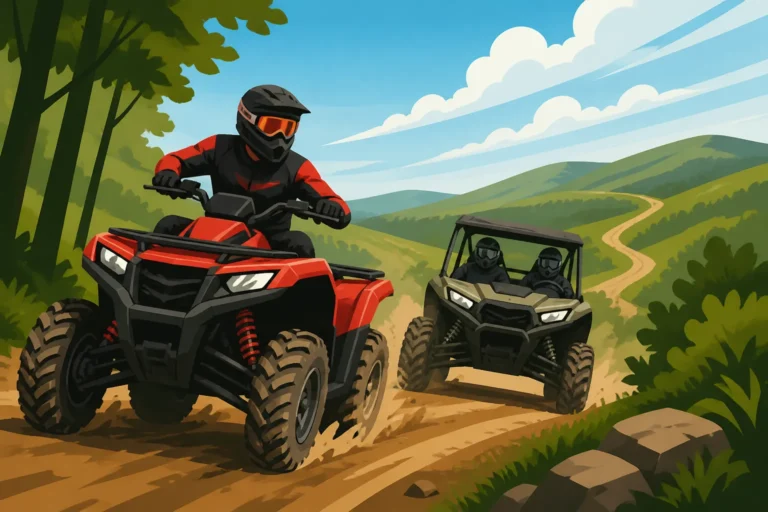
Confirm that your ATV, UTV, dirt bike, or other machine is allowed before you haul it to the park. Trail widths, surface conditions, and operator rules may limit where particular vehicles can go. A wide side-by-side, for example, may not fit every route that a quad can use. Likewise, a machine set up for a broad gravel road may not be ideal for narrow trails or rougher ground.
Give the machine a basic pre-ride inspection at home and again before unloading. Check tires, brakes, throttle response, lights if required, fluid levels, and visible steering or suspension issues. Make sure any cargo is secured and that passengers have appropriate protective gear. A small issue caught in the driveway is usually much easier to handle than a problem discovered after the group is on the trail.
Use onX Offroad or another mapping tool as a planning aid for the drive and general orientation, not as the final authority on park access. Download or save useful information before leaving home if you expect weak cell service. Then follow the operator’s directions, boundary instructions, and any trail markings on site. The park’s posted rules take priority over a line on a screen.
| Planning question | What to confirm before you go |
|---|---|
| Is the park open on your planned day? | Check directly with the operator rather than relying on an old listing. |
| Is your machine permitted? | Ask about vehicle types, widths, passenger rules, and any equipment limits. |
| Which routes fit your group? | Describe riders’ experience levels and ask about suitable terrain. |
| What paperwork or permits are needed? | Confirm the park’s specific entry requirements and any applicable state rules. |
| Can you camp or park a trailer nearby? | Verify site availability, facilities, and any reservation requirements. |
| What happens after rain? | Ask about closures, muddy sections, and whether conditions affect access. |
Sort out access, permits, and practical logistics
Confirm which sticker or permit applies
Illinois OHV paperwork can be confusing because different requirements serve different purposes. A usage stamp and an access decal are not interchangeable, and a private park’s admission rules may be different from the requirements at a grant-assisted riding site. Start with the park’s own instructions, then check which state rules apply to your specific ride.
The overview Illinois OHV Permits: Two Stickers Explained clarifies the general distinction between Illinois stickers. For a broader explanation of where public access decals apply, see Illinois Grant-Assisted Riding Areas. Do not assume that a decal is required—or that it is unnecessary—just because the destination is in Southern Illinois. Confirm whether the site is grant-assisted and what its current operator requires.
If you are carrying paperwork, keep it somewhere accessible and protected from mud and rain. Before the trip, make sure you understand which document or sticker is being checked at the gate and whether every machine needs its own. A quick phone call can prevent the frustrating scenario of arriving with a trailer full of machines only to discover that one vehicle or rider is missing a required item.
Plan the drive and arrival, not just the ride
A smooth day starts before you reach the trailhead. Confirm the correct entrance and directions with the operator, then account for the trailer’s turning radius, fuel stops, and time needed to unload. A rural address or pin can lead to a nearby road without identifying the actual entrance, so do not rely on a map pin alone. Save the operator’s directions and contact information before leaving.
Use onX Offroad or your preferred navigation app to organize the drive and keep your group oriented, but double-check the route against the park’s own directions. If your phone loses service, a saved map or written directions can keep a small navigation problem from turning into a long detour. For trailer-specific preparation, Illinois Trailheads With Trailer Parking offers related planning considerations.
Weather is another reason to check in before you tow. Heavy rain can make trails slippery, muddy, or unsuitable for some machines, and a wet route may be very different from what your group expects. Review Illinois Trail Conditions Before You Tow and ask the operator about conditions that could affect your intended visit. Bring recovery gear appropriate to your machine and skill level, but do not treat a winch or tow strap as permission to enter terrain that the park has closed.
Make the day safer and more enjoyable
Set expectations for trail etiquette
On a shared trail, courteous riding helps everyone have a better day. Keep a controlled speed, leave space between machines, and slow down when visibility is limited. Be especially careful around blind corners, narrow sections, and places where riders may be stopping to regroup. Do not assume that another rider can hear you coming or has room to move aside.
Stay on authorized routes and follow signs, barriers, and staff directions. Cutting a new line around mud or a blockage can damage the property and create a route that other riders may mistakenly follow. Pack out trash, avoid unnecessary noise, and give people time to sort out a stalled or disabled machine safely. For more shared-trail basics, see Illinois Trail Etiquette Locals Expect.
Agree on a simple communication plan before setting out. Decide how often to regroup, who rides at the back, and what to do if someone gets separated. Riders should know the park’s check-in or emergency procedures and should not assume that a mobile phone will work everywhere. A map can help orient you, but it is not a replacement for staying together and following site guidance.
Leave room for the unexpected
Even a well-planned ride can run into a flat tire, a weather change, a tired rider, or a route that proves more difficult than expected. Carry water, basic first-aid supplies, and any personal medication your group may need. Bring protective gear that suits the machine and the conditions, and keep a charged phone in a secure place. For longer visits, consider how you will handle fuel, food, and a safe way to get a disabled machine back to the parking area.
Build flexibility into the day instead of treating every planned loop as a must-do. If a rider is uncomfortable, the weather turns, or the trail is beyond your group’s ability, turning around is a sensible decision—not a failed trip. Ask the operator about designated stopping areas and what to do if your machine needs assistance.
Finally, make the ride about the experience rather than covering every part of the property. A smaller, comfortable loop with a group that finishes safely is a better day than pushing too far because the acreage sounds expansive. With the site’s rules confirmed, machines checked, and a realistic plan in place, the 718-acre area near Crab Orchard can be approached as a private riding destination—not a guesswork trip based on a map or a number.
Disclaimer
This article is for general informational purposes only and does not constitute professional advice. Laws, prices and regulations vary by location and change over time. Consult a qualified professional for guidance on your specific situation.