270 Acres of Insane Terrain
A compact riding area can still feel demanding when its trails climb, dip, twist, and change under your tires. The Cliffs near Marseilles is known for 270 acres of varied off-road terrain, but “insane” is not a useful skill rating. This guide explains how to assess the riding, prepare your machine, and plan a safer visit before unloading.
What to expect from 270 acres of terrain
Understand the park before you ride
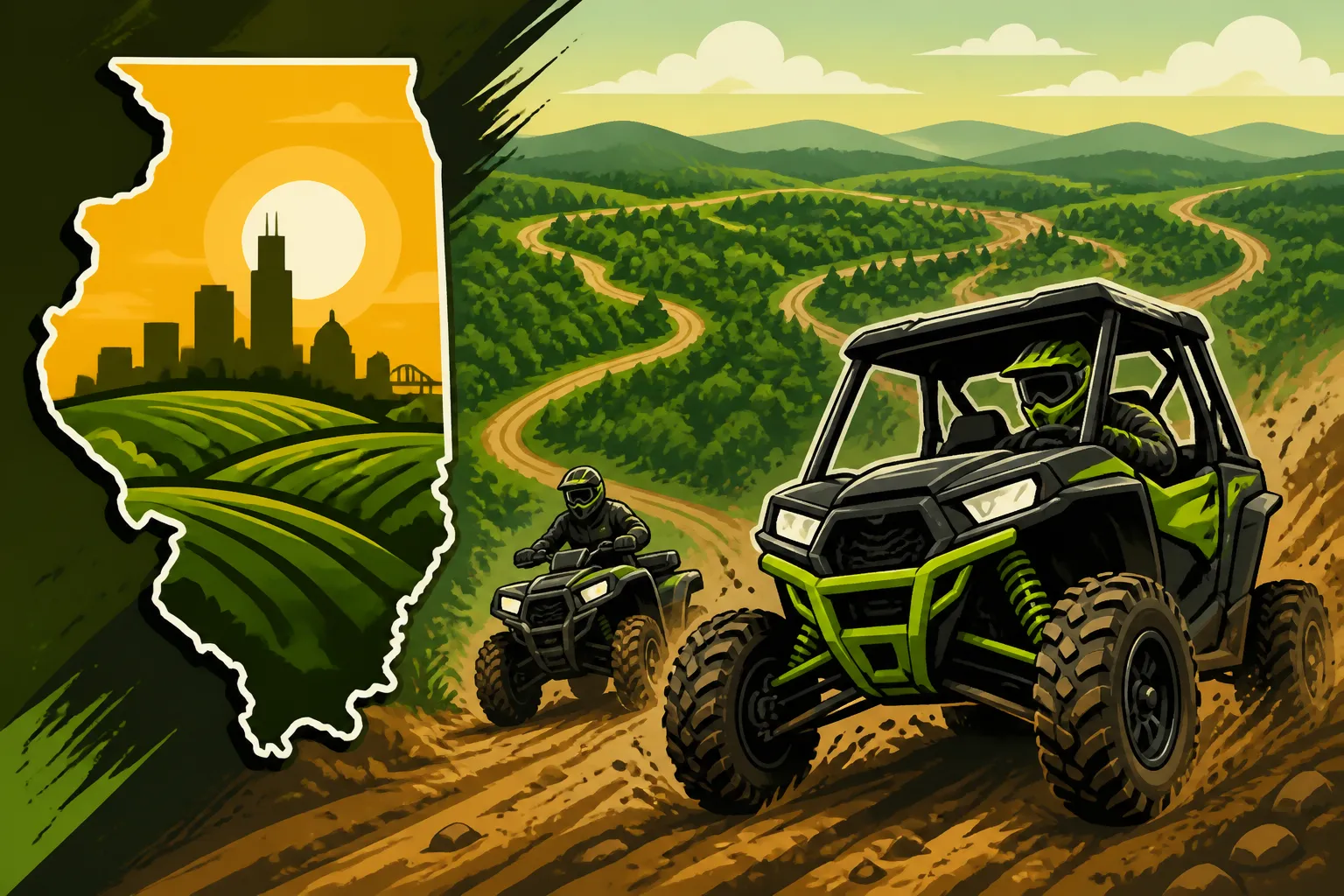
The Cliffs is an off-road riding destination near Marseilles in northern Illinois. Its 270 acres offer a different kind of day from a long-distance trail system: the experience is about navigating a concentrated riding area rather than covering a huge route between distant trailheads. A smaller footprint does not automatically mean an easy ride. A short stretch can demand careful throttle control, line choice, and patience if the ground is rutted, uneven, or steep.
The phrase “insane terrain” is a nickname, not a promise that every trail is extreme—or a warning that every trail is beyond a beginner’s ability. Conditions and difficulty can vary across a property, and the same route may feel different after rain or heavy use. Ask the park which areas suit your machine and experience level before you head out, especially if you are bringing a new rider or an older ATV.
It also helps to distinguish a private riding park from public riding land. Do not assume that a public-use sticker, state permit, or map layer gives you permission to ride at a private facility. Check the park’s current admission, access, age, and machine rules directly. For broader context on public-land stickers and what they cover, see Illinois OHV Permits: Two Stickers Explained and [Illinois Public Access Decal Rules].
Match your expectations to your machine
A compact sport quad, a utility ATV, and a side-by-side do not handle every obstacle the same way. A narrow machine may fit through places a wider UTV cannot, while a heavier machine may need a different approach on a steep or loose section. Ask whether there are size, width, or equipment limits before making the drive. A listing that says a park allows off-road riding does not necessarily mean every machine is welcome on every route.
The park’s 270 acres can make route choice feel less daunting than navigating a sprawling trail network, but the terrain still deserves respect. Ride at a pace that lets you assess what lies ahead, and avoid following another rider into an obstacle you have not inspected. If you are unsure whether a particular line is manageable, turn around or ask someone familiar with the property rather than trying to prove a point.
For riders comparing destinations, the machine rules matter as much as the scenery. Check Illinois Trails That Allow Side-by-Sides or Illinois Trails That Allow Dirt Bikes if you are weighing other options around the state. Before you decide that a route is suitable, review Illinois Trail Difficulty Ratings and ask the specific property how it describes its trails. Labels are helpful, but your own experience, equipment, and comfort level should guide the final call.
Plan your visit before towing to Marseilles
Check operating details and access rules
A long drive with a trailer makes a last-minute surprise especially frustrating. Before leaving home, confirm that the property is open to the public on your intended day and ask what riders need to bring. Clarify whether reservations, waivers, identification, proof of ownership, or advance registration are required. Also ask whether the park has limits on vehicle types, passenger ages, helmets, or machine modifications.
Do not rely on an old social post, a saved map pin, or a friend’s visit from a previous season for current instructions. Operating schedules and site rules can change. The same goes for trail availability: a route shown on a map may be closed, rerouted, or unsuitable after weather. Check directly with the property close to your visit and again before departing if the forecast has been unsettled.
If you use onX Offroad to orient yourself, treat it as a planning aid rather than permission to ride. Confirm the park’s entrance and boundaries using the property’s own directions, then follow posted signs and staff instructions once you arrive. Map data can help you understand the general area, but it should not replace a current site briefing or an on-site trail map.
Think through trailers, arrival, and unloading
Towing adds a layer of planning that is easy to overlook. Confirm where trailers can be parked and whether your vehicle and trailer combination will fit in the designated area. A narrow rural entrance, a busy check-in area, or limited turning space can turn a simple arrival into a stressful one. The park can tell you what to expect better than a general-purpose map can.
Before leaving, secure ramps, tie-downs, tools, and loose equipment. A basic checklist helps: machine keys, riding gear, water, first-aid supplies, a tire repair kit, and any paperwork the park requires. If you are traveling with several riders, agree on who is carrying essentials and how the group will communicate if someone stops or takes a wrong turn. You can also compare logistics with Illinois Trailheads With Trailer Parking when considering another riding destination.
For navigation, onX Offroad can help you keep track of your planned route and general position, but do not use it to cross a fence or take an unmarked connector. Save the park’s address and phone number before you leave, since mobile reception can vary around rural routes. A paper copy of check-in instructions or a screenshot can be useful if your phone battery runs low.
Ride within your ability and the day’s conditions
Read the ground before committing to an obstacle
A route that looked straightforward from the parking area may contain a sharp change in slope, a rut, loose soil, or a slick patch around a bend. Stop somewhere safe and take a moment to look. Consider the approach, the exit, and where you could turn around if the line becomes harder than expected. On a side-by-side, also think about clearance and width before entering a narrow or uneven section.
Riders often get into trouble by treating momentum as a substitute for judgment. A fast approach can make it harder to correct a poor line, while excessive throttle can spin tires and worsen a rut. Use smooth inputs, leave room between machines, and avoid stopping where another rider may need the same line. If you are riding with someone less experienced, let them choose a comfortable pace rather than pressuring them to keep up.
Rain and recent traffic can change a trail’s surface quickly. A dry route may become slick, soft, or rutted after a storm, and a machine that handled the previous visit well may behave differently under new conditions. Check Illinois Trail Closures After Rain for general guidance on how weather can affect riding access, then ask the park about its own conditions. If staff advise against a route, take that seriously rather than trying to see for yourself.
Keep the group together without crowding
A group ride works better when everyone understands the plan. Pick a lead rider and a sweep rider, agree on where to regroup, and make sure no one feels obliged to tackle an obstacle just because the rest of the group has. Keep a sensible gap between machines so riders have space to brake, choose a line, and respond to a sudden stop.
Newer riders may benefit from watching an experienced rider approach an obstacle from a safe distance before deciding whether to try it. That does not mean copying every move. The other rider may have a different machine, tires, ground clearance, or level of experience. If you are riding with children or teens, check the park’s supervision and operator rules ahead of time and match the machine to the rider rather than to the adult’s expectations.
Be considerate of other visitors, too. Slow down near check-in areas and other gathering points, avoid unnecessary wheelspin, and leave room for riders traveling in both directions where routes meet. For a broader set of shared-trail habits, see Illinois Trail Etiquette Locals Expect. Good etiquette is not just about being polite; it gives everyone more time to react when the trail gets busy.
Prepare your ATV or UTV and ride responsibly
Do a practical pre-ride check
A quick inspection before unloading can prevent an avoidable problem on the trail. Check tire condition and pressure, brakes, throttle response, steering, lights, and fluid levels. Look for loose fasteners, leaking fluids, cracked plastic, or anything that shifted during the drive. If your machine has a winch, test it before you need it, and make sure passengers know where to keep their hands and feet.
Bring equipment that suits the outing rather than packing as though you are setting off on an expedition. A first-aid kit, drinking water, basic tools, tire-repair supplies, and a charged phone are sensible starting points. A helmet and other protective gear should fit correctly and meet the park’s rules. Keep essentials accessible; tools buried under gear in a trailer are not much help after a mechanical problem.
A digital map can be useful, but it is no substitute for staying oriented and following signs. onX Offroad may help you review your general location or keep a personal track, but respect the park’s approved routes and staff directions. Do not ride onto neighboring property because a map line appears to continue. If you are uncertain about a boundary or connector, stop and ask.
Separate park riding from street riding
An off-road park visit does not make a machine street legal. A quad or side-by-side that can travel on a trail may still be prohibited from public roads, and local rules can differ from one Illinois municipality to another. Keep the ride within the property and use a properly equipped, legal tow vehicle and trailer to get your machine there. For the wider question of local street access, see Illinois ATV Road Rules: Local Ordinances Decide.
Do not assume that a stamp, decal, or permit for one type of access substitutes for a private park’s own requirements. Public-site rules and private-property rules serve different purposes. If you plan to ride at other Illinois destinations during the same trip, verify requirements for each property rather than treating one document as a universal pass.
Finally, leave the site in good condition. Pack out trash, follow any posted noise or camping rules, and report a hazard or damaged section to staff instead of trying to fix it yourself while other machines are moving through. A thoughtful visit helps protect the riding area and keeps the experience more enjoyable for the next group.
Disclaimer
This article is for general informational purposes only and does not constitute professional advice. Laws, prices and regulations vary by location and change over time. Consult a qualified professional for guidance on your specific situation.