Illinois Riding Compared to Indiana
A weekend ride can look simple on a map, then turn into a long haul to discover the trail is closed, private, or limited to a different kind of machine. Illinois and Indiana offer different riding experiences, and knowing how access, terrain, and site rules compare helps you pick a destination that suits your ATV or UTV before you hitch up.
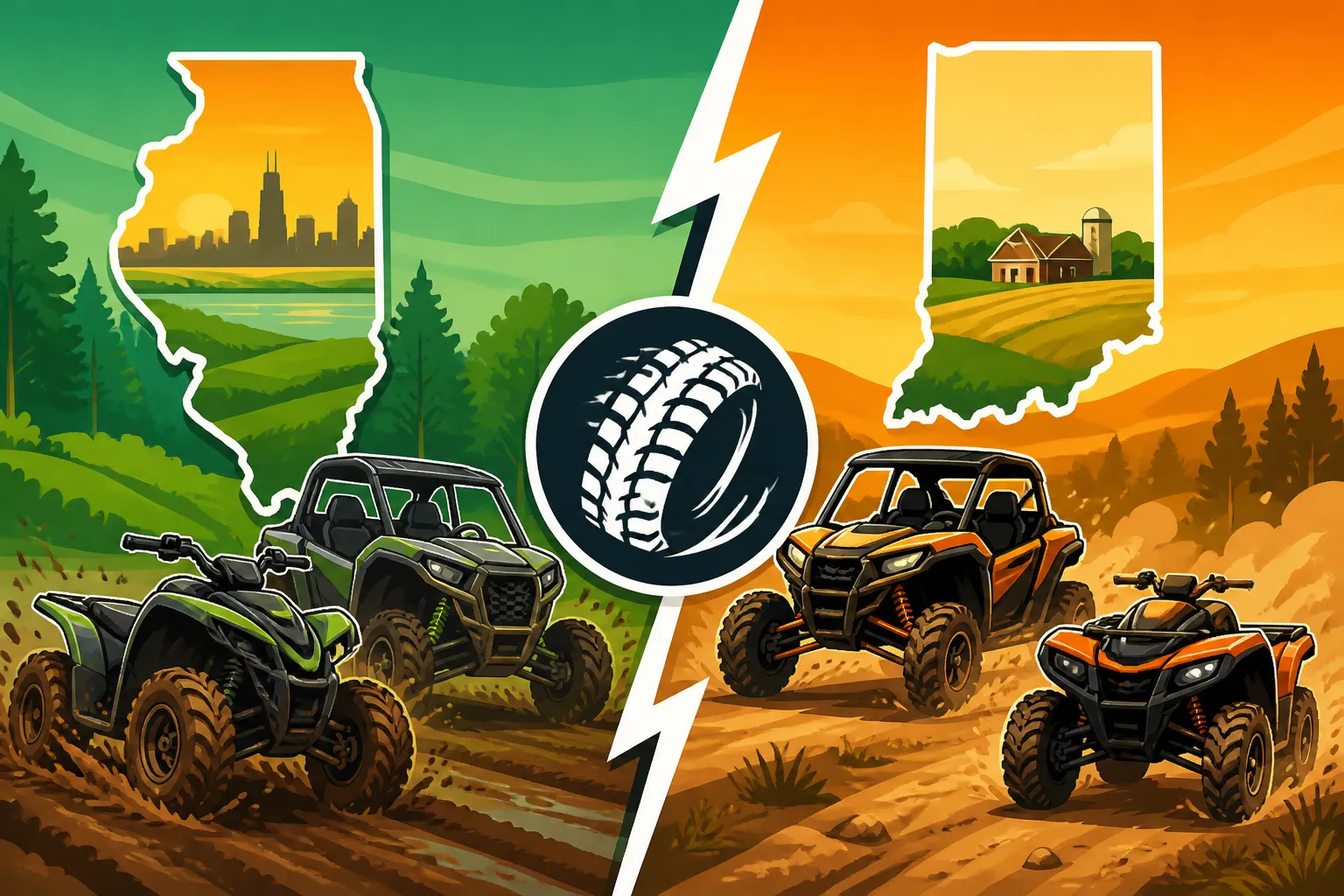
Illinois and Indiana offer different kinds of riding
Illinois has fewer public riding options
Illinois is not a state where you can assume a forest road, county trail, or stretch of public land is open to off-highway vehicles. Riding is generally limited to designated areas and private parks that allow machines. For many riders, that means building a trip around a specific destination rather than expecting to find a long network of public trails along the way.
Sahara Woods near Harrisburg is a major destination for riders looking for a state OHV park. Other options include private and club-operated riding areas, particularly in southern Illinois. These can provide a very different experience from public land: a site may have its own trail system, admission process, hours, machine requirements, and waiver rules. Start with [Illinois ATV Trails: Where You Can Actually Ride] and [Illinois Southern Riding Areas] when comparing possible destinations.
Indiana gives riders a different mix of places to investigate, including public riding areas such as Redbird State Recreation Area and Interlake State Recreation Area, as well as private parks. That can make it easier to plan a trip around a particular kind of terrain or facility, but it does not mean every public road or wooded area is open to ATVs. Each riding area has its own boundaries and requirements.
The practical difference is that Illinois riders often need to check whether a specific destination exists and is open to their machine, while Indiana-bound riders may be comparing several established riding areas. In either state, the park’s own rules matter more than a general impression that “the area is open.”
Indiana may provide more destination variety, but the trip still needs planning
A bigger list of possible riding areas is helpful only if the place you choose fits your machine, riding style, and group. One park may be more appealing for a family ride or a less technical day; another may have difficult terrain that is frustrating or unsafe for a beginner. Don’t choose by state alone. Compare the individual properties.
If you are coming from northern Illinois, a trip to a closer Indiana destination may mean less time towing. From southern Illinois, some Illinois parks may be more convenient than crossing the state line. A location that looks close on a highway map can still involve a lengthy drive from the nearest fuel stop or lodging, so check the final leg of the route and the facility’s arrival instructions.
Use a route-planning tool such as onX Offroad to help you understand the surrounding roads and organize your trip. It can be useful for general navigation, but don’t treat a map layer or user-submitted route as permission to ride. Confirm access directly with the park or land manager, especially if the route appears to cross private property or unmarked land.
Compare the ride, not just the state
Terrain and trail difficulty vary by property
Illinois riding areas can include wooded trails, reclaimed mine ground, mud, and rolling terrain. Conditions can change noticeably after rain. Southern Illinois clay, for example, can become slick and cling to tires, guards, and undercarriages; a trail that felt manageable in dry weather may demand more careful throttle control after a storm.
Indiana parks also vary widely. A property’s soil, elevation, trail layout, and maintenance all shape the ride. Even two parks in the same region can feel very different. One may be more suitable for a casual day with newer riders, while another offers steeper or more technical sections that require experience and appropriate equipment.
Look for published difficulty guidance, but treat it as a starting point rather than a guarantee. Ask the park whether recent rain has changed trail access, whether some loops are closed, and whether the site allows your ATV or side-by-side on the routes you want to ride. [Illinois Trail Difficulty Ratings] can help you think through what to check before choosing an Illinois destination.
Machine type matters as much as location
A trail system that welcomes ATVs may restrict side-by-sides, dirt bikes, or wider machines. Width limits, vehicle specifications, passenger rules, and age requirements can vary by property. If your UTV is modified, especially if it has larger tires, a lift, or other changes that affect its dimensions, ask the site whether it meets the rules before you travel.
This is particularly important for groups with mixed machines. A family may assume that everyone can ride the same loop, only to learn at the gate that one vehicle is too wide or that a passenger arrangement is not allowed. Before leaving home, confirm the accepted vehicle types, passenger policy, helmet requirements, and any inspection process.
| What to compare | Illinois | Indiana |
|---|---|---|
| Public riding options | Limited to designated places; check the specific area | Includes designated public riding areas; verify each property’s rules |
| Private riding parks | Available, with site-specific admission and operating rules | Available, with site-specific admission and operating rules |
| Terrain | Varies by site; southern areas can be muddy after rain | Varies by site, soil, weather, and trail maintenance |
| ATV and UTV access | Do not assume every trail allows every machine | Confirm vehicle type, dimensions, and trail access with the property |
| Permits and documentation | Requirements depend on the site and land type | Requirements depend on the property and applicable state rules |
| Best planning habit | Confirm the destination is designated and open | Confirm registration or permits, site access, and current trail status |
Before you commit, use [Illinois Trails That Allow Side-by-Sides] to narrow down Illinois options, then call or check directly with the selected park. For an Indiana ride, use the same approach with the destination’s official information rather than relying on a general trail map.
Sort out access rules before crossing the state line
Illinois stickers are tied to where you ride
Illinois has separate OHV stamp and public access decal requirements, and riders can easily mistake one for a universal pass. The right requirement depends on the property and its designation. A riding site’s instructions should tell you what applies to your machine and whether you need to arrange anything before arrival.
A private park may have its own admission system and rules. A grant-assisted riding site may require an access decal. A designated public OHV area may have a different permit requirement. Don’t assume that buying one sticker automatically gives you access to every riding area. [Illinois Usage Stamp vs Access Decal] and [Illinois Grant-Assisted Riding Areas] explain why the distinction matters.
If you are an Indiana resident planning to ride in Illinois, check the visitor requirements before you leave. A state-line crossing does not erase the destination’s rules, and a permit that applies to one Illinois riding area may not cover another. [Illinois Visitors From Indiana] is a useful place to start when sorting out the paperwork.
Indiana requirements are not interchangeable with Illinois requirements
Having an Indiana registration, permit, or other document does not automatically establish that an Illinois riding site will accept it. The reverse is also true: meeting an Illinois requirement does not necessarily satisfy rules at an Indiana property. Treat the two states as separate systems, and ask the site what proof it expects to see.
Keep relevant ownership and permit documents accessible while traveling. If you are towing a borrowed or recently purchased machine, make sure the person transporting it has the paperwork the property requires. A phone photo can be handy, but ask whether a digital copy is accepted before relying on it. A quick check before the trip is easier than trying to solve a documentation problem at the gate.
There is another distinction worth keeping clear: an OHV permit is not general permission to ride public roads. Street use is governed by separate rules, which can vary by local jurisdiction in Illinois. A machine that is allowed on a designated trail does not therefore become legal on the nearest road. For additional context, see [Illinois ATV Road Rules: Local Ordinances Decide].
Plan the trip around conditions and logistics
Call ahead about closures, hours, and reservations
Trail conditions can change after heavy rain, maintenance work, or seasonal closures. A park’s usual operating schedule does not guarantee that every trail will be open on the day you arrive. Check for current hours, reservations, admission procedures, closures, and weather-related restrictions shortly before departure.
This step matters even more for a long towing trip. A rider driving from Chicago toward southern Illinois may need to coordinate travel time, fuel, food, and a place to stay. If the riding area limits daily capacity or requires advance registration, arriving without a reservation can turn a planned weekend into a disappointing drive. For Illinois trips, [Illinois Trail Conditions Before You Tow] can help you build a pre-departure checklist.
Use onX Offroad or another mapping tool to organize the route and identify nearby roads, but confirm the trail network with the riding area itself. A line on a map does not tell you whether the land is open, whether a machine is permitted, or whether a trail has been temporarily closed. Save the park’s contact details, and keep a backup destination in mind if weather affects access.
Compare the full cost and convenience of a riding day
The ride itself is only one part of the plan. Include admission or permit costs, any required decals or stamps, fuel for the tow vehicle and machine, lodging, meals, and potential equipment needs. Fees and policies differ by property, so check each destination’s own information instead of relying on an old post or a friend’s recollection.
Consider the group’s comfort level, too. A technical trail may be exciting for experienced riders but stressful for a child or beginner. A longer drive may be worthwhile if the site offers the type of terrain your group wants; a closer park may be the better choice if you have only one day or are traveling with new riders.
A practical comparison can be as simple as writing down the drive time, accepted vehicle types, terrain, reservation process, permit requirements, and available facilities for each candidate. onX Offroad can help with route planning, while direct contact with the park can resolve questions about access and current rules. If you are comparing Illinois parks, [Illinois Private Off-Road Parks] and [Illinois Northern Riding Areas] may help you identify alternatives across the state.
The best Illinois-versus-Indiana choice is the place that is open, permits your machine, and matches the group’s ability—not necessarily the state with the longest list of trails. Confirm access, conditions, and paperwork before loading up, and you will spend less time troubleshooting at the gate and more time riding.
Disclaimer
This article is for general informational purposes only and does not constitute professional advice. Laws, prices and regulations vary by location and change over time. Consult a qualified professional for guidance on your specific situation.