Being Pulled Over on a Rural County Road
There's nothing quite like the freedom of cruising down a quiet, rural county road in Illinois on your ATV or UTV, taking in the scenery and leaving the daily grind behind. But that peaceful moment can vanish in an instant when you see flashing blue lights in your rearview mirror. Getting pulled over, especially when you're just out enjoying your machine, can be a jarring and confusing experience. This guide is here to demystify what happens during such a stop, explain your rights and responsibilities, and help you understand how to navigate Illinois's unique rules for off-road vehicles on public roadways.
Navigating the Legal Landscape of Illinois Rural Roads
When you're riding your ATV or UTV on what seems like an open county road in Illinois, it's easy to assume you're in the clear. However, the legal framework governing off-road vehicles on public roads is quite specific, and understanding it is your first line of defense against an unexpected pullover. Illinois has a foundational stance on these machines, but it also allows for crucial local variations that can make all the difference.
The Foundation: Illinois's General Ban on Off-Road Vehicles on Public Roads
Let's start with the baseline rule: in Illinois, [Illinois Law Starts by Banning Street Riding] for off-highway vehicles (OHVs), which include ATVs and UTVs. This means that, by default, you shouldn't be operating your machine on state highways, county roads, township roads, or any other public thoroughfare. This isn't just a suggestion; it's a legal prohibition rooted in safety concerns and the design differences between OHVs and conventional street-legal vehicles. OHVs are built for rugged terrain, not for the speed, traffic, and pavement of public roads, which often leads to stability and visibility issues in a mixed-traffic environment.
Even if a rural county road looks deserted, feels like a private path, or you rarely see other vehicles, it's still considered a public road. This distinction is critical because many riders mistakenly believe that "out in the sticks" means "out of sight, out of mind," but law enforcement, including county sheriffs and Illinois Conservation Police, are well aware of these regulations and patrol these areas. The state's primary concern is ensuring the safety of all road users, and off-road machines are typically not equipped or designed to meet the same safety standards as cars and trucks for public road use.
The Local Exceptions: County and Village Ordinances
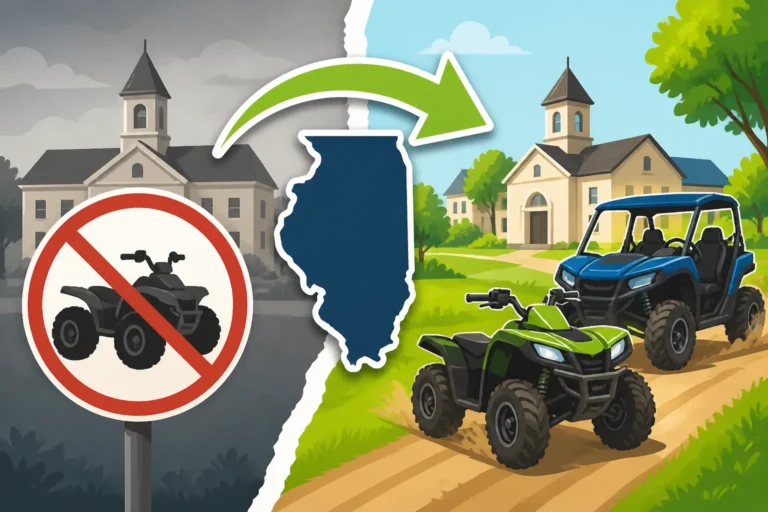
Here's where things get a bit more nuanced. While the state law generally bans OHVs from public roads, it also grants local units of government the authority to create exceptions. This means that [Illinois Municipalities That Pass Ordinances] and [Illinois Counties That Pass Resolutions] can, under specific conditions, allow ATVs and UTVs on certain roadways within their jurisdictions. This is not a blanket permission slip, however. Each ordinance is unique, detailing specific roads, hours of operation, required permits, and equipment mandates.
It's absolutely essential to remember that these are local rules. Just because one county or village allows UTVs on its roads doesn't mean the neighboring one does. You could be riding legally in one township, cross an invisible line into another, and suddenly be in violation of the law. These ordinances typically stipulate that [Only Streets Posted 35 mph or Lower Qualify] for UTV access, and often exclude state highways entirely, even for crossings. Before you even think about riding on a rural county road, you must conduct thorough research into the specific local ordinances for that area. Without an explicit, written ordinance from the relevant county, township, or village, the state's general ban remains in effect, putting you at risk of a citation if you're pulled over.
Essential Equipment for Any Road-Legal Exemption
Even if you've done your homework and found a local ordinance that permits UTVs or ATVs on specific rural county roads, your machine needs to be properly equipped to comply. This isn't just about making your ride more visible; it's about meeting legal requirements that are often explicitly detailed in local ordinances and state statutes regarding non-highway vehicles. Without the correct gear, even with a valid permit, you could still be cited for equipment violations.
You'll need functional headlights that are visible at a significant distance – specifically, [Your Headlight Must Be Visible at 500 Feet]. Your machine also needs a working tail lamp that shows red at a distance of [Your Tail Lamp Must Show Red at 100 Feet], and crucially, [Illinois Requires Brake Lights] that activate when you hit the pedal. For UTVs, [Illinois Requires Turn Signals] are usually a must for communicating your intentions to other drivers, and [Illinois Requires a Rearview Mirror] is vital for maintaining awareness of traffic behind you. Beyond lighting and mirrors, a slow-moving vehicle emblem – often referred to as [The Orange Farm Emblem Your UTV Must Carry] – must be visibly affixed to the rear of your machine if you're traveling at speeds below typical road traffic. Companies like SuperATV specialize in providing aftermarket kits and individual components that help riders equip their machines to meet these stringent street-legal requirements, ensuring that when you do ride on approved roads, you're doing so safely and legally.
What to Do When a Patrol Car Signals You to Stop
Even the most law-abiding rider, equipped with all the right gear and riding under a valid local ordinance, can find themselves being pulled over. Perhaps it's a routine check, or maybe an officer is simply unfamiliar with the nuances of local OHV laws. Whatever the reason, knowing how to react calmly and professionally can significantly impact the outcome of the stop.
Your Immediate Actions and Safe Pull-Over Procedure
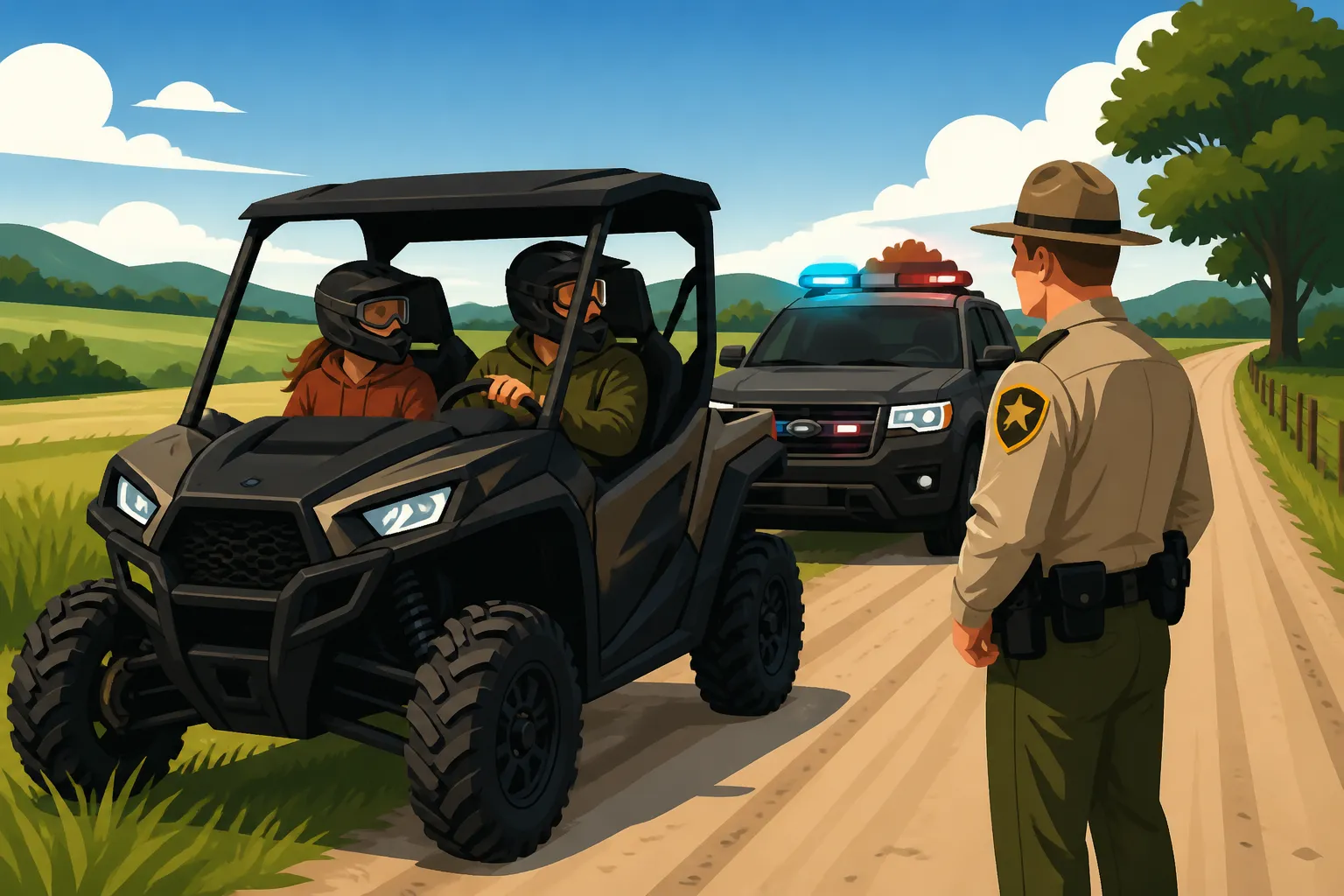
That moment when you see the flashing lights in your rearview mirror can send a jolt through you, especially when you're out enjoying a ride. Your first priority is safety for yourself, the officer, and any other traffic on the road. As soon as it's safe to do so, begin to slow down, activate your turn signal (if your machine has one and you're in a UTV), and pull over to the right shoulder of the road. Try to find a spot that is as far off the road as possible, flat, and well-lit if it's nearing dusk or dark. Avoid sudden braking or swerving, as this can be misinterpreted by the officer.
Once stopped, turn off your engine immediately. If you're in a UTV, keep your hands visible on the steering wheel. If you're on an ATV, keep your hands on the handlebars or in your lap. Do not make any sudden movements or reach for anything until the officer instructs you to do so. This helps to de-escalate the situation and ensures the officer feels safe approaching your vehicle. Remain in your seat or on your machine unless instructed otherwise. Patience is key at this stage; let the officer approach you.
Necessary Documents and Proof of Compliance
When the officer approaches, they will typically ask for your driver's license, proof of insurance, and vehicle registration or title. For Illinois riders, it's crucial to understand that [Illinois Titles but Does Not Register ATVs] for general road use in the same way cars are registered. So, while you'll need to show proof of ownership, you won't have a traditional "registration" for street driving. Instead, you'll need your valid [Illinois Requires a Driver's License] – a regular driver's license is required, not a special OHV permit for street use. You'll also need [Illinois Insurance Minimums for Street Use] if the local ordinance you're riding under requires it (which most do for any public road use), and always your certificate of title for the machine.
Beyond these standard documents, if you are operating under a local ordinance, you absolutely must carry proof of that compliance. This could be a village-issued sticker or permit, as mentioned in [Illinois Towns With UTV Permits], or a copy of the ordinance itself if it doesn't issue a physical permit. It's a smart practice to keep all of these documents – your license, insurance card, title, and any local permits – in a waterproof bag or container that is easily accessible but securely stored on your machine. Fumbling around for papers can make an officer suspicious, and having them ruined by unexpected rain is just an added headache.
Professional Conduct During the Stop
The way you interact with law enforcement during a stop can greatly influence the outcome. Remain calm, polite, and cooperative, even if you feel frustrated or believe you're in the right. Address the officer respectfully, make eye contact, and avoid arguing. The officer might ask you a series of questions about where you're coming from, where you're going, and whether you're aware of the local laws regarding OHV use on public roads. This is also where [What a Conservation Officer Can Ask to See] might come into play, as they are empowered to enforce these rules.
Answer questions truthfully, but remember you don't have to volunteer extra information beyond what's directly asked. If you're unsure how to answer, you can politely state that you'd prefer not to answer without legal counsel. Avoid making excuses or attempting to negotiate on the side of the road. If you believe you're being unfairly ticketed, the roadside stop is not the place to debate the law. Your goal in this moment is to be cooperative, provide the requested information, and get through the stop smoothly. Any disputes can be addressed later through the proper legal channels.
The Repercussions and Proactive Measures
Getting pulled over on a rural county road might seem like a minor inconvenience, but the repercussions for non-compliance can range from costly fines to more serious legal issues. Understanding these potential outcomes and, more importantly, knowing how to prevent them in the first place, is crucial for any Illinois ATV or UTV owner.
Understanding Potential Penalties for Violations
If you are found to be in violation of Illinois's off-road vehicle laws or a specific local ordinance, you could face various penalties. The most common outcome is a citation, which comes with a fine. [Illinois Penalties for Illegal Street Riding] can vary significantly depending on the specific charge and the local jurisdiction. For instance, riding on a prohibited road could be one charge, while lacking required equipment, like proper lighting or a rearview mirror, could be a separate offense. Each missing piece of equipment or regulatory failure can stack up, quickly increasing the total cost of the ticket.
Beyond the initial fine, you might also be responsible for [Illinois Court Costs for a Citation] if you choose to contest it or if the violation is deemed more severe. In some cases, repeated offenses or extremely dangerous operation could lead to your machine being impounded, which means additional fees for towing and storage to get it back. Furthermore, if you're involved in an accident while illegally operating your machine on a public road, your insurance policy might deny coverage, leaving you personally liable for damages and injuries. This can lead to a significant financial burden, underscoring why proactive compliance is always the best approach.
How to Prevent a Stop or Avoid a Citation
The old adage "an ounce of prevention is worth a pound of cure" certainly applies here. The best way to handle being pulled over is to avoid it altogether. This starts with diligent research. Before you even load up your machine, you must thoroughly research [Illinois Ordinance Lookups Before You Ride] for every county, township, or village you plan to traverse. Remember, these laws are hyper-local and can change frequently. What was legal last year or in the next town over might not be today or here. If you're unsure, contact the local sheriff's department or village hall directly.
Next, ensure your machine is absolutely compliant with all equipment requirements specified by any applicable local ordinance or state law for non-highway vehicles. This includes not just the obvious lights and mirrors, but also items like spark arrestors, functional brakes, and the proper slow-moving vehicle emblem. Regular maintenance ensures these components are always in working order. Beyond legal compliance, ride responsibly and respectfully. Observe posted speed limits, yield to other traffic, and be a good ambassador for the OHV community. Avoiding aggressive riding, excessive noise, or trespassing will reduce the likelihood of attracting law enforcement attention or generating complaints from residents. Remember, companies like SuperATV can be a great resource for finding the necessary aftermarket parts to ensure your UTV meets all these requirements before you ever hit the road.
What to Do If You Receive a Ticket
Despite your best efforts, sometimes you still might receive a ticket. Don't panic. First, take a deep breath. During the stop, politely ask for clarification on the specific charges and the section of the law or ordinance you're accused of violating. Note the officer's name, badge number, and the exact location, time, and circumstances of the stop. If you have a smartphone, discreetly take photos of any relevant signs, road conditions, or your machine's equipment, as these might be useful later.
Once you have the ticket, you generally have two options: pay the fine or contest it in court. If you believe the ticket was issued in error, perhaps due to a misunderstanding of a valid local ordinance you were following, you have the right to challenge it. This is where your diligent research and documentation of local laws come into play. For example, if you're disputing a ticket issued by a village, understanding the process for [Contesting a UTV Ticket Written by a Village] will be essential. Consult with a legal professional who specializes in traffic or administrative law. They can advise you on the strength of your case, help you gather evidence, and represent you in court. Remember to adhere strictly to all deadlines for responding to the ticket; missing a court date can result in additional fines or even a warrant for your arrest.
Disclaimer
This article is for general informational purposes only and does not constitute professional advice. Laws, prices and regulations vary by location and change over time. Consult a qualified professional for guidance on your specific situation.