Reflectors Front and Rear
It's incredibly frustrating when you want to take your ATV or UTV on a local road, but the rules feel like a tangled mess. One often-overlooked but absolutely crucial piece of the puzzle for street-legal riding in Illinois involves those simple little reflective pieces. This guide will shine a light on why front and rear reflectors aren't just a suggestion but a legal necessity, helping you understand their role in your machine's visibility and ensuring you stay on the right side of the law on Illinois streets.
Why Reflectors Matter on Illinois Roads Beyond Just Looking Good
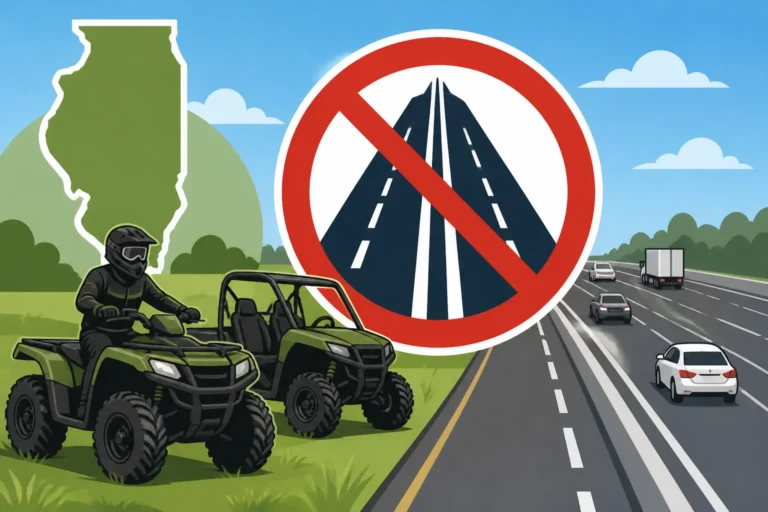
You might think that with bright headlights and tail lights, a few reflectors are just a minor detail, but that couldn't be further from the truth. In Illinois, where [Illinois Law Starts by Banning Street Riding] unless a local ordinance specifically allows it, meeting all equipment requirements is paramount. Reflectors act as a passive safety net, making your machine visible even when your active lights aren't on, or are obscured, significantly reducing the risk of an accident on public roads. It's about being seen, always, from every angle.
The Passive Safety Net: How Reflectors Enhance Visibility
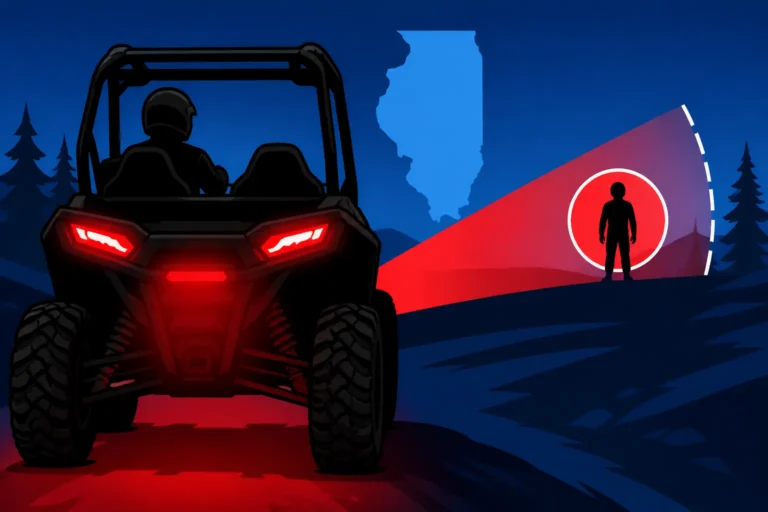
Think of reflectors as tiny emergency beacons that don't need power. They work by bouncing back light from other vehicles, acting like a silent guardian that's always on duty. This is especially critical during those "in-between" times – dawn, dusk, heavy overcast days, or even in bright daylight when shadows can play tricks. When a driver's headlights hit your machine, those reflectors immediately light up, making your ATV or UTV's presence and width clear to oncoming or approaching traffic.
Imagine you're pulling out of a field onto a county road, or your machine is temporarily parked on a shoulder. Your headlights might be off, or perhaps you're facing away from traffic. Without reflectors, your machine could easily blend into the background, especially if it's a dark color. But with properly placed reflectors, even a brief flash of an approaching car's headlights can make you stand out, giving other drivers precious extra seconds to react. This passive visibility is a game-changer, whether you're meeting a semi-truck on a narrow township road or just navigating a busy village street.
Meeting the Letter of Illinois Law for Road-Legal ATVs/UTVs
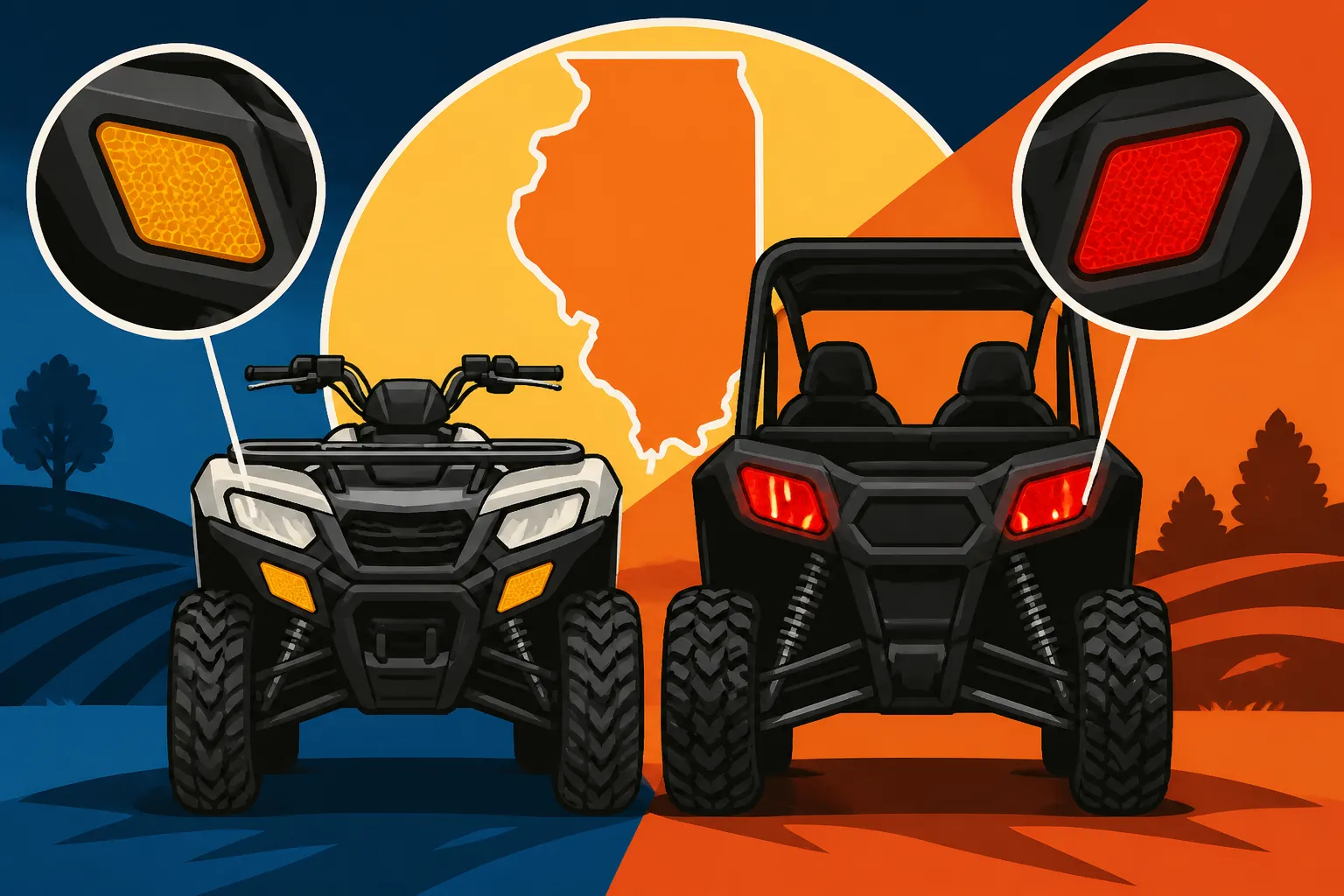
When a village, county, or township passes an ordinance to allow ATVs or UTVs on their roads, they almost always stipulate a list of required safety equipment. And on that list, you'll consistently find requirements for reflectors. The key phrase often used is "reflectors visible from the front and rear," and typically, this means amber reflectors for the front and red reflectors for the rear. This color coding immediately tells other drivers which direction your machine is facing, a simple but effective communication tool on the road.
These requirements aren't just for show; they're integral to making your machine predictable and safe within the flow of traffic. Whether it's [Illinois Municipalities That Pass Ordinances] or [Illinois Counties That Pass Resolutions] opening up roads, they're doing so with the expectation that riders will equip their machines to be as visible as possible. Without these essential pieces of equipment, you're not just risking a ticket; you're putting yourself and others in danger. It's a fundamental part of responsible riding on public thoroughfares.
Deciphering the "Front and Rear" Requirement for Your Machine
Understanding that reflectors are a must is one thing; figuring out exactly where to put them on your specific ATV or UTV is another challenge entirely. These machines come in all shapes and sizes, and what works perfectly on a sport quad might not be ideal for a utility side-by-side. The goal is always to maximize visibility and meet the legal definition of "front and rear," ensuring your machine's profile is clearly communicated to other drivers, day or night.
Where to Mount Front Reflectors for Optimal Visibility
For front reflectors, the general rule is to place amber-colored reflectors in a way that clearly indicates the full width of your machine. This usually means mounting them symmetrically, one on each side, as far forward and as far out to the sides as practical. Good locations often include the front bumper, the leading edge of fender flares, or even on a brush guard. The idea is to create a wide, clear signal to oncoming traffic, helping them judge your machine's size and position accurately.
Some riders even incorporate additional reflective elements into their front lighting setup or use aftermarket accessories that come with integrated reflectors. For instance, SuperATV offers bumpers and brush guards that sometimes include mounting points or even built-in LED strips that can be supplemented with amber reflectors. Just make sure whatever you choose, it's firmly attached and not easily obscured by mud, branches, or gear. The goal isn't just to have reflectors, but to have effective reflectors that do their job consistently.
Ensuring Rear Visibility with Proper Reflector Placement
When it comes to the rear of your machine, the law typically requires red reflectors, and their purpose is just as vital: to warn drivers approaching from behind, especially when your brake lights aren't illuminated or when you're simply idling or parked. [Illinois Requires Red Reflectors], and these should also be mounted symmetrically to define the width of your ATV or UTV. Prime spots include the rear bumper, the back of a cargo rack, or integrated into the tail light housing itself. For a UTV with a roll cage, mounting them securely on the rear posts can be highly effective.
It's common for these reflectors to be positioned relatively low to the ground but still high enough to clear most obstacles and avoid being caked in mud. Just like the front, ensure they're firmly attached and won't get ripped off during a spirited ride or by brushing against tall grass. The clearer and wider the reflective signal you present from the rear, the safer you'll be on those public roads, especially as darkness falls or visibility decreases.
Beyond the Basics: Additional Reflective Measures
Sometimes, simply bolting on a couple of reflectors isn't enough, or your machine's design might make standard placement tricky. This is where getting a little creative, within legal bounds, can make a big difference. Many riders opt to add reflective tape to their machines, especially in areas that might otherwise be dark. This can include the edges of fender flares, the perimeter of your cargo box, or even along the frame rails. The beauty of reflective tape is its versatility; it can conform to curves and irregular surfaces, adding a significant amount of passive reflectivity without being bulky.
Remember, reflectors are distinct from active lighting. While your headlights, tail lights, and brake lights generate their own light, reflectors only work when another light source hits them. Combining these two elements provides the best protection. For example, adding highly visible reflective decals from a brand like SuperATV to your roll cage or body panels can supplement your mandated reflectors, creating an even more pronounced visual footprint for your machine on the road. The more angles from which your machine is easily seen, the safer everyone will be.
Common Pitfalls and How to Avoid Them
Even with the best intentions, it's easy to make mistakes when it comes to reflectors. Whether it's picking the wrong color, placing them in an ineffective spot, or simply neglecting their maintenance, these errors can negate their safety benefits and potentially lead to citations. Staying informed and being diligent about your equipment checks can save you a lot of hassle and keep you safer on the road.
The Wrong Color, The Wrong Place: Avoiding Common Compliance Errors
One of the most frequent mistakes riders make is using the wrong color reflectors for the wrong end of the machine. Red in the front or amber in the rear will not only confuse other drivers but is also a clear violation of typical street-legal requirements. Always remember: amber for the front, red for the rear. Another common pitfall is placing reflectors where they are easily obscured. Reflectors mounted too low might get caked in mud instantly, especially on a gravel road after a rain. Those mounted too high might be missed by lower-set headlights or simply not convey the machine's width effectively.
It's crucial to ensure your reflectors are visible from a reasonable distance and angle. An officer, like [What a Conservation Officer Can Ask to See] during a stop, will be looking for clear, unobstructed visibility. Before your first ride on public roads, do a walk-around. Stand a good distance away from your machine, both front and rear, and have someone shine a flashlight at it from various angles. If the reflectors aren't popping, they're not doing their job, and you'll need to adjust their placement or add more.
Keeping Your Reflectors Effective and Undamaged
Reflectors, like all parts of your off-road machine, take a beating. They can get scratched, cracked, faded by the sun, or even knocked off entirely. A reflector covered in dried mud or dust is practically useless. This means regular maintenance and inspection are non-negotiable. Make checking your reflectors part of your pre-ride ritual, along with fluid levels and tire pressure. A quick wipe-down can restore their effectiveness, and replacing a damaged or missing one promptly is crucial.
When choosing aftermarket reflectors or accessories that incorporate them, consider durability. Products from reputable brands like SuperATV are often designed with the rigors of off-road use in mind, making them more likely to withstand impacts and environmental exposure. A cheap, flimsy reflector might save you a few dollars upfront, but it's not going to stand up to the elements or the vibrations of riding on rougher roads. Invest in quality and inspect often.
Reflectors in the Broader Street-Legal Context
It’s easy to get tunnel vision on one specific requirement, but reflectors are just one puzzle piece in the larger picture of making your ATV or UTV street-legal in Illinois. While they're vital for passive visibility, you'll also need a host of other functional equipment to meet local ordinances. This includes [Illinois Requires a Rearview Mirror] so you can see traffic behind you, and typically [Illinois Requires a Slow-Moving Vehicle Emblem] for rural roads where speeds are lower.
Beyond passive visibility, your machine will need active lighting: [Illinois Requires a 500-Foot Headlight] for seeing and being seen at night, a [Illinois Requires a 100-Foot Tail Lamp] to mark your presence from the rear, and working [Illinois Requires Brake Lights] to signal deceleration. For UTVs especially, [Illinois Requires Turn Signals] are almost always a must to clearly indicate your intentions to other drivers. And don't forget the personal requirements, like [Illinois Requires a Driver's License] and [Illinois Requires Insurance for Street Use]. Always double-check [Illinois UTV Street Legal Rules by Town] or county, as requirements can vary. Ensuring all these elements are in place provides comprehensive safety and full compliance, making your road rides worry-free.
Here’s a quick summary of the reflector requirements:
| Feature | Front Reflectors | Rear Reflectors |
|---|---|---|
| Color | Amber | Red |
| Purpose | Indicate presence/width to oncoming traffic | Indicate presence/width to following traffic |
| Visibility | From the front | From the rear |
| Common Placement | Front bumper, fender flares, brush guard | Rear bumper, cargo rack, roll cage |
| Key Benefit | Passive safety, especially in low light | Passive safety, prevents rear-end collisions |
| Maintenance | Keep clean, check for damage, ensure firm attachment | Keep clean, check for damage, ensure firm attachment |
Disclaimer
This article is for general informational purposes only and does not constitute professional advice. Laws, prices and regulations vary by location and change over time. Consult a qualified professional for guidance on your specific situation.