Bolting a Slow-Moving Vehicle Emblem to the Rear
It's incredibly frustrating when you just want to take your UTV out for a spin on a local road, only to be met with a confusing maze of rules and equipment requirements. You've heard whispers about needing a slow-moving vehicle emblem, but what exactly does that mean, and where does it even go? This guide is designed to cut through that confusion, explaining why this distinctive orange triangle is so crucial for legal street use in Illinois and how to make sure your machine is properly equipped.
Why the Slow-Moving Vehicle Emblem Matters in Illinois
Navigating the rules for riding your ATV or UTV on Illinois roads can feel like you need a law degree and an engineering certification rolled into one. Among the many specific pieces of equipment your machine might need, depending on where and how you ride, the slow-moving vehicle (SMV) emblem stands out as a critical component for safety and compliance. It's not just a suggestion; it's a legal requirement rooted in the very nature of how these machines interact with conventional traffic.
Understanding the "Non-Highway Vehicle" Definition
In Illinois, your ATV or UTV typically falls under the umbrella of a "non-highway vehicle" when it comes to road use. This designation is key because it's what triggers a whole host of specific equipment mandates, including the SMV emblem. These machines aren't designed or built to the same standards as a passenger car or truck, and the law recognizes that. They often have different braking characteristics, acceleration profiles, and most importantly for this topic, a lower top speed that can pose a hazard on roads with faster-moving vehicles.
This classification means that while you might be allowed to ride on certain local roads, your machine is still fundamentally different from other traffic. The state wants to ensure that these differences don't lead to dangerous situations. The SMV emblem is one of the most visible ways to signal this difference to others on the road. Understanding this basic legal definition helps clarify why Illinois has these particular rules in place, aiming to strike a balance between allowing local road access and maintaining public safety.
The Safety Imperative: Why It's Required
Think about driving down a country road at 55 miles per hour and suddenly encountering a vehicle traveling at 20 mph. Your reaction time for spotting that difference and safely slowing down is critical. This is precisely the safety concern the slow-moving vehicle emblem addresses. Its distinct fluorescent orange triangle with a reflective red border is designed to be highly visible, both during the day and at night, from a significant distance. It provides an immediate, universal signal to other drivers: "Hey, I'm moving slower than you might expect, so be prepared to slow down."
This visual cue is absolutely vital for preventing rear-end collisions, which can be devastating given the often-lighter construction and lack of extensive crash protection on ATVs and UTVs. Especially on winding rural roads or at dusk and dawn, the emblem gives oncoming and following traffic extra precious seconds to recognize your machine and adjust their speed. It’s a proactive measure, a silent ambassador for your safety on roads shared with faster vehicles. Without it, you’re not just breaking a rule; you're significantly increasing the risk for yourself and others.
Local Ordinances and State Statute: Where the Rule Comes From
The requirement for a slow-moving vehicle emblem isn't just a suggestion someone came up with; it's enshrined in Illinois state law. Specifically, the Illinois Vehicle Code outlines the equipment necessary for non-highway vehicles when they are permitted to operate on public roads. However, the exact ability to ride on roads often hinges on local decisions. This means that while the state sets the safety equipment standards, it's typically [Illinois Municipalities That Pass Ordinances] or [Illinois Counties That Pass Resolutions] that grant permission for UTVs to operate on their specific roads.
When a local government decides to allow UTVs on its streets, it's almost always conditional on meeting the state's equipment list. This is why you'll see phrases like, "UTVs permitted on roads posted 35 mph or less, provided they meet all state equipment requirements, including a slow-moving vehicle emblem." So, while your village might greenlight your UTV for street use, you still have to equip it properly to avoid tickets from local law enforcement or, worse, being involved in an accident where your non-compliance could be a factor. Always check [Illinois UTV Street Legal Rules by Town] for the specifics in your area.
Choosing and Mounting Your Slow-Moving Vehicle Emblem
Once you understand why the slow-moving vehicle emblem is so important, the next step is actually getting one and installing it correctly. It's not a complicated task, but there are definitely best practices to ensure it's effective and compliant with Illinois regulations. Think of it as a small but mighty investment in your safety and peace of mind.
What Exactly is a Slow-Moving Vehicle Emblem?
The slow-moving vehicle emblem, often abbreviated as SMV, is a very specific device. It's a triangular sign, usually measuring about 14 inches high, with a fluorescent orange-red center and a reflective red border. The fluorescent center provides excellent daytime visibility, especially in bright sunlight, while the reflective border ensures it stands out when illuminated by headlights at night or in low-light conditions. These emblems are standardized, meaning you shouldn't just grab any orange triangle you find; it needs to be an actual SMV emblem designed for this purpose.
You can find these emblems at most farm supply stores, auto parts retailers, or online marketplaces. When purchasing, make sure it meets ANSI/ASAE S276.6 standards or an equivalent. These standards ensure the color, reflectivity, and durability are up to par. Don't be tempted to use a homemade sign or something that looks "close enough"—it might not provide the necessary visibility and could leave you non-compliant. Products from reputable brands like SuperATV often come with options for mounting plates or hardware, making the installation process even smoother.
Finding the Right Spot on Your UTV
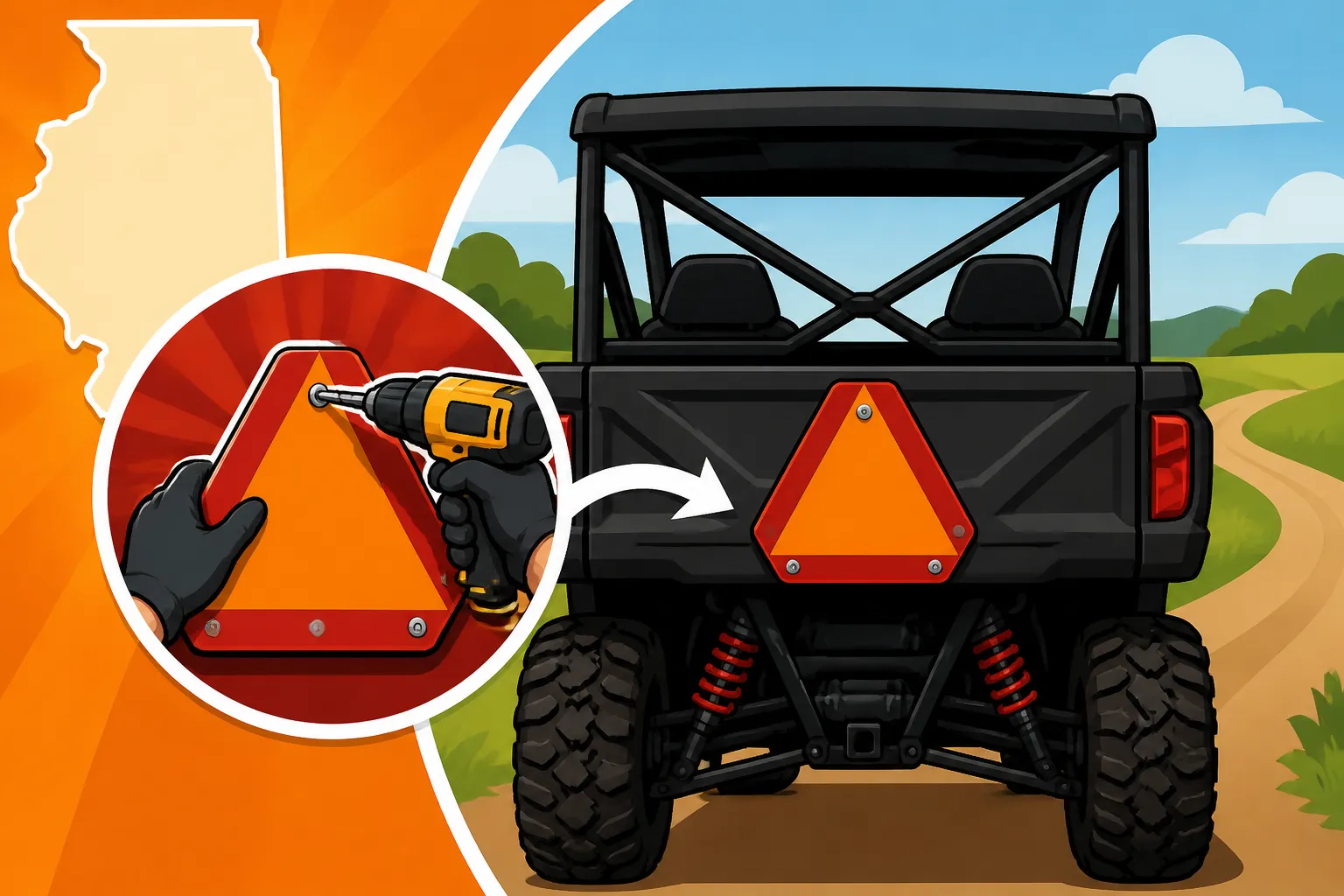
Placement is absolutely critical for the SMV emblem to be effective. The law typically dictates that [The Orange Farm Emblem Your UTV Must Carry] must be mounted on the rear of the vehicle, as close to the center as practical, and at a height that makes it clearly visible to following traffic. This usually means somewhere on the tailgate, bumper, or a secure rack on the back of your UTV. The key is that it should be unobstructed by cargo, passengers, or other accessories.
Imagine another driver approaching your UTV from behind. Can they see the entire triangle clearly from a distance? Is anything blocking even a part of it? If your UTV has a bed, it might need to be mounted higher than the bed rails. If you have a rear cargo box, you might need to find a bracket that allows the emblem to sit above it. Some UTVs might require a custom bracket to achieve optimal placement, especially if you regularly haul gear or have a spare tire mounted on the rear. Take a few steps back, even ask a friend to stand a hundred feet or so away, to confirm its visibility before you finalize the mounting.
Secure Attachment: Bolting It Down
Simply zip-tying an SMV emblem to your roll cage isn't going to cut it, both for compliance and durability. The emblem needs to be securely attached, typically by bolting it to the machine's frame, bumper, or a sturdy mounting plate. Most emblems come with pre-drilled holes for this purpose. You'll want to use stainless steel bolts, washers, and nuts to prevent rust, especially if your UTV sees a lot of mud, water, or rough terrain.
When bolting, make sure the surface you're attaching it to is rigid and won't flex or vibrate excessively. If you're drilling into metal, use appropriate drill bits and consider adding rubber grommets between the emblem and the mounting surface to reduce vibration and prevent wear. After installation, give the emblem a good shake to ensure it's firmly attached. You don't want it rattling loose on a bumpy trail or, worse, falling off completely during a road ride. Many riders opt for aftermarket solutions, such as those offered by SuperATV, that provide robust mounting brackets designed specifically for UTVs, ensuring a secure and compliant fit.
Beyond the Emblem: Other Illinois Street-Legal Requirements
While the slow-moving vehicle emblem is a key piece of the puzzle, it's just one item on a longer checklist if you want to legally ride your UTV on permitted Illinois roads. Ignoring other requirements can lead to tickets, fines, and serious safety compromises. It’s about creating a complete package of compliance and safety.
A Full Checklist of Required Equipment
Illinois law has a comprehensive list of equipment that non-highway vehicles must have to operate on public roads. Beyond the SMV emblem, this includes things you might already have, and some you might need to add. For example, your UTV needs working headlights that are visible from at least [Illinois Requires a 500-Foot Headlight], and a tail lamp that shows red from [Illinois Requires a 100-Foot Tail Lamp]. These aren't just for looking cool; they're essential for being seen during low light or nighttime conditions.
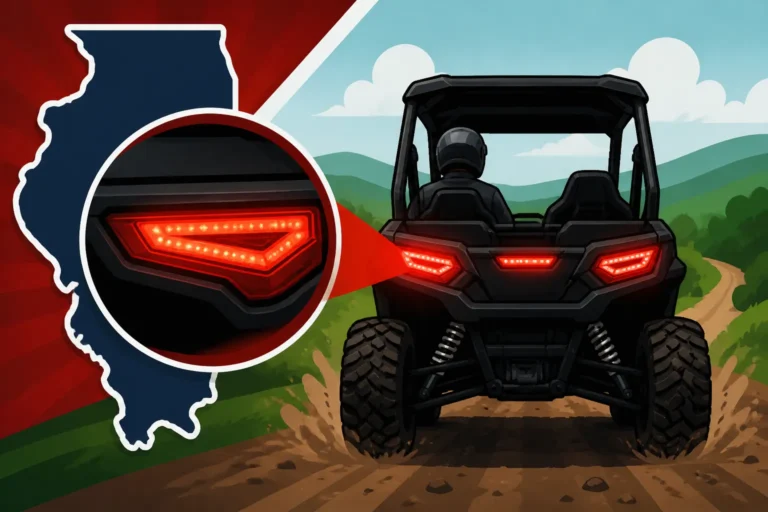
You'll also need [Illinois Requires Brake Lights], [Illinois Requires Turn Signals], and [Illinois Requires a Rearview Mirror]. Imagine trying to change lanes or make a turn without these basic safety features! Many UTVs don't come stock with turn signals or proper mirrors for road use, so these are common additions. Remember, all this equipment must be fully functional. A burned-out bulb or a broken mirror means you're not compliant. It's always a good idea to periodically check your [Illinois Non-Highway Vehicle Equipment List] to ensure everything is in working order before you head out.
Navigating Local Ordinances: The Bigger Picture
Even with all the correct equipment, remember that Illinois doesn't have a blanket statewide permission for UTVs on public roads. Permission is typically granted at the local level by villages, cities, or counties. This means that while you might be legal on the streets of one town, you could be breaking the law just a few miles down the road in another. It's your responsibility to know the local rules wherever you plan to ride.
These local ordinances often specify not only if you can ride, but where (e.g., only on roads posted 35 mph or lower) and when (e.g., no riding after dark, or specific hours). Many municipalities also require a special permit, like those you might apply for at [Applying for a UTV Permit at Village Hall], and some even charge annual fees. Understanding [Illinois Rules for Riding a Village Street] and [Illinois Rules for Riding a County Road] is paramount. Always check the specific ordinance for the area you're in; a quick call to the local police department or village hall can save you a lot of trouble.
Insurance and Licensing: Don't Forget the Paperwork
Even with a perfectly equipped UTV, your street-legal journey isn't complete without the proper paperwork. In Illinois, if you're riding your UTV on any public road, you generally need to be a licensed driver. This means holding a valid driver's license, just as you would for a car or truck. There aren't special "UTV licenses" in Illinois for road use; your standard driver's license usually suffices.
Furthermore, you are typically required to carry liability insurance. This isn't just a suggestion; it's a legal safeguard. If you were involved in an accident on a public road, [Illinois Insurance Minimums for Street Use] would kick in to cover damages you might cause to other vehicles or property. While the specific limits may vary, commonly you'll see requirements like 25/50/20 coverage. It's a non-negotiable part of being a responsible and legal street rider. Always carry proof of insurance with you, along with your driver's license, whenever you're operating your UTV on public roads.
Common Missteps and Troubleshooting
Even with the best intentions, it's easy to make mistakes when trying to make your UTV street-legal in Illinois. From overlooked details to maintenance issues, these missteps can lead to problems ranging from minor inconveniences to serious legal headaches. Knowing what to watch out for can save you a lot of grief.
Avoiding Penalties: The Cost of Non-Compliance
Let's be frank: the cost of being non-compliant often far outweighs the cost and effort of properly equipping your machine. If you're pulled over and found to be missing a required item like the slow-moving vehicle emblem, or if your lights aren't working, you could face significant [Illinois Penalties for Illegal Street Riding]. These aren't just small warnings; they can be actual tickets with fines that really hit your wallet. Depending on the violation, you might even find your machine impounded, which adds further fees and hassle to retrieve it.
Beyond financial penalties, consider the impact of an accident. If you're involved in a collision and your UTV isn't properly equipped, your insurance company might deny coverage, leaving you personally liable for damages. This can be financially ruinous. Furthermore, if an accident occurs due to your lack of proper lighting or visibility (which the SMV emblem helps provide), you could face more severe charges. It's simply not worth the risk. Make sure you adhere to the [Illinois Non-Highway Vehicle Equipment List] to protect yourself legally and financially.
Maintenance and Replacement: Keeping Your Emblem Effective
Like any piece of equipment exposed to the elements, your slow-moving vehicle emblem won't last forever without a little attention. The fluorescent orange can fade over time with prolonged exposure to sunlight, reducing its daytime visibility. The reflective red border can become scratched, dirty, or lose its effectiveness. It's a good habit to periodically inspect your emblem. Is it still brightly colored? Does it reflect light well at night?
If you notice significant fading, damage, or a loss of reflectivity, it's time for a replacement. A new emblem is relatively inexpensive compared to a ticket or, more importantly, the potential consequences of an accident. Also, check the mounting hardware regularly. Vibrations from riding can loosen bolts over time, so give them a snugging-up periodically. If your UTV is stored outdoors, consider covering the emblem when not in use to prolong its life. Even sturdy options from SuperATV can benefit from regular checks and cleaning to ensure peak performance and visibility.
Questions for Your Local Authorities
The world of UTV street-legal rules can be complex, and sometimes, despite all your research, you'll still have specific questions for your particular machine or riding area. Don't hesitate to reach out to your local authorities. This could be your village hall, county clerk's office, or even the local police department (for non-emergency questions, of course!). They are the ultimate arbiters of what's allowed on their roads and can provide clarity on local ordinances, permit requirements, and equipment specifics.
When you call, be prepared with specific details about your UTV and where you intend to ride. Ask clear, concise questions. For instance, "Does this specific road in our village allow UTVs, and if so, what are the permit requirements and mandatory equipment in addition to the state's list?" Getting answers directly from the source can prevent misunderstandings and ensure you're fully compliant. It's always better to ask ahead of time than to learn the hard way through a ticket or, worse, an accident.
Summary of Illinois UTV Street-Legal Equipment Requirements
| Requirement | Description | Placement | Purpose |
|---|---|---|---|
| Slow-Moving Vehicle Emblem | Fluorescent orange triangle with red reflective border. | Rear, center, unobstructed. | Warns faster traffic of slow-moving vehicle. |
| Headlights | At least one, capable of illuminating objects at 500 feet. | Front. | Visibility for driver and to oncoming traffic. |
| Tail Lamp | Displays red light visible from 100 feet. | Rear. | Visibility to following traffic. |
| Brake Lights | Activates when brakes are applied. | Rear. | Signals deceleration to following traffic. |
| Turn Signals | Operational front and rear amber turn signals. | Front and rear, clearly visible. | Signals turns or lane changes. |
| Rearview Mirror | Provides clear view of traffic to the rear. | Driver's side, or center (if sufficient field of view). | Situational awareness for the driver. |
| Insurance | Minimum liability coverage as required by Illinois Vehicle Code. | Carry proof of insurance with you. | Financial protection in case of an accident. |
| Driver's License | Valid, current driver's license. | Carry with you. | Legal authorization to operate a motor vehicle. |
| Local Permit (if applicable) | Specific permit issued by city, village, or county. | Displayed as required by local ordinance. | Local authorization for street access. |
Disclaimer
This article is for general informational purposes only and does not constitute professional advice. Laws, prices and regulations vary by location and change over time. Consult a qualified professional for guidance on your specific situation.