When a County Board Passes a UTV Resolution
It can be incredibly frustrating to own a UTV in Illinois, knowing it’s a capable machine, but feeling constantly uncertain about where you can legally ride it on public roads. The patchwork of laws, where one town says yes and the next says no, can make simply enjoying your side-by-side feel like navigating a legal minefield. This guide is here to demystify one crucial piece of that puzzle: how a county board passes a resolution to allow UTVs on its roads, what that process entails, and what it ultimately means for you, the rider, in the Prairie State.
Understanding County Board UTV Resolutions
When we talk about making UTVs "street legal" in Illinois, it's rarely a sweeping statewide change. Instead, it's often a highly localized decision. A "county board UTV resolution" is essentially a local law passed by a county's governing body that grants permission for off-highway vehicles (OHVs), specifically UTVs, to operate on certain designated county roads within its jurisdiction. It’s important to understand that this isn’t about changing state law; it’s about a specific county opting into existing state provisions that allow local authorities to regulate UTV use on their own roadways.
This kind of resolution carves out an exception to the general prohibition against operating OHVs on public roads. It acknowledges the unique needs and desires of rural communities and UTV owners. Without such a resolution, even if your UTV is equipped with all the necessary safety features, it would remain illegal to operate on county roads unless explicitly exempted, say for farm use directly related to agricultural activity.
Think of it this way: Illinois law starts by generally saying "no" to UTVs on public roads. Then, it offers individual villages, towns, and counties the power to change that "no" to a conditional "yes" within their specific boundaries. A county resolution is that official "yes" for county roads.
What Exactly is a UTV Resolution?
At its core, a UTV resolution from a county board is a formal declaration and set of rules. It will outline the specific types of UTVs allowed, the roads they can use (often limited by speed or road classification), the hours of operation, and the safety equipment required. It’s more than just an opinion; it carries the weight of local law, enforceable by the county sheriff’s department and other local law enforcement agencies.
These resolutions are usually crafted carefully, taking into account traffic safety, road conditions, and community feedback. They typically specify that UTVs must still adhere to certain state-mandmandated safety requirements, such as carrying liability insurance and displaying a slow-moving vehicle emblem. Many riders, especially those who've outfitted their machines with street-legal accessories from brands like SuperATV, want to know that their investment can actually be used on appropriate local roads.
It’s not just a free-for-all once a resolution passes. There are almost always specific conditions and often a permit process involved, designed to integrate UTVs safely into the existing road network. For instance, the resolution might restrict UTVs to roads with a posted speed limit of [Illinois's 35 mph Street Limit] or lower, preventing them from mixing with faster-moving traffic on busier thoroughfares.
The Difference Between County and Village Ordinances
This is where things can get a little tricky, and it's a common point of confusion for riders. Illinois has a tiered system of local governance: villages and cities, townships, and counties. Each of these governmental units has the authority to pass its own ordinances or resolutions regarding UTV use on the roads under its jurisdiction.
A county board resolution applies specifically to roads maintained by the county. These are typically the numbered county roads that crisscross the rural landscape, connecting smaller towns and farms. It does not automatically apply to village streets within an incorporated municipality, nor does it apply to township roads, which are maintained by individual townships. For those roads, separate [Illinois Municipalities That Pass Ordinances] or township-level resolutions would be required.
This means you could be riding legally on a county road, turn onto a village street, and suddenly be in violation of local law if that village hasn't passed its own ordinance. Similarly, turning onto a township road might require a separate township resolution. It's a complex situation, especially in areas where [Illinois Roads Under Two Jurisdictions] might meet. This fragmented approach is why it’s absolutely critical to research the specific rules for every jurisdiction you plan to ride in.
Why Counties Consider UTV Resolutions
County boards don't just wake up one day and decide to allow UTVs on their roads. There are usually significant drivers behind such decisions, ranging from strong community demand to potential economic benefits. Understanding these motivations can give riders insight into how best to advocate for UTV access in their own areas.
Rural communities, in particular, often have a different relationship with off-road machines than more urbanized areas. For many, UTVs aren't just recreational toys; they're essential tools for farm work, property maintenance, and accessing remote areas.
Community Demand and Economic Impact
One of the strongest catalysts for a UTV resolution is persistent and organized community demand. Residents, often farmers, outdoor enthusiasts, or simply those living in rural areas, advocate for the ability to use their UTVs for practical purposes like running errands, accessing agricultural fields, or even just getting to a neighbor’s house without having to trailer their machine. The convenience factor for these everyday tasks is a significant motivator.
Beyond convenience, there's a strong economic argument. Allowing UTVs on county roads can boost local tourism by attracting riders from other areas who are looking for places to legally operate their machines. These visitors stop at local gas stations, restaurants, convenience stores, and maybe even stay at local accommodations, injecting money into the county's economy. Businesses that cater to UTV owners, such as repair shops, parts suppliers, or even dealerships, also see increased activity. Many counties see the economic potential in being a UTV-friendly destination.
Before even proposing a resolution, county boards often hear from constituents who have already made their UTVs street-ready with kits from companies like SuperATV, highlighting the demand for legal road access and accessories that make their machines road-worthy.
Safety Considerations and Road Classifications
While the desire for access is strong, county boards must also grapple with legitimate safety concerns. Integrating UTVs into general road traffic raises questions about accident risk, road wear, and noise. Resolutions are typically crafted to mitigate these risks by imposing specific conditions. For example, a common restriction is limiting UTVs to roads with lower speed limits, usually 35 mph or less, where the speed differential between UTVs and other vehicles is less pronounced.
Road classifications play a big role here. County boards will often designate which specific classes of county roads are permissible for UTV use, avoiding major thoroughfares or highways with high traffic volumes. This might mean allowing UTVs only on gravel or lightly paved rural roads, while keeping them off busier state routes or county highways that serve as primary commuter arteries. [Illinois Crossing Rules at Intersections] might also be outlined, ensuring UTVs cross busier roads safely.
The resolution may also mandate specific safety equipment beyond what's required for off-road use, such as headlights, tail lights, turn signals, and rearview mirrors, all designed to make UTVs more visible and predictable to other drivers. This proactive approach helps address safety concerns before they become problems.
Harmonizing with Neighboring Jurisdictions
Another factor influencing county board decisions is the desire for consistency, especially in areas where counties border each other or where riders frequently travel between different local government areas. If one county has a UTV resolution, neighboring counties might feel pressure to enact similar rules to avoid confusing riders or to capitalize on the same economic benefits.
Imagine a rider who lives just across a county line; it would be incredibly inconvenient and confusing if they could ride legally on one side but not the other. Harmonizing rules creates a more seamless and enjoyable riding experience for residents and visitors alike. This doesn’t mean every county will have identical rules, but there can be an effort to create a logical flow for riders, preventing them from inadvertently breaking the law just by crossing a county line.
This consideration for neighboring areas often leads to discussions about how permits, if required, are recognized, or how [Illinois Penalties for Illegal Street Riding] are enforced consistently across borders. It fosters a sense of regional planning rather than isolated, conflicting regulations.
The Process of Passing a County Resolution
Passing a UTV resolution isn't an overnight decision; it involves a structured governmental process that allows for debate, public input, and legal review. Understanding these steps can empower riders to participate effectively and advocate for responsible UTV access in their own communities. It’s a democratic process, and rider involvement often makes a significant difference.
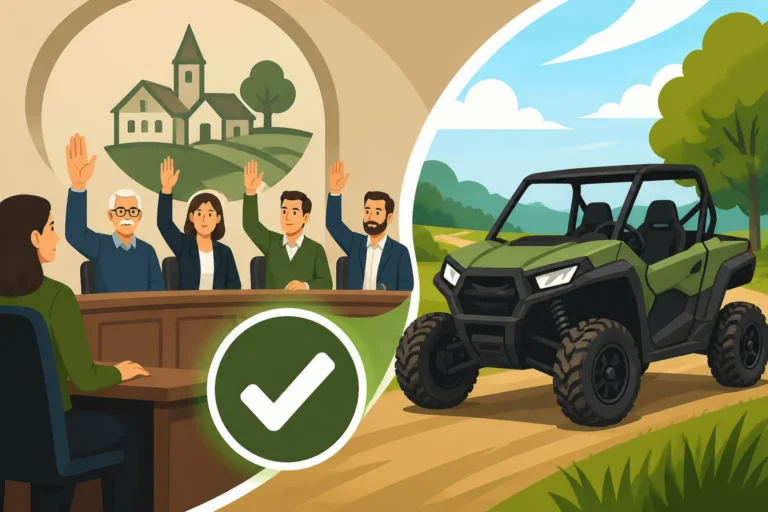
Like any local law, these resolutions require multiple readings, discussions, and a formal vote by the elected representatives on the county board. It's not uncommon for the process to take several months, sometimes even longer, especially if there's significant debate or opposition.
Initial Discussions and Public Input
The process usually begins with an elected county board member bringing the idea forward, often in response to public inquiries or a formal petition from constituents. This initial discussion might happen during a regular board meeting or a committee meeting focused on public safety or economic development. At this stage, the concept is introduced, and initial pros and cons are weighed.
Crucially, public input is almost always a vital component. County boards will schedule public hearings where residents, business owners, and UTV enthusiasts can come forward to share their perspectives, concerns, and support. This is the opportunity for riders to explain why they want UTV access, how they plan to use their machines responsibly, and to address common misconceptions. Conversely, it's also where opponents can voice their objections, which the board must consider. Gathering testimonials, data on economic benefits, and examples of successful UTV programs in other counties can be very persuasive here.
Effective communication during these meetings, focusing on safety and responsibility, is key. Showing that riders are committed to following rules and being good stewards of the roads helps build trust with the board and the wider community.
Drafting the Ordinance
Once the county board decides there’s enough interest and potential benefit to move forward, the actual drafting of the resolution begins. This is typically handled by the county’s legal counsel, often in consultation with the county sheriff’s department, highway department, and other relevant officials. The legal team will review existing state statutes (like those that govern [Illinois Non-Highway Vehicle Equipment List]) to ensure the local resolution aligns with broader Illinois law.
The draft ordinance will specify:
- Designated Roads: Which county roads are open, often specifying speed limits or road classifications.
- Permit Requirements: Whether a county permit is needed, how to obtain it, and any associated fees. (This might be similar to [Byron's UTV Permit Fees in Illinois] at a municipal level).
- Required Equipment: Beyond standard UTV features, what additional safety equipment is mandatory, such as [Illinois Requires a Rearview Mirror], working brake lights, and [Illinois Requires Turn Signals].
- Hours of Operation: Any restrictions on when UTVs can be operated on county roads.
- Age and License Requirements: Typically mirroring state law, requiring a valid [Illinois Requires a Driver's License].
- Insurance: Proof of minimum liability insurance, often following [Illinois Insurance Minimums for Street Use].
- Penalties: What fines or other consequences exist for violations.
This detailed drafting process aims to create a clear, enforceable, and safe framework for UTV use. It often involves multiple revisions as officials debate specific clauses and consider potential loopholes or unintended consequences.
The Vote and Implementation
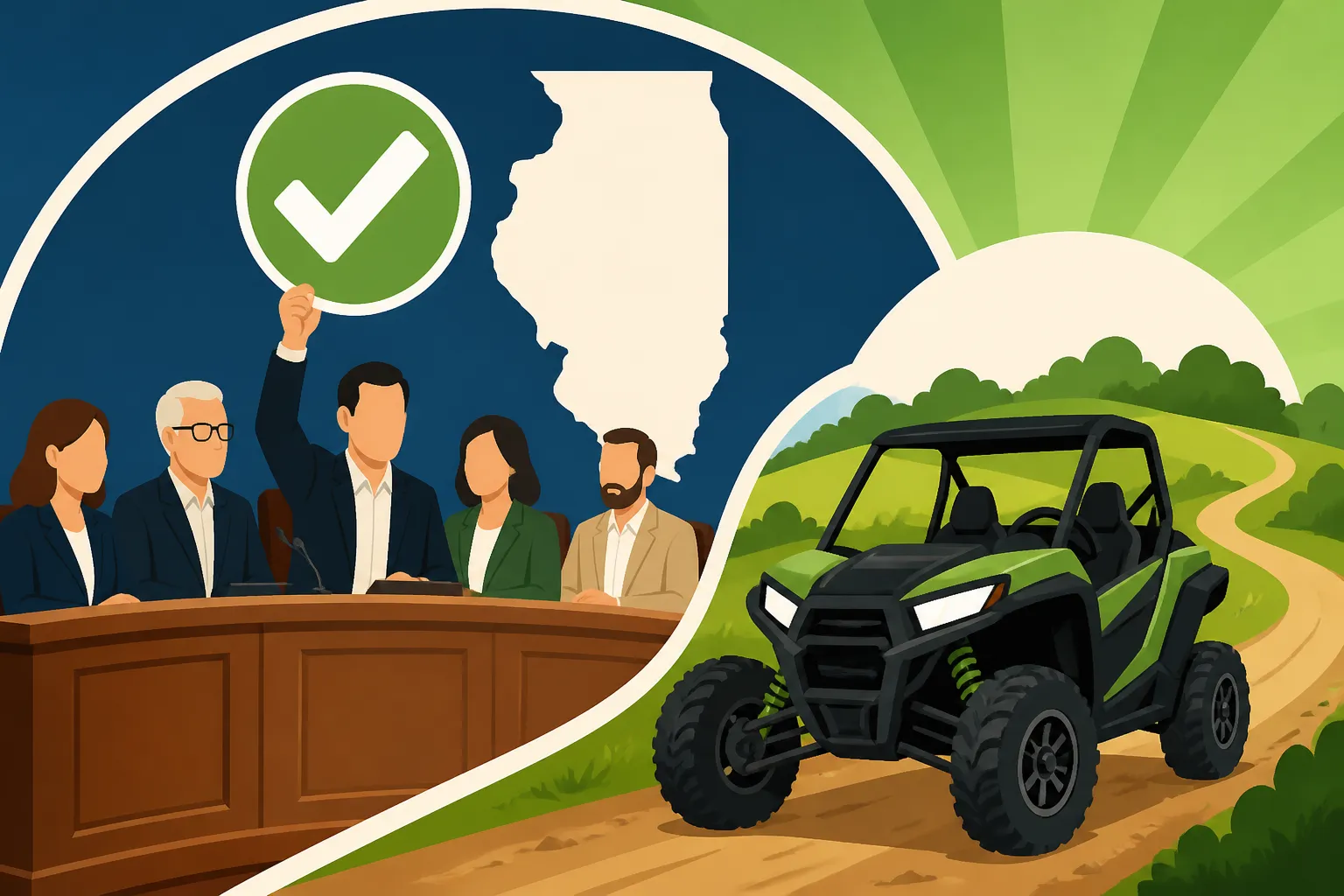
After the draft resolution has been refined and debated, it moves to a formal vote by the full county board. Depending on the county's rules, this might require a simple majority or a supermajority vote. If the resolution passes, it officially becomes law, although there's usually a short waiting period before it takes effect. This allows time for the public to be informed and for the county to prepare for implementation.
Upon implementation, the county will typically disseminate information about the new rules through its website, local media, and perhaps signage on designated roads. Law enforcement agencies will be briefed on the new regulations to ensure consistent enforcement. Riders will need to understand that even with a resolution, they are subject to all other traffic laws and must operate their UTVs safely and responsibly.
The passage of a resolution is a significant step, but it's just the beginning. Ongoing monitoring and public feedback often lead to future amendments or refinements as the county gains experience with UTVs on its roads.
What a County Resolution Means for Riders
When your county board passes a UTV resolution, it's a huge win for local riders, but it comes with responsibilities and specific rules you absolutely need to follow. It’s not a blank check to ride anywhere; it’s a conditional privilege that requires careful adherence to the new local laws.
This means putting in the effort to understand the specifics of your county’s resolution, not just assuming it's the same as a neighboring county or a village you’ve heard about. Disregarding these local rules can quickly lead to citations and even the loss of riding privileges.
| Aspect | Typical County Resolution Approach | Rider Responsibility |
|---|---|---|
| Road Access | Designates specific county roads (often 35 mph or less) and restricts others (e.g., state highways). | Know the Map: Identify and stick to designated roads. Avoid restricted areas like interstates or tollways. |
| Permits | May require an annual county permit, application process, and fee. | Obtain Permit: Apply, pay fees, and display permit as required. Keep a copy with you. |
| Equipment | Mandates specific safety gear beyond manufacturer standards (e.g., mirrors, signals, SMV emblem). | Equip Machine: Ensure your UTV has all required equipment. Consider upgrading with reliable parts from brands like SuperATV for durability and compliance. |
| Licensing/Age | Typically aligns with state law for driver's license and age for operation. | Be Qualified: Hold a valid driver's license. Ensure any youth riders meet age/supervision requirements. |
| Insurance | Requires proof of minimum liability insurance. | Carry Proof: Keep your insurance card or proof of coverage with you at all times. |
| Hours of Operation | May specify hours (e.g., no night riding) or general traffic laws (e.g., lights after dark). | Adhere to Schedule: Observe any time restrictions. Ensure your headlights and tail lights are functional when required. |
| Penalties | Defines fines, potential impoundment, or loss of permit for violations. | Comply Fully: Understand the consequences of non-compliance. Operate safely to avoid tickets or accidents. |
Permitting, Equipment, and Age Requirements
One of the first things you'll need to check is whether your county's resolution requires a specific local permit for UTV operation on its roads. Many counties implement a permit system to track UTVs, ensure compliance, and sometimes generate revenue to offset administrative or road maintenance costs. These permits might be annual, require an application process, and involve a fee. You’ll also need to know where and how to display the permit sticker on your machine.
Beyond permitting, there will almost certainly be explicit equipment requirements. While your UTV came from the factory ready for off-road trails, street use demands more. You can expect mandates for things like:
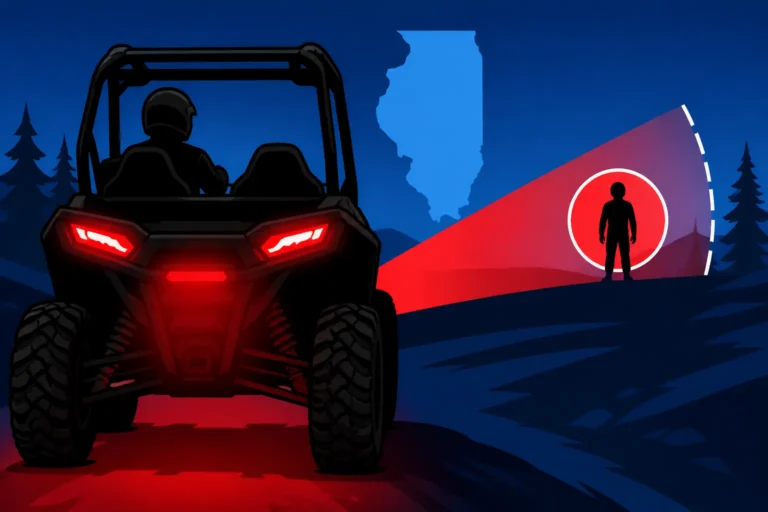
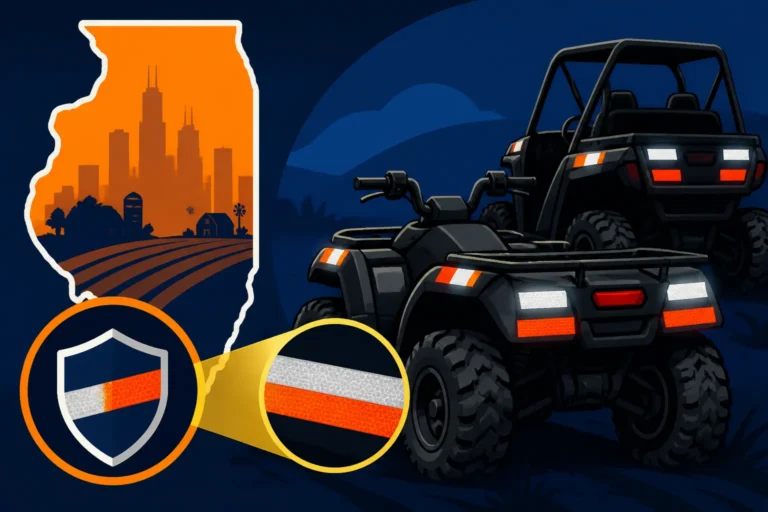
- Working Headlights and Tail Lights: Visible from specific distances (e.g., [Illinois Requires a 500-Foot Headlight] and [Illinois Requires a 100-Foot Tail Lamp]).
- Brake Lights: Fully functional to signal stopping.
- Turn Signals: Both front and rear, to indicate lane changes or turns.
- Rearview Mirror: Essential for visibility in traffic.
- Slow-Moving Vehicle (SMV) Emblem: Required on the rear for vehicles traveling under 25 mph.
For many riders, this means investing in aftermarket accessories. Once a resolution passes, riders might need to ensure their UTVs meet the specific equipment mandates. For instance, if the county requires turn signals or a windshield, a visit to SuperATV or a similar parts provider might be in order to get your machine fully compliant.
Finally, age and licensing are critical. Illinois generally requires UTV operators on public roads to hold a valid driver's license. County resolutions typically reinforce this, meaning no unlicensed drivers, regardless of age, can operate a UTV on county roads, even if they're allowed off-road on private property. [Illinois Requires a Driver's License] is a non-negotiable for street use.
Limitations and Enforcement
Even with a county resolution, there are always limitations. Most notably, a county resolution cannot override state law regarding state highways, interstates, or tollways. These roads remain off-limits to UTVs, regardless of local county rules. Similarly, the resolution only applies to county roads; you cannot assume it applies to roads in incorporated villages or to township roads without their own specific ordinances.
Enforcement of these resolutions falls to the county sheriff's department and other local law enforcement. Officers will be looking for proper permitting, required safety equipment, adherence to speed limits, and responsible operation. Violations can lead to tickets, fines, and potentially even impoundment of your machine. [Illinois Penalties for Illegal Street Riding] can be substantial, so it’s not something to take lightly.
The county resolution will likely also include provisions for operating hours (e.g., no riding after dark unless specified with proper lighting), passenger limits, and general rules of the road that apply to all vehicles. Remember, when you’re on a county road, you’re part of the regular traffic flow and must yield to other vehicles and follow all traffic signs and signals.
Staying Informed
The UTV landscape in Illinois is always evolving at the local level. What’s allowed today might be amended tomorrow, and new counties might pass resolutions while others choose not to. Therefore, staying informed is paramount.
- Check County Websites: Your county’s official website is the best place to find the full text of any UTV resolutions, maps of designated roads, and permit application forms. Look for sections on county ordinances, public safety, or the county clerk's office.
- Contact Local Authorities: If you have questions, reach out to your county sheriff’s office or the county highway department. They can provide clarification on specific rules or road designations.
- Join Local Riding Groups: Often, local ATV/UTV clubs and online forums are excellent resources for real-time information, discussions about local ordinances, and tips from experienced riders. These groups often advocate for rider rights and keep members updated on rule changes.
Being a responsible and informed rider not only helps you avoid legal trouble but also contributes positively to the community’s perception of UTVs, making it more likely that these riding opportunities will continue and potentially expand in the future.
Disclaimer
This article is for general informational purposes only and does not constitute professional advice. Laws, prices and regulations vary by location and change over time. Consult a qualified professional for guidance on your specific situation.