Illinois Rules for a Golf Cart on a Street
It's a common dream: hopping into your golf cart to zip down the street for a quick errand, to visit a neighbor, or just to cruise around the subdivision on a sunny afternoon. But then the questions start bubbling up. Is this even legal? Do I need a license? What about lights? The confusion around street-legal golf carts in Illinois is real, and it often stops people from enjoying their machines the way they envision. This guide is here to untangle the complexities of Illinois law and local ordinances, helping you understand exactly what it takes to get your golf cart legally on neighborhood streets.
The Foundation: Why Illinois Law Starts with a "No"
When you first start looking into driving a golf cart on public roads in Illinois, it can feel like you're hitting a brick wall. The Illinois Vehicle Code, the overarching state law that governs all vehicles, generally views golf carts as "non-highway vehicles." This means, by default, they are not designed or permitted for use on streets, highways, or any other public thoroughfare. It's a blanket prohibition that covers a lot of ground, including ATVs and UTVs, and it's intended to maintain safety on roads that are primarily designed for cars, trucks, and motorcycles. The state's position is rooted in the idea that these machines lack many of the safety features and operational characteristics necessary for safe integration into mainstream traffic. This initial "no" can be frustrating for golf cart owners who simply want to enjoy their machines closer to home, but understanding this baseline is crucial before we explore the exceptions.
Understanding Non-Highway Vehicle Classifications
So, what exactly is a golf cart in the eyes of Illinois law, and how does it compare to other off-road machines? Generally, a golf cart is defined by its primary design purpose: transporting golfers and their equipment around a golf course. This inherently means they aren't built for high speeds, crash protection, or prolonged road use. They typically have smaller engines or electric motors, a lighter frame, and minimal safety features compared to a traditional automobile.
While ATVs (All-Terrain Vehicles) and UTVs (Utility Terrain Vehicles, often called side-by-sides) are also classified as non-highway vehicles, they differ in their intended use and capabilities. ATVs are usually single-rider machines for off-road recreation, while UTVs are designed for utility tasks and recreational riding, often with multiple passengers and cargo capacity. Although their classifications differ, the fundamental state law that generally prohibits them from public roads is similar. The key takeaway here is that if a vehicle wasn't explicitly designed and manufactured to meet federal motor vehicle safety standards for road use, Illinois starts with the assumption it shouldn't be on the road. This distinction is why you can't just drive your golf cart off the course and onto the street without addressing further regulations.
The State's Stance Versus Local Control
Here's where the story takes a turn, offering a glimmer of hope for golf cart enthusiasts. While the state of Illinois generally says "no," it also provides a pathway for local municipalities to say "yes." This is a critical nuance in Illinois law. [Illinois Law Starts by Banning Street Riding], but it wisely delegates authority to local units of government—cities, villages, and even some townships—to assess their own unique traffic patterns, road infrastructure, and community needs. These local bodies can, through an official ordinance or resolution, create specific exceptions to the statewide prohibition, allowing golf carts on certain public roads within their jurisdiction.
This means that while the Illinois Department of Natural Resources (DNR) or the Secretary of State's office won't issue a "street legal" registration for your golf cart, your local village hall might be the place to go. This system acknowledges that what works for a bustling urban center like Chicago certainly won't work for a quiet, rural town with minimal traffic. It empowers local leaders to make decisions that best fit their community, provided they follow certain guidelines laid out in state statutes regarding equipment and safety. However, it also means that the rules can be dramatically different from one town to the next, which is a major source of confusion for riders.
How Local Ordinances Open Up Street Access
The good news is that many Illinois communities have recognized the desire of their residents to use golf carts for local transportation and have, indeed, passed ordinances to allow them. This local control is the primary mechanism through which golf carts become street-legal in specific areas. It’s not a free-for-all, however; these ordinances come with very specific conditions and requirements designed to ensure safety for everyone on the road. When a [Illinois Municipalities That Pass Ordinances], they aren't just giving a blanket permission; they are establishing a regulated framework.
The process typically involves a village or city council reviewing the potential impact on public safety, traffic flow, and emergency services. They consider factors like the speed limits of their roads, the presence of schools or busy commercial areas, and their capacity to enforce the new rules. Once an ordinance is passed, it almost always includes a detailed list of what modifications your golf cart needs, who can drive it, and under what conditions. This is where the real work begins for golf cart owners.
Common Requirements for Street-Legal Golf Carts
If your local municipality decides to allow golf carts on its streets, you can bet they will have a stringent list of equipment and operational requirements. These are usually in place to bring golf carts closer to the safety standards expected of other vehicles on the road. Think of it as a conversion process to make your golf cart more visible and predictable in traffic. For instance, most ordinances will require:
- Headlights and Taillights: Not just any lights, but those that meet specific visibility standards, often similar to those required for other vehicles. This ensures you can see and be seen, especially at dawn, dusk, or in inclement weather.
- Turn Signals: Essential for communicating your intentions to other drivers, just like in a car. Many aftermarket kits, including those from brands like SuperATV, are available to add these to your golf cart.
- Rearview Mirror: To see traffic behind you. Sometimes side mirrors are also required. [Illinois Non-Highway Vehicle Equipment List] typically includes these for other non-highway vehicles, and golf cart ordinances often adopt similar standards.
- Brake Lights: To indicate when you're slowing down or stopping.
- Horn: For signaling and warning.
- Slow-Moving Vehicle (SMV) Emblem: A reflective orange triangle mounted on the rear, signifying that your vehicle travels at speeds of 25 mph or less. This is crucial for driver awareness on roads.
- Seatbelts: For all occupants, in many cases.
- A Valid Driver's License: The operator of the golf cart must hold a valid driver's license. This isn't just a suggestion; it's a legal requirement, as [Illinois Requires a Driver's License] for anyone operating a motor vehicle on public roadways, even one as seemingly innocuous as a golf cart.
- Insurance: Most ordinances will mandate liability insurance coverage, often mirroring the state's minimum requirements for other vehicles. This protects you and others in case of an accident. It's smart to review [Illinois Insurance Minimums for Street Use] to understand the typical coverage amounts required.
Meeting these equipment standards often means investing in aftermarket parts or having a professional shop install them. It's not uncommon for owners to purchase kits that provide a combination of these necessities, making the conversion process a bit simpler.
Navigating Local Permit Processes
Once your golf cart is equipped to meet all the local safety standards, the next step is typically to apply for a permit with your municipality. This isn't a state-issued registration; it's a local permit that acknowledges your golf cart is compliant with their specific ordinance and grants you permission to operate it on designated streets. The process will vary by town, but it usually involves:
- Application Form: You'll need to fill out a form, often available at your village or city hall, providing details about yourself and your golf cart.
- Proof of Ownership and Insurance: You'll likely need to show your golf cart's bill of sale or title, and proof of your liability insurance coverage.
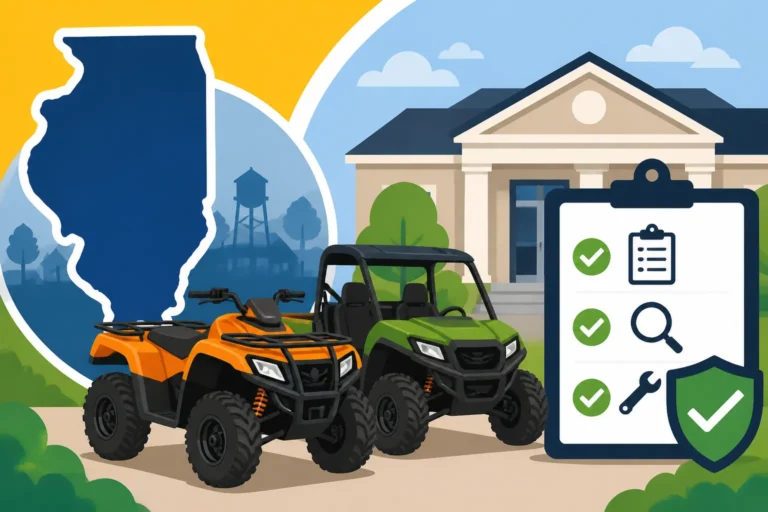
- Inspection: Many towns require an inspection of your golf cart to verify that all the required safety equipment is properly installed and functioning. This is a crucial step to ensure your modifications truly meet the ordinance's standards.
- Permit Fee: There will almost certainly be an annual fee for the permit. These fees vary widely, but they help cover the administrative costs of the program and, in some cases, contribute to local road maintenance or safety initiatives. [Illinois Permit Fees Set by a Town] can give you an idea of the range for similar permits.
- Permit Display: Once approved, you'll receive a sticker or plate that must be prominently displayed on your golf cart, usually on the front or rear, so law enforcement can easily identify it as street-legal within that jurisdiction.
Consider towns like Byron, Winnebago, or Ramsey, which have implemented various recreational vehicle codes. While their specific rules and fees differ, they all share this common theme of local control and permit requirements. For example, the process might be similar to [Applying for a UTV Permit at Village Hall], even if it's for a golf cart. It's vital to remember that a permit from one town has no authority in a neighboring town that hasn't passed its own ordinance. Always check the specific rules for each municipality where you plan to ride.
Limitations and Responsibilities on Public Roads
Even after you've jumped through all the hoops—outfitting your golf cart, getting the proper insurance, securing your local permit—there are still significant limitations and responsibilities you must adhere to when operating it on public roads. A local ordinance doesn't magically turn your golf cart into a car; it just allows it to share specific, restricted road access. Understanding these limitations is not just about avoiding a ticket; it's about ensuring your safety and the safety of others.
The idea is to integrate golf carts into traffic where they pose the least risk, which means they are almost always restricted to slower-speed roads and certain times of day. This is where many riders get into trouble, often assuming more freedom than the ordinance actually grants.
Where You Can (and Can't) Ride
The single most critical limitation for street-legal golf carts is the type of roads they are allowed on. Almost universally, municipalities will restrict golf cart use to streets with speed limits of 35 miles per hour or less. This is a direct safety measure, as golf carts are not designed to travel at higher speeds, nor do they offer the same level of protection as a standard car in a higher-speed collision. [Only Streets Posted 35 mph or Lower Qualify] is a consistent guideline you'll find in most local ordinances.
Furthermore, golf carts are typically prohibited from:
- State Highways: Even if a state highway passes through your town and has a 35 mph section, state law often supersedes local ordinances in this regard. You might be able to cross a state highway at an intersection, but riding on it is usually forbidden. [State Highways May Be Crossed Only at an Intersection] provides the general rule for non-highway vehicles.
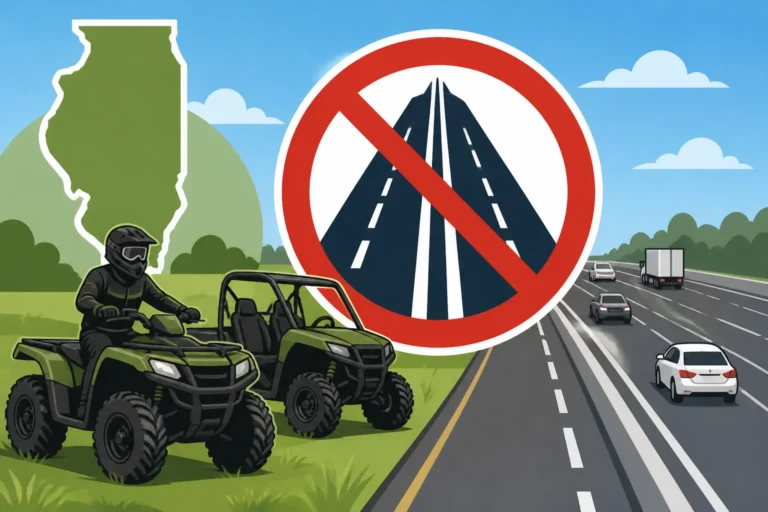
- Interstates and Tollways: These high-speed arteries are absolutely off-limits for golf carts, ATVs, UTVs, and similar vehicles. [Illinois Closes Tollways and Interstates to Every Machine] without exception.
- Busy Arterial Roads: Even if the speed limit is 35 mph or less, a local ordinance might exclude roads that are simply too busy or critical for through traffic.
- After Dark: Many ordinances restrict golf cart operation to daylight hours only, or specify that if operated after dark, they must have exceptionally bright lights and reflective tape to enhance visibility.
Always check the specific language of your local ordinance, as it will explicitly list the roads, or types of roads, where golf cart use is permitted and prohibited. There will likely be a map or a description of the designated streets.
Staying Safe and Legal
Beyond the "where," there's the "how." Operating a golf cart on public roads, even under permit, carries significant responsibilities. Law enforcement officers, whether local police or county sheriffs, have the authority to pull you over if you're not complying with the ordinance.
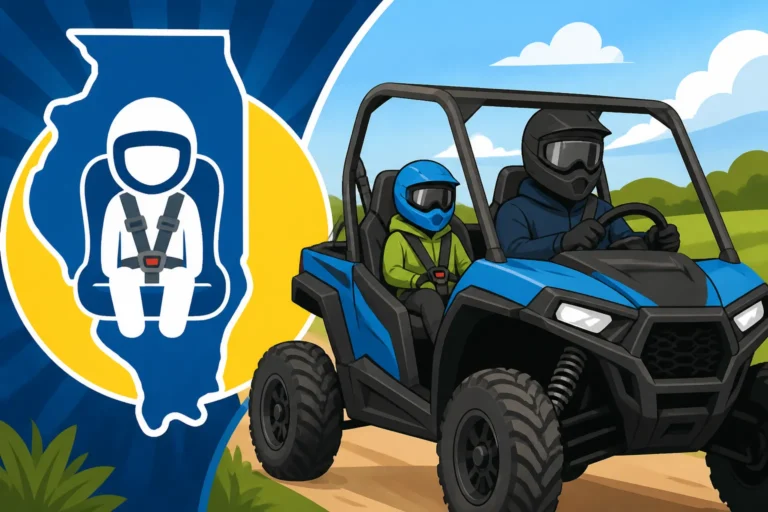
- Adherence to All Rules: This means ensuring all your required equipment is working, your permit is displayed, you have proof of insurance, and you're driving within the posted speed limits. Passengers must also adhere to rules, which may include age limits or the use of seatbelts. For instance, there might be specific guidelines if you have [Illinois Rules for a Child Passenger] on your golf cart.
- Awareness and Caution: Remember that other drivers on the road may not expect a golf cart. Drive defensively, be predictable, and use your signals diligently. Golf carts are slower, smaller, and less protected than cars, making them more vulnerable.
- Penalties for Violations: Ignoring the rules can lead to more than just a warning. Fines can be substantial, and in some cases, your golf cart could even be impounded. [Illinois Penalties for Illegal Street Riding] can be a harsh reality for those who don't take the local rules seriously. It's always cheaper and less stressful to comply than to face a citation and potential court costs.
For those looking to ensure their golf cart meets all necessary requirements, many aftermarket companies offer comprehensive kits. For example, SuperATV offers a range of accessories from turn signal kits to mirrors and windshields, which can help bring your golf cart up to code. However, always double-check with your local authority that the specific products you choose meet their ordinance's technical specifications before purchasing. Ultimately, the goal is to enjoy your golf cart safely and legally, without becoming a nuisance or a hazard on the road.
| Feature / Requirement | General Illinois State Law (No Ordinance) | Typical Local Ordinance (If Permitted) |
|---|---|---|
| Road Access | Generally prohibited on public roads | Permitted on specific local roads |
| Speed Limit | N/A (prohibited) | Roads 35 mph or less |
| Headlights | Not required | Required (specific visibility) |
| Taillights | Not required | Required (specific visibility) |
| Brake Lights | Not required | Required |
| Turn Signals | Not required | Required |
| Rearview Mirror | Not required | Required (sometimes side mirrors too) |
| Horn | Not required | Required |
| SMV Emblem | Not required | Required (on rear) |
| Driver's License | N/A (prohibited) | Required (valid driver's license) |
| Insurance | N/A (prohibited) | Required (liability) |
| Permit | No state permit | Required (local permit/sticker) |
| Roads Prohibited | All public roads | State highways, interstates, busy roads |
| Operating Hours | N/A | Often daylight only, or specific hours |
Disclaimer
This article is for general informational purposes only and does not constitute professional advice. Laws, prices and regulations vary by location and change over time. Consult a qualified professional for guidance on your specific situation.