Illinois Rules for a Visiting Missouri Rider
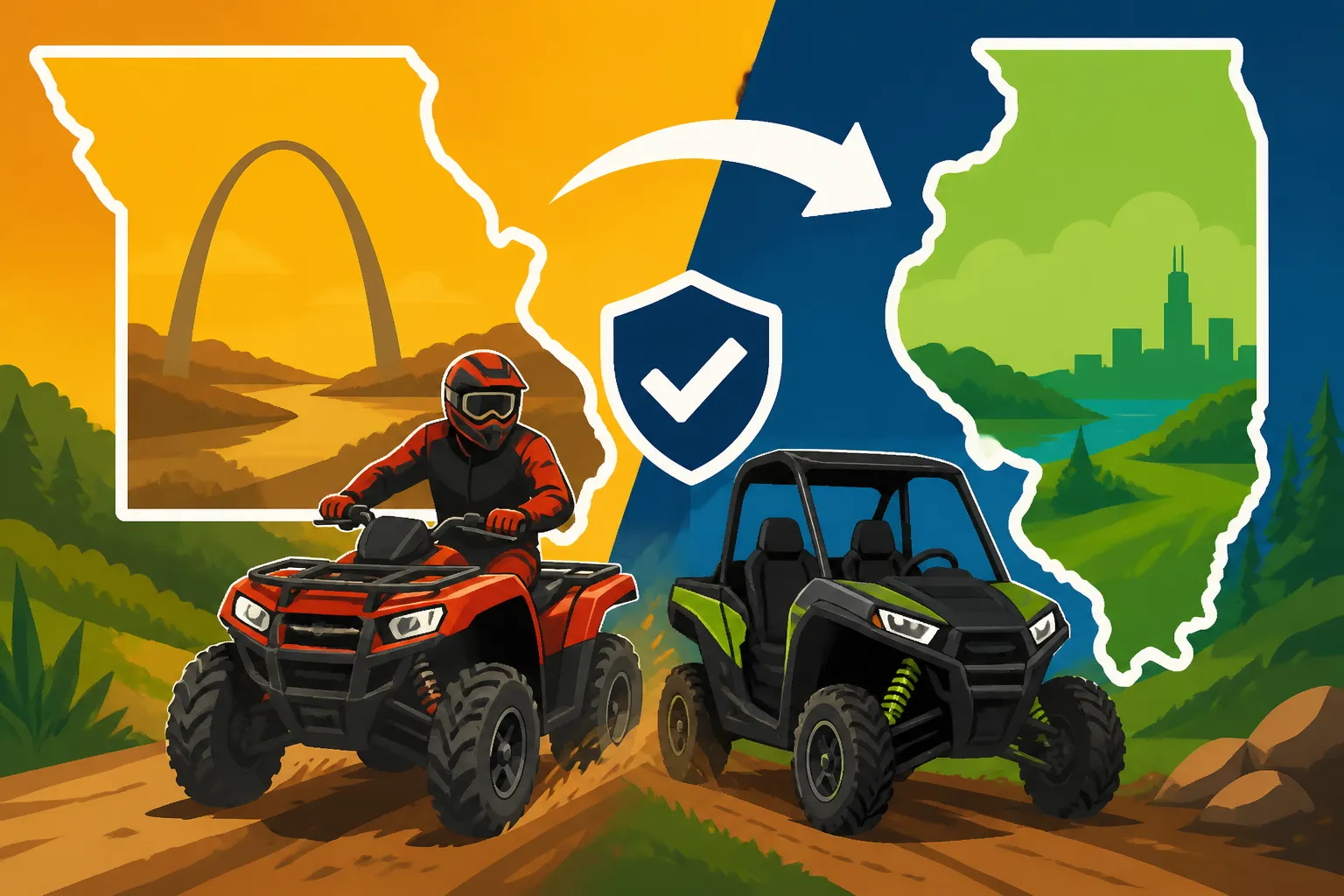
Crossing state lines with your ATV or UTV for a day of riding or even just for transport can feel like navigating a maze, especially when you're coming from Missouri into Illinois. You might assume your home state's registration or title rules will carry over, only to find yourself facing potential fines or confused park rangers. This guide is here to untangle the specific Illinois requirements that Missouri riders need to know before you even hit the border, ensuring your off-road adventures in the Prairie State are smooth, legal, and stress-free.
Understanding Illinois's Fundamental OHV Requirements
One of the biggest surprises for out-of-state riders, particularly those from Missouri where rules can differ significantly, is how Illinois handles off-highway vehicles (OHVs). Illinois doesn't register ATVs or UTVs for road use in the same way you'd register a car or motorcycle. Instead, it focuses on titling for ownership and then uses a system of stamps and decals for permission to ride on public or grant-assisted lands. This distinction is crucial to grasp because it dictates the paperwork and stickers you'll need.
The Illinois Title Requirement for Off-Road Machines
First things first: Illinois requires a title for all off-highway vehicles, including ATVs, UTVs, and dirt bikes, if they were purchased new after January 1, 1998, or if they are changing ownership. This isn't just for Illinois residents; it's a fundamental proof of ownership for the machine itself. If you're bringing your machine from Missouri, you'll need to have a valid title from Missouri or any other state in your name. [Illinois ATV Title Certificates Explained] can shed more light on the specifics of this document.
For many Missouri riders, a title is standard practice, but the emphasis here is that Illinois cares about proof of ownership regardless of where the machine is from. If you're stopped by a conservation officer or park staff, being able to produce this title or a copy of it, proving you lawfully own the machine, is paramount. Without it, you could face delays or questions about the machine's provenance. It’s always best to keep a copy with you, even if the original is stored safely at home.
The Illinois OHV Usage Stamp: A Prerequisite for State Lands
Once you've got your ownership sorted, the next layer of Illinois law for off-road machines is the OHV Usage Stamp. This little sticker is often where out-of-state riders, including those from Missouri, get tripped up. The Illinois Usage Stamp is required for any off-highway vehicle operated on public lands or lands funded by the Illinois OHV Grant Program. This is not tied to your residency; if you ride in Illinois on these lands, you need one. [Illinois OHV Usage Stamp Explained] details its purpose.
Think of the Usage Stamp as your basic permission slip for designated riding areas. Even if you're just passing through or plan to ride for a single weekend, you'll need to purchase this stamp. It's a flat fee, and it renews annually on March 31st, so always double-check the current year. You can often purchase these stamps online through the Illinois Department of Natural Resources (DNR) or from authorized vendors throughout the state. Having this affixed to the forward half of your machine, clearly visible, is non-negotiable at many riding sites.
The Illinois Public Access Decal: Your Key to Grant-Assisted Sites
Beyond the general Usage Stamp, Illinois has another specific sticker: the Public Access Decal. This decal is also required for operation on any OHV trails or areas that have received state grant assistance for acquisition, development, or maintenance. This often includes popular riding parks like Sahara Woods State Fish & Wildlife Area. Here's the kicker for Missouri riders: the price of this decal can differ based on residency, with non-residents typically paying a higher fee.
For a Missouri visitor, you'll need to purchase the non-resident version of the Public Access Decal. It’s important to understand that having an Access Decal cancels the need for a separate Usage Stamp at grant-assisted sites. So, if your primary goal is to ride at a grant site like Sahara Woods, buying the Access Decal covers both bases for that specific location. However, if you plan to ride on other public lands not specifically grant-assisted (which are fewer), you might still need the Usage Stamp. It's a nuanced distinction, and [Why the Two Stickers Exist] highlights the different purposes. Always mount this decal front and center on your machine for easy inspection by officials.
Navigating Illinois's Roads and Trails as a Missouri Visitor
Now that you understand the basic paperwork and stickers, let's talk about where you can actually ride your ATV or UTV in Illinois as a Missouri visitor. The rules vary wildly depending on whether you're looking at public trails, private parks, or the surprisingly complex world of "street legal" UTVs. What might be acceptable in some parts of Missouri might be strictly forbidden in Illinois, so paying close attention to local laws is key.
Street Legal UTVs: A Local Ordinance Labyrinth
This is perhaps the biggest area of confusion and potential trouble for Missouri riders, especially those with UTVs that they might consider "street legal" back home. Illinois law starts with a blanket ban on OHVs being ridden on public roads, streets, and highways. However, the state allows local units of government—villages, cities, townships, and counties—to pass their own ordinances allowing UTVs on certain designated roads. This means there is no statewide "street legal" designation for UTVs. [Can You Drive a UTV on the Road in Illinois?] explains this in more detail.
For a Missouri rider, this means you absolutely cannot assume your UTV is street legal in Illinois just because it's set up with lights, mirrors, and turn signals, even if those modifications came from a reputable aftermarket provider like SuperATV. You must research the specific local ordinances for every single town, village, or county road you intend to ride on. Many towns that allow UTVs require permits, inspections, specific equipment beyond basic street-legal kits (like a slow-moving vehicle emblem), and proof of insurance. [Illinois UTV Street Legal Rules by Town] is an invaluable resource for this research. Without checking, you risk serious penalties, including fines and having your machine impounded.
Required Equipment for Street-Legal UUTV (Where Permitted by Local Ordinance)
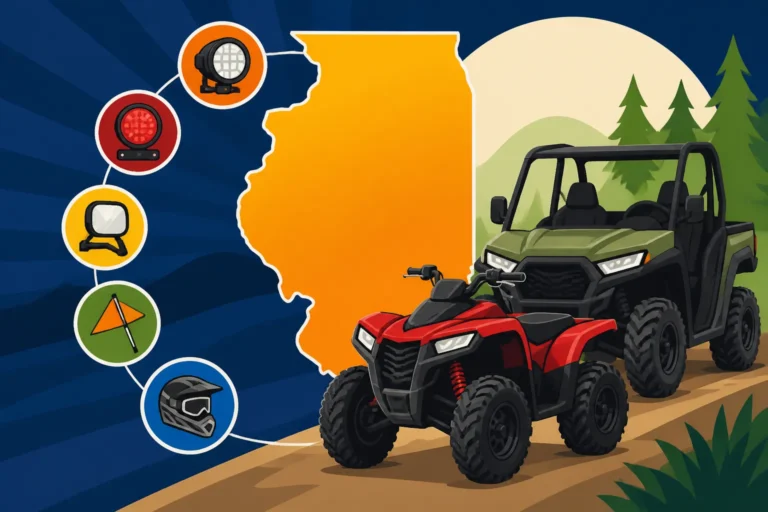
| Requirement | Description |
|---|---|
| Driver's License | You must possess a valid driver's license from any state to operate a UTV on public roads. |
| Insurance | Minimum liability insurance (25/50/20 coverage) is typically required, similar to cars. Carry proof in your UTV. |
| Headlights | Must emit a white light visible from at least 500 feet to the front. |
| Tail Lamp | Must emit a red light visible from at least 100 feet to the rear. |
| Brake Lights | Functioning brake lights are mandatory. |
| Turn Signals | Front and rear turn signals are required. |
| Rearview Mirror | At least one rearview mirror, providing a clear view of the highway behind the UTV. Many riders choose wider mirrors from SuperATV for better visibility. |
| Red Reflectors | Two red reflectors, one on each side of the rear, visible from 100 to 600 feet when illuminated. |
| Slow-Moving Vehicle Emblem | A triangular orange and red emblem, visible from the rear, required when operating on roads where allowed. |
| Local Permit | Many municipalities that allow UTVs require a specific local permit or sticker, often issued after an inspection. |
Always verify these requirements with the specific local authority whose roads you plan to use.
Riding Designated Off-Road Trails and Parks
For most Missouri riders looking for pure trail riding, focusing on Illinois's designated off-road parks and grant-assisted sites is the safest and most straightforward approach. Illinois has a limited number of public off-road riding areas, with Sahara Woods being the only state-run OHV park. There are also several private parks and club-run areas that welcome riders. [Illinois ATV Trails: Where You Can Actually Ride] provides a good overview.
When visiting these sites, your Illinois Usage Stamp or Public Access Decal is paramount. [Illinois Sahara Woods Permits] provides details on booking and requirements for the state park. Many private parks will also require you to sign waivers, adhere to specific rules (like helmet use, age restrictions, or spark arrestor requirements), and pay a daily or weekend fee. Some parks may even have specific equipment requirements or recommendations, and aftermarket upgrades like those from SuperATV for suspension, protection, or lighting can enhance your experience and meet certain park requirements. Always check the park's website or call ahead for their specific rules, hours, and any necessary reservations, especially on holiday weekends when permits can sell out quickly.
Crossing State Lines with Your Machine: What to Expect at the Gate
So, you've got your Missouri title, you've purchased your Illinois Usage Stamp or Public Access Decal, and you know where you plan to ride. What happens when you actually arrive at an Illinois riding area, especially a public or grant-assisted one? Expect to be checked. Conservation officers and park staff are diligent about ensuring compliance.
They will likely ask to see proof of ownership (your title), verify your Illinois Usage Stamp or Public Access Decal is properly affixed and current, and may even do a quick visual inspection of your machine. This could include checking for spark arrestors, sound levels, or general safety. For UTVs, if you're attempting to ride on local roads, they will verify you have the necessary local permit and required equipment. [What a Conservation Officer Can Ask to See] outlines their authority. Don't be surprised; they are simply enforcing Illinois law and ensuring a safe riding environment for everyone. Having all your paperwork in order and readily accessible, perhaps in a waterproof bag, will make this process quick and painless.
Avoiding Common Pitfalls and Penalties for Out-of-State Riders
It's easy to make assumptions when you're riding in a different state, especially one right next door. However, Illinois's OHV laws have distinct differences from Missouri's, and misunderstanding them can lead to frustrating and expensive consequences. Being prepared and informed is your best defense against penalties.
Why Your Missouri Registration Doesn't Translate
Many states, including Missouri, have some form of ATV or UTV registration that might involve a sticker or plate. It's a common misconception among visitors that their valid Missouri registration will be recognized in Illinois. Unfortunately, this is rarely the case for the specific purposes Illinois requires for riding on public lands. [Do You Need to Register an ATV in Illinois?] explains that Illinois does not "register" ATVs or UTVs in the typical sense for road use, but rather requires titles for ownership and usage stamps/decals for access to specific riding areas.
So, while your Missouri title proves ownership, your Missouri registration sticker or plate doesn't grant you permission to ride Illinois public trails or act as a substitute for the Illinois Usage Stamp or Public Access Decal. You absolutely must acquire the appropriate Illinois sticker for the type of riding you intend to do. Attempting to argue that your out-of-state registration should suffice will not work and may only escalate the situation with law enforcement. The rules are clear: if you're riding in Illinois on designated lands, you need Illinois-specific permits.
Common Violations and Their Consequences
Ignorance of the law is no excuse, and Illinois takes its OHV regulations seriously. For Missouri riders, the most common violations often stem from not having the correct Illinois permits or attempting to ride a UTV on roads without proper local authorization.
- No Usage Stamp or Access Decal: If you're caught riding on public or grant-assisted trails without the required Illinois sticker, you could face fines. [Illinois Penalties for No Stamp] and [Illinois Penalties for No Decal] detail these consequences, which can quickly add up and ruin your riding trip. Park staff and conservation officers regularly patrol these areas, and they know what to look for.
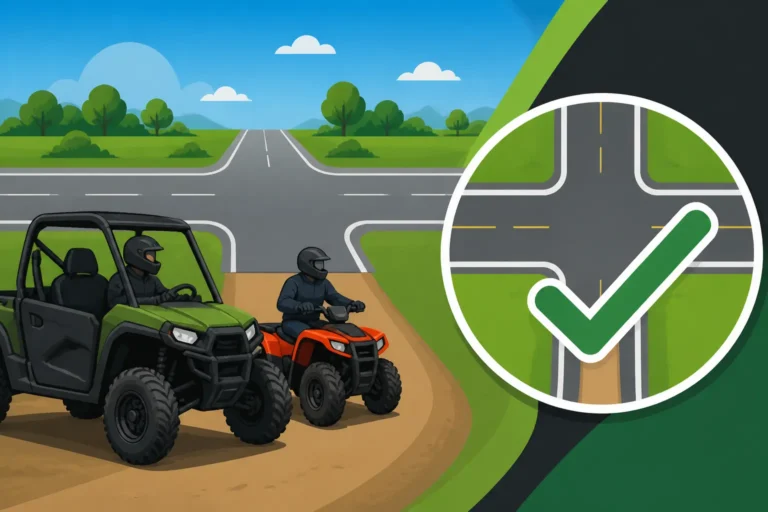
- Illegal Street Riding: This is a particularly risky area. If you're pulled over while operating your UTV on an Illinois road that does not have a specific local ordinance allowing it, or if you don't have the necessary local permit and equipment, the penalties can be severe. This can include significant fines, court costs, and potentially having your machine impounded. [Illinois Penalties for Illegal Street Riding] paints a clear picture of the risks. Even crossing a state highway without following strict intersection crossing rules could lead to a ticket.
- Trespassing: Always ensure you have permission to ride on private land. Whether you're riding a powerful SuperATV-equipped machine or a stock quad, private property is off-limits without explicit consent. [Illinois Trespass Penalties for Riders] can be harsh, including fines and potential impoundment of your machine. Stick to designated trails or private land where you have written permission.
Planning Ahead for a Smooth Illinois Riding Experience
The key to a hassle-free riding trip from Missouri to Illinois is meticulous planning. Don't leave things to chance. Before you load up your machine, take these steps:
- Check Your Title: Ensure you have your current title for your ATV or UTV in your name. Have a physical or digital copy readily available.
- Acquire Illinois Permits: Determine where you plan to ride. If it’s a grant-assisted site like Sahara Woods, purchase the non-resident [Illinois Public Access Decal]. If it’s other public lands, get the [Illinois OHV Usage Stamp]. Purchase these online well in advance, print your confirmation, and affix the stickers as required.
- Research Local Road Ordinances: If you intend to use your UTV on any Illinois roads, identify the specific towns or counties you'll be in and contact their village hall or county clerk's office. Ask about UTV ordinances, permit requirements, equipment mandates, and insurance minimums. Do not assume.
- Inspect Your Machine: Ensure your machine meets all basic safety requirements (working brakes, lights) and any specific requirements for the park or road system you plan to use (e.g., spark arrestor). For UTVs, confirm your SuperATV or other aftermarket parts comply with local street-legal equipment lists where applicable.
- Pack Essential Documents: Carry your driver's license, proof of insurance, a copy of your title, and any Illinois permits or local UTV permits. A paper map of the riding area can also be a lifesaver, as cell service can be spotty in rural Illinois.
By taking these proactive steps, you can transition from a Missouri rider to an informed and legal Illinois off-road enthusiast, ready to enjoy the trails and, where permitted, the roads of the Prairie State without a single worry about legal headaches.
Disclaimer
This article is for general informational purposes only and does not constitute professional advice. Laws, prices and regulations vary by location and change over time. Consult a qualified professional for guidance on your specific situation.