Illinois Rules for Towing a Trailer
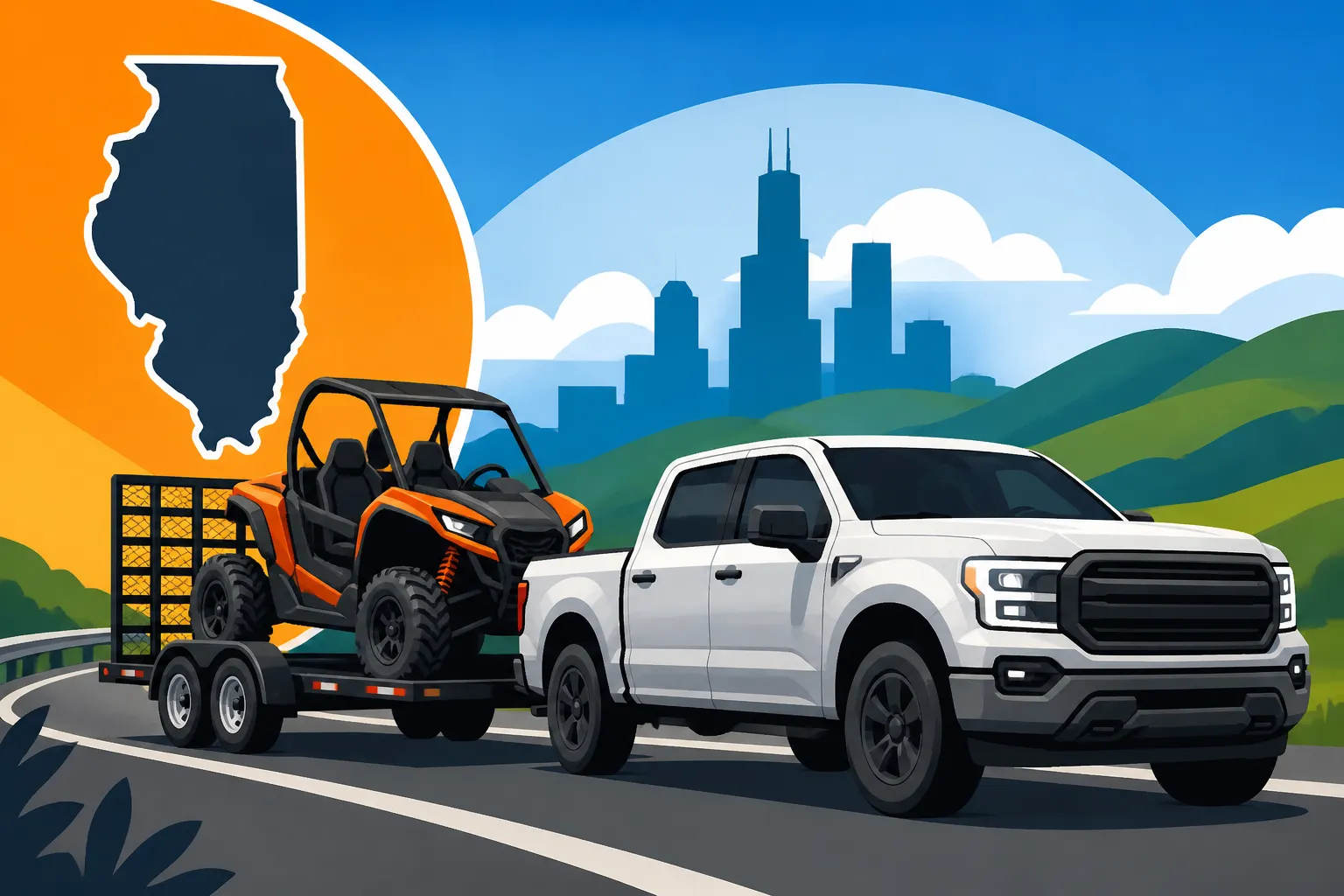
One common question I hear from fellow riders in Illinois is all about towing. You’ve got a side-by-side with a hitch, or maybe you’re thinking of adding one to your ATV, and you want to know what the rules are for hauling a small trailer. It’s a completely valid question because the law in Illinois can feel like a patchwork quilt, and you don’t want to inadvertently break a rule just trying to get some work done or bring extra gear to the trails. This guide will walk you through the various scenarios for towing a trailer with your ATV or UTV in Illinois, clarifying where you can tow, what equipment you might need, and what restrictions you should always keep in mind.
Understanding the Legal Landscape for Towing in Illinois
Let’s be honest, figuring out what you can and can't do with an ATV or UTV in Illinois is rarely straightforward. The state generally considers these machines off-highway vehicles (OHVs), which means their use on public roads is highly restricted unless specifically allowed by a local ordinance. This fundamental distinction impacts everything, especially when you start talking about adding a trailer to the mix.
When you're looking to tow, whether it's a small utility trailer for yard work, a deer cart for hunting season, or even a compact camper for an adventurous weekend, the first thing you need to consider is where you plan to do that towing. The rules will differ dramatically depending on whether you're on your own private property, a designated off-road riding park, or attempting to use public roads. Ignorance of these location-based rules isn't bliss; it's a ticket waiting to happen, or worse, a safety hazard.
Private Land: Your Rules, But Safety First
On your own property, or on private land where you have explicit permission from the landowner, the rules for towing a trailer with your ATV or UTV are generally much more relaxed. Here, the primary concern shifts from legal compliance to practical safety and common sense. If you're using your ATV or UTV as a workhorse on a farm, hauling feed, tools, or even small equipment, you're usually operating within the landowner's discretion. [Illinois Rules for Riding a Farm Lane] covers some of these scenarios.
However, "relaxed" doesn't mean "reckless." You're still responsible for your own safety and the safety of anyone around you. This means ensuring your machine is capable of safely handling the load, that the trailer is in good condition, and that you're operating at appropriate speeds. Overloading your ATV or UTV, especially on uneven terrain, can lead to rollovers, loss of control, and severe accidents. Always consider the manufacturer's recommended towing capacity for your specific machine. Accessories like a heavy-duty hitch receiver, perhaps from a brand like SuperATV, can provide a more secure connection, but they don't magically increase your machine's towing capacity.
Public Roads: A Maze of Local Ordinances
This is where things get truly complicated in Illinois. Generally, ATVs and UTVs are banned from public roads like state highways, county roads, and township roads. However, many individual villages, cities, and counties have started passing ordinances that allow UTVs (and sometimes ATVs) on specific, low-speed public roads within their jurisdiction. [Illinois UTV Street Legal Rules by Town] dives deep into this.
If you are lucky enough to be in an area with such an ordinance, the question then becomes: Does that ordinance specifically allow for towing a trailer? Most ordinances that permit UTVs on public streets focus on the UTV itself and its required equipment (turn signals, mirrors, lights, etc.). They might not explicitly address towing. If an ordinance does permit towing, it will likely come with additional requirements, such as brake lights on the trailer, proper hitching, and limitations on the size or weight of the trailer. You'd need to consult the specific language of your local municipality's ordinance to be absolutely sure. For instance, [Illinois Rules for Riding a Village Street] or [Illinois Rules for Riding a County Road] might hint at this, but you'd need the specific ordinance text.
It's a mistake to assume that if you can drive your UTV on the street, you can automatically tow anything you want. Always check the local rules, because if you're pulled over by local law enforcement, [What a Conservation Officer Can Ask to See] includes proof of compliance with local regulations. Getting a ticket for illegal street riding is one thing; getting one for illegal towing on top of it is another.
Towing for Work vs. Play: Specific Scenarios
The intent behind your towing can also influence how the rules apply, particularly when distinguishing between agricultural or utility work and purely recreational activities.
Agricultural and Farm Use
Illinois law often provides specific exemptions for ATVs and UTVs used for agricultural purposes. If you're towing a load across your own farm ground, or even on certain rural roads directly connecting parts of your farm, you might fall under these exemptions. [Illinois Farm and Livestock Exemption] covers the broad strokes of farm-related use. This is primarily about practical necessity for the operation of a farm.
For instance, [Illinois Rules for Towing a Load Across Your Own Farm Ground] details how farmers can utilize their machines for essential tasks like moving tools, small implements, or harvested goods. In these cases, the emphasis is still on safety – securing your load, operating at safe speeds, and being aware of other traffic (even if limited) – but the strictures of recreational public road use are often eased. You won't typically need a specific "trailer permit" in these situations, but proper lighting on the towed implement may still be required if you're on a public road, even for a short distance.
Recreational Towing at Grant-Assisted Sites and Parks
What about towing at a designated riding park or a grant-assisted site like Sahara Woods? These locations typically have their own set of rules, and they're usually much clearer about what's allowed. For example, [Illinois Grant Site Rules for Riders] will outline acceptable behavior and equipment.
At many off-road parks, small utility trailers, deer carts, or even specific "gear haulers" designed for OHVs might be permitted within designated areas or on certain trails, especially if you're using them to transport camping gear to a remote site or to haul out a successful hunt. However, parks will usually prohibit towing large or unwieldy trailers, especially on tighter, more technical trails, due to safety concerns and potential trail damage. Always check the park's specific rules and regulations before you arrive with a trailer. For instance, [Sahara Woods: Illinois's Only State OHV Park] will have detailed guidelines for what you can bring in. Most parks will not allow you to tow another machine, for instance, unless it’s an emergency recovery with specific equipment.
Essential Equipment for Safe Towing
Regardless of where you're towing, certain equipment is crucial for ensuring a safe and effective operation. Don't skimp on these details; they can prevent accidents and make your towing experience much smoother.
Hitches and Balls
Most utility UTVs come standard with a receiver hitch, making it relatively easy to attach a trailer. Many ATVs, especially larger utility models, also have factory-installed hitches or mounting points for an aftermarket option. Ensure your hitch ball matches the size of your trailer's coupler (most commonly 1 7/8 inch or 2 inch).
You want a robust hitch, especially if you plan to tow frequently or with heavier loads. Brands like SuperATV offer heavy-duty receiver hitches and related accessories designed specifically for the stresses of off-road towing. Make sure the hitch is securely bolted to the frame of your machine, and check those bolts regularly for tightness, especially after a tough tow.
Safety Chains
Safety chains are non-negotiable for any trailer being towed, even on private property. These chains provide a backup connection between your ATV/UTV and the trailer in case the primary hitch connection fails. They should be crossed under the tongue of the trailer and attached to the towing vehicle's frame or hitch receiver, not just loosely looped. This crossing creates a cradle that can prevent the trailer tongue from digging into the ground if it disconnects, helping to maintain control.
Lighting and Signals
If you're towing on any public road where it's legally permitted, your trailer will almost certainly need functioning brake lights, tail lights, and turn signals. Even on private land, having these can greatly enhance safety, especially if you're operating in low light or near other people. Check your trailer's wiring regularly, as off-road use can cause connections to loosen or corrode.
Modern UTVs often have a standard wiring harness for a trailer plug, making it easier to connect trailer lights. For ATVs, or older UTVs, you might need an adapter or an aftermarket wiring kit.
Brakes
For heavier trailers, independent trailer brakes are a significant safety upgrade. While not always legally mandated for smaller trailers, they dramatically reduce the stopping distance and strain on your ATV's or UTV's braking system, especially when going downhill or in emergency situations. Surge brakes, which activate as the tow vehicle slows, or electric brakes, controlled from the cab of a UTV, are common options. Always check the manufacturer's recommendations for your trailer regarding brake systems based on its weight.
Tires and Suspension
Your machine's tires and suspension are under increased stress when towing. Ensure your tires are properly inflated for the load – often, you'll need slightly higher pressure when towing. If your suspension is sagging excessively with a loaded trailer, it could compromise stability and control. Aftermarket springs or air helper bags can improve a UTV's load-carrying capacity, but remember, these enhancements improve handling with a load, they don't increase your machine's maximum towing capacity.
Practical Towing Tips for Illinois Riders
Beyond the legal and equipment considerations, there are several practical tips that can make towing with your ATV or UTV a safer and less stressful experience.
Know Your Limits
Every ATV and UTV has a manufacturer-specified towing capacity. Do not exceed it. Period. Overloading can damage your machine's engine, transmission, and frame, and more importantly, it creates an extremely dangerous situation where you could lose control, especially when braking or turning. Also, consider the tongue weight – the downward force the trailer's tongue exerts on the hitch. Too much or too little tongue weight can make the trailer unstable. Aim for about 10-15% of the total trailer weight on the tongue.
Secure Your Load
A shifting load is a dangerous load. Use straps, tie-downs, and tarps to secure whatever you're hauling in the trailer. Make sure items are evenly distributed to balance the trailer and prevent swaying. Loose items can fly out, creating hazards for others, or shift unexpectedly, causing you to lose control.
Adjust Your Driving Style
Towing significantly changes how your ATV or UTV handles. You'll need more time and distance to accelerate, brake, and turn. Take corners wider to account for the trailer's tracking. Drive slower than you normally would, especially on uneven terrain, hills, or in congested areas. Avoid sudden maneuvers. When backing up, make small steering corrections and remember the trailer will move in the opposite direction of your steering wheel initially. [Illinois Rules for Towing a Trailer] is all about responsible operation.
Pre-Trip Inspection
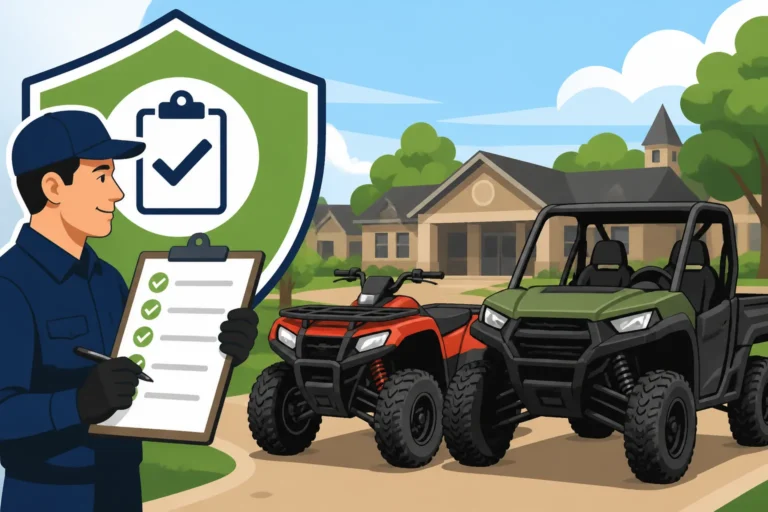
Before every tow, do a quick walk-around. Check tire pressure on both the tow vehicle and the trailer. Ensure the hitch connection is secure and locked. Verify safety chains are properly attached. Test all lights (brakes, turn signals, tail lights). Make sure the load is secured. This simple routine can prevent a lot of headaches down the trail or road.
Visibility
When towing, your rear visibility might be compromised, especially with a wider or taller trailer. Your UTV's mirrors might not be enough. Consider adding aftermarket wide-angle mirrors or even temporarily mounted extended mirrors if you're frequently towing a large trailer. This is particularly important if you're operating on roads where other vehicles are present.
Be Aware of Your Surroundings
Towing requires extra vigilance. Be constantly aware of your surroundings, potential obstacles, and the behavior of other drivers if on public roads. Consider how the trailer affects your overall length, especially when navigating tight turns or obstacles. If you're on a trail, remember that a trailer can get hung up on rocks or roots, or scrape the ground on steep inclines.
| Towing Location | Primary Considerations | Key Equipment | Legal Requirements |
|---|---|---|---|
| Private Land (Farm/Yard) | Safety, machine capacity, load security. | Hitch, ball, safety chains, secure load. | Landowner discretion, common sense. |
| Public Roads (Permitted) | Local ordinance, safety, other traffic. | Hitch, ball, safety chains, trailer lights (brake, tail, turn), possibly trailer brakes. | Must comply with specific local ordinance; check for explicit towing provisions. |
| Designated Riding Park | Park rules, trail conditions, safety. | Hitch, ball, safety chains, secure load. | Park-specific rules; check before arrival. |
Final Thoughts on Towing a Trailer in Illinois
Towing a trailer with your ATV or UTV in Illinois can be incredibly useful, whether for work or for enhancing your recreational adventures. However, it's crucial to approach it with a clear understanding of the rules and a strong commitment to safety. Always prioritize knowing where you can legally tow, equipping your machine and trailer properly, and adjusting your driving to accommodate the added weight and length. Don't be afraid to ask questions at your local village hall about their specific ordinances, or to park staff if you're at a riding site. Being informed is your best defense against accidents and unnecessary fines.
Disclaimer
This article is for general informational purposes only and does not constitute professional advice. Laws, prices and regulations vary by location and change over time. Consult a qualified professional for guidance on your specific situation.