Illinois Closes Tollways and Interstates to Every Machine
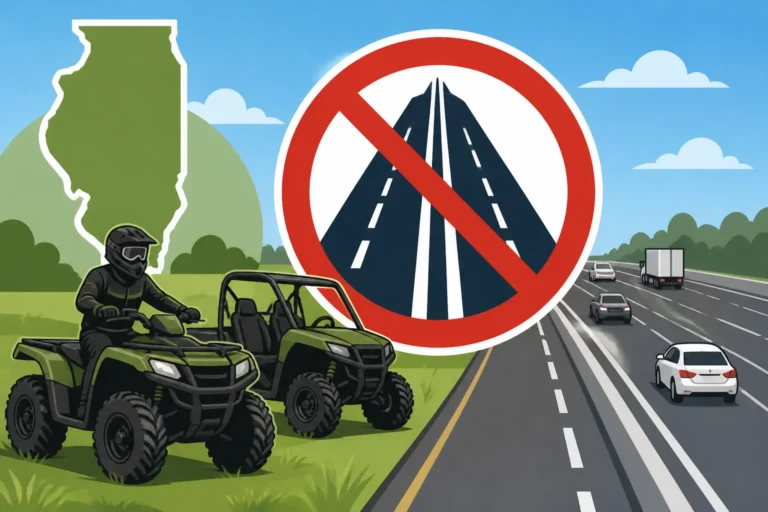
It’s a scene many of us know all too well: you’re trailering your beloved ATV or UTV downstate for a weekend of riding, or perhaps just moving it from one part of your property to another, and you briefly consider just hopping on the interstate for a few miles to save time. Or maybe you’ve seen videos from other states where off-road machines cruise down major highways, leading you to wonder if Illinois has similar leniency. The reality, however, is a firm "no." Illinois law explicitly prohibits ATVs and UTVs from traveling on tollways and interstates, treating them as non-highway vehicles incapable of safely integrating with high-speed traffic. This guide will dive deep into why these restrictions exist, what they mean for you, and where you can legally operate your machine on public roads in the Prairie State.
The Blanket Ban: Why Illinois Closes Major Highways to ATVs and UTVs
When you look at a roaring interstate or a busy tollway, it's clear these aren't designed for every type of vehicle. For ATVs and UTVs, the state of Illinois draws a very hard line, classifying them as vehicles not intended for such high-speed, high-volume environments. This isn't just about inconvenience; it's rooted in fundamental safety and operational realities that separate your off-road machine from a passenger car or truck.
Safety Concerns on High-Speed Roads
Let's be honest, your ATV or UTV is built for agility on rough terrain, not for sustained speeds of 60-70 miles per hour on asphalt. The significant speed differential between an off-road machine and highway traffic creates a recipe for disaster. Imagine trying to merge onto I-57 at 30-40 mph when traffic is flowing at double that speed. It’s an incredibly dangerous proposition, not just for the off-road rider but for every other motorist on the road. The sheer mass and momentum of larger vehicles make even a minor collision with an ATV or UTV on an interstate potentially catastrophic.
Furthermore, ATVs and UTVs often have different braking characteristics, suspension systems, and tire types that are optimized for dirt, mud, and rocks, not for quick stops or stable handling on slick pavement at high speeds. The tires, for instance, are typically knobbed and designed for grip off-road, which can actually reduce traction and stability on paved surfaces, especially when wet. The open-air design, while fantastic for trail riding, offers minimal crash protection compared to an enclosed automobile, leaving riders extremely vulnerable in a highway incident.
Federal Regulations and State Adoption
The rules governing vehicle use on major highways, particularly interstates, often have roots in federal guidelines. The Federal Highway Administration (FHWA) sets standards for the National Highway System, which includes interstates. These standards dictate everything from road design to the types of vehicles permitted. Generally, any vehicle operating on these federal-aid highways must meet specific motor vehicle safety standards (FMVSS) that ATVs and UTVs simply are not designed to fulfill.
States like Illinois then adopt and enforce these federal principles, often through their own vehicle codes. The Illinois Vehicle Code explicitly classifies ATVs and UTVs as "non-highway vehicles" or "off-highway vehicles," essentially stating that they are not designed or manufactured for use on public highways. This classification is the lynchpin for why they are excluded from high-speed thoroughfares like interstates and tollways. It’s not an arbitrary decision; it’s a systematic approach to ensure that vehicles on our most critical arteries meet a baseline of safety and performance for the conditions they will encounter.
The Legal Framework for Non-Highway Vehicles
Illinois law, particularly the Illinois Vehicle Code, defines what constitutes an ATV or UTV and then outlines where these machines can and cannot operate. It's a critical distinction. Unlike a passenger car or motorcycle, which are designed and certified for highway use, off-road vehicles are typically exempt from many of the safety and emissions standards required for highway vehicles because their intended use is off-road.
This exemption, while beneficial for manufacturers and riders in the off-road context, means they don't meet the legal requirements to be considered "street legal" for major highways. The law starts by assuming a blanket prohibition on street use for these machines, and then carves out very specific, limited exceptions for local roads, under strict conditions. This foundational understanding that [Illinois Law Starts by Banning Street Riding] is crucial for any owner. The tollways and interstates, being the pinnacle of high-speed public roadways, fall squarely under this initial prohibition.
Understanding "Non-Highway Vehicles" in Illinois Law
To truly grasp why your quad or side-by-side isn't welcome on I-80, we need to dig into how Illinois legally defines these machines and what that definition implies for their operation. It's more than just a name; it’s a classification that dictates every aspect of their permissible use on public land and roads.
What Qualifies as a Non-Highway Vehicle
Illinois law broadly defines "non-highway vehicles" to include a range of machines primarily designed for off-road use. This typically covers:
- All-Terrain Vehicles (ATVs): These are generally machines designed for operation on four tires, with a seat designed to be straddled by the operator, and handlebars for steering.
- Utility Terrain Vehicles (UTVs) or Side-by-Sides (SxS): These vehicles typically have four or more wheels, side-by-side seating for the operator and passengers, and a steering wheel. They often feature roll-over protective structures.
- Dirt Bikes/Off-Highway Motorcycles: While some motorcycles can be street legal, dirt bikes designed solely for off-road use fall under similar restrictions.
The key thread uniting these machines is their primary design and intended purpose: traversing natural terrain, farm fields, or dedicated off-road trails, not cruising down paved highways. This means that even if you've added some fantastic aftermarket parts from a company like SuperATV to enhance performance or utility, such as heavy-duty axles or lift kits, these modifications typically don't magically reclassify your machine as a highway-legal vehicle in the eyes of Illinois law. The core design and manufacturer's intent remain paramount.
The Purpose of ATVs and UTVs (and Why Roads Aren't It)
Think about why you bought your ATV or UTV. Was it to commute to work on the interstate, or to tear up some trails at Sahara Woods, haul feed across your farm, or navigate rough terrain on a hunting trip? For most of us, it's the latter. These machines excel in environments where traditional vehicles struggle: mud, rocky paths, steep inclines, and dense woods. They are engineered for durability, traction, and maneuverability in challenging conditions.
The very features that make them excellent off-roaders are what make them ill-suited for highways. Their often compact size, high ground clearance, and specialized suspension for absorbing bumps and jumps are not conducive to stable, predictable handling at high speeds on smooth pavement. They lack the extensive crumple zones, advanced airbag systems, and robust lighting packages that highway vehicles require. Attempting to force them into a role they weren't designed for not only puts the rider at risk but also introduces unpredictable elements into the flow of highway traffic.
Equipment Differences That Matter
When you compare your side-by-side to your everyday pickup truck, the equipment differences become glaringly obvious, and these differences are precisely why major roads are off-limits. Highway vehicles are required to have a specific suite of safety and operational equipment to be road-legal. While many UTVs can be equipped with turn signals, mirrors, and even windshields, these additions don't automatically make them compliant for interstates.
Consider braking systems, for instance. Highway vehicles have complex anti-lock braking systems (ABS) designed for consistent performance on varied paved surfaces. ATV/UTV brakes are typically simpler, designed for off-road stopping power and often less concerned with maintaining steering control during hard braking on asphalt. Then there are the tires, as mentioned earlier. Highway tires have specific tread patterns and rubber compounds for optimal grip and longevity on pavement; off-road tires prioritize traction on loose surfaces. Even lights, while often bright on a UTV, might not meet the precise photometric requirements for highway use, such as specific beam patterns for headlights or visibility distances for taillights.
For instance, while a company like SuperATV offers fantastic LED light bars and accessory mirrors that dramatically improve visibility on the trail or in the fields, these don't necessarily equate to meeting Department of Transportation (DOT) standards for highway use that a standard passenger vehicle must meet. The absence of these fundamental design and equipment features is why [Illinois Closes Tollways and Interstates to Every Machine].
Navigating Illinois Roads: Where ATVs and UTVs Can Go (and How)
While the dream of cruising your side-by-side down I-55 is firmly squashed, it doesn’t mean your off-road machine is entirely confined to private land or dedicated trails. Illinois law does provide avenues for ATVs and UTVs to use certain public roads, but these are specific, locally-determined, and come with strict conditions. It’s crucial to understand these distinctions to avoid fines and ensure you're riding legally.
The Power of Local Ordinances
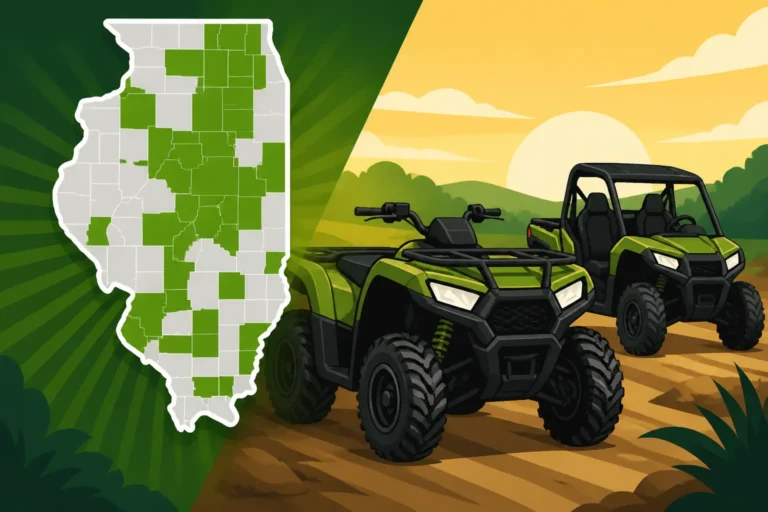
This is where things get interesting for Illinois riders. While the state broadly prohibits ATVs and UTVs on public roads, it grants local units of government—cities, villages, townships, and counties—the authority to pass ordinances that allow these machines on specific local roads under their jurisdiction. This means what's legal in one town might be strictly forbidden in the next.
Before you even think about taking your machine onto a local street, you must check with the specific municipality or county. Many towns require a special permit, an inspection, and proof of insurance before you can ride their streets. For example, some villages might allow UTVs on streets with speed limits of 35 mph or less, provided the vehicle has proper lighting, mirrors, and is insured. Others may have stricter rules or simply choose not to allow them at all. This is why [Illinois UTV Street Legal Rules by Town] vary so much, and why due diligence is absolutely essential. You'll need to research your specific town's ordinance, which is usually available on their municipal website or at the village hall.
Crossing State Highways: Specific Rules Apply
Even if your local village allows you to ride your UTV on its streets, you still can’t simply drive across a state highway as if it were another local road. Illinois law is very clear: ATVs and UTVs may cross a state highway only at an intersection, and only after coming to a complete stop and yielding to all traffic. This is a quick traverse from one side of the state highway to the other, not riding alongside traffic for any distance.
This rule is vital for safety, as state highways often carry higher traffic volumes and speeds than local roads. You can't merge onto a state highway, travel for a block, and then turn off. It's strictly about moving from one permitted local road to another, directly across the state route. The moment you deviate from a direct crossing, you are in violation. Keep in mind that this crossing privilege does not extend to interstates or tollways under any circumstances.
Permitted Uses Beyond Designated Roads
Beyond the limited local road access, ATVs and UTVs have other legal applications in Illinois:
- Private Property: You can always ride on your own private property, or on someone else's property with their express permission. This is often where most recreational riding takes place.
- Farm Use Exemptions: Farmers often rely on ATVs and UTVs for agricultural work. Illinois law provides certain exemptions for farm use, allowing these machines to be operated on farm property, and in some cases, to briefly traverse public roads adjacent to farm fields for agricultural purposes. However, these are strictly defined exemptions related to farming operations, not general recreational riding. You might want to check out [Illinois Machines Used Only on a Farm] for more details.
- Grant-Assisted Riding Areas: Illinois has designated off-road riding parks, often funded in part by grant money from the Illinois Department of Natural Resources (IDNR). These are places like Sahara Woods, where you can ride legally on marked trails. To ride at these sites, you'll generally need an [Illinois Public Access Decal] and potentially an [Illinois OHV Usage Stamp], depending on the specific site. These parks are purpose-built for off-road recreation and offer a safe, legal environment to enjoy your machine away from highway traffic.
| Road Type | ATV/UTV Use in Illinois | Notes |
|---|---|---|
| Interstates | FORBIDDEN | No exceptions for any off-road machine. High speed, high volume traffic. |
| Tollways | FORBIDDEN | No exceptions. Same safety and legal reasons as interstates. |
| State Highways | Crossing ONLY | Permitted only at intersections, after stopping and yielding to all traffic. Not for travel. |
| County Roads | Permitted (by ordinance) | Only if the specific county has passed an ordinance allowing it. May require permits/insurance. |
| Township Roads | Permitted (by ordinance) | Only if the specific township has passed an ordinance allowing it. May require permits/insurance. |
| Municipal Streets | Permitted (by ordinance) | Only if the specific city/village has passed an ordinance allowing it. Speed limits usually apply. |
| Private Property | Permitted | With landowner permission. Primary use area for most riders. |
| DNR Grant Sites | Permitted | Dedicated off-road trails (e.g., Sahara Woods). Requires specific decals/stamps. |
This table provides a quick reference, but always remember that "permitted (by ordinance)" means you must confirm the local rules and requirements before riding. Never assume.
Consequences of Illegal Highway Riding
Riding your ATV or UTV on forbidden roads, especially major highways like interstates and tollways, isn't just a minor infraction; it carries significant legal, financial, and safety risks. Understanding these consequences is critical to making responsible decisions and avoiding serious trouble. Law enforcement officers, from State Police to local sheriffs, are well aware of the limitations on these vehicles and will not hesitate to enforce the rules.
Penalties for Riding on Restricted Highways
If you're caught riding an ATV or UTV on an Illinois interstate or tollway, you're looking at a range of immediate penalties. The most common is a traffic citation, which will come with a hefty fine. These aren't minor parking tickets; they can easily run into hundreds of dollars, especially when court costs are added. In addition to the fine, you could face points on your driver's license, which can impact your insurance rates.
Beyond the financial hit, there's the very real possibility that your machine could be impounded. This means not only are you stranded, but you'll have to pay impound fees, storage fees, and potentially other administrative costs to get your machine back. This process can be lengthy and expensive, turning a quick illegal ride into a logistical nightmare. In some cases, depending on the specifics of the situation and any other violations, more severe charges could even be considered. Officers have seen too many tragic outcomes from off-road machines on highways to take such violations lightly.
Insurance Implications and Liability
This is perhaps one of the most overlooked, yet critical, consequences of riding illegally. Your ATV or UTV insurance policy is almost certainly written with the understanding that you will be operating the machine within legal parameters. If you're involved in an accident while riding on an interstate or tollway, which are explicitly forbidden roads, your insurance company could deny coverage for damages, injuries, or liability claims.
Imagine a scenario: you decide to try a quick run down the shoulder of I-70. You lose control, hit a guardrail, and cause damage to your UTV and potentially state property. Your comprehensive or collision coverage, which might normally cover such damage, could be nullified because you were operating the vehicle in a manner explicitly prohibited by law and likely outside the terms of your policy. If you were to collide with another vehicle, the liability costs could be staggering, and without your insurance to back you up, you would be personally responsible for all damages and medical expenses. This risk alone should be a powerful deterrent. Carrying [Illinois Insurance Minimums for Street Use] is only relevant if you are legally permitted to operate on those streets, and interstates are never included.
The Ripple Effect: Public Perception and Future Access
Every time an ATV or UTV is seen illegally operating on a major highway, it damages the reputation of the entire off-road riding community. Such incidents create negative public perception, fueling the stereotype that off-road riders are reckless and disregard laws. This isn't just about bad optics; it has tangible consequences for the future of riding access in Illinois.
Efforts to expand legal riding areas, open more local roads, or create new trails often face opposition from residents and lawmakers concerned about safety and noise. When there are highly visible instances of illegal operation, especially on dangerous roads like interstates, it makes it incredibly difficult for advocates to argue for more access. Legislators and local boards become less inclined to consider ordinances or funding for riding parks when they perceive the community as unwilling to follow existing rules. Essentially, a few irresponsible actions can undermine years of work by responsible riders and clubs to promote safe and legal riding. It's a collective responsibility, and respecting the explicit ban on major highways is a crucial part of being a good ambassador for the sport.
Disclaimer
This article is for general informational purposes only and does not constitute professional advice. Laws, prices and regulations vary by location and change over time. Consult a qualified professional for guidance on your specific situation.