Illinois Non-Highway Vehicle Equipment List
Dreaming of taking your ATV or UTV from the muddy trails to the asphalt roads in Illinois can quickly turn into a headache when you start looking into what it actually takes to make your machine street legal. Many riders find themselves utterly bewildered by the mix of state laws and local ordinances, often investing in a side-by-side only to realize it's missing crucial safety equipment. This guide cuts through the confusion, detailing the essential Non-Highway Vehicle equipment list required by the state of Illinois to get you riding on designated roads safely and legally.
Understanding What "Non-Highway Vehicle" Means in Illinois
Before we dive into the nuts and bolts of equipment, it's crucial to grasp what Illinois classifies as a "Non-Highway Vehicle" (NHV) and why this distinction matters so much for street-legal riding. An NHV is essentially a broad category that includes ATVs, UTVs, golf carts, and similar machines that weren't originally designed for public road use but can be operated on certain public roadways if they meet specific criteria. This isn't just a technical term; it's the legal framework that dictates what equipment your machine needs.
The very essence of an NHV is that it's not a regular car or truck. It doesn't have the same safety features or robust construction, and it's generally not designed to handle high speeds or heavy traffic. Because of this inherent difference, the state imposes a distinct set of equipment requirements to bridge the gap between off-road capability and on-road safety. Without meeting these foundational definitions, you're essentially trying to fit a square peg in a round hole when it comes to riding on streets.
The critical takeaway here is that you can't just slap a license plate on your quad and call it a day. The "Non-Highway Vehicle" designation triggers a whole host of safety mandates designed to protect not just you, but other drivers and pedestrians when you operate your machine in a shared traffic environment. Understanding this starting point is key to comprehending why each piece of equipment on the list is required.
What Constitutes a Non-Highway Vehicle
In Illinois, the definition of a Non-Highway Vehicle is quite specific. It encompasses a range of machines, from all-terrain vehicles (ATVs) to utility terrain vehicles (UTVs), and even golf carts, as long as they are not used for agricultural purposes on a highway. The common thread among them is their primary design for off-road use, recreation, or specific tasks, rather than typical highway travel. This classification is the bedrock upon which all the subsequent equipment requirements are built.
Many riders mistakenly assume that if their machine has four wheels and a steering wheel, it's automatically treated like a car for registration and equipment purposes. This simply isn't the case in Illinois. The state recognizes the unique characteristics and limitations of these machines, which is why they fall under a separate category with its own rules. Your local village or county board, when considering ordinances to allow [Illinois UTV Street Legal Rules by Town], will always start with this state-level definition.
Consider a typical side-by-side, often used for hunting, trail riding, or farm work. While incredibly versatile off-road, its open cabin, lack of traditional crumple zones, and specific tire types mean it can't just blend in with sedans and trucks without some modifications. Illinois law mandates these modifications to enhance visibility, control, and signaling capabilities, making it safer for limited street use.
The Legislative Basis for NHV Equipment Rules
The requirements for NHV equipment aren't arbitrary; they are codified in Illinois state law, specifically within the Illinois Vehicle Code. This means they are not suggestions or guidelines but rather legal mandates that must be followed. These laws provide a statewide baseline, ensuring a minimum level of safety regardless of where in Illinois you might be riding your machine.
Understanding that these rules stem from state legislation helps emphasize their importance and the potential consequences of non-compliance. It's not just a matter of avoiding a fine; it's about adhering to laws designed to prevent accidents and ensure everyone's safety on public roads. While local governments have the authority to add more restrictions or requirements, they cannot subtract from these state minimums.
For instance, if your county passes a resolution allowing UTVs on its roads, it will inevitably refer back to the Illinois Vehicle Code for the fundamental equipment list. This ensures consistency across different jurisdictions, even if specific towns add their own nuances like permit fees or operational hours. These foundational state laws are the starting point for any discussion about legal NHV operation on Illinois roads.
Essential Lighting Requirements for Street Legal Operation
When you take your Non-Highway Vehicle onto a public road, visibility becomes paramount. Unlike a trail where you might only encounter other off-road enthusiasts, on a public street, you're sharing space with cars, trucks, cyclists, and pedestrians. This means your machine needs to be seen, and your intentions clearly communicated, both day and night. Illinois law has very specific requirements for lighting that go beyond what might come standard on a purely off-road machine.
Imagine driving your UTV down a country road at dusk. Without proper lighting, you become a ghost, a sudden apparition that other drivers might not see until it's too late. The frustrations many riders face often revolve around ensuring their machine's stock lighting is adequate or figuring out which aftermarket lights actually meet the legal standards. It's not just about having a light, but having the right kind of light in the right place with the right performance.
Many stock ATVs and UTVs come with headlights and taillights designed for illuminating trails, not necessarily for being seen effectively on a public road or for clearly signaling turns. This is where most riders will need to make their first set of modifications, and it's a non-negotiable step for street legality.
Headlights: What's Required for Night Riding
Illinois law is clear: any Non-Highway Vehicle operated on a public roadway must be equipped with at least one headlight that emits a white light visible from a distance of 500 feet. While most modern ATVs and UTVs come with some form of headlight, it's important to ensure yours meets this specific visibility standard, especially if you plan to operate your machine after dark. A dim, trail-oriented light might be perfectly fine for seeing deer in the woods, but it might not cut it for being seen by an oncoming semi-truck.
The crucial aspect here is not just the presence of a light, but its efficacy. You're not merely illuminating your path; you're announcing your presence to everyone else on the road. This becomes particularly vital on unlit rural roads where visibility is naturally low. Investing in brighter, street-legal headlights or upgrading your existing ones can make a significant difference in your safety margin. [Illinois Requires a 500-Foot Headlight] highlights this specific requirement.
When considering upgrades, many riders look to aftermarket LED solutions. Brands like SuperATV offer a range of headlight assemblies and light bars that can significantly enhance your machine's forward illumination and visibility. However, always ensure any aftermarket lighting solution you choose is designed for street use and won't create glare that blinds other drivers. Proper aiming of your headlights is just as important as their brightness to comply with regulations and ensure safe operation for everyone on the road.
Tail Lights and Brake Lights: Making Sure You're Seen From Behind
Equally important to seeing where you're going is ensuring you're seen by those behind you. Illinois mandates that Non-Highway Vehicles have at least one red tail lamp that is visible from a distance of 100 feet to the rear. Additionally, your machine must be equipped with brake lights that illuminate when the brakes are applied. These two components work hand-in-hand to prevent rear-end collisions, particularly when slowing down or stopping unexpectedly.
Think about a sudden stop on a dusty gravel road or a busy village street. Without clear, bright tail and brake lights, the driver behind you might not register your deceleration until it's too late. The tail light provides a constant indicator of your presence, while the brake light provides an immediate, unmistakable signal of your intent to slow or stop. Both are absolutely critical for safe road sharing.
Many stock machines have basic tail lights, but some might lack dedicated brake lights or have systems that aren't as robust as required for street use. This is an area where modifications are often necessary. Ensuring your brake lights are easily visible, even in bright sunlight, and activate reliably every time you touch the pedal is a key safety check. It's not just about avoiding a ticket; it's about giving other drivers the necessary warning to react safely.
Turn Signals: Signaling Your Intent Clearly
Communicating your intentions to other drivers is a fundamental aspect of road safety, and turn signals are the primary tool for this. Illinois law requires that any NHV operated on a roadway must have functioning turn signals. These signals, typically amber in color, must be visible from both the front and the rear, clearly indicating your planned direction of travel. [Illinois Requires Turn Signals] is a direct mandate for this.
Imagine attempting a left turn off a busy county road without turn signals. You'd be relying solely on hand signals, which can be difficult to see, especially from larger vehicles, or impossible to use if you're navigating a rough patch of road. The absence of clear turn signals creates ambiguity and increases the risk of a collision, as other drivers simply won't know if you're turning, going straight, or just meandering.
For many ATVs and UTVs, turn signals are not standard factory equipment, meaning this is almost always an aftermarket addition for street-legal conversion. Fortunately, there are many kits available that integrate seamlessly into most machines. When installing, pay attention to the visibility of the indicators from all angles, ensuring they are not obscured by fenders, racks, or aftermarket accessories. This investment in clear communication is a vital step in making your off-road machine a responsible road user.
Visibility and Safety Gear Beyond Lighting
While proper lighting ensures you can see and be seen, there are other crucial pieces of equipment Illinois mandates to enhance overall visibility and safety when operating a Non-Highway Vehicle on public roads. These elements address different aspects of road awareness, from allowing you to monitor traffic behind you to clearly identifying your machine as a slow-moving vehicle. Overlooking these items can be just as problematic as missing proper lights, leading to tickets and, more importantly, increasing your risk on the road.
The transition from off-road to on-road isn't just about illuminating your path; it's about creating a comprehensive safety profile for your machine. Riders often focus heavily on the obvious (like headlights) but might forget about equally important passive safety features. The frustration here can come from assuming your machine is "good enough" only to find out it's missing critical elements that cost little but make a big difference in safety and compliance.
These additional pieces of equipment serve to make your machine more conspicuous and allow you to react safely to surrounding traffic, reinforcing the idea that NHVs are sharing the road with vehicles that operate at much different speeds and sizes.
Rearview Mirrors: Keeping an Eye on What's Behind
Illinois law mandates that Non-Highway Vehicles operated on roadways must be equipped with at least one rearview mirror. This mirror must be mounted so that it provides the operator with a clear view of the roadway to the rear of the machine. This is a fundamental safety device for any vehicle on the road, allowing you to monitor traffic approaching from behind, especially before changing lanes, turning, or slowing down. [Illinois Requires a Rearview Mirror] is a clear requirement.
Imagine you're driving your UTV on a two-lane road and need to make a left turn. Without a rearview mirror, you'd have to physically turn your head, taking your eyes off the road ahead and potentially off your immediate surroundings. This brief moment of inattention can be extremely dangerous, particularly when operating a machine with a wider turning radius or less agile handling than a car. A properly positioned mirror mitigates this risk significantly.
While many UTVs come with a center rearview mirror, some ATVs or older side-by-sides might not. If your machine is missing one, it's a straightforward addition. Ensure the mirror is securely mounted and provides a wide, unobstructed view. It's not just a legal requirement; it's a crucial tool for situational awareness, allowing you to make safer decisions on the road. A good quality mirror from a reputable accessory manufacturer like SuperATV can make a big difference in how easily you monitor traffic.
Reflectors and Slow-Moving Vehicle Emblems: Adding Passive Visibility
Beyond active lighting, Illinois requires passive visibility enhancements to ensure your NHV is seen, especially in low light conditions or if your electrical system fails. Specifically, your machine must be equipped with red reflectors visible from the rear, and if it operates at speeds below 25 mph, it must display a slow-moving vehicle (SMV) emblem. [Illinois Requires Red Reflectors] and [Illinois Requires a Slow-Moving Vehicle Emblem] are both legal mandates.
The purpose of reflectors is simple yet vital: they catch and reflect light from other vehicles' headlights, making your machine visible even if your taillights are off or malfunctioning. This is a critical backup safety feature, especially on dark, unlit roads where a broken taillight could turn your machine into an invisible hazard. The red reflectors should be mounted securely on the rear of your machine.
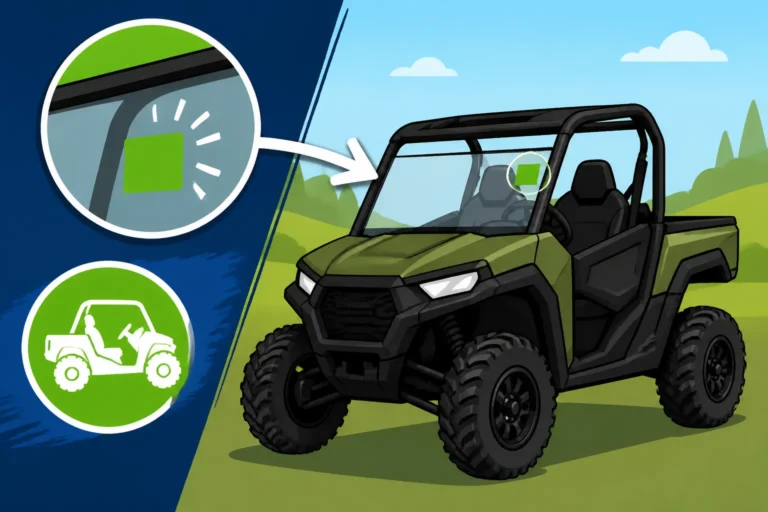
The SMV emblem, a distinctive fluorescent orange triangle with a dark red reflective border, is designed to instantly communicate to other drivers that your vehicle will be moving at significantly slower speeds than typical traffic. This warning allows following drivers to adjust their speed and plan for a safe pass, reducing the risk of a rear-end collision. If your ATV or UTV is primarily used on local roads with speed limits of 35 mph or less, and your machine isn't designed for sustained higher speeds, this emblem is a must. Placing it prominently on the rear of your machine, clear of obstruction, is essential for its effectiveness.
The Role of Your Local Ordinance in Equipment Rules
While Illinois state law sets a foundational list of equipment requirements for Non-Highway Vehicles, it's absolutely critical to understand that local ordinances play a huge role in determining where and how you can actually ride your machine on public roads. The state legislation allows individual cities, villages, townships, and counties to pass their own resolutions or ordinances permitting NHV use on their roads. This means that while state law outlines what equipment you need, local law dictates if and where you can use it.
This dual layer of regulation is often a source of significant frustration for riders. You can have all the state-mandated equipment perfectly installed, but if your specific town hasn't passed an ordinance allowing UTVs on its streets, then you're still out of luck. Conversely, a local ordinance might add further equipment requirements beyond the state minimums, such as specific colored lights for permit holders or additional reflective taping.
It's paramount to investigate your local government's rules before assuming you can ride your machine on the streets. Checking with your village hall, county clerk, or township office is a necessary step, and many municipalities now post their ordinances online.
Local Equipment Additions and Specifics
When a local government unit decides to permit NHVs on its roads, it often comes with additional rules, which can sometimes include further equipment mandates. These aren't always about core safety features like headlights, but might pertain to things like permit stickers, noise limits, or even unique safety measures deemed necessary by that specific community. These additions are designed to address local concerns, such as traffic volume, road conditions, or community aesthetics.
For example, a small village might require a specific permit sticker to be prominently displayed on your machine, proving you've registered with them and paid any associated fees. While not a piece of "equipment" in the traditional sense, it's a mandatory item for legal operation within that jurisdiction. Other towns might enforce stricter noise limits than what the factory machine produces, potentially requiring aftermarket muffler modifications to comply.
It’s not uncommon for municipalities to require annual inspections before issuing or renewing a UTV permit. During these inspections, local officials will check not only for state-mandated equipment but also for any locally required additions. Missing a specific village-issued reflective decal or having a muffler that's just a few decibels too loud could be the reason your permit is denied or your ride is cut short by a local officer.
The Driver's License and Insurance Connection
While not "equipment" for your Non-Highway Vehicle itself, a valid driver's license and proof of liability insurance are absolutely non-negotiable requirements for operating an NHV on any public roadway in Illinois. The state explicitly requires that any person driving an NHV on a public street must possess a valid driver's license. [Illinois Requires a Driver's License] clearly states this. This means that even if your machine is fully equipped and street legal, if the operator isn't licensed, they cannot legally drive it on the road.
Furthermore, just like any other motor vehicle on a public road, your NHV must be covered by liability insurance. Illinois law mandates specific minimum coverage amounts for street use: $25,000 for bodily injury to one person, $50,000 for bodily injury to two or more people, and $20,000 for property damage. [Illinois Requires Insurance for Street Use] is a critical detail that many off-road riders overlook until it's too late.
These requirements underscore the state's intent to treat NHVs as legitimate road users with commensurate responsibilities once they leave private land or designated trails. Getting pulled over without a valid license or proof of insurance can lead to significant fines, penalties, and even impoundment of your machine, regardless of how perfectly equipped it might be otherwise. Always carry your driver's license and proof of insurance with you when operating your NHV on public roads.
Common Misconceptions and Overlooked Details
Navigating the world of Illinois Non-Highway Vehicle rules is fraught with potential misunderstandings. Many riders, with the best intentions, fall prey to common misconceptions or overlook seemingly minor details that can have significant legal ramifications. These aren't necessarily about missing a big piece of equipment, but rather misinterpreting where you can ride, who can ride, or under what conditions. The frustration here often stems from assuming rules based on other states or general vehicle laws, only to find Illinois has its own specific nuances.
It's easy to get caught up in the excitement of making your machine street legal and forget about some of the operational restrictions or specific definitions that impact everyday use. This section aims to clear up some of those common points of confusion that often trip up even experienced riders. Understanding these details can save you from inconvenient stops by law enforcement or dangerous situations on the road.
From helmet rules to crossing major highways, the nuances matter immensely. A simple misunderstanding can quickly turn a fun ride into a costly citation or, worse, a dangerous encounter.
Helmet Rules and Age Requirements
One of the most frequently asked questions, and a common area of misunderstanding, revolves around helmet laws for ATVs and UTVs in Illinois, particularly when riding on public roads. Unlike some other states, Illinois does not have a universal helmet law for all ATV or UTV operators on all roads. However, there are very specific conditions under which helmets are required, especially for younger riders. [Illinois ATV Helmet Rules] provides more detail.
Generally, riders under the age of 18 are required to wear a helmet when operating an ATV or UTV, regardless of where they are riding – including on public roads where allowed. For adult riders (18 and over), helmets are generally not mandated by state law for NHV operation on public roads, unless they are riding on designated state-owned or managed property (like Sahara Woods State OHV Park). However, many private riding parks or local ordinances might have stricter helmet rules for all ages, so always check local regulations.
Despite not being universally mandated for adults, wearing a helmet is always a smart choice when operating an NHV, whether on a trail or a public road. The risk of head injury in an accident remains significant, and a helmet provides crucial protection. Don't let the absence of a universal law lull you into a false sense of security; personal safety should always be a top priority.
Crossing State Highways vs. Riding On Them
A major point of confusion for many NHV operators in Illinois involves state highways. While some local ordinances allow NHVs on village streets, county roads, and township roads, there's a distinct difference when it comes to state-maintained highways. Illinois law generally permits NHVs to cross state highways at intersections, but it strictly prohibits them from riding longitudinally on these highways. [Illinois Crossing Rules at Intersections] clarifies this.
This means you can typically cross a state route (like an Illinois Route, US Route, or even a Business I-55) if you're traveling from one permissible local road to another, provided you do so safely at an intersection. However, you cannot drive your ATV or UTV down a state highway for any distance. The distinction is critical and often overlooked, leading to fines for illegal operation.
The rationale behind this restriction is primarily speed and safety. State highways typically have higher speed limits and greater traffic volumes than local roads, making it unsafe for slower-moving NHVs to share the lane. Furthermore, interstates and tollways are completely off-limits to NHVs under any circumstances. [Illinois Ban Riding on Interstates and Tollways] is a firm rule that must be respected, regardless of your machine's equipment or local permits. Always plan your routes carefully to avoid riding on prohibited roadways.
The Often-Forgotten Noise Limits
While not explicitly an "equipment" item in the same way a headlight is, noise limits are an important operational detail that can indirectly affect your machine's setup and lead to significant frustrations. Illinois law includes provisions regarding excessive noise from motor vehicles, and while specific decibel levels can be hard to enforce roadside, local ordinances often include noise restrictions specifically aimed at NHVs.
Many stock ATVs and UTVs are designed with performance in mind, and while they might meet factory noise standards, modifications like aftermarket exhaust systems can significantly increase their sound output. What might be exhilarating on a private track can become a major nuisance in a residential neighborhood or a quiet rural area. Local governments are highly responsive to noise complaints from residents, and excessive noise can lead to a quick repeal of an NHV ordinance or a direct citation.
If you've modified your exhaust system, it's wise to consider whether it still meets reasonable noise levels, especially if you plan to operate on public roads. Some local ordinances might even require a specific type of muffler or a sound inspection. Being considerate of others in the community by keeping your machine's noise levels in check is not only good neighborly practice but also a smart way to help preserve and expand NHV access on public roads.
Where to Get Your Equipment and Ensure Compliance
Once you have a clear understanding of what Illinois law requires for Non-Highway Vehicle equipment, the next logical step is to source and install these items. This process can range from simple plug-and-play additions to more complex wiring jobs, depending on your machine's current setup and your comfort level with DIY projects. Knowing where to find reliable, compliant parts and how to effectively check your machine's readiness is essential to avoid wasted time, money, and potential legal issues.
Many riders, eager to get on the road, might opt for the cheapest or easiest solution, only to find their equipment doesn't meet the visibility or performance standards. It's frustrating to spend money on parts only to fail a local inspection or get pulled over for non-compliance. Investing in quality, purpose-built components from reputable sources is generally the wisest approach.
This section will guide you through acquiring the necessary gear and ensuring your machine is truly up to snuff before you hit the blacktop. Proper installation and regular checks are just as important as the purchase itself.
Sourcing Quality Aftermarket Parts
For many of the required components, such as turn signals, rearview mirrors, or brighter headlights/taillights, you'll likely be turning to the aftermarket. The good news is that the market for ATV and UTV accessories is robust, with many manufacturers offering conversion kits and individual components designed specifically for street-legal compliance. However, not all aftermarket parts are created equal, and choosing wisely is key.
When looking for parts, prioritize quality and ensure they are designed for the specific purpose of road use. For instance, headlight and taillight assemblies should be clearly marked as DOT (Department of Transportation) compliant if possible, or at least meet the specific visibility ranges mandated by Illinois law (500 feet for headlights, 100 feet for taillights). For turn signals, integrated kits that include a turn signal switch, flasher relay, and front/rear lights are often the easiest to install.
Reputable companies like SuperATV specialize in UTV and ATV accessories, offering a wide array of products including street-legal kits, mirrors, and lighting upgrades. Shopping from well-known brands often provides peace of mind regarding product quality, fitment, and the likelihood of meeting legal standards. Always read product descriptions carefully and consider customer reviews to ensure you're getting suitable components for your machine and for Illinois's specific requirements.
Pre-Ride Checks and Self-Inspection
Even after you've installed all the required equipment, your work isn't quite done. Before every ride on public roads, and certainly before any formal inspection (if your local ordinance requires one), you should perform a thorough pre-ride check. This self-inspection ensures that all your critical safety equipment is functioning correctly and is properly maintained. A broken taillight or a loose mirror can turn a legal ride into an illegal one in an instant.
Your pre-ride checklist should include:
- All Lights: Headlights (high/low beam), taillights, brake lights, and turn signals should all illuminate brightly and consistently. Check that brake lights activate when the pedal is pressed.
- Rearview Mirror: Ensure it's clean, securely mounted, and provides an unobstructed view to the rear.
- Reflectors: Verify that all required red reflectors are present, clean, and securely attached to the rear of the machine.
- Slow-Moving Vehicle Emblem: If required, confirm it's clean, securely mounted, and clearly visible from the rear.
- Horn: Test the horn to ensure it functions.
- Tires: Check tire pressure and inspect for any damage or excessive wear. Ensure they are appropriate for road use (some extreme off-road tires may not be suitable).
- Brakes: Test both front and rear brakes for proper function and stopping power.
- Steering: Check for any excessive play or looseness in the steering system.
This routine check isn't just about avoiding a ticket; it's about your safety and the safety of others. Equipment can fail, wires can come loose, and bulbs can burn out. Taking a few minutes to verify everything is in working order is a small investment for a much safer and legally compliant ride.
The Consequences of Non-Compliance
Operating a Non-Highway Vehicle on Illinois public roads without the legally mandated equipment carries real and significant consequences. It's not just a minor infraction; it's a violation of state traffic laws that can lead to fines, citations, and even more serious repercussions. Many riders underestimate the seriousness of these violations, mistakenly thinking they'll get a warning or a slap on the wrist. The reality is that law enforcement officers, especially those familiar with NHV regulations, are trained to spot non-compliant machines.
The frustrations that come from getting a ticket are immense – the cost, the time, and the potential impact on your driving record. But beyond the legal penalties, there's the even greater consequence of compromised safety. Each piece of required equipment is there for a reason, designed to prevent accidents and protect lives. Riding an under-equipped machine puts you, your passengers, and every other road user at unnecessary risk.
Understanding these potential pitfalls is not about fear-mongering, but about providing a realistic picture of what can happen if you choose to operate your NHV without proper compliance. It emphasizes why the investment in correct equipment is so crucial.
Fines and Citations for Missing Gear
The most immediate and common consequence of operating an NHV on public roads without the required equipment is receiving a traffic citation. These tickets come with fines that can vary depending on the specific violation and the jurisdiction. For instance, a missing rearview mirror might incur a different fine than non-functioning brake lights. These fines can quickly add up, turning what was supposed to be a fun outing into a costly mistake.
Beyond the initial fine, a citation can also mean court costs, and potentially points on your driving record, depending on how the violation is classified. This can lead to increased insurance premiums, which adds another layer of financial burden. Furthermore, if you're cited for a serious equipment deficiency, an officer might deem your machine unsafe for the road and could prevent you from continuing your journey until the issue is rectified, potentially requiring a tow.
The penalties for operating without a valid driver's license or proof of insurance are often far more severe, sometimes involving impoundment of the vehicle and higher fines. It's a harsh reality that many riders only learn after being pulled over, but it's a completely avoidable situation by simply ensuring your machine and your paperwork are in order before you ever turn the key on a public road.
Safety Risks of an Unprepared Machine
While legal penalties are a deterrent, the most profound consequence of non-compliance is the increased safety risk. Every piece of equipment mandated by Illinois law—from headlights and turn signals to mirrors and SMV emblems—serves a vital function in preventing accidents. An under-equipped machine is a rolling hazard, not just to its operator but to everyone else on the road.
Imagine trying to navigate a busy intersection on your UTV at dusk without functioning turn signals. Other drivers won't know your intentions, increasing the likelihood of a collision. Or picture trying to slow down quickly on a road without working brake lights; the driver behind you has no warning and less time to react. These aren't hypothetical scenarios; they are real-world dangers that arise from a lack of proper equipment.
Moreover, if an accident does occur while you're operating an unequipped or non-compliant NHV, the legal and insurance ramifications can be catastrophic. Your insurance company might deny coverage if your machine was not legally equipped for road use, leaving you personally liable for damages and injuries. Investing in and maintaining the proper equipment is not just about following the law; it's about taking personal responsibility for your safety and the safety of others in the community.
Navigating the Process for a Smooth Ride
Getting your Non-Highway Vehicle ready for Illinois roads requires more than just bolting on a few parts; it's a systematic process of understanding the rules, acquiring the right gear, installing it correctly, and then staying informed about local requirements. The path can feel daunting at times, especially with the interplay between state law and local ordinances, but breaking it down into manageable steps makes it much clearer.
One of the biggest frustrations riders encounter is feeling like they're playing a guessing game. "Did I get everything right?" "Will this actually pass inspection?" "Is this specific street legal?" These questions are common, and having a clear roadmap can alleviate much of that anxiety, allowing you to enjoy your machine on the road with confidence.
Ultimately, the goal is to make the process as seamless as possible, ensuring you meet all legal requirements without unnecessary headaches or expenses. A proactive approach, focusing on education and diligent preparation, is your best strategy.
Step-by-Step Equipment Checklist
To help you ensure full compliance, here's a handy checklist of the essential equipment required by Illinois state law for Non-Highway Vehicles to be operated on designated public roadways. Remember, local ordinances may add further requirements, so always check with your specific municipality.
| Equipment Item | Illinois State Requirement | Compliance Notes |
|---|---|---|
| Headlights | At least one white light, visible from 500 feet to the front. | Ensure brightness and aim are appropriate; consider DOT-compliant aftermarket upgrades. |
| Tail Lights | At least one red light, visible from 100 feet to the rear. | Verify consistent illumination; often integrated with brake lights. |
| Brake Lights | Red lights that illuminate upon brake application. | Crucial for signaling deceleration; ensure reliable activation and visibility. |
| Turn Signals | Amber lights, front and rear, indicating direction of turn. | Typically an aftermarket add-on; ensure clear visibility from all angles. |
| Rearview Mirror | At least one mirror providing a clear view of the roadway to the rear. | Essential for situational awareness; securely mount for stability. |
| Red Reflectors | Visible from the rear. | Passive safety feature; often built into taillight assemblies or added as separate stick-ons/bolt-ons. |
| Slow-Moving Vehicle (SMV) Emblem | Required if machine typically operates below 25 mph. | Prominent fluorescent orange triangle with red reflective border, securely mounted on the rear. |
| Horn | A working horn capable of emitting sound audible from 200 feet. | Essential for alerting pedestrians or other drivers to your presence. |
| Fenders | Capable of covering the full width of the tire to prevent debris from being thrown up. | Standard on most machines, but check if aftermarket tires require wider fenders. |
| Brakes | Independent braking system on at least two wheels, capable of stopping the machine effectively. | Regular maintenance is crucial; ensure proper function of both front and rear brakes. |
| Muffler | System in good working order to prevent excessive or unusual noise. | Check local ordinances for specific noise limits; avoid excessively loud aftermarket exhausts. |
| Spark Arrestor | Equipped with an effective spark arrestor if operated on public land where required (e.g., some grant sites or trails). | Important for fire prevention; many stock exhausts include this. |
Beyond this equipment list, remember these crucial operational requirements: a valid driver's license for the operator, proof of liability insurance, and adherence to local ordinances regarding permitted roads and operational hours. Also, understand that [Illinois Helmet Rules on State Areas] might differ from general street riding.
Consulting Local Authorities for Specifics
The importance of consulting your local authorities cannot be overstated. While the state provides the overarching framework for NHV equipment, the power to actually permit NHVs on local streets rests with individual municipalities and counties. This means that a village, city, township, or county board must pass an ordinance specifically allowing NHVs on their roads. Without such an ordinance, even a perfectly equipped machine cannot be legally operated on those public roads.
This is where many riders get tripped up. They diligently outfit their machine with all the state-mandated gear, only to find out their hometown hasn't approved NHV use. Before you spend a dime on conversions, contact your local village hall, county clerk's office, or township office. Ask if there's an existing ordinance for ATVs or UTVs on public roads. If there is, request a copy so you can review any additional requirements, such as permit fees, specific decals, or restricted hours of operation.
If no ordinance exists, you might even consider attending local board meetings to advocate for NHV access, armed with knowledge of state requirements and local safety considerations. Being informed and proactive with your local government is the best way to ensure your efforts to make your machine street legal are not in vain, and that you understand the exact conditions under which you can ride in your specific community.
Resources for Further Information and Compliance
The journey to making your Non-Highway Vehicle street legal in Illinois might seem like a lot to take in, but remember that many others have successfully navigated these waters. There are resources available to help you stay informed and ensure your machine is fully compliant. From official state documents to online communities, leveraging these tools can simplify the process and give you peace of mind.
The frustration of dealing with regulations often comes from feeling isolated or unsure where to turn for accurate information. However, the state of Illinois has official channels for clarity, and a vibrant community of riders often shares valuable real-world experiences and advice. Connecting with these resources is a smart way to stay updated and troubleshoot any challenges you encounter.
Remember, laws and local ordinances can change, so making it a habit to periodically review information from official sources is always a good idea. This proactive approach ensures you remain compliant over time and can enjoy your machine without worry.
Official Illinois State Resources
For the most accurate and up-to-date information on Illinois Non-Highway Vehicle laws, your primary resources should always be official state government publications. The Illinois Department of Natural Resources (IDNR) and the Illinois Secretary of State's office are key departments that oversee aspects of NHV operation, titling, and road rules. While the IDNR primarily handles off-road regulations and grant site access, the Illinois Vehicle Code, which dictates road rules, falls under the Secretary of State's purview.
You can often find relevant sections of the Illinois Vehicle Code online through the Illinois General Assembly website. Searching for sections pertaining to "Non-Highway Vehicles" or specific vehicle types like ATVs and UTVs will lead you to the foundational legal text. This is where you'll find the specific wording for equipment requirements, licensing, and insurance mandates. While legal text can be dense, it provides the definitive answers.
Additionally, local municipal websites (for your village, city, or county) are invaluable for finding specific ordinances that permit and regulate NHV use on local roads. These will often be found in the "Code of Ordinances" section of the government website. These official sources are your best bet for avoiding misinformation and ensuring your compliance is based on current law.
Connecting with Rider Communities and Clubs
Beyond official state resources, connecting with local ATV and UTV rider communities and clubs in Illinois can be an incredibly helpful way to navigate the complexities of street-legal conversions and local ordinances. Experienced riders often have first-hand knowledge of what works, what doesn't, and which towns are more welcoming to NHVs. They can share practical advice on sourcing parts, installation tips, and specific quirks of local regulations.
Many online forums and social media groups are dedicated to Illinois ATV and UTV enthusiasts. These platforms allow you to ask specific questions, share your progress, and learn from the collective experience of hundreds, if not thousands, of other riders. You might find out which brands of aftermarket turn signals are easiest to install on your particular machine, or hear about a local dealer that specializes in street-legal conversions.
Local riding clubs are another excellent resource. Members often organize group rides and are intimately familiar with permissible routes and the nuances of various county and village ordinances. They can offer guidance on everything from finding the right insurance policy to understanding [Illinois Rules for Riding a Village Street]. These communities foster a shared love for the sport and a willingness to help fellow riders stay safe and compliant on both trails and roads.
Disclaimer
This article is for general informational purposes only and does not constitute professional advice. Laws, prices and regulations vary by location and change over time. Consult a qualified professional for guidance on your specific situation.