Where the Stamp Money Goes
It's easy to feel like you're constantly shelling out money for off-road riding in Illinois, between the purchase price, the title, and then these mysterious stickers. Many riders scratch their heads, wondering exactly where their hard-earned cash actually goes once they've bought that Illinois OHV Usage Stamp. This guide is here to unravel that mystery, showing you precisely how your stamp dollars are put to work and how they contribute to the future of off-road riding in the Prairie State.
The Illinois OHV Usage Stamp: What It Is and Why It Matters
Before we dive into the financials, it's crucial to understand what the Illinois OHV Usage Stamp is all about. It's more than just a sticker; it's an investment in your riding future, a commitment to maintaining and expanding the very trails you love to explore.
A Ticket to Ride on Public Lands
At its heart, the Illinois OHV Usage Stamp is your entry ticket to designated public off-highway vehicle riding areas across the state. Think of it as a small toll you pay to help keep those gates open and the trails in prime condition. Without this stamp, your machine isn't legally cleared to traverse these state-supported landscapes. It applies to all types of off-road machines, from your trusty ATV to your powerful UTV or nimble dirt bike, as long as you're planning to ride on public land. It's a fundamental part of responsible riding in Illinois, ensuring that riders contribute to the upkeep of shared resources. For a deeper dive into its purpose, check out [Illinois OHV Usage Stamp Explained].
This stamp helps the state track participation and usage, which in turn influences future planning for OHV recreation. It’s a mechanism to ensure that the resources used by the riding community are also supported by the riding community. It’s not just about a single ride; it’s about a sustainable future for the sport within Illinois.
The Annual Cycle and the Cost of Access
The Illinois OHV Usage Stamp isn't a one-and-done purchase; it operates on an annual cycle, meaning you'll need to renew it regularly to stay compliant. The state's OHV usage year runs from April 1st through March 31st of the following year. This means that no matter when you purchase your stamp within that window, it will expire on March 31st. This annual renewal schedule ensures a continuous flow of funds into the programs that support our riding areas. For more on the renewal timeline, see [Illinois Usage Stamps Expire March 31].
While we won't get into specific pricing here, it's a fixed, relatively modest fee that applies to each individual machine you plan to operate on public lands. This standardized approach makes it straightforward for all riders to understand their obligations. It’s a small amount when you consider the cost of maintaining miles of trails, bridges, and facilities. Every rider contributes equally to the common good of the trail system. You can find more details on the general cost structure in [Illinois Charges $15 for a Usage Stamp].
Following the Money: Where Your Usage Stamp Dollars Go
This is the big question, isn't it? When you hand over your money for that OHV Usage Stamp, you want to know it's going to a good cause – one that directly benefits you, the rider. Thankfully, the process is quite transparent, and your dollars play a crucial role in maintaining and expanding Illinois's off-road opportunities.
Powering the OHV Grant Program
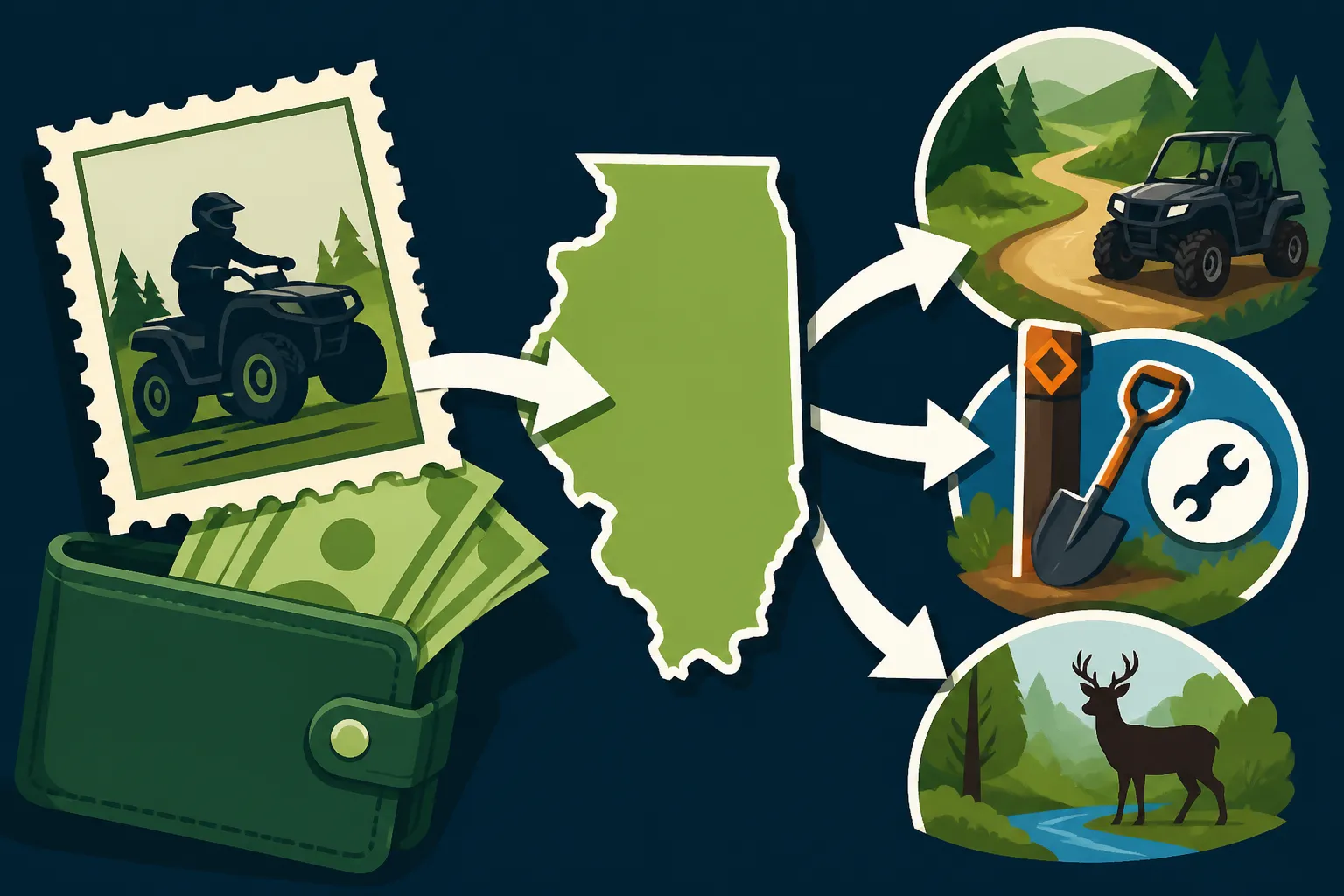
The vast majority of the funds collected from the sale of Illinois OHV Usage Stamps are channeled directly into the Illinois OHV Grant Program, administered by the Illinois Department of Natural Resources (IDNR). This grant program is the lifeblood of off-road recreation in the state. It's specifically designed to provide financial assistance to local governments, park districts, non-profit organizations, and even private entities that want to develop, maintain, or expand public OHV riding areas. This means your stamp money isn't just disappearing into a general state fund; it's earmarked for specific projects that improve your riding experience.
These grants are competitive, meaning that organizations must submit detailed proposals outlining their projects, their impact on the riding community, and their budget. This structured approach ensures that funds are allocated efficiently and effectively to projects that genuinely benefit riders. Imagine a local county looking to convert an old mining area into a riding park, or an existing park needing to repair storm damage to its trails; these are the types of projects that the OHV Grant Program supports. Sometimes, even the foundational legal documents for these organizations, like charters or operational agreements, might be prepared with the help of services like LawDepot, ensuring they are properly structured to apply for and manage these grants effectively.
Tangible Benefits on the Trails
So, what does this grant money actually pay for on the ground? It translates into a wide array of improvements that make your rides safer, more enjoyable, and more accessible. Think about that new bridge over a creek, the fresh gravel on a muddy stretch, or the clear signage guiding you along the route – that's your stamp money at work. Funds are frequently used for the actual construction and ongoing maintenance of trails, which includes everything from grading and clearing brush to building culverts and erosion control measures.
Beyond the trails themselves, the grants also support infrastructure vital for riders. This can mean new or improved parking areas at trailheads, making it easier to unload your machine. It also covers the installation and maintenance of essential facilities like restrooms, picnic areas, and informational kiosks. Safety enhancements, such as better trail marking and emergency access points, are also commonly funded through these grants. Essentially, every time you see an improvement at a public riding site that wasn't there before, there's a good chance your OHV Usage Stamp contributed to it. For a closer look at these sites, read [What a Grant-Assisted Riding Site Actually Is].
Usage Stamp vs. Access Decal: Two Sides of the Same Coin?
It's common for Illinois off-road riders to get a little confused about the difference between the OHV Usage Stamp and the Public Access Decal. Both are stickers, both cost money, and both are related to riding access, but they serve distinct purposes and their funds go to different places. Understanding this distinction is key to being a fully compliant and informed rider.
Decoding the Public Access Decal
The Illinois Public Access Decal is another sticker you might encounter, especially if you frequent state-operated or state-supported riding areas. Unlike the Usage Stamp, which funds the general OHV Grant Program, the money from the sale of a Public Access Decal is specifically directed back to the grant-assisted riding site itself. This decal serves as proof that you've paid the entry fee for that particular site, helping to cover its direct operational costs. This can include anything from staff salaries, utility bills, specific trail maintenance supplies for that park, or even insurance. To understand more about this specific sticker, take a look at [Illinois Public Access Decal Explained].
Each site that operates under the grant program receives a portion of these decal sales, allowing them to directly reinvest in their unique facilities and trails. This direct funding stream allows sites to address immediate needs and tailor improvements to their specific terrain and visitor base. So, while your Usage Stamp contributes to the broader state-level program, your Access Decal supports the very ground you're riding on that day. For details on where those specific funds go, check out [Where the Decal Money Goes].
Why You Might Need Both (or Just One)
Here's where it can get a little tricky for riders. In Illinois, if you plan to ride on any public OHV land that is not a designated "grant-assisted riding area," you only need the Usage Stamp. However, if you're heading to a specific grant-assisted site (like Sahara Woods, for example), you'll also need a Public Access Decal for that site. The interesting twist is that at these grant-assisted sites, possessing the Access Decal negates the requirement for the Usage Stamp. It's almost like the decal acts as an upgraded pass that covers the stamp's intent for that specific location. Many riders wonder [Why the Two Stickers Exist] in the first place, and it really boils down to different funding mechanisms for different types of public land.
This setup ensures that all public OHV riding is financially supported, whether directly by a specific park's visitors or through the broader state grant program. It's a way to ensure fair contribution and targeted funding. But be warned: you cannot simply have one or the other everywhere; the requirements depend on where you are riding. It’s definitely worth clarifying the specific requirements of any park before you load up your machine and head out. Sometimes, trying to understand these nuances can feel like solving a puzzle, but knowing that [Two Stickers That Cancel Each Other] is a helpful rule of thumb.
Here’s a quick breakdown to help you keep them straight:
| Feature | OHV Usage Stamp | Public Access Decal |
|---|---|---|
| Purpose | Broad access to general public OHV lands | Specific access to designated grant-assisted sites |
| Funds Go To | Illinois OHV Grant Program (state-level) | Specific grant-assisted riding site (local-level) |
| Required For | Any public OHV land not a grant-assisted site | Designated grant-assisted riding sites |
| Annual? | Yes, renewed April 1st | Yes, typically site-specific annual or daily |
| Cost | Fixed state fee | Varies by site/residency (state sets max) |
| Cancellation | Decal cancels stamp requirement at grant sites | N/A (decal is specific to a site) |
Practical Steps for Responsible Illinois Riding
Understanding where your money goes is important, but equally vital are the practical steps you need to take to ensure you're riding legally and safely in Illinois. Getting the right stickers and displaying them correctly isn't just about avoiding penalties; it's about being a responsible member of the off-road community.
Acquiring Your Necessary Stickers
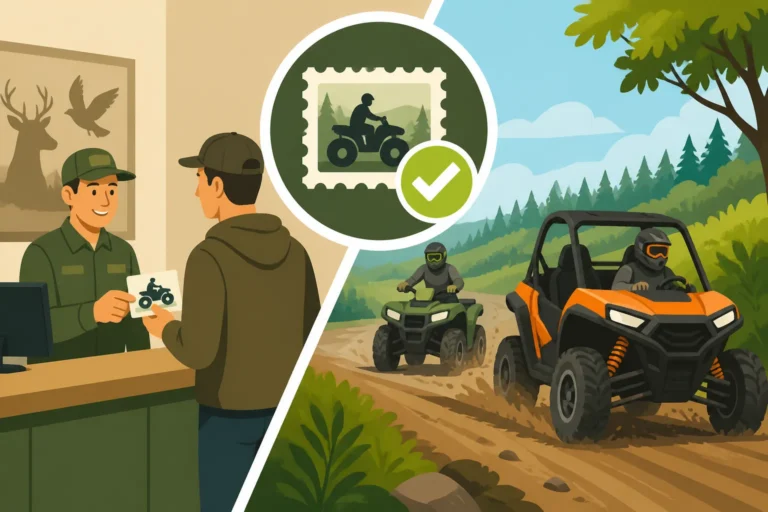
Getting your Illinois OHV Usage Stamp is relatively straightforward. The most common way is to purchase it through an authorized DNR Direct Vendor. These vendors are often places that also sell hunting and fishing licenses, so if you're already familiar with that process, it's very similar. You can also explore options through the state's electronic registration and title system, which has streamlined many of these processes. For a comprehensive list of vendors, check out [Finding a DNR Direct Vendor That Sells Stamps]. Remember, planning ahead and purchasing your stamp before your trip will save you a headache at the trailhead.
For the Public Access Decal, the process can vary slightly depending on the specific grant-assisted riding site you plan to visit. Many sites offer online purchasing options, especially through platforms like ExploreMoreIL, where you can often reserve your spot and get your decal in advance. Others may sell them directly at the gate or through local vendors near the park entrance. Always check the specific park's website before you go to avoid surprises.
Displaying Your Proof of Compliance
Having the right stickers isn't enough; they need to be displayed correctly on your machine so that conservation officers can easily verify your compliance. For the Illinois OHV Usage Stamp, the rules state it must be clearly visible on the forward half of your off-highway vehicle. This typically means on the front fender, handlebars, or a similar prominent location. The idea is that it should be easily spotted without an officer having to climb all over your machine. For specific guidance, refer to [Illinois Stamps on the Forward Half].
Similarly, the Public Access Decal also has specific placement requirements, often front and center on your machine, ensuring it's clearly visible when entering and riding within the grant-assisted park. These rules aren't arbitrary; they are designed to make enforcement quick and efficient, allowing officers to focus on safety rather than paperwork checks. If you're running a club or managing a fleet of machines, formalizing your internal processes for decal application and tracking, possibly using templates from LawDepot, can ensure consistent compliance across all your units.
The Consequences of Skipping Your Stickers
Nobody wants to get a ticket, especially when you're out enjoying a ride. However, if you're caught operating your OHV on designated public lands without the required Illinois OHV Usage Stamp or Public Access Decal, you could face penalties. These can range from fines to being asked to leave the riding area, which can certainly put a damper on your day. Conservation officers regularly patrol these areas, and they are trained to look for these stickers. For a clear understanding of the repercussions, consult [Illinois Penalties for No Stamp] and [Illinois Penalties for No Decal].
Beyond the legal ramifications, failing to purchase your stickers means you're not contributing your fair share to the maintenance and development of the very trails you're using. These funds are vital for keeping the trails open, safe, and enjoyable for everyone. By purchasing and properly displaying your stickers, you're not just following the law; you're actively supporting the riding community and helping to ensure that future generations of riders have places to explore.
Disclaimer
This article is for general informational purposes only and does not constitute professional advice. Laws, prices and regulations vary by location and change over time. Consult a qualified professional for guidance on your specific situation.