Handing Over an MCO at a Title Counter
Oh, the thrill of bringing home a brand-new ATV or UTV! You’ve picked out your machine, maybe added some accessories, and now you’re eager to hit the trails. But then comes the stack of paperwork from the dealer, and nestled within it is a document called the Manufacturer’s Certificate of Origin, or MCO. If you’re like many Illinois riders, you might stare at it, wondering what this official-looking paper is and exactly what you’re supposed to do with it. This guide will walk you through everything you need to know about your MCO and its crucial role in getting your off-road machine legally titled in Illinois.
Understanding the MCO: Your Machine's Birth Certificate
Think of the Manufacturer’s Certificate of Origin (MCO) as the birth certificate for your ATV or UTV. It’s the very first official document that proves your machine exists and comes from a legitimate manufacturer. Without it, getting your new pride and joy officially recognized and titled in Illinois would be a major headache.
What Exactly is a Manufacturer's Certificate of Origin (MCO)?
An MCO is a vital document issued by the manufacturer of your ATV or UTV. It's essentially the machine's initial legal identification. This isn't just a fancy piece of paper; it’s loaded with critical information that formally introduces your machine into the world. You’ll find details like the Vehicle Identification Number (VIN), which is unique to your specific machine, much like a social security number for a person. It also clearly states the make, model, and year of manufacture, confirming its specifications right from the factory floor.
Beyond the identifying data, the MCO also certifies that the machine meets all federal safety and emissions standards applicable at the time of its production. This means it's ready for sale and use, as intended. When you purchase a brand-new ATV or UTV from a dealership, the MCO is passed from the manufacturer to the dealer, and then from the dealer to you, the first retail owner. It's a chain of custody for its official identity.
Why the MCO is So Important for Illinois Titling
In Illinois, the MCO is absolutely non-negotiable when you’re titling a new off-road machine. Illinois requires that all ATVs, UTVs, and other off-highway vehicles (OHVs) purchased after 1998 be titled, even though they aren't registered for street use like cars. This process is essential for establishing legal ownership and creating a clear record. The MCO serves as the primary proof that the machine is new and that you are its first owner. It validates the VIN and prevents fraudulent titling of non-existent or stolen machines.
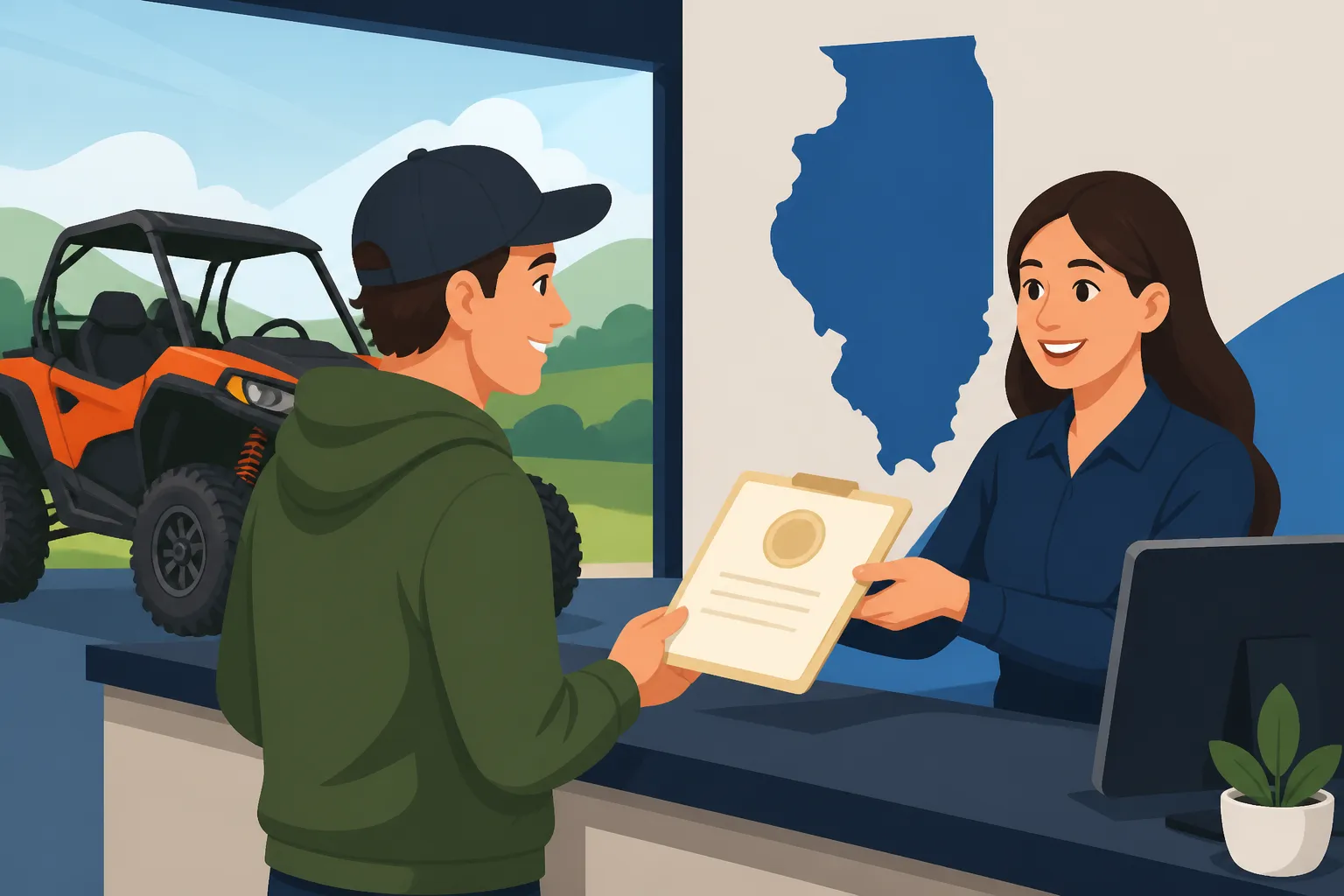
When you present your MCO at the title counter, you're essentially telling the state, "Here is a brand-new machine, and here's its official identity direct from the factory." Without this document, the state has no way to verify the machine's origin or its initial ownership status. This can lead to significant delays and complications, potentially requiring alternative—and often more arduous—methods to establish proof of ownership, such as a bonded title process, which is far more complex than simply handing over the MCO. It’s critical to remember that [Illinois Titles Required Since 1998], making the MCO a standard and expected part of the process for any newer machine.
The MCO at the Illinois Title Counter: What to Expect
When you've just bought a new off-road machine, the next step after the excitement wears off is often a trip to a Secretary of State facility to get your title. Bringing the MCO along with all your other required documents is key to a smooth process.
Bringing Your MCO and Other Required Documents
Beyond your precious MCO, you’ll need a few other important items to successfully title your ATV or UTV in Illinois. The state requires a completed application for certificate of title, which is typically Form VSD-190. Your dealer might help you fill this out, or you might do it yourself. This form will ask for your personal information, details about the machine (which you can pull directly from the MCO), and any lienholder information if you financed the purchase.
You’ll also need proof of purchase. This usually comes in the form of a bill of sale or a detailed invoice from the dealership where you bought your machine. This document confirms the transaction, the purchase price, and often details any trade-ins or sales tax paid. While the dealer typically provides this, some riders like to create their own robust records for peace of mind. Services like LawDepot can offer templates for detailed bills of sale if you want a supplemental document outlining all terms, even for a new purchase, just to keep everything meticulously organized for your personal files.
Finally, don't forget the fees! There's a title fee, and you might also need to pay sales tax if it wasn't already collected by the dealer (though reputable Illinois dealers usually handle this). Make sure you have the correct payment method ready, whether that's cash, check, or a credit/debit card, as accepted by the facility. For a complete overview, check out the [Illinois Title Paperwork Checklist] to ensure you haven't missed anything.
Here's a quick checklist for your title counter visit:
| Document/Item | Purpose | Notes |
|---|---|---|
| Manufacturer's Certificate of Origin (MCO) | Primary proof of new machine ownership | Original document, ensure accuracy |
| Application for Certificate of Title (VSD-190) | Official form to apply for title | Complete fully and accurately, available at facility or online |
| Proof of Purchase (Bill of Sale/Invoice) | Confirms transaction and purchase price | From dealer; ensure VIN matches MCO |
| Payment for Title Fees & Sales Tax | Required state fees and any outstanding taxes | Check current rates and accepted payment methods beforehand |
| Identification (Driver's License/State ID) | To verify your identity as the applicant | Must be valid and current |
The Process at an Illinois Secretary of State Facility
When you arrive at an [Illinois Secretary of State Facilities], you’ll typically take a number and wait your turn. When called to the counter, you'll present all your documents to the clerk. Their first step will be to verify your identification and then meticulously review the MCO and your application form. They’ll cross-reference the VIN on the MCO with your application and the bill of sale to ensure everything matches up perfectly. Any discrepancies, even a single digit difference in the VIN, can cause a significant delay or even a rejection of your application.
The clerk will then input your machine's data into the state's titling system. This includes all the identifying information from the MCO, your ownership details, and any lienholder information. They’ll confirm the fees, collect payment, and provide you with a receipt. While you won't walk out with your physical title immediately – [Illinois Title Processing Time] typically involves mailing the document to you – this in-person step is crucial. Successfully completing this process means your application is officially submitted, and the state will begin processing your new off-road title.
Common MCO Issues and How to Avoid Headaches
Even with the best intentions, sometimes things go sideways with paperwork. Knowing what common MCO issues can arise and how to deal with them can save you a lot of grief.
Missing or Incorrect MCO Information
Imagine sitting at the title counter, ready to finalize everything, only for the clerk to point out a typo on your MCO or, worse, a missing VIN. This can be incredibly frustrating. Common errors include incorrect model years, misspelled names, or VINs that don't match the actual machine. This isn't just a minor detail; an MCO with incorrect information can prevent the state from issuing a title because the document doesn't accurately represent the machine.
The best way to avoid this specific headache is to meticulously inspect your MCO before you even leave the dealership. When the dealer hands over your paperwork, take a moment to double-check every detail on the MCO against your bill of sale and even the VIN plate on the machine itself. If you spot an error, the dealership is responsible for correcting it. They will need to contact the manufacturer or issue a corrected MCO directly, which can take time, but it's much easier to handle this at the point of sale rather than after a rejected title application. Be polite but firm in ensuring these corrections are made, as an accurate MCO is your ticket to a smooth titling process.
When Your Dealer Holds Onto the MCO
Sometimes, a dealer might tell you they'll "handle all the titling paperwork" and keep the MCO. While this can seem convenient, it's essential to understand the implications. A reputable dealer will indeed submit the MCO and other required forms on your behalf, often as part of their service. However, in less scrupulous situations, or simply due to miscommunication, a dealer might delay sending the paperwork, leading to you missing the state's filing deadlines or simply not receiving your title in a timely manner.
If your dealer offers to handle the titling, make sure you get a clear agreement in writing about the timeline for submission and when you can expect your title. Request a copy of the MCO for your records, even if they keep the original for submission. If weeks pass and you haven't received your title or any confirmation, don't hesitate to follow up with the dealership. If you find yourself in a situation where the MCO is held and delays mount, or you receive your machine without an MCO and the dealer is unresponsive, you might face the difficult task of trying to title the machine without it. This could involve trying to get a duplicate from the manufacturer or even pursuing a bonded title, a significantly more complicated process. For any documentation related to the purchase, having clear records, perhaps even generated through platforms like LawDepot for initial agreements, can be very helpful in dispute resolution or tracking.
Beyond the MCO: What Happens Next?
Once you’ve successfully handed over that crucial MCO and all the other necessary documents, you’re on the homestretch to becoming the proud, legally recognized owner of your off-road machine in Illinois.
Receiving Your Illinois Off-Road Title
After your application is processed at the Secretary of State facility, the state will typically mail your official Illinois Off-Road Title to you. This isn't an overnight process; it can take several weeks, so don't fret if it doesn't arrive immediately. When it does arrive, you'll notice it's a formal document, usually on special security paper, that clearly lists you as the owner and details your machine's VIN, make, model, and year. It also indicates any lienholders if you financed your purchase.
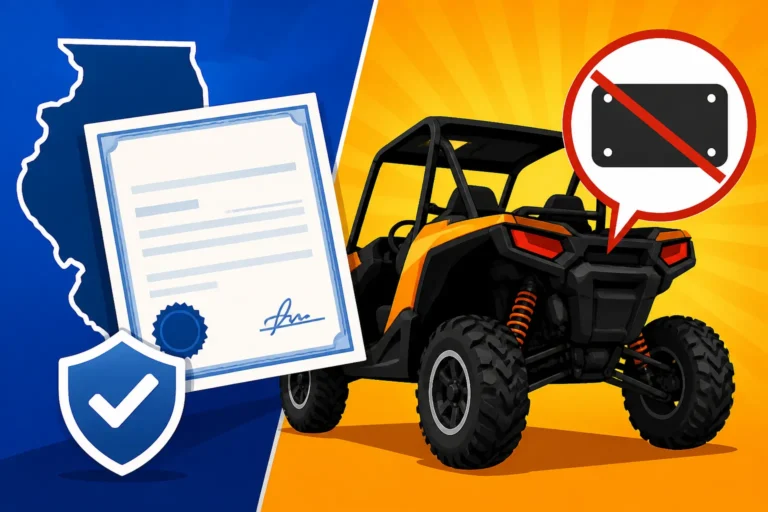
It's important to understand a key distinction in Illinois: when you receive this document, it's a "title only." This means the state establishes your ownership, but it does not register your ATV or UTV for use on public roads or trails. Illinois does not issue license plates for off-road vehicles. This can be confusing for new owners, but the phrase [What "Title Only" Means on a Title Application] is critical here. The title is purely for ownership purposes, much like a deed to a house. For actual riding, you'll need additional stickers, like the [Illinois OHV Usage Stamp Explained] and potentially an [Illinois Public Access Decal Explained], which are separate permits related to where you ride, not ownership.
Your Responsibilities After Titling
Once you have your official title in hand, your responsibilities don't end there. First and foremost, safeguard that document! Your title is proof of ownership, and you’ll need it for any future transactions, like selling the machine or if you ever need to prove ownership for insurance or recovery purposes. Store it in a secure place, separate from the machine itself, such as a home safe or a safe deposit box. Losing it means you’ll have to apply for an [Illinois Duplicate Title Cost], which involves additional paperwork and fees.
You’ll also want to start thinking about the riding permits mentioned earlier. Depending on where you plan to ride—whether on designated public trails, private land, or grant-assisted sites—you'll likely need a Usage Stamp and potentially an Access Decal. These are annual requirements and are crucial for legal trail use. Ensure you understand the distinction between the two, as covered in [Illinois Usage Stamp vs Access Decal].
Finally, if you ever decide to sell your machine, that title will be critical. You'll sign it over to the new owner, completing the chain of ownership. Proper documentation is key for selling a machine, and just as you received the MCO when new, the new buyer will need your signed title. Using clear, professionally drafted documents, such as sales agreements from LawDepot, can also provide an extra layer of protection and clarity for both parties when you are [Selling a Titled Machine in Illinois]. Keeping meticulous records throughout your ownership journey ensures a smooth experience from purchase to potential resale.
Disclaimer
This article is for general informational purposes only and does not constitute professional advice. Laws, prices and regulations vary by location and change over time. Consult a qualified professional for guidance on your specific situation.