Where the Usage Stamp Goes on Your Machine
If you're an ATV or UTV rider in Illinois, you know how important it is to keep all your paperwork in order. One common point of confusion revolves around the Illinois Off-Highway Vehicle (OHV) Usage Stamp – specifically, where exactly it needs to be placed on your machine. This guide will cut through the uncertainty, explaining not just where to put that little sticker, but also why its correct placement is crucial for enjoying the trails without a hitch.
Understanding the Illinois OHV Usage Stamp
Let's start by clarifying what this stamp is all about, because it's often confused with other requirements. The Illinois OHV Usage Stamp is a vital part of legally operating your off-road machine in designated public riding areas, particularly those that receive financial assistance through the state's OHV Grant Program. Think of it as your machine's individual pass to these sites. It helps fund trail maintenance and development, ensuring you and other riders have quality places to enjoy.
What the Stamp Funds
Every time you purchase an Illinois Usage Stamp, that money goes directly back into the OHV Grant Program. This program is instrumental in maintaining and developing the trails at places like Sahara Woods State Recreation Area or other grant-assisted sites across the state. Without these funds, the trails would quickly deteriorate, making for less enjoyable and potentially unsafe riding conditions. It's a small investment that pays big dividends for the riding community. This is why understanding [Where the Stamp Money Goes] is important.
The funds generated by these stamps can cover everything from signage and erosion control to bridge repairs and new trail construction. It's a self-sustaining model that relies on rider compliance to keep the system working. When you buy your stamp, you're directly contributing to the future of off-road riding in Illinois, ensuring that future generations of riders will also have well-maintained trails to explore.
Stamp vs. Decal: The Big Difference
This is where many riders get mixed up! The Illinois OHV Usage Stamp is not the same as the Illinois Public Access Decal. While both are stickers you might display on your machine, they serve different purposes and have different placement rules. The Usage Stamp is machine-specific and generally required for any OHV using grant-assisted trails, regardless of where you bought your machine or where you live. You can learn more about [Illinois OHV Usage Stamp Explained].
The Public Access Decal, on the other hand, is generally for site-specific access, primarily for residents or non-residents at specific grant-assisted sites. In many cases, if you have an Access Decal, it cancels out the need for the Usage Stamp at that particular grant site. It's a subtle but important distinction, and understanding [Why the Two Stickers Exist] can save you a lot of confusion. Think of the stamp as a general contribution to the OHV fund, while the decal is often a direct pass for a specific type of rider or machine at a specific kind of area.
Precise Placement of Your Usage Stamp
Now, let's get down to brass tacks: where does that sticky little rectangle need to go? The Illinois Department of Natural Resources (DNR) is quite specific about this to ensure easy visibility and verification by conservation police officers or park staff. The goal is clear: the stamp must be readily visible so officials can confirm your compliance without having to search for it.
Forward Half, Visible and Secure
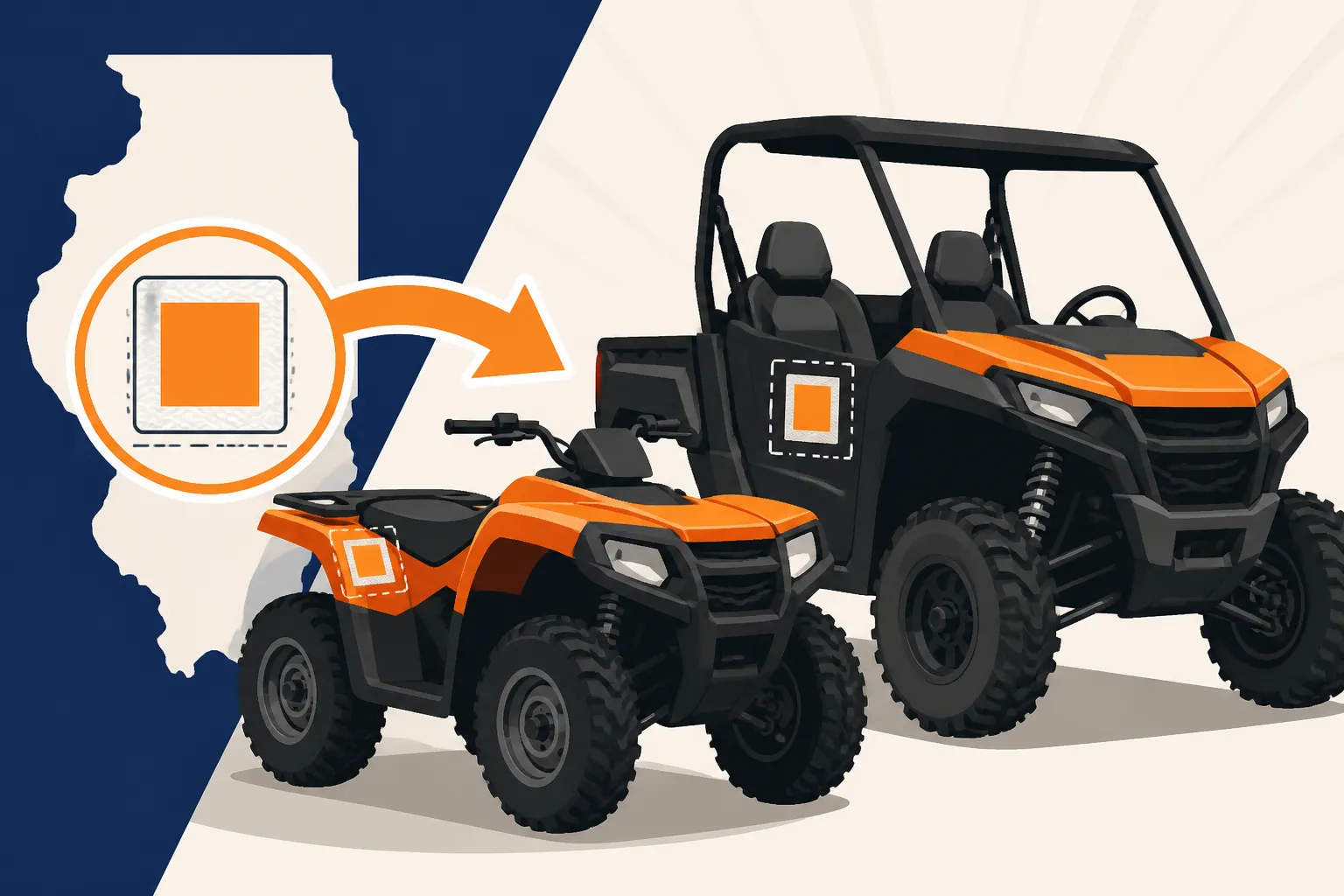
The general rule of thumb is that the Illinois OHV Usage Stamp must be affixed to the forward half of the machine, in a place that is readily visible. This means no tucking it away under a seat, hiding it behind a shock, or placing it in an obscure spot that requires someone to get on their hands and knees to find it. It needs to be out in the open, where an official can easily spot it from a standing position near the front of your ATV or UTV.
Choosing a flat, clean surface is key. Before applying, make sure the area is free of dirt, grease, and moisture. A good, strong adhesion will prevent the stamp from peeling off during rides, which can be a real headache later. Many riders choose a front fender, the handlebars, or a clear section of the cowling. The main thing is that it should be in a location that doesn't obstruct your view or interfere with the machine's operation, but is still clearly visible to anyone inspecting it.
Specific Machine Type Guidance
While the "forward half, readily visible" rule applies broadly, let's consider how this plays out for different types of machines:
- ATVs (Quads): For ATVs, popular spots include the front fender (either side, but often the left for rider convenience), the handlebars, or sometimes a flat area on the front rack if you have one. Just ensure it's not going to get covered by gear when you're loaded up for a ride. The key is that it's unobstructed.
- UTVs (Side-by-Sides): With UTVs, you have more options. The dashboard is a common choice, especially a flat area near the windshield. Other places include the hood, a front fender, or a flat panel on the side of the engine compartment that's still on the forward half. Again, think about where it would be most easily seen by someone standing outside the vehicle.
- Dirt Bikes: Dirt bikes often have less flat surface area. The front fork guard, a visible part of the frame on the forward half, or sometimes a flat area on the headlight cowl are common locations. The main thing is to avoid placing it where it will be obscured by mud or debris during normal riding.
Regardless of your machine, the principle remains: make it easy to see. If you have to explain where it is, it's probably not in the right spot.
Why Correct Placement Matters
You might think, "As long as I have the stamp, who cares exactly where it is?" But correct placement isn't just about following rules; it's about making your life easier and ensuring you comply with the spirit of the law. There are real consequences for improper placement.
Ease of Inspection and Verification
Imagine a conservation police officer or park ranger checking machines at a busy trailhead. They're looking for quick visual confirmation that you're compliant. If your stamp is hidden or obscured, it slows down the process, potentially leading to delays for you and other riders. A clearly placed stamp means a quick glance, a nod, and you're on your way to enjoy the trails. It's about efficiency and mutual respect.
Proper placement minimizes any doubt or need for a closer, more intrusive inspection. It shows you've made an effort to comply, which can go a long way in any interaction with enforcement officials. Remember, these officials are there to ensure everyone's safety and the proper use of public resources. Making their job easier benefits everyone.
Avoiding Penalties and Hassles
Failing to properly display your usage stamp can lead to a citation, even if you technically purchased one. The Illinois DNR considers improper display akin to not having the stamp at all, because it can't be easily verified. Penalties for not having a valid stamp can range from warnings to fines, and in some cases, you could even be asked to leave the riding area. Nobody wants their day on the trails cut short by a preventable administrative issue.
It's far better to take a few extra minutes to ensure your stamp is correctly and securely affixed than to face the frustration and expense of a ticket. Think of it as part of your pre-ride checklist, just like checking your tire pressure or fuel levels. Don't let a simple sticker placement error ruin your ride. Remember, you can also be subject to [Illinois Penalties for No Stamp] even if you just fail to display it correctly.
Common Mistakes and How to Avoid Them
Even with clear instructions, riders sometimes make honest mistakes. Being aware of these common pitfalls can help you avoid them and keep your machine in full compliance.
Hiding the Stamp
One of the most frequent errors is placing the stamp in a location that makes it difficult to see. This might be unintentional, like tucking it under a piece of fairing or behind a winch, or it could be because a rider thinks it makes their machine look "cleaner." However, aesthetics should never trump compliance. If an official has to actively search for your stamp, it's not considered "readily visible."
To avoid this, step back from your machine after applying the stamp. Can you see it clearly from a few feet away, without bending over or peering into crevices? If not, it's probably in the wrong spot. Consider what an officer standing next to your machine would see. The goal is unmistakable visibility.
Using the Wrong Adhesive or Surface
The stamps are designed with their own adhesive, but sometimes riders try to reinforce them with tape or glue, or they apply them to a surface that isn't clean or smooth. This can lead to the stamp peeling, tearing, or becoming illegible over time. A faded or damaged stamp can also be considered invalid, much like a lost one. It's often helpful to keep documents related to your machine's ownership and maintenance in order. Services like LawDepot can assist with creating various legal forms for personal use, which, while not directly related to the stamp, speak to the general importance of maintaining accurate records for your OHV.
Always apply the stamp to a thoroughly cleaned, dry, and flat surface. Avoid textured or porous plastics that might not allow the adhesive to bond properly. If you find your stamp peeling, it's better to address it immediately rather than waiting for it to fall off completely.
Confusing the Usage Stamp with an Access Decal
As we discussed earlier, the Usage Stamp and Access Decal are distinct. Placing a Usage Stamp where an Access Decal should go, or vice-versa, can lead to confusion and potential issues. For instance, [Illinois Decals Mounted Front and Center] have their own specific rules, which differ from the Usage Stamp's general "forward half" guidance.
Always double-check which sticker you're applying and where it needs to go. If you're riding at a specific grant-assisted site, verify if an Access Decal is required or if the Usage Stamp suffices. Sometimes both are necessary, or one cancels the other for specific purposes. Make sure you understand [Illinois Stamp and Decal Together] to avoid any mix-ups.
What to Do If Your Stamp is Damaged or Lost
Things happen. Stamps can get scraped off, peel away in harsh weather, or simply go missing. Don't panic, but do address the situation promptly. Riding without a valid, visible stamp is a violation.
Obtaining a Replacement
If your Illinois OHV Usage Stamp becomes damaged, lost, or illegible, you will need to replace it. The process is straightforward, but it's important not to delay, especially if you plan on riding soon. You can generally obtain a replacement stamp through the same channels where you purchased the original. This often means visiting an authorized [Illinois DNR Direct Vendors] or using the state's online portal if available for replacements.
Be prepared to provide details about your original purchase and your machine. While there may be a fee for a replacement, it's usually the same cost as a new stamp, which is far less than a potential fine. Learn more about [Illinois Stamp Replacement If Lost].
Temporary Solutions While You Wait
What if your stamp falls off in the middle of a multi-day trip, or just before a planned ride, and you can't get a replacement immediately? This is a tricky situation. Legally, you need a valid, visible stamp. Some riders might carry a copy of their purchase receipt as proof of ownership and stamp purchase, but this is usually not considered a substitute for the physical stamp by enforcement officials.
Your best bet is to try to secure a new stamp as quickly as possible. If you're at a grant-assisted riding site, sometimes they have vendors on-site or nearby where you can purchase one. If not, and you're caught without a visible stamp, you risk a citation. It's always best to have the physical stamp affixed to your machine before you hit the trails.
Other Illinois OHV Requirements Beyond the Stamp
While the Usage Stamp is crucial for many Illinois riders, it's just one piece of the puzzle for legal and responsible OHV operation. Don't forget there are other important requirements that ensure your machine is ready for the trails.
Titling Your Machine
In Illinois, titling your ATV or UTV is a separate but equally important requirement, especially for machines bought after 1998. The state issues distinctive titles for off-road machines, much like it does for cars, but these are "title only" and don't come with license plates or road registration for general street use. The title establishes legal ownership, which is essential for buying, selling, or inheriting a machine. Understanding [Illinois Titles Required Since 1998] is vital for any owner.
If you bought your machine from a private seller, you'll need to transfer the title into your name. If you purchased new from a dealer, they typically handle the initial titling paperwork for you. This is a critical step that often gets overlooked by new owners, leading to headaches down the road. You'll definitely want to know [How to Title an ATV in Illinois] if you're a new owner.
Usage Stamp Renewal and Cost
The Illinois OHV Usage Stamp is not a one-and-done purchase. It needs to be renewed annually. The usage stamp year typically runs from April 1st through March 31st of the following year. This means that if you buy a stamp in the fall, it will still expire on March 31st, requiring renewal in the spring. Being aware of [Illinois Usage Stamps Expire March 31] can prevent you from riding on an expired stamp.
The cost for the stamp is set by the state. Historically, Illinois [Illinois Charges $15 for a Usage Stamp], plus an issuance fee. It's a relatively small annual fee that contributes significantly to the state's OHV program. Don't forget to budget for this yearly expense to keep your machine legal for grant-assisted riding areas. Also, be aware that [The 50-Cent Issuance Fee on Top of $15] is standard.
Whether Each Machine Needs a Stamp
This is another common question: if you have multiple ATVs or UTVs, do they all need their own usage stamp? The answer is a resounding yes. The Illinois OHV Usage Stamp is issued per machine, not per rider or per household. Each individual ATV, UTV, or dirt bike that will be ridden at a grant-assisted site must have its own valid and properly displayed usage stamp.
This ensures that every machine benefiting from the grant program's trail maintenance and development contributes its fair share. So, if you're planning a family outing with several machines, make sure each one has its own current stamp firmly affixed in the correct location. It's important to know [Whether Each Machine Needs Its Own Usage Stamp].
Where to Purchase Your Usage Stamp
Acquiring your Illinois OHV Usage Stamp is straightforward, with several options available to riders across the state. The most common methods ensure you can get your stamp conveniently and be ready for your next adventure.
Authorized Vendors
Many hunting and fishing license vendors throughout Illinois are also authorized to sell OHV Usage Stamps. These often include sporting goods stores, bait shops, and some department stores. These "DNR Direct Vendors" use the state's point-of-sale system to issue the stamps, often printing them on the spot. This is a convenient option, especially if you're already out picking up other outdoor essentials. You can usually find a list of [Illinois DNR Direct Vendors] on the state's website.
When purchasing, you'll need to provide some basic information about your machine, such as the make, model, and Vehicle Identification Number (VIN). The vendor will process the transaction, and you'll receive your stamp, ready to be affixed to your machine.
Online Purchases
The Illinois Department of Natural Resources (DNR) also offers an online portal, ExploreMoreIL, where you can purchase various permits and stamps, including the OHV Usage Stamp. This is a great option for convenience, allowing you to buy your stamp from the comfort of your home, any time of day. You'll simply navigate to the correct section, provide your machine's details, and complete the payment.
After an online purchase, you'll typically receive a printable confirmation. While the official stamp is usually mailed to you, the confirmation often serves as temporary proof of purchase until your physical stamp arrives. However, for immediate riding, having the physical stamp affixed is always the safest bet. It's generally a good idea to buy your stamp well in advance of your riding season or planned trip to avoid any last-minute stress. Remember, you can also buy your stamp [Buying a Stamp Where You Buy Hunting Licenses].
Ensuring Compliance for a Smooth Ride
Navigating the rules and regulations for OHVs in Illinois can feel like a maze at times, but with a little attention to detail, you can ensure a smooth, penalty-free riding experience. The Illinois OHV Usage Stamp is a small but mighty piece of paperwork, and knowing exactly where to place it on your machine is a key part of responsible ownership.
By understanding the difference between the stamp and the decal, knowing the correct placement, and being prepared for renewals or replacements, you're doing your part to support the OHV community in Illinois. These efforts directly contribute to the maintenance and expansion of riding opportunities across the state, ensuring that the trails remain open and enjoyable for everyone. So, affix that stamp proudly, hit the trails, and enjoy the incredible off-road adventures Illinois has to offer!
Disclaimer
This article is for general informational purposes only and does not constitute professional advice. Laws, prices and regulations vary by location and change over time. Consult a qualified professional for guidance on your specific situation.