Illinois Title and Proof of Address
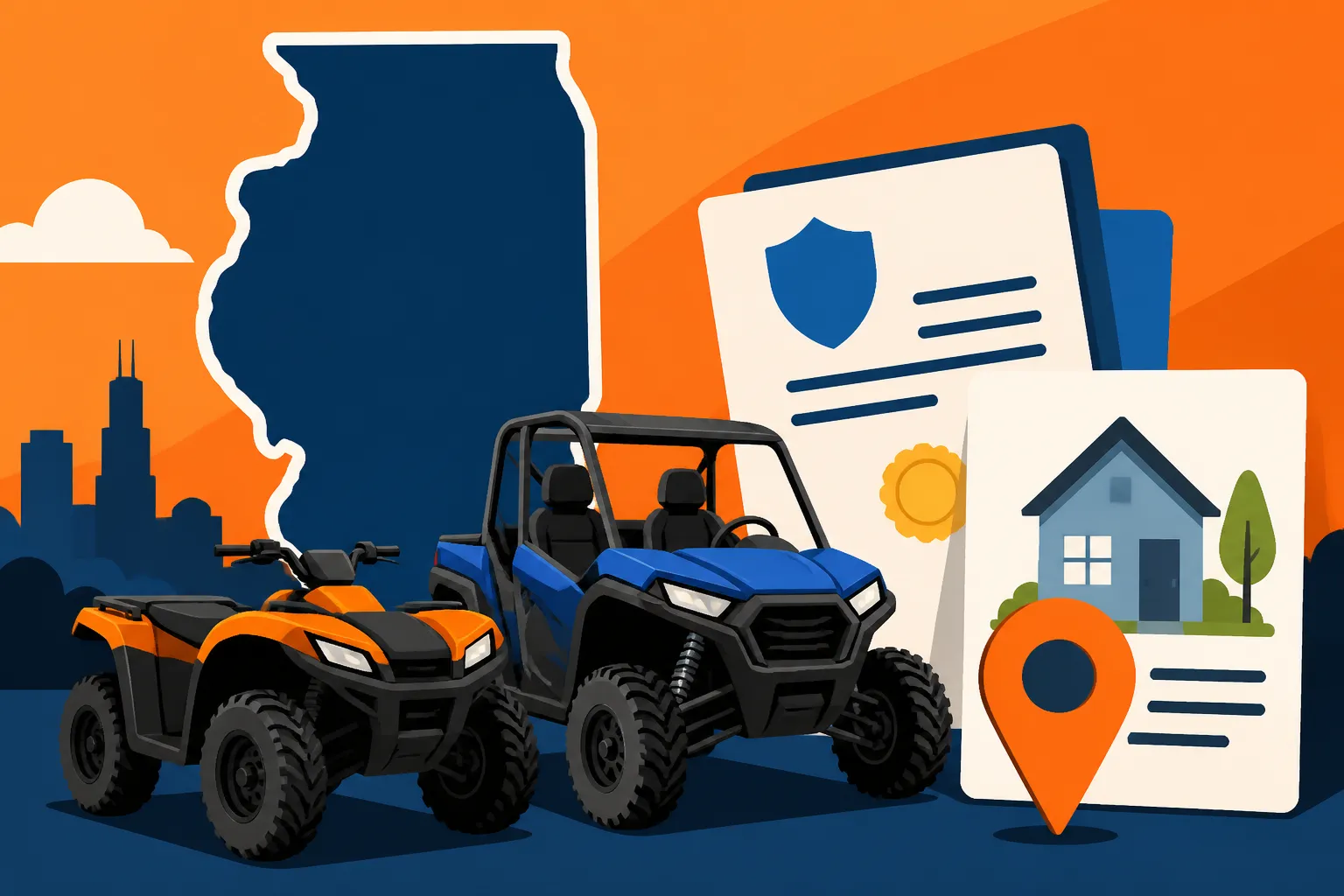
Trying to get your ATV or UTV titled in Illinois can sometimes feel like a treasure hunt for paperwork, and one document that often throws people for a loop is proof of address. It’s not just about showing you live in Illinois; it’s about proving your primary residence in a way the state accepts, and making sure that address matches all your other documentation. This guide will walk you through exactly what kind of proof the Illinois Department of Natural Resources (DNR) or Secretary of State (SOS) expects to see, helping you navigate the process without unnecessary delays.
Why Proof of Address Is Essential for Your Illinois ATV Title
When you apply for an Illinois off-highway vehicle (OHV) title, the state needs to confirm your identity and residency for a couple of important reasons. First, it ties the machine directly to you, the owner, at a verifiable location. This helps prevent fraud and ensures accurate records for legal and administrative purposes. Second, residency can sometimes influence fees or the specific processes you follow, especially if you're a new resident or dealing with unique living situations. The state wants to make sure the address on your title application is legitimate and current.
Establishing Residency for Titling Purposes
Establishing residency isn't just a formality; it's a legal requirement. The state relies on this information to ensure that taxes, fees, and future communications related to your OHV title go to the correct individual and location. If there's ever a question of ownership, or if you need to replace your title, having a consistent and verifiable address on file is crucial. Imagine trying to prove you own a machine that was stolen, but your address on file is outdated or doesn't match your current records – it can create a huge headache. This is why official, verifiable proof is so important.
For example, if you just moved to the state and are trying to title your machine, you'll need to show that Illinois is now your primary residence. This helps differentiate you from someone just visiting or someone who owns property in Illinois but primarily resides elsewhere. The rules are designed to keep things clear and prevent misuse of the titling system. It also impacts things like whether you pay resident or non-resident prices for things like decals, if applicable.
Avoiding Delays with Correct Documentation
The biggest frustration for many people when dealing with state agencies is the back-and-forth because of incorrect or missing paperwork. Submitting an application without proper proof of address is a surefire way to get your title application returned, costing you time and delaying your ability to legally use your machine on designated trails. Think about how annoying it is to wait weeks for a reply, only to find out you missed a single document. It’s a common pitfall, and one you can easily avoid by being prepared from the start.
This diligence is especially important if you’re trying to meet a deadline, perhaps to get your machine ready for an upcoming riding season or a specific event. Every day your application is held up is a day you can’t legally hit the trails or sell your machine. Understanding what the state accepts as proof of address helps you gather everything correctly the first time, ensuring a smoother process. You might find our guide on [Illinois Title Paperwork Checklist] helpful for a broader look at all the documents you'll need.
Accepted Forms of Proof of Address in Illinois
When it comes to proving your address for an Illinois ATV or UTV title, the state generally accepts documents that are official, current, and clearly show your name and the address you're claiming as your residence. They're looking for stability and verification, so old bills or handwritten notes usually won't cut it. The goal is to provide evidence that leaves no doubt about where you reside.
Common and Readily Available Documents
Most people will have one or more of these documents readily available, making them the easiest options to use. These are typically generated by official institutions or government bodies and are widely recognized as valid proof of residency.
Here are some of the most common forms of proof of address:
- Utility Bills: Bills for gas, electric, water, or landline phone services that are no older than 90 days. The key here is "landline" – mobile phone bills often aren't accepted because they aren't tied to a physical address in the same way. The bill must show your name and the service address.
- Bank Statements: A recent statement from your checking or savings account, typically within the last 90 days. Again, your name and address must be clearly visible.
- Credit Card Statements: Similar to bank statements, a recent credit card statement (within 90 days) showing your name and mailing address is often accepted.
- Lease Agreement or Mortgage Statement: If you rent, a current lease agreement with your name, the landlord's name, and the property address is excellent proof. If you own your home, a recent mortgage statement works well.
- Vehicle Registration Card or Title: If you have another vehicle (car, truck, motorcycle) already registered and titled in Illinois under your name and at the correct address, this can serve as proof. Remember, this is about a different vehicle; you're trying to get a title for your ATV/UTV.
- Voter Registration Card: Your official Illinois voter registration card with your current address.
- Property Tax Bill: A current property tax bill for your residence.
- Insurance Policy: A current policy for your home, renter's insurance, or even another vehicle insurance policy showing your Illinois address.
It’s always a good idea to bring a couple of these, just in case one isn’t deemed sufficient for some reason. Having backups never hurts when you're trying to get through bureaucracy! You'll often present these documents when you're applying for an off-road title, perhaps at one of the [Illinois Secretary of State Facilities].
Less Common or Specific Situations
Sometimes, standard documents aren't available, or your living situation is a bit more complex. The state does have provisions for these scenarios, but they often require more effort or specific documentation.
- New Residents: If you've just moved to Illinois, you might not have a utility bill or bank statement with your new address yet. In this case, a signed lease agreement, mortgage closing documents, or a letter from your employer on company letterhead confirming your employment and Illinois address can sometimes be accepted. Remember to update your other forms of ID, like your driver's license, as soon as possible, as that will be your primary form of identification. Our guide on [Illinois Title for a New Resident] might be helpful here.
- Living with Family/Friends: If you live with parents, roommates, or friends and your name isn't on the lease or utility bills, you'll likely need a notarized affidavit from the primary resident. This letter should state that you reside at that address, along with their name and signature, and then be accompanied by one of their accepted proofs of address (like a utility bill). This situation can be a bit trickier, so providing multiple supporting documents is advisable. When drafting such a document, resources like LawDepot can be useful for creating a formal, legally sound affidavit or letter of residency.
- Homeless or Transitional Housing: For individuals without a fixed address, the process becomes more complicated. Generally, the state will require a letter from a shelter, a social worker, or a government agency providing services, confirming your residence at their facility or through their program. This is a sensitive area and often requires direct consultation with the titling office to understand specific requirements.
It’s crucial to ensure that whatever document you present, your name and the physical address you're using for the title application are clearly legible and match exactly. Any discrepancies can lead to rejection.
| Document Type | Typical Issuer | Age Limit (Approx.) | Notes |
|---|---|---|---|
| Utility Bill | Gas, Electric, Water Co. | 90 days | Landline phone only. Must show service address. |
| Bank Statement | Financial Institution | 90 days | Must show mailing address. |
| Credit Card Statement | Credit Card Company | 90 days | Must show mailing address. |
| Lease Agreement | Landlord | Current | Signed by landlord and tenant, showing property address. |
| Mortgage Statement | Lender | Recent | Must show property address. |
| Vehicle Registration | IL SOS | Current | For a different vehicle registered at the same address. |
| Voter Registration Card | Election Authority | Current | Must show current Illinois address. |
| Property Tax Bill | County Tax Collector | Current | Must show property address. |
| Insurance Policy | Insurance Provider | Current | Home, renter's, or other vehicle policy showing IL address. |
| Employer Letter | Employer | Recent | On company letterhead, confirms employment and residence (new residents). |
| Notarized Affidavit | Primary Resident | Recent | For those living with others (with their utility bill/lease). |
Common Pitfalls and How to Avoid Them
Even with a clear understanding of what's needed, it's easy to stumble over small details that can cause big headaches in the titling process. Being aware of these common mistakes can save you a lot of frustration and travel time. The goal is to make sure your [Applying for an Illinois Off-Road Title] goes as smoothly as possible.
Mismatched Addresses and Names
One of the most frequent reasons for an application rejection is an inconsistency between the address on your proof of address document and the address you write on your title application. They must match exactly, down to the street abbreviation (e.g., "Rd" vs. "Road"). If your driver's license has a different address than your utility bill, that's an immediate red flag. The state wants to see consistency across all your official documents.
Similarly, your name on the proof of address must match the name on your application. If you recently got married or changed your name for any other reason, ensure all your documents reflect your current legal name. If your name is "Robert Smith" on your driver's license but "Bob Smith" on your utility bill, it could cause an issue. It's often best to use your full legal name on all forms and supporting documents. If you're dealing with a legal name change, you might need to show supporting legal documentation, like a marriage certificate, to bridge the gap.
Outdated or Unacceptable Documents
Using an expired driver's license or a utility bill that's six months old is another common mistake. State agencies typically have strict rules about how recent documents need to be. For most proofs of address, they're looking for something within the last 60 to 90 days. Always double-check the date on any document you plan to submit.
Beyond age, some documents simply aren't accepted. Mobile phone bills, as mentioned, are often rejected. P.O. Box addresses alone are generally not sufficient as proof of residence because they don't confirm a physical living location. While a P.O. Box can be a mailing address, you still need to provide proof of your physical street address. Make sure the document clearly states your physical residential address, not just a mailing address.
The Nuance of "Title Only" and Proof of Address
Sometimes, when you're filling out forms like VSD-190, you might see an option for "Title Only." This typically means you're just applying for the certificate of title for your machine and not, for example, registering it for road use (which isn't applicable to ATVs/UTVs in Illinois anyway). Even if you're just getting a title, the requirement for proof of address remains. The state still needs to know who owns the machine and where they reside. Our guide on [What "Title Only" Means on a Title Application] delves deeper into this concept.
The logic here is consistent: ownership needs to be tied to a verifiable person and location. Whether you're getting a title and registration for a car, or just a title for an off-road machine, the state's need for accurate owner information and residency proof doesn't change. So, don't think "title only" means you can skip the proof of address; it's still a mandatory step in confirming your identity and legal residency in Illinois.
What If Your Address Changes After Titling?
Life happens, and people move. If you've already titled your ATV or UTV in Illinois and then move to a new address, you might be wondering what steps you need to take. It's important to update your records with the state promptly to avoid any issues down the road, especially if you ever need a duplicate title or if there are any official communications regarding your machine.
Updating Your Address on Your Title Records
While you won't get a brand new physical title certificate mailed to you every time you change your address for an OHV, you absolutely need to inform the Illinois DNR or SOS of your new residence. This updates their internal records, ensuring that any official correspondence or inquiries related to your ATV or UTV are sent to the correct location. This process is similar to updating your address on your driver's license, though typically handled through the DNR for OHVs.
You’ll generally need to fill out a specific form to notify them of an address change. This form will require your vehicle identification number (VIN), your previous address, and your new address. You might also be asked to provide proof of your new address, just as you did when first titling the machine. This ensures the update is legitimate and accurate. Failing to update your address could mean missing important notices, or even having trouble proving ownership if your machine is ever stolen and recovered, and the records don't match your current details. [Illinois Title Address Change] offers more specific steps on this process.
The Importance of Current Records for All Your Machines
Keeping your address current isn't just about one machine; it's about all your titled vehicles. If you have multiple ATVs, UTVs, or even street-legal vehicles, it's a good practice to update your address across all state records at the same time. This consistency ensures that whether you're dealing with the DNR for an ATV or the SOS for your car, all your information is aligned.
Imagine you need to transfer the title of your UTV to a new owner, but the address on record is old. This could create confusion or delays during the transfer process, as the state might question the legitimacy of the record. Keeping everything up-to-date simply makes your life easier and ensures you remain in good standing with state regulations. When it comes to selling a titled machine, clear and current paperwork is invaluable for both buyer and seller. [Selling a Titled Machine in Illinois] explores this further.
Disclaimer
This article is for general informational purposes only and does not constitute professional advice. Laws, prices and regulations vary by location and change over time. Consult a qualified professional for guidance on your specific situation.