When Your Side-by-Side Is Too Wide for the Trail
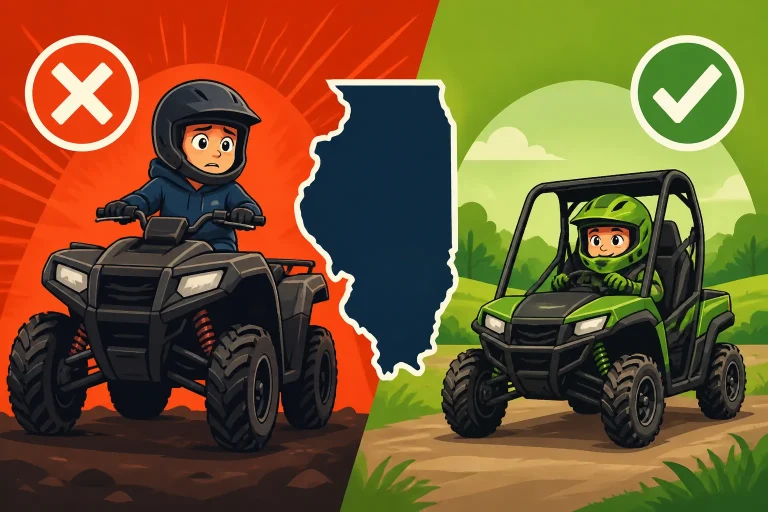
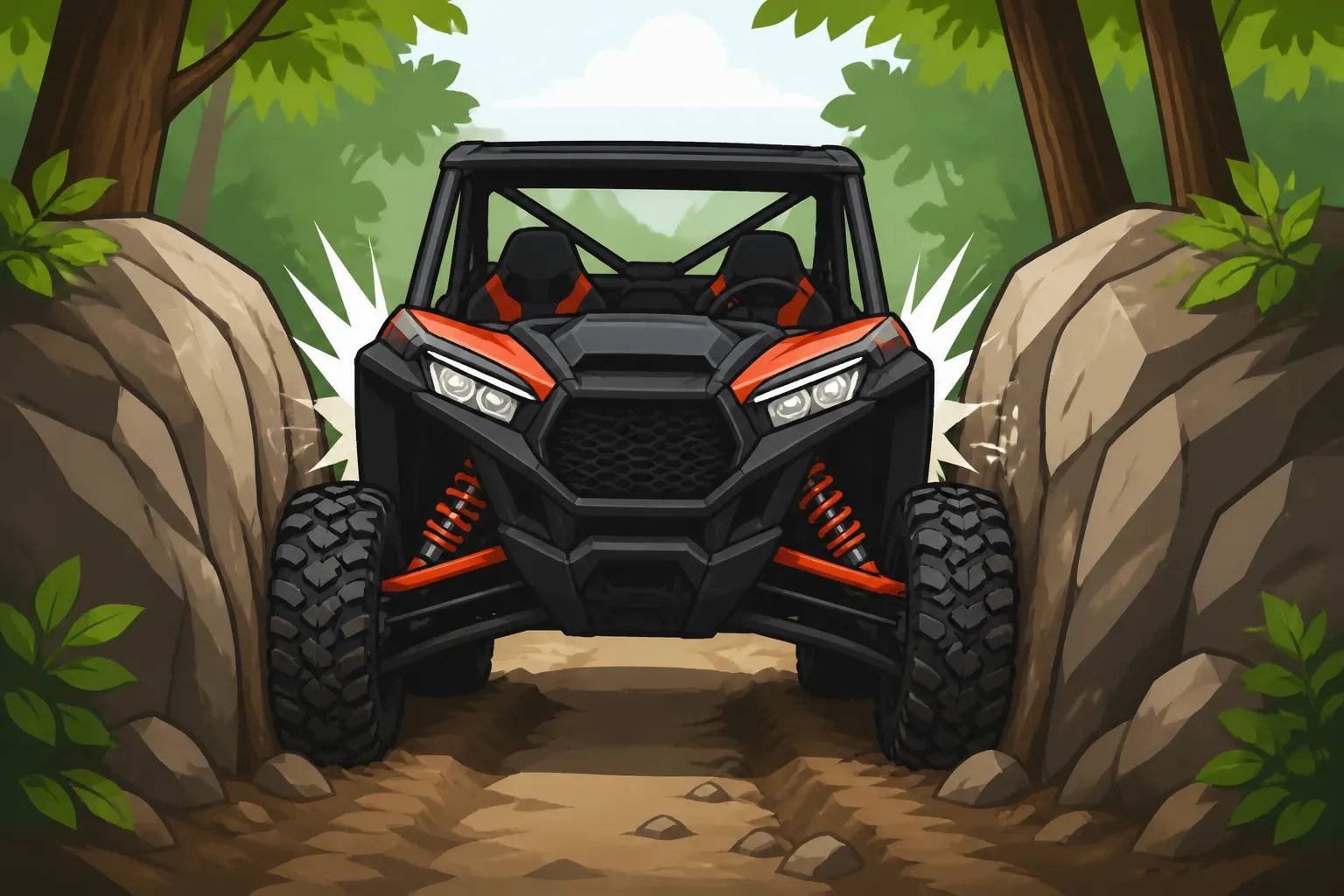
A side-by-side can fit on a trailer and still be too wide for a particular Illinois trail. Width limits may depend on the riding area, route, gates, and installed accessories—not simply whether the site allows UTVs. Before towing, measure your machine as you plan to ride it and ask the operator which routes can accommodate it.
Why a Side-by-Side May Not Fit
“Side-by-side allowed” does not necessarily mean every side-by-side can use every trail. An operator may allow UTVs generally but restrict access to certain routes based on their width, turning space, surface, or nearby obstacles. A trail can also narrow at a gate, between trees, along a bridge, or around a sharp bend.
There is not one width figure you should assume applies to every Illinois riding area. Site rules and trail conditions differ, and a width that works at one park may not work at another. Check the specific property’s current rules rather than relying on a general statement that a place is “UTV friendly.” Illinois Trails That Allow Side-by-Sides can help you identify relevant riding options, but confirm the details directly with the site before making the trip.
A machine’s published width is useful for an initial check, not necessarily a final answer. Specifications may describe the vehicle in its standard configuration. Your actual side-by-side may be wider because of wheel offset, aftermarket suspension, tire choice, tracks, fender extensions, bumpers, mirrors, or other equipment. Even without modifications, the published figure may not tell you whether a particular narrow point is passable.
A site’s overall width policy and a trail’s practical clearance are related but not identical. A vehicle could meet the property’s stated limit and still be a poor fit for one tight route. Conversely, a narrow trail entrance does not necessarily mean the whole property is inaccessible; there may be another route or a separate area intended for wider machines. Ask about your particular machine and intended riding plan.
Permits and stickers do not solve a physical-access problem. A permit may cover entry or a required use, but it is not a promise that every vehicle can use every trail. Before you set out, review the relevant Illinois Grant Site Rules for Riders and distinguish riding authorization from trail suitability.
Measure Your Side-by-Side in Its Riding Setup
Measure the machine as it will arrive at the trailhead, not as it looked in a brochure or at the dealership. If you have changed wheels, tires, suspension, or bodywork, those changes can affect the space the vehicle needs.
Find the widest point
Park on level ground with the wheels straight. Measure across the widest parts of the vehicle from side to side, perpendicular to its direction of travel. Check both sides rather than assuming the machine is perfectly symmetrical.
Include anything that sticks out and will remain in place while riding. Depending on the setup, that could include tires, fender flares, mirrors, bumpers, nerf bars, or track systems. If a component can be adjusted or folded, ask the site whether that configuration is allowed and safe; do not assume you can change it at the trail entrance to get around a restriction.
A tape measure is enough for most owners. If you need one, a basic tape measure from a hardware store or Amazon can help you check the machine at home. Measure more than once, and write down the result so you can give the operator a clear figure.
| What to check | Why it matters |
|---|---|
| Tire-to-tire or body width at the widest point | The manufacturer’s listed width may not reflect your current setup |
| Mirrors and other projections | These may be wider than the body or tires |
| Wheel offset and aftermarket parts | Modifications can change the vehicle’s overall width |
| Tracks or other seasonal equipment | Attachments can alter both width and handling |
| Trailer width and loading | The towing setup is separate from whether the machine fits the trail |
If you are unsure which part is widest, walk around the parked vehicle and look from the front and rear. Measure the outermost points that cannot be removed or repositioned for normal riding. It can also help to take a photo of the measurement with the tape visible, especially if you plan to call an operator and want to explain the setup precisely.
Do not confuse the side-by-side’s width with the width of its trailer. The trailer affects whether you can transport and park the machine, while the vehicle’s dimensions determine whether it can travel through trail pinch points. Check both when planning the trip.
Keep in mind that a tape measurement alone cannot predict how easily a vehicle will negotiate a route. Tire sidewalls can flex, the ground may slope, and a bend may leave less room than a straight section. A machine may technically pass through an opening yet have too little clearance for a comfortable, controlled ride. Illinois Trail Difficulty Ratings can help you think about route demands beyond the vehicle’s basic dimensions.
Confirm Access Before You Tow
Once you have the machine’s measured width, contact the riding area and ask direct questions. “Do you allow UTVs?” is a useful starting point, but it may not resolve whether your particular side-by-side is suitable.
Give the operator the vehicle’s measured width and explain any modifications or attachments that affect it. Then ask:
- Is there a maximum vehicle width for the property, for specific trails, or for both?
- Are any routes restricted to narrower machines?
- Are there gates, bridges, or other known pinch points that may be difficult for a wider UTV?
- Is there a route suitable for a machine with your dimensions?
- Do current conditions or temporary closures change which trails are open?
- Does the site have a place to turn around if a route becomes impassable?
If you are looking at a private park, check its current rules and ask the operator about its trail layout. Properties differ, so do not assume that an answer from one park applies to another. Illinois Private Off-Road Parks may help you compare places to contact.
Conditions can change the amount of usable space. Rain, erosion, fallen branches, maintenance work, or a temporary closure may affect a route after you have planned your visit. Check the site’s updates shortly before leaving, especially if you are travelling a long distance. See Illinois Trail Conditions Before You Tow and Illinois Trail Closures After Rain for related planning considerations.
If you plan to ride at a state OHV area, confirm that the machine and the chosen route meet the site’s current requirements. A reservation or permit should not be treated as a guarantee that every trail is a match for your machine. Review Illinois Sahara Woods Permits for the permit side of planning, and contact the site about width and route access separately.
Keep a record of the answer if it affects your plans. Note the date, the person or office you contacted, the width you provided, and any route guidance. This is not a substitute for following posted rules at the property, but it can make it easier to understand what was discussed if details are unclear when you arrive.
If you cannot get a definite answer, consider choosing a different riding area or postponing the trip until you can confirm access. A vague “it should be fine” is not very reassuring when the vehicle is already on a trailer. The operator may be able to suggest a suitable route, but only if you describe the actual machine rather than just its model name.
What to Do If a Trail Is Too Narrow
At the trailhead, look for posted restrictions and follow staff directions. If an entrance or marked section appears too tight, stop before entering and assess whether there is a clearly permitted alternative. Do not try to squeeze through by scraping trees, pushing aside a barrier, or driving around a closure sign. That can damage the property, create a hazard, or put you on a route that is not authorized.
A tight passage is not always solved by going faster or by asking a passenger to guide you. If you cannot maintain safe clearance, back out only when you can do so carefully and without creating a risk for other riders. On a blind turn or narrow trail, do not reverse into traffic or block the route without checking for approaching machines. If staff are available, ask for help choosing a safe way to turn around.
Avoid making an unplanned route through brush or across land beside the trail. The ground may be private, environmentally sensitive, or closed to riding. Stay on designated routes and ask site staff where to go next. Illinois Land You May Not Ride explains why an open-looking patch of land should not be treated as permission to leave the trail.
Before the next outing, use what happened to improve the plan. Recheck the vehicle’s width, note which attachment or part caused the problem, and ask the operator whether a different route or riding area would work. If the difficulty came from temporary conditions rather than the machine itself, check for updates before returning. A site may have reopened a route, changed access, or issued new guidance.
If the machine is consistently too wide for the places you want to ride, factor that into future equipment choices. A narrower setup may improve access, but changing wheels or suspension can affect handling and should be evaluated for safety and compatibility. Do not modify the machine simply to meet a guessed width limit. First get the actual requirement from the riding area, then consult a qualified service professional if the change could affect safe operation.
A little planning prevents an avoidable trip with a machine that cannot use the route. Measure the side-by-side in its real riding configuration, confirm current rules with the site, and treat trail access as route-specific rather than guaranteed by a general UTV policy.
Disclaimer
This article is for general informational purposes only and does not constitute professional advice. Laws, prices and regulations vary by location and change over time. Consult a qualified professional for guidance on your specific situation.