Riding Under the Influence on Private Ground
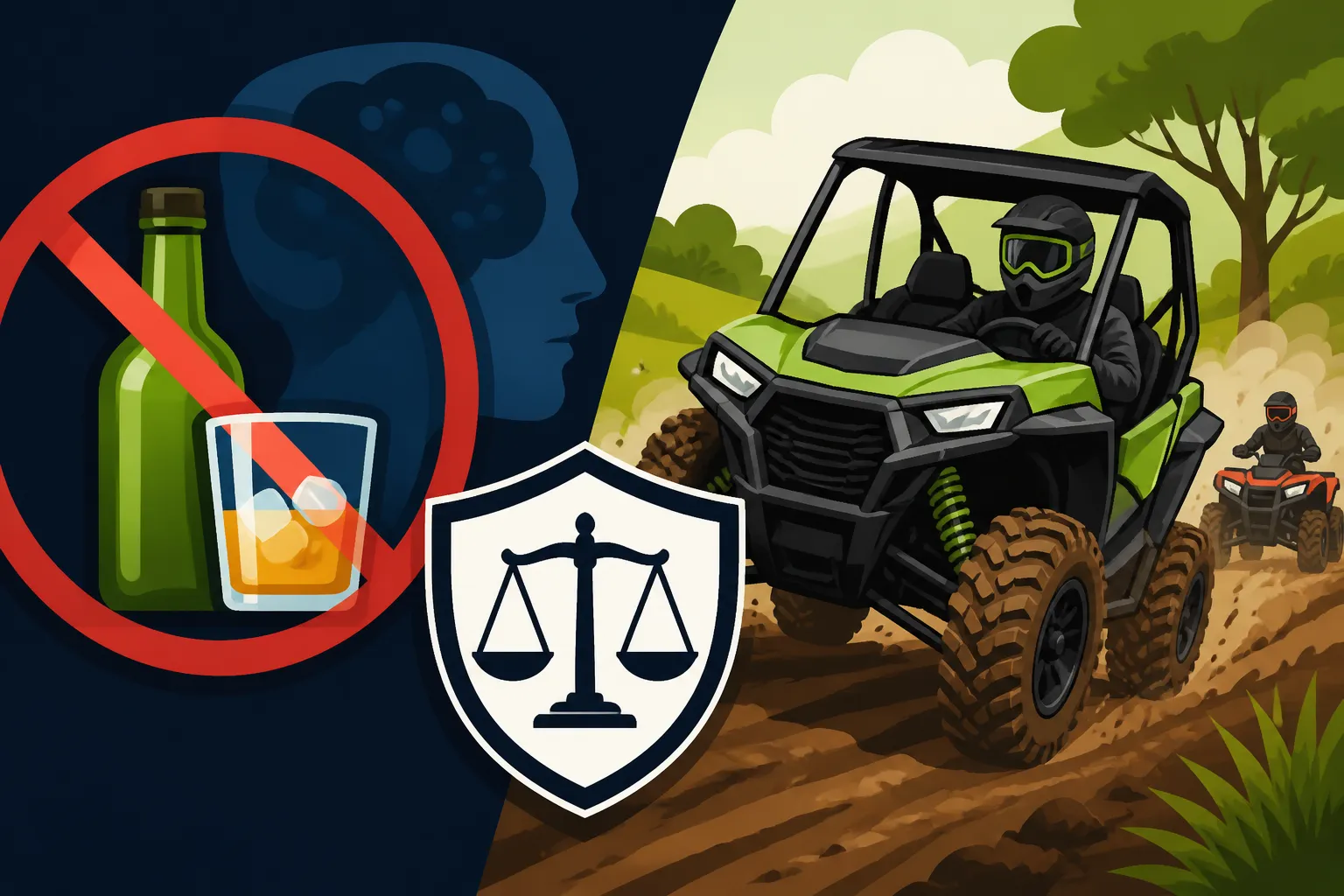
It’s a common scene in Illinois: a beautiful Saturday, friends and family gathered, a bonfire crackling, and maybe a few adult beverages flowing. Someone decides to hop on the side-by-side to grab more firewood from the back forty or zip over to the shed for tools. In their mind, they’re perfectly safe because it’s their own property, far from public roads. But here’s the stark reality that surprises many Illinois ATV and UTV owners: riding under the influence on private land can still land you in serious legal trouble. This guide will cut through the misconceptions and lay out exactly how Illinois law views impaired operation, even on your own acreage.
The Misconception of "Private Land Immunity"
For many activities, the idea that "my property, my rules" holds a lot of weight. If you want to paint your garage purple or have a late-night barbecue, the law generally respects your right to do so on your private land, as long as you're not disturbing the peace or breaking local ordinances. This freedom often extends to how you operate your off-road vehicles, leading many riders to mistakenly believe that if they're not on a public road, state trail, or grant-assisted site, the rules simply don't apply.
Why Riders Think They're Safe on Their Own Acreage
It's completely understandable why this belief takes root. After all, if you own a sprawling farm or a large parcel of recreational land, it feels like an extension of your home. You're not interacting with public traffic, you're not in a situation where you might directly endanger other motorists or pedestrians on a highway. The thought process is often: "I'm just moving my machine from point A to point B on my own land, where's the harm?" This mindset comes from a place of common sense regarding property rights and personal freedom, but when it comes to operating a motor vehicle, even an off-road one, Illinois law draws a different line. People are often well-intentioned, simply unaware that the same strict DUI regulations that apply to cars on highways can extend to a quad in their backyard or a UTV on their farm lane. It’s a classic example of [Illinois Rules Riders Get Wrong].
The Legal Reality in Illinois: It's Not Just About Public Roads
Here's where the rubber meets the road, so to speak. Illinois's driving under the influence (DUI) statutes are incredibly broad, and they don't always confine themselves to paved public thoroughfares. While specific wording can vary, the core principle is that if you are "operating" a "vehicle" while impaired, you can face charges. The definition of "vehicle" in Illinois law is expansive, typically including ATVs, UTVs, dirt bikes, and other off-highway vehicles. The critical distinction that many riders miss is that the law doesn't always specify "on a public highway" for certain offenses, including DUI. This means that if you're riding your UTV back to the barn after a few celebratory drinks at your family reunion, you could still be in violation of the law. This is particularly important when considering [Illinois DUI Law and Off-Road Machines].
What Constitutes DUI on an ATV or UTV in Illinois
Understanding what "under the influence" and "operation" truly mean in the eyes of Illinois law is crucial, especially when you're on private ground. It's not just about being visibly drunk or weaving erratically.
Defining "Under the Influence" for Off-Road Machines
In Illinois, the legal blood alcohol content (BAC) limit for operating any motor vehicle, including ATVs and UTVs, is generally 0.08%. This is a hard limit, and if you're tested and found to be at or above this level, you are legally presumed to be under the influence. But it's not just about alcohol. The law also covers impairment by cannabis, other drugs (prescription or illegal), or any combination thereof, to a degree that renders you incapable of safely operating the machine.
Consider this: you're out on your sprawling farm, maybe doing some work on your [Illinois Rules for Riding a Farm Lane] or a [Illinois Rules for Riding a Field Road]. You come in for lunch, have a couple of beers, and then decide to finish up. If an accident were to occur, or if law enforcement were to be called to your property for any reason, and they observed signs of impairment, you could be in serious trouble. Even if you feel fine, your judgment, reaction time, and coordination can be subtly affected by alcohol or drugs, making you a danger to yourself and others, even on familiar private terrain.
The Role of "Operation" – Even a Key in the Ignition Counts
Many people assume "operating" a vehicle means it has to be moving. In Illinois, that's often not the case. The legal definition of "operation" can be very broad and extend to situations where you have actual physical control over the machine, even if it's stationary. This might include:
- Sitting in the driver's seat with the keys in the ignition and the engine running. You might be just warming it up, or waiting for someone, but if you're impaired, you could still be charged.
- Having the keys in the ignition, even if the engine is off, with the apparent intent to drive. This falls under the concept of "constructive possession" or "actual physical control." If you're impaired and in a position to start the machine, it can be enough.
- Attempting to start the machine while impaired.
Think about a common scenario: you're enjoying an evening at your cabin, having a few drinks. You decide it's time to put the side-by-side away for the night. You hop in, turn the key, but maybe don't even put it in gear before you're approached by someone, or an incident occurs. In such a situation, even though you weren't actively driving it across your property, you could still be considered to be "operating" the machine under the influence. It's a fine line, and one that often catches people off guard.
Scenarios Where Private Land DUI Becomes a Public Matter
The most common question then becomes, "How would law enforcement even know if I'm riding under the influence on my own private property?" While it's true they can't simply wander onto your land without cause, there are several situations that can open the door for intervention.
When Law Enforcement Can Intervene on Private Property
Law enforcement officers in Illinois generally require probable cause or a lawful reason to enter private property. However, these reasons are not as rare as you might think. Here are some scenarios where a private land DUI can quickly become a public legal issue:
- Citizen Complaints: A neighbor might call the police reporting reckless driving, excessive noise ([Illinois Noise Complaints About Quads]), or a disturbance involving an ATV or UTV on your property. This gives officers a legitimate reason to investigate.
- Accidents: If you or a guest are involved in an accident on your property while impaired, especially if there's injury or significant property damage, emergency services will be called. Once first responders are on the scene, and impairment is suspected, law enforcement can investigate and press charges. Remember, [Illinois Accident Reporting for a UTV Crash] rules still matter, even on private land.
- Plain View Doctrine: If an officer is lawfully on adjacent public property (e.g., a road bordering your land) and observes a clear violation or signs of impairment in "plain view" on your private property, they may then have grounds to enter.
- Emergency Situations: If there's a perceived emergency, such as someone in distress or a dangerous situation unfolding, officers can enter private property without a warrant.
- Invitation: If you, or another legal occupant of your property, invite law enforcement onto the land for any reason, they are lawfully present.
For example, imagine hosting a large gathering. A guest, after having too much to drink, decides to take a joyride on your quad and crashes into a fence, injuring themselves. When paramedics arrive, law enforcement will follow, and if they observe signs of intoxication in the operator, a DUI investigation will begin. Your initial thought might be that since it was on your land, it's just a private matter, but the law doesn't always see it that way.
Consequences Beyond the Initial Stop
A DUI charge, regardless of where it occurs, carries significant weight. For an ATV or UTV DUI on private property in Illinois, the consequences can be just as severe as if you were driving a car on a public road.
- Criminal Charges: You will face criminal charges for DUI, which can range from a misdemeanor to a felony, depending on prior offenses, the level of impairment, and whether an accident with injuries occurred.
- Fines and Fees: Substantial fines and court costs are standard with any DUI conviction.
- Jail Time: Even for a first offense, judges have discretion to impose jail time, especially if there were aggravating factors.
- Loss of Driver's License: This is often the most shocking consequence for many. A conviction for DUI on an ATV or UTV, even on private land, can result in the suspension or revocation of your automobile driver's license. The state views it as an impairment to safely operate any motor vehicle.
- Increased Insurance Rates: Your car insurance premiums, as well as any specific ATV or UTV insurance you might carry (like [Illinois Comprehensive Coverage for a Quad]), will almost certainly skyrocket. Some insurers may even drop your coverage entirely. This contributes significantly to [Illinois ATV & UTV Insurance Costs].
- Criminal Record: A DUI conviction creates a permanent criminal record, which can impact employment opportunities, housing, and even travel.
- Liability: If someone is injured or property is damaged due to your impaired operation, you could face civil lawsuits on top of criminal penalties, leading to devastating financial costs.
It's a stark reminder that the legal system takes impaired driving very seriously, and the location of the offense often does not mitigate the severity of the consequences. While you might think you're safe from [Illinois Penalties for Illegal Street Riding] on your own ground, the penalties for DUI can follow you.
Protecting Yourself and Your Guests
Understanding the law is the first step, but taking proactive measures is how you truly protect yourself, your family, your friends, and your property from the severe repercussions of impaired riding.
Establishing Clear Rules for Off-Road Vehicle Use on Your Property
If you own property where ATVs and UTVs are ridden, it's smart to establish clear, unambiguous rules, especially if you host guests.
- Zero-Tolerance Policy: The simplest and safest approach is to implement a strict zero-tolerance policy for impaired operation of any machine on your land.
- Designated Operators: For events where alcohol is served, designate sober operators for any necessary vehicle movements.
- Secure Storage: If machines aren't going to be used, especially later in the day, secure them. Keys should be removed and stored in a safe, inaccessible place to prevent anyone from hopping on impulsively.
- Clear Communication: Don't assume everyone knows the rules. Verbally communicate your policies to guests, and if feasible, consider posting simple signs near common riding areas or storage sheds, reminding everyone of the "no impaired riding" rule. This also helps establish that you've taken reasonable steps to prevent dangerous behavior, which could be helpful in a liability scenario. For property with regular off-road activity, a clear set of [Illinois Private Land Permission Rules] can go a long way.
The Importance of Personal Responsibility and Planning
Ultimately, the responsibility rests with each individual to make safe choices.
- Plan Ahead: If you know you'll be consuming alcohol or any impairing substances, plan for alternative transportation or lodging. Don't rely on your ATV or UTV as a convenient shuttle across your property if you've been drinking.
- Recognize Impairment: Be honest with yourself about your state. Even if you feel "fine," your judgment and motor skills are compromised.
- Educate Others: Share this information with friends and family who ride on your property or who might host gatherings where off-road vehicles are present. A little knowledge can prevent a lot of heartache.
- Consider Liability Insurance: While insurance won't protect you from criminal DUI charges, having robust liability coverage on your ATV or UTV can be critical in the event of an accident on your property, especially if someone else is injured. Accidents happen, and even on private land, injuries can be severe. Understanding [Illinois ATV & UTV Insurance Costs] and ensuring you have adequate coverage, like [Illinois Comprehensive Coverage for a Quad], is a vital part of responsible ownership, providing a financial safety net against the unexpected.
Remember, the goal is to enjoy your machines safely and legally. A little foresight and adherence to the law can save you from a world of trouble.
| Feature | Common Misconception on Private Land | Legal Reality in Illinois |
|---|---|---|
| DUI Law Scope | Only applies to public roads | Broadly applies to any "vehicle" operated while impaired, often extending to private property. |
| "Operation" | Machine must be moving | Includes actual physical control, such as sitting in the driver's seat with keys in the ignition, even if stationary. |
| Law Enforcement | Cannot enter private property | Can intervene if there's probable cause (e.g., citizen complaint, accident, plain view, emergency, invitation). |
| Consequences | Minor inconvenience, no big deal | Severe fines, potential jail time, suspension/revocation of automobile driver's license, increased insurance, criminal record. |
| Safety Concerns | Only a risk to self and close circle | Risk of severe injury or death to operator, passengers, and others on property; significant property damage. |
Disclaimer
This article is for general informational purposes only and does not constitute professional advice. Laws, prices and regulations vary by location and change over time. Consult a qualified professional for guidance on your specific situation.